









De Groene Boog aims for maximum reduction in CO2 emissions
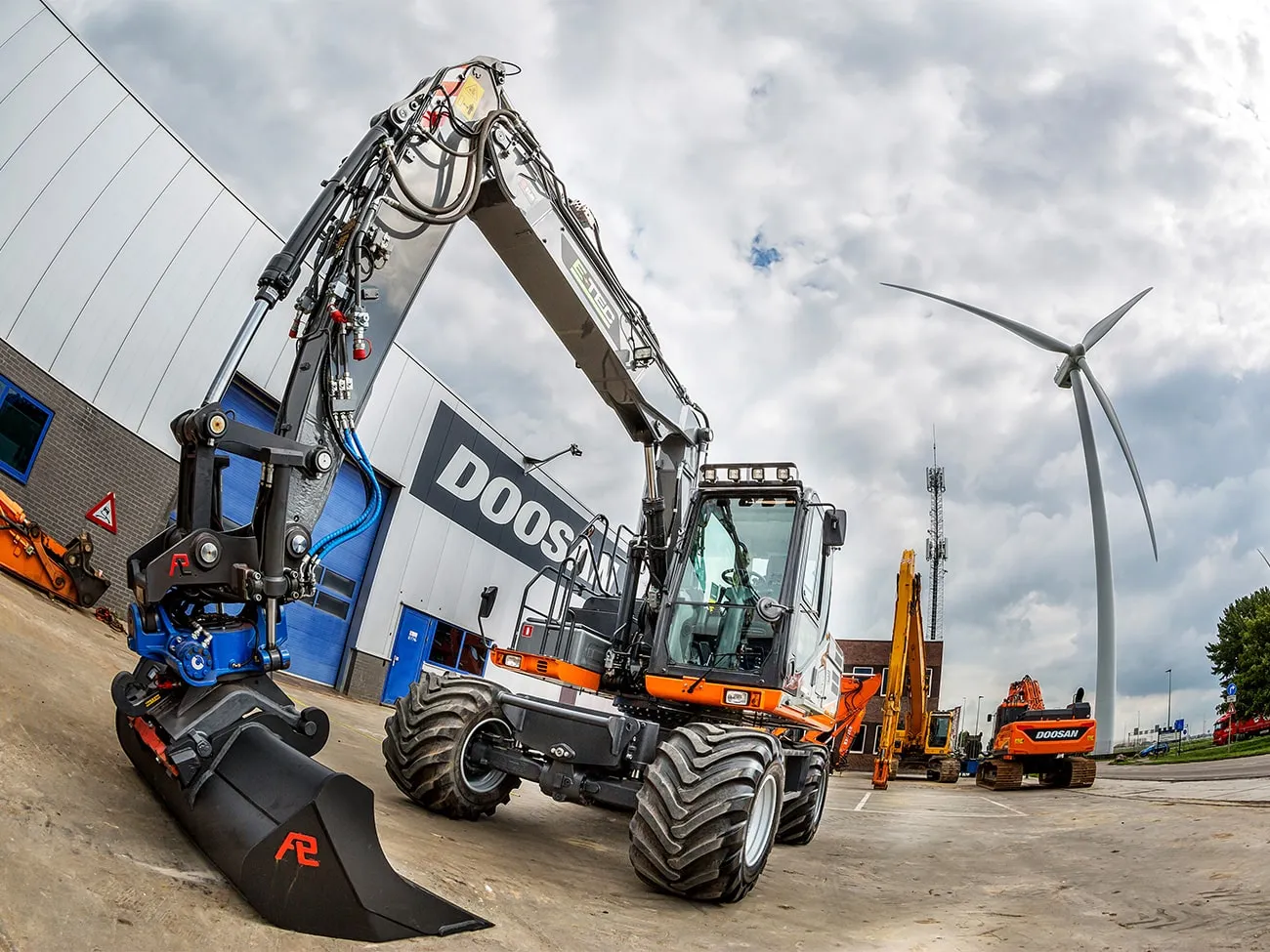
“We’re not there yet: zero emissions. But we are already aiming for the maximum possible reduction in CO2 emissions on site.” Speaking are Stefan van der Voorn, contract manager at Rijkswaterstaat, and Sjoerd Gijezen, CSR manager for construction consortium De Groene Boog (which comprises Besix, Dura Vermeer, Van Oord, TBI (Mobilis, Croonwolter&dros), Rebel and John Laing).
De Groene Boog is delivering the A16 Rotterdam project on behalf of Rijkswaterstaat. The A16 Rotterdam will be an 11-kilometre, energy-neutral motorway between the A16/A20 at Terbregseplein and the A13 near Rotterdam The Hague Airport. The new link will help traffic on the A13, A20 and surrounding local roads flow more smoothly, and will contribute to improved mobility, accessibility and quality of life in the region. Together, they explain the green measures implemented on the project.
Measures at a glance
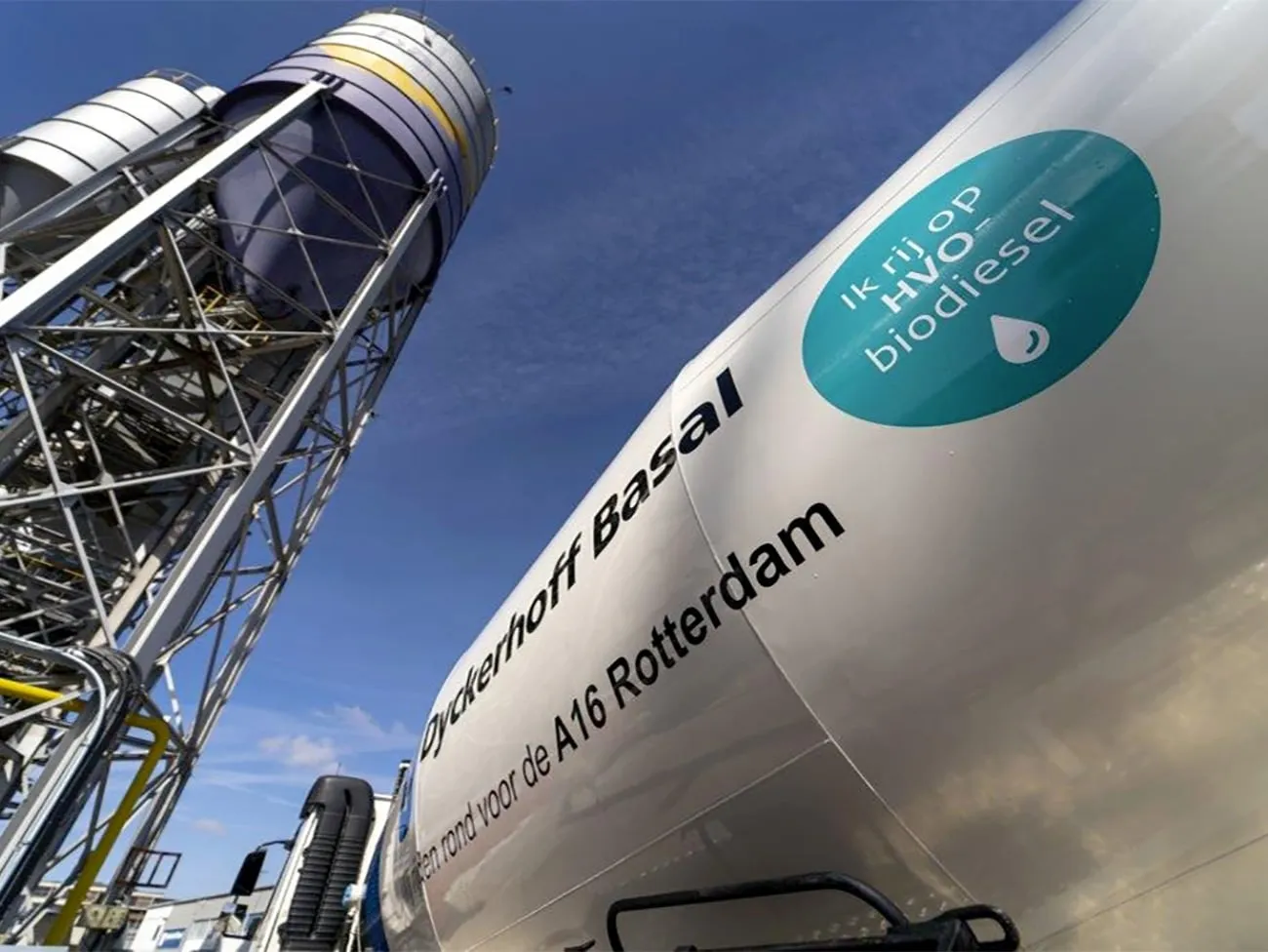
Gijezen takes us through all the methods being used to drastically reduce CO2 emissions: “One measure with a huge impact is the large-scale use of HVO fuel, which delivers a 90% reduction in CO2 emissions compared with diesel.
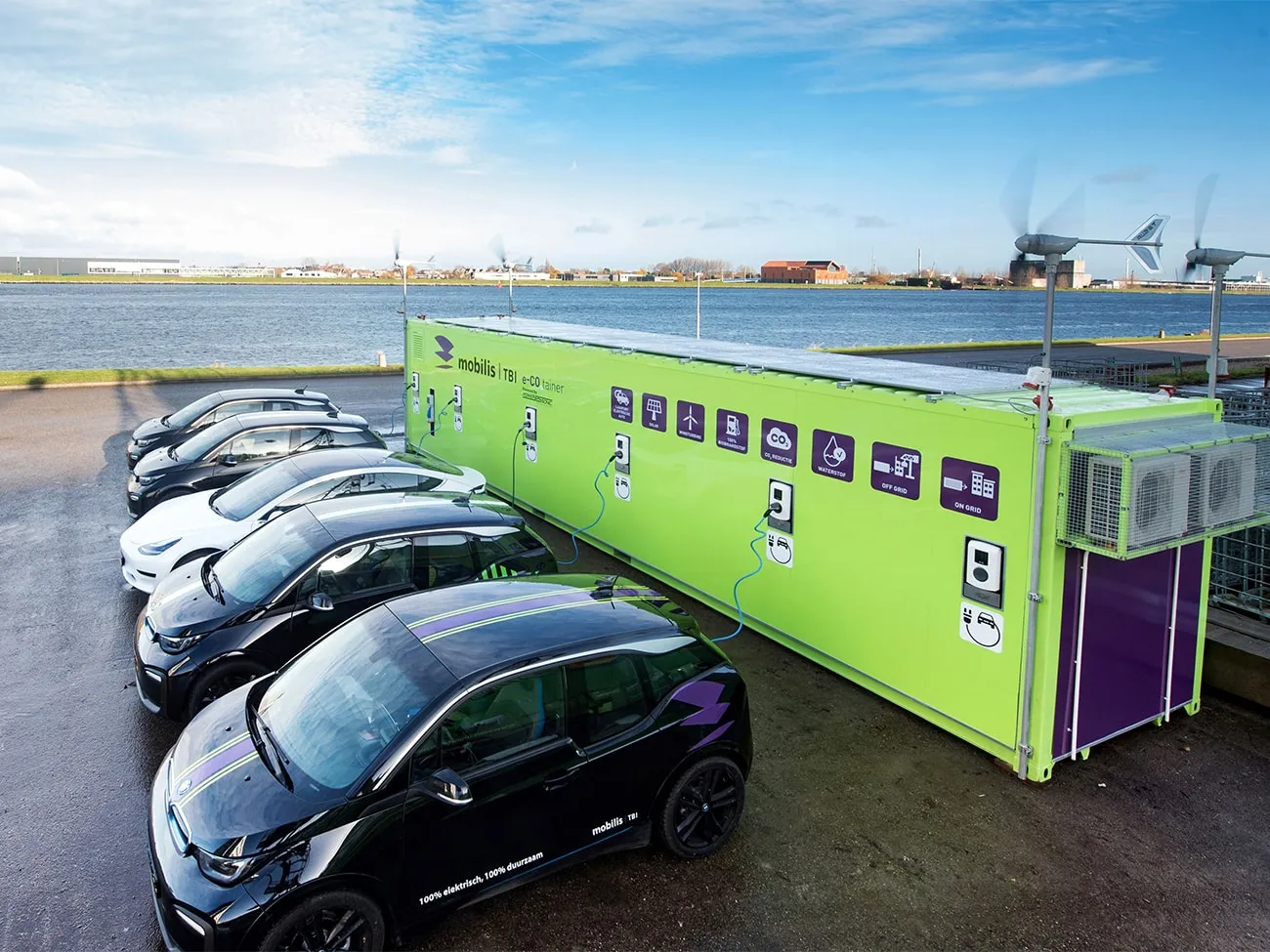
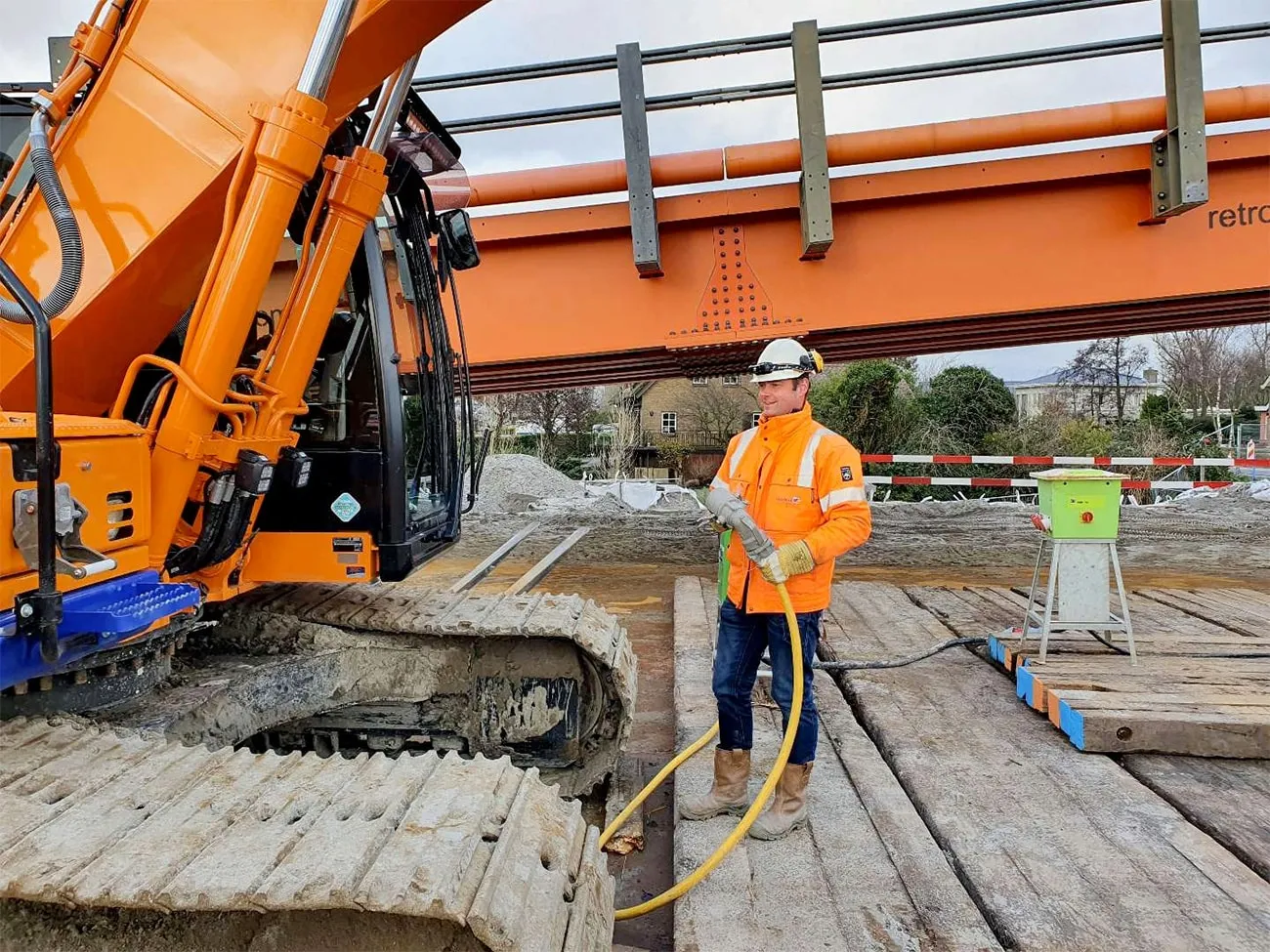
HVO is produced from waste materials from the food industry and can replace diesel on a one-to-one basis. We have also brought several heavy (>20 tonnes) electric excavators into service. In addition, we use the e-CO2tainer, a hybrid generator that combines batteries with a clean generator. It can be used as a standalone unit or connected to the grid to handle peaks in demand. The e-CO2tainer only switches on when needed, unlike traditional diesel generators, which run all day.”
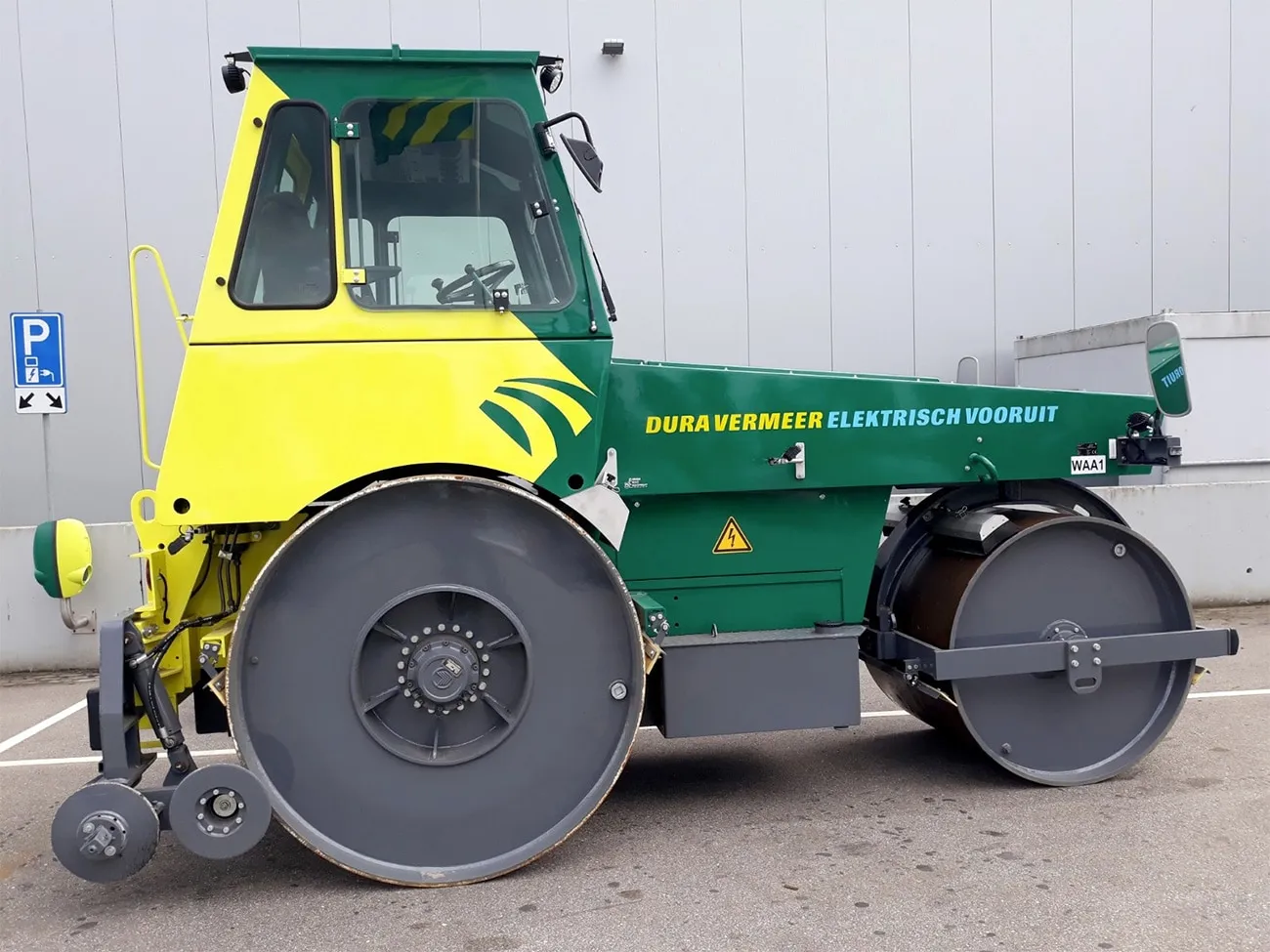
‘Electrification is great, but how do you get power to the site?’
That was the underlying question that needed answering. Van der Voorn: “Do you bring the charger to the machine, or the battery to the charger?” Gijezen: “A tracked electric excavator isn’t designed to cover long distances efficiently. Ideally, you bring the battery pack to the machine.” Van der Voorn adds that the best way of working was assessed for each location. “It’s a constant process of exploration, and we accept that these kinds of challenges call for pioneering work.” Gijezen: “Many factors affect the answer in each situation. What can the grid supply, what capacity do the construction work and electric equipment require, and where is it physically possible and worthwhile to install charging facilities?”
The perfect learning ground
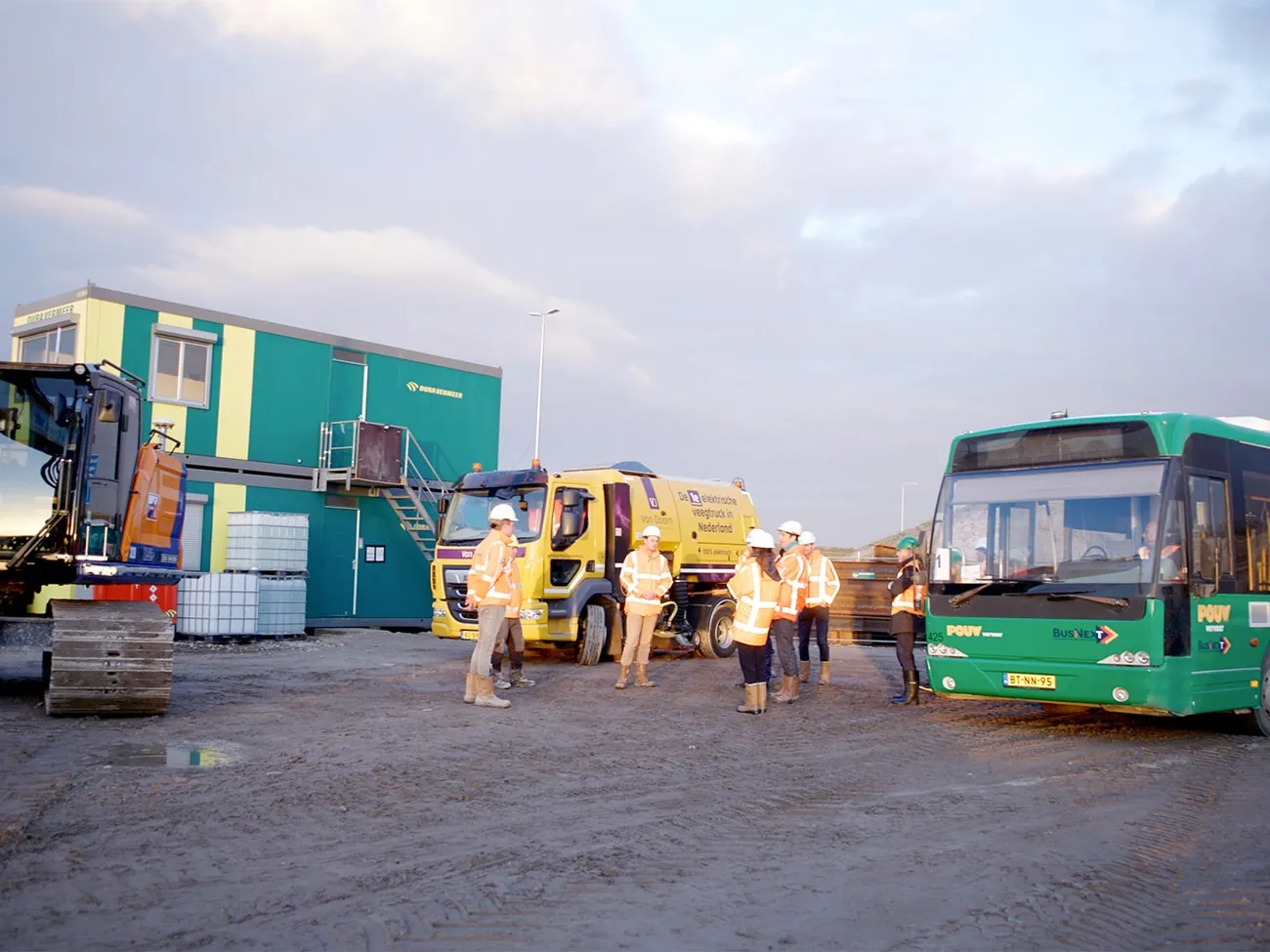
There is a lot of talk in the infrastructure sector about alternative, clean energy sources to get equipment moving and keep it running. This is the first project of this scale to examine so intensively how to achieve the maximum CO2 reduction, by scrutinising everything related to power. Gijezen sees De Groene Boog’s approach as the perfect learning ground for future projects. “We’re creating a blueprint that everyone can benefit from. Why reinvent the wheel every time?” One notable detail is that this green approach was not part of the tender. Van der Voorn: “De Groene Boog set up its own themed workshops in response to Rijkswaterstaat’s overarching ambition to be emissions-free by 2030. In those workshops, we worked with suppliers of green technology to identify how this project could already help realise Rijkswaterstaat’s green ambitions.”
More than fulfilling a promise
De Groene Boog wants to go a step further than simply meeting its tender commitments: “We want to excel. De Groene Boog has set up an EMVU fund (the U stands for implementation) and offered it to Rijkswaterstaat. It provides €3 million to fund the sustainable measures, a good incentive. But how do you go about putting them into practice? The themed workshops generated a wealth of insights and ideas. Discussions with Rijkswaterstaat, experts and external parties produced so many practical measures that €3 million was not enough. We therefore applied to the ministry for additional support. Several proposals, including one for electric equipment, were submitted in June 2020. We were awarded the funding in September 2020.” Van der Voorn notes that the thorough preparation meant they were able to submit a very concrete proposal. “We applied for a second round in 2021, and that funding was also approved.”
A learning process with its share of sacrifices
Gijezen sees keeping everyone ‘on board’ as a challenge. “We’re running into a few hurdles because we’re breaking new ground. But you learn most from the things that don’t go smoothly. The trick is to keep everyone motivated so that, together, we reach the finish line every time.” According to Van der Voorn, as well as a willingness to learn, this also requires considerable effort. “We’re sticking our necks out on several fronts,” he says. “We need the right mindset, and everyone needs to be pulling in the same direction. That calls for De Groene Boog to be persuasive and for Rijkswaterstaat to take decisive action. We know that what’s being done now will act as a catalyst for future projects. That’s why it’s so important that everyone gets involved and stays involved. We’re showing that it can be done, and that has a flywheel effect. Realistically, we still have a long way to go, but we’re paving the way for ‘continuous improvement’.”
Gijezen concludes: “We can see where we need to go. To achieve a goal in the longer term, the frontrunners need to be encouraged now. We need to realise that what we’re doing today will be a requirement in 2030. And that’s not far away.”
Have a business enquiry for BESIX Nederland BV? Get in touch
Who worked on A16 Rotterdam
- consortiumDe Groene BoogMentioned in Project A16 Rotterdam to become the first energy-neutral motorway, including a 2.2 km-long tunnel
- lifting and transport frame
 SarensMentioned in Reinforced underwater concrete floor for Rottemerentunnel
- supplier of reinforcing steelBCSMentioned in Reinforced underwater concrete floor for Rottemerentunnel
- construction consortiumDura VermeerIn this story
- construction consortiumTBIIn this story
- construction consortiumRebelIn this story
- construction consortiumJohn LaingIn this story
- construction consortiumDe Groene Boog construction consortiumMentioned in GPS-guided precision excavation in the wet cofferdam
- excavation workAannemingsbedrijf Verboon Maasland BVMentioned in GPS-guided precision excavation in the wet cofferdam
- foundation contractor consortium
 Voorbij FunderingstechniekMentioned in The foundation joint venture is De Groene Boog’s ‘invisible friend’
- foundation contractor consortiumFranki GrondtechniekenMentioned in The foundation joint venture is De Groene Boog’s ‘invisible friend’
- UO calculationsM.U.C.Mentioned in The foundation joint venture is De Groene Boog’s ‘invisible friend’
- UO calculationsHektecMentioned in The foundation joint venture is De Groene Boog’s ‘invisible friend’
- reinforcementDiepstraten WapeningstaalMentioned in Specialist reinforcement solutions for 33 structures
- ready-mixed concreteDyckerhoff BasalMentioned in Specially formulated mixes significantly reduce carbon footprint
- waterproofingBrabotechMentioned in Watertight construction with flexible joint seals and a liquid-tight layer
- construction consortiumDe Groene Boog construction consortiumMentioned in Watertight construction with flexible joint seals and a liquid-tight layer
- prefabricatedCiviele technieken deBoerMentioned in A leading name in heavy lifting and specialist transport
- Bonneveld Gewapende Grondconstructies
 BonneveldMentioned in One of the largest EPS structures ever built




Keep following this
Get an email when a new story is published. No account needed.
- ProjectA16 Rotterdam
- ThemeLower emissions and more reuse
- SubjectRoad construction
- CompanyBESIX Nederland BV
- CompanyVan Oord
- CompanyDura Vermeer
- CompanyTBI
- CompanyRebel







