Electrification starts with power on site
Text Armand Landman Beeld Martens en Van Oord
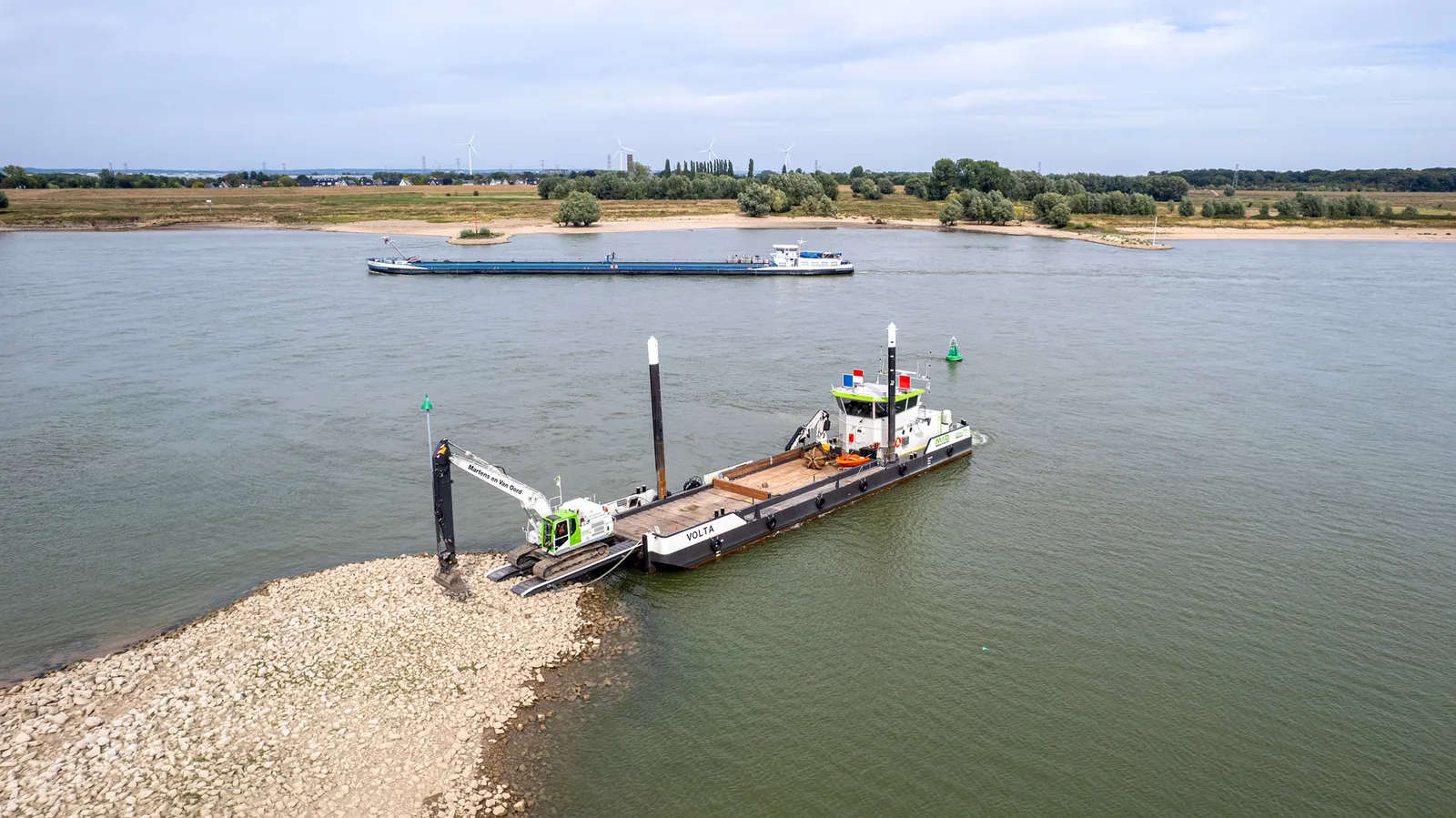
It is not just the truck that needs to be electric, but the whole chain
Civil engineering contractor Martens en Van Oord is building an emissions-free earthmoving chain with electric Volvo trucks, battery containers and smart logistics. The approach will soon be put to the test on a large scale in Vlissingen.
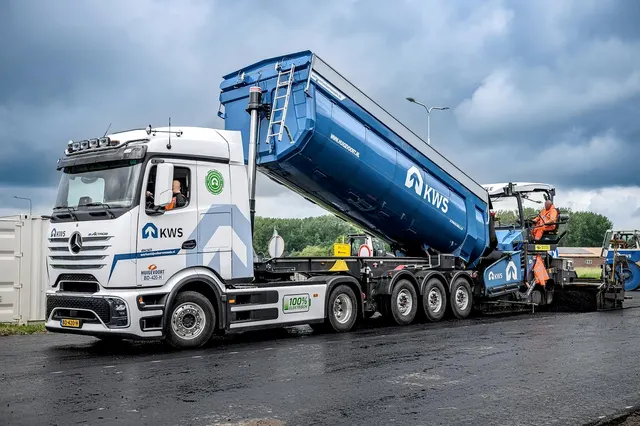
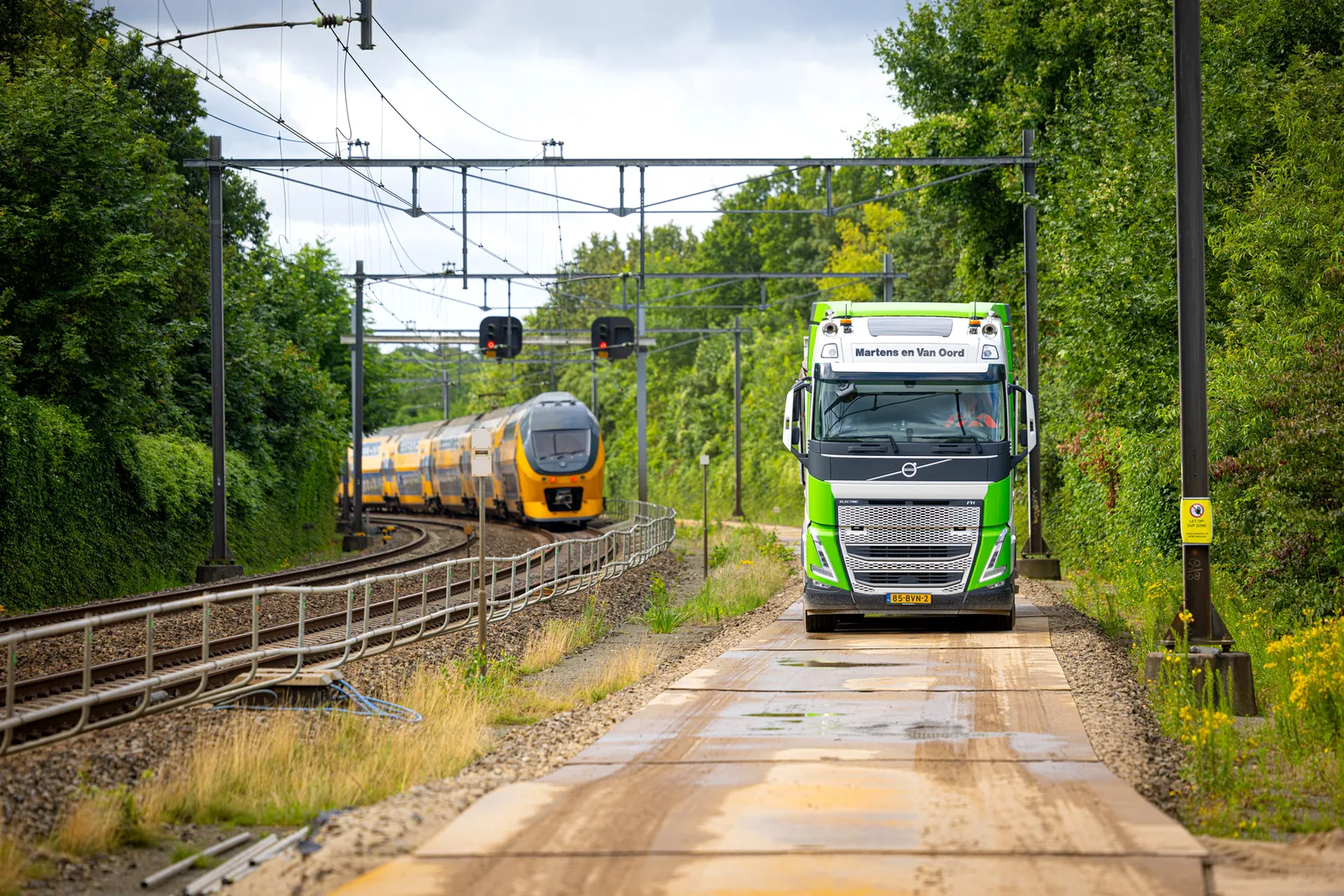
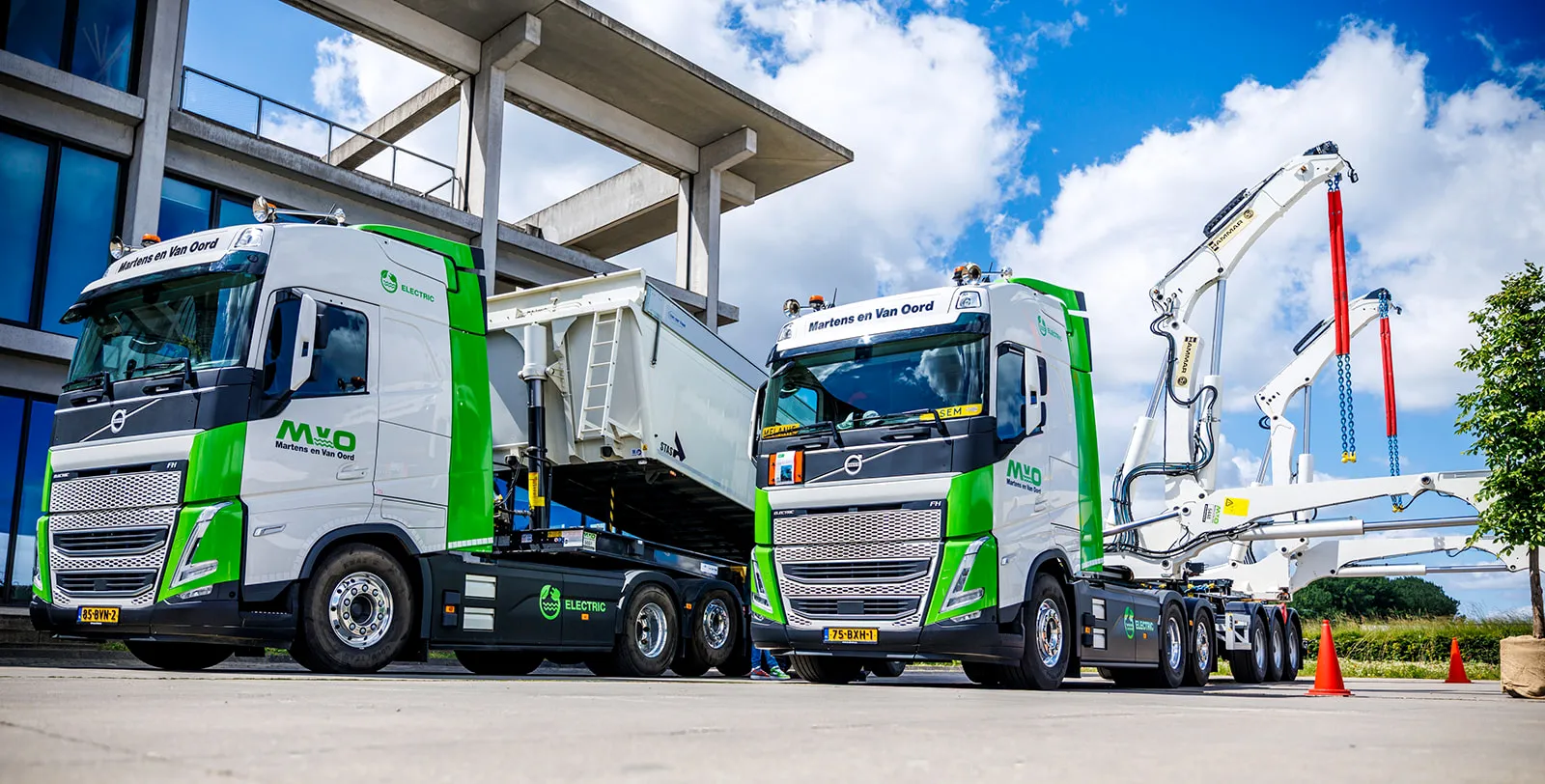
An electric Volvo FH Electric travelling to Sweden to collect a special sideloader sounds like a nice stunt, but for Martens en Van Oord it mainly illustrates how widely electrification now affects the way the business operates. The trailer is needed to transport heavy battery containers to projects. The tractor unit collecting it is electric itself.
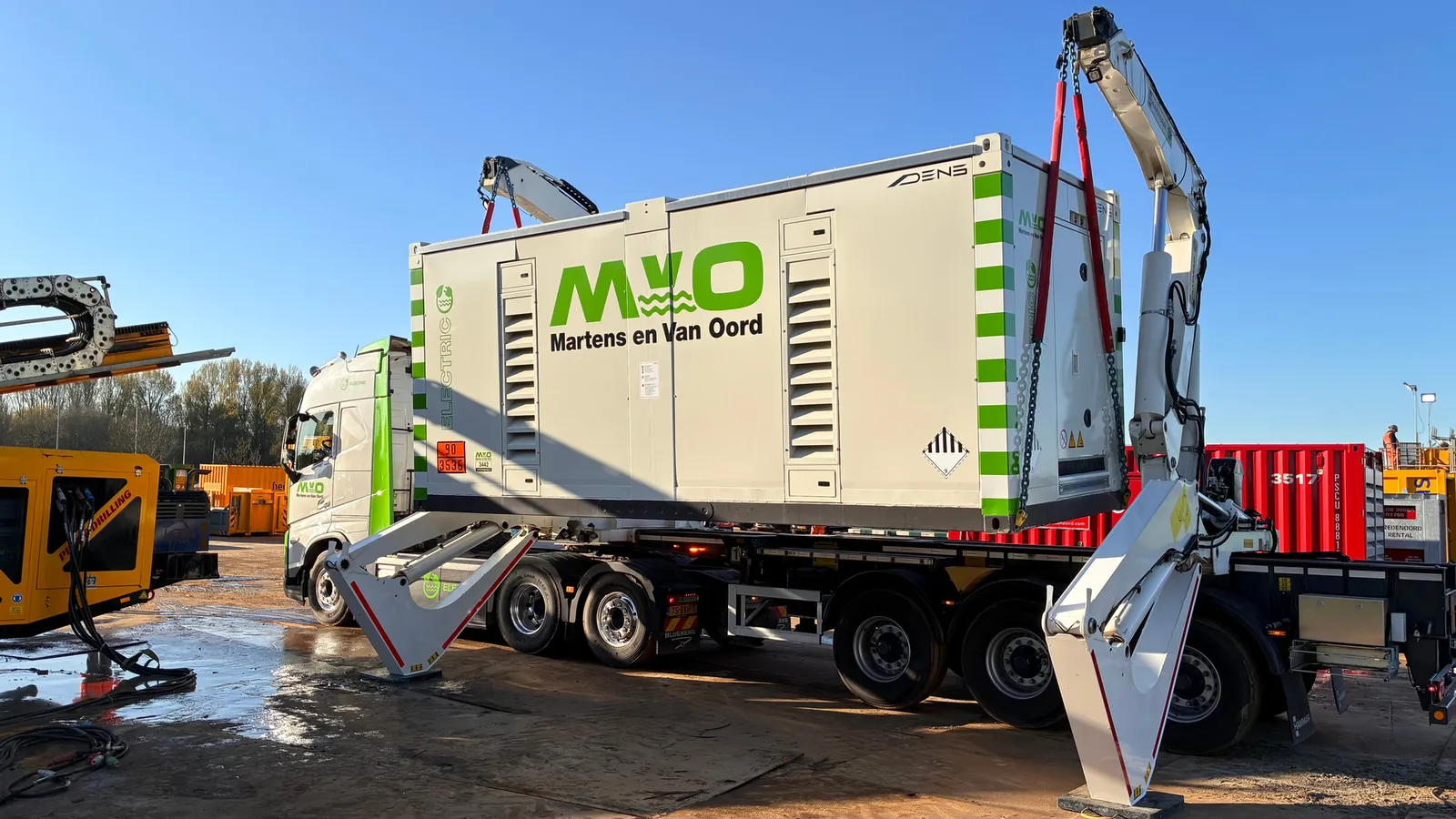
“A container like that weighs 25 tonnes,” says director Tobias van Oord. “We bought a sideloader for that. When we bought it in Sweden, we thought: it would be quite a stunt to go and collect it electrically too.” Two colleagues made the trip. Tobias says it took some preparation, particularly in Germany, to find suitable charging locations, but they succeeded.
The story says a lot about how Martens en Van Oord views emissions-free working. It is not one electric machine or truck that makes the difference, but the entire chain around it: from transport and earthmoving to the power supply on site.
Not a burden, but a conscious choice
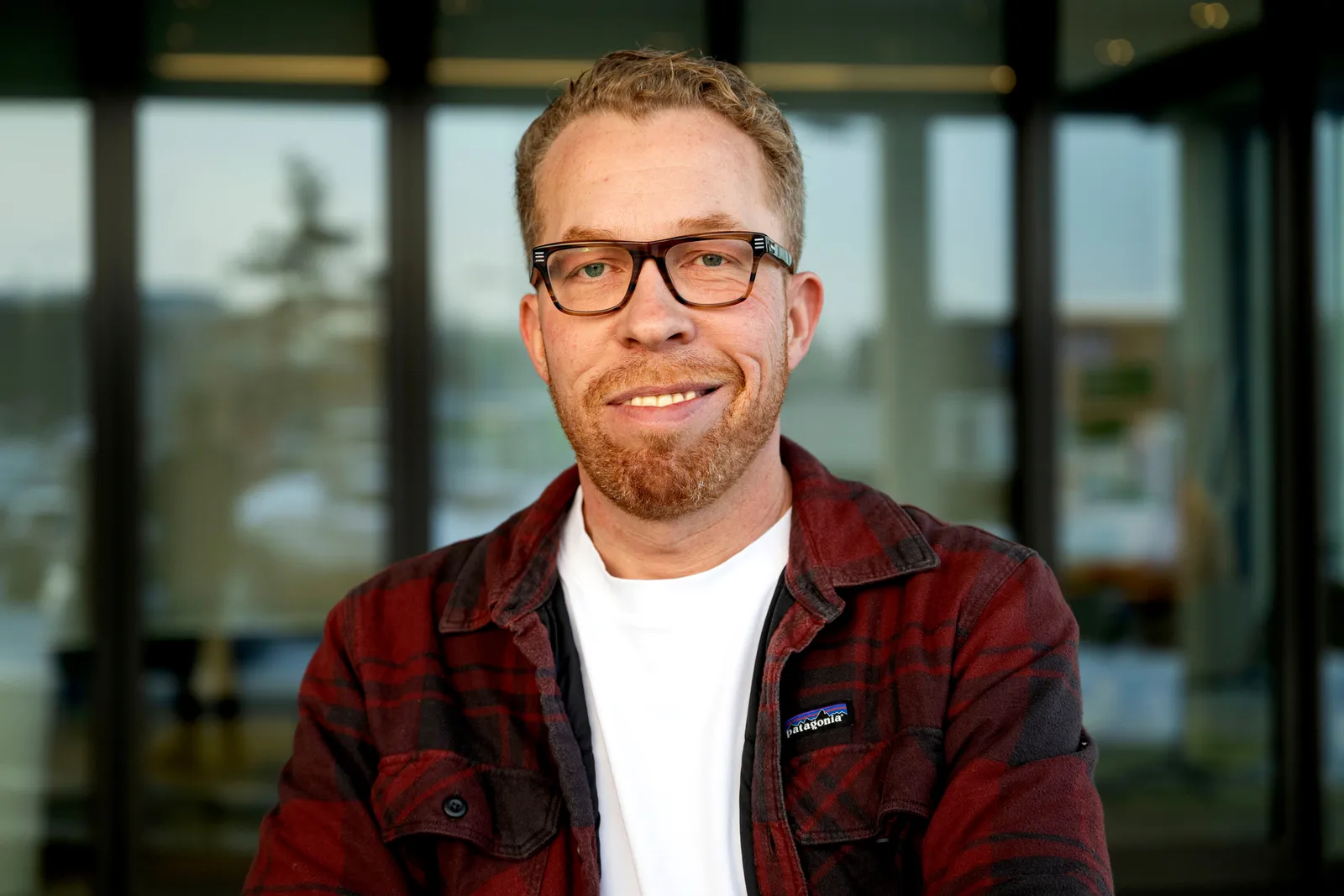
According to Tobias, there are two reasons for electrifying. “We want to make our own business more sustainable, and our clients are asking us to do so.” The pressure from clients is real, but the family business does not see it as a burden. “It’s not that we’re being forced by our clients and see it as a punishment. We think it’s important and exciting too.”
It is all about continuity. Martens en Van Oord is a second-generation family business. “We use a lot of energy in the form of diesel, particularly to power our machines and carry out our work. We are keen to make that much more sustainable. We want to hand the business on to the next generation, as a company that is ready for the future.”
That ambition also aligns with the reality of tendering. Tobias sees Rijkswaterstaat putting increasing emphasis on emissions-free working. “They are now requiring at least 30 per cent of the work to be carried out emissions-free. What they are effectively saying is that 70 per cent of the work can still be done with diesel equipment, but 30 per cent has to be electric.”
Volvo leads the way
For Martens en Van Oord, electrifying its heavy equipment fleet logically began with the trucks. “Among heavier equipment, trucks were the first to be readily available as factory-built electric models,” says Tobias. “There are earthmoving machines for sale now too, but what you still often see is an existing diesel machine being converted to electric.”
Volvo’s early entry into the electric truck market was an important reason for MvO to choose the brand. “Because Volvo was the first to bring electric trucks to market, we made the switch to Volvo. It’s worked out really well.”
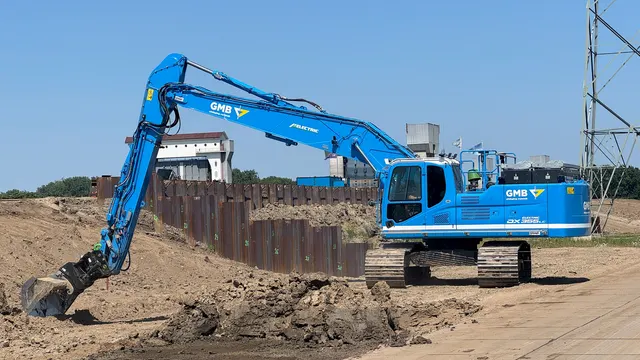
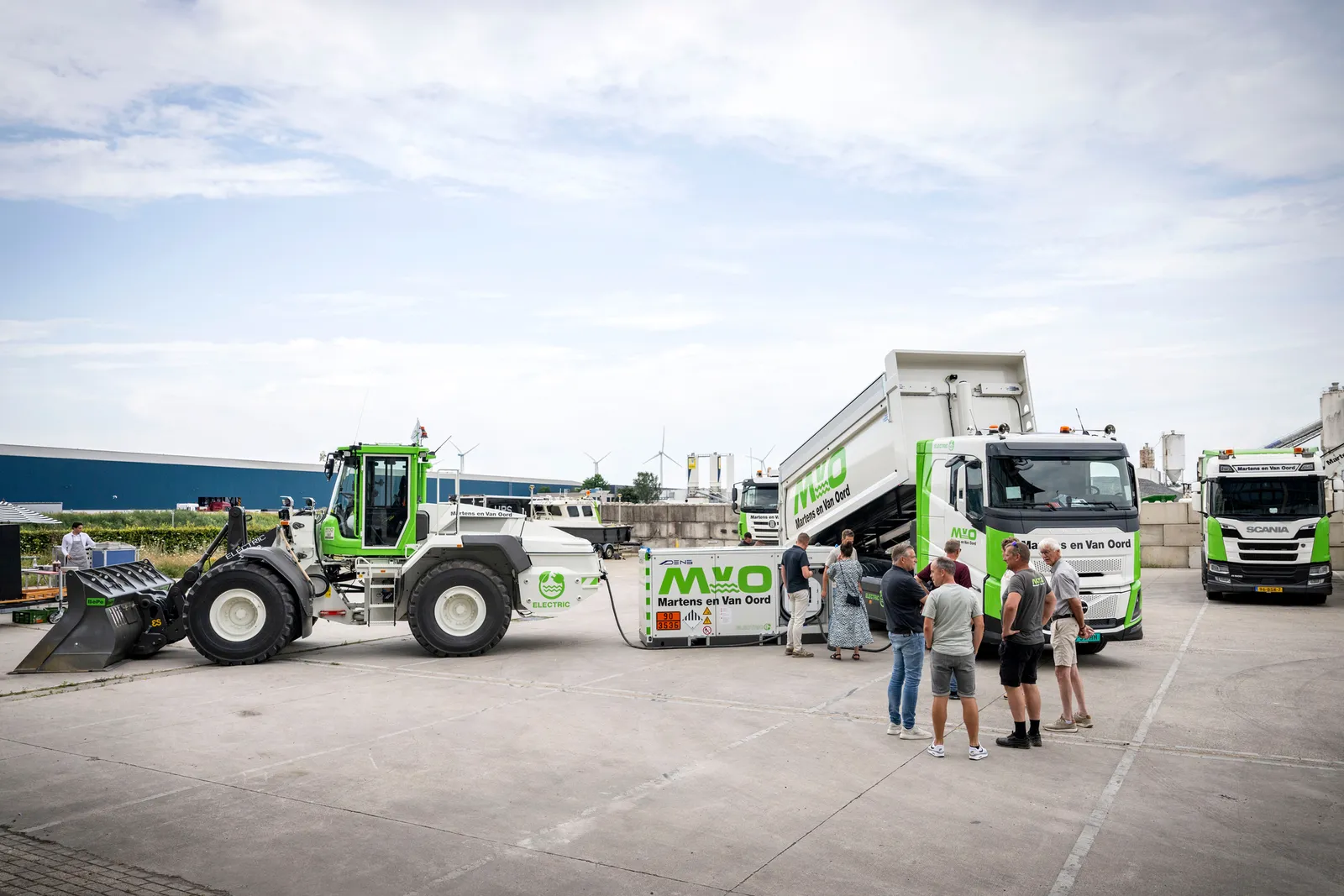
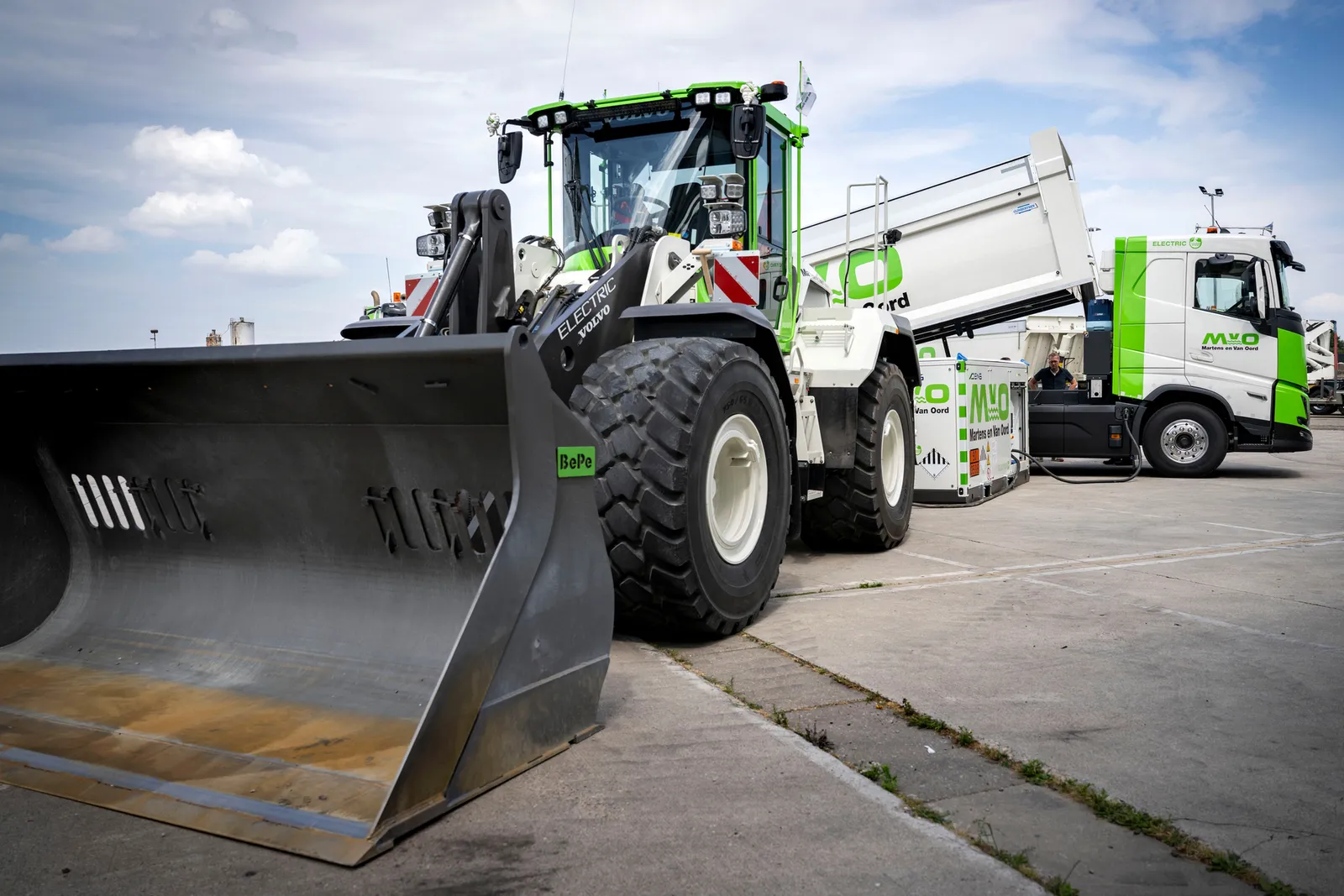
The first order comprised three electric Volvo tractor units. The fleet now includes five Volvo FH Electric tractor units, following the recent purchase of two 8×4 Aeros. Two more long-range tractor units will arrive around the turn of the year, bringing the total to seven. Martens en Van Oord has also invested in electric excavators, electric wheel loaders, battery containers and an electric workboat.
Tobias particularly values Volvo’s company-wide commitment to electrification. On one day, MvO even took delivery of a new Volvo truck and a Volvo wheel loader. “I think that’s really great. Volvo is genuinely committed to sustainability and electrification across the whole company. You really need that, because I don’t think converting machines has a future.”
Power follows the work
The biggest challenge is not the vehicles themselves, but charging. “The power supply is always the biggest challenge.” Whereas diesel could previously be brought to a project site with ease, electric working requires an energy plan to be drawn up early in the preparation phase. “With electric work, you really have to think things through more carefully and get involved earlier. But in the end, it works out pretty well.”
This will be evident on a major project in Vlissingen, where Martens en Van Oord will soon be providing a large amount of electric transport for a major Rijksvastgoedbedrijf construction project. Due to a lack of nitrogen-emission capacity, the work must be carried out emissions-free. The sand will arrive by ship, and its transport and handling, as well as the lighting, must all be electric.
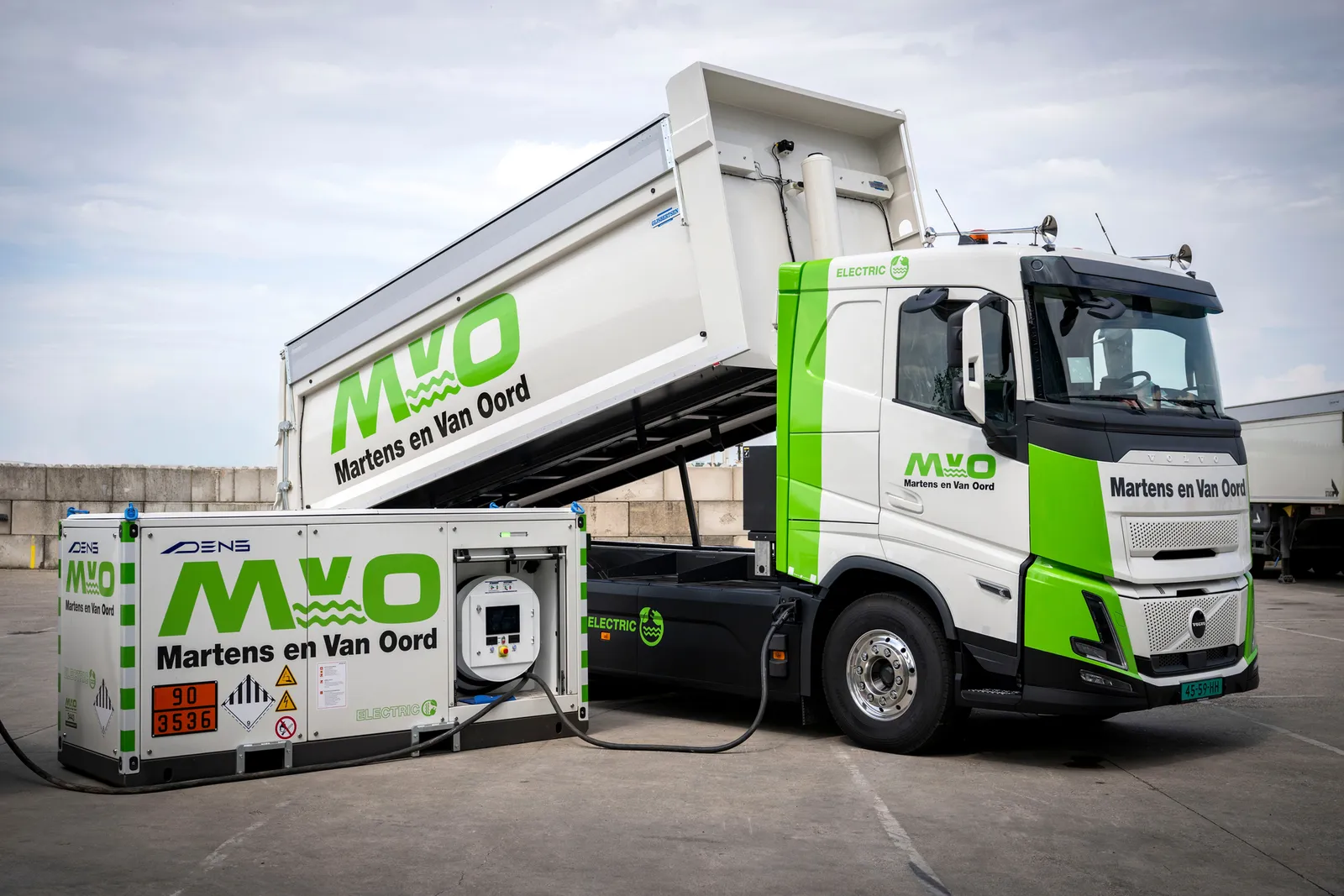
There are no high-capacity charging stations in the area. Martens en Van Oord is therefore placing a large battery container at a local contractor’s site, a few kilometres from the construction site. The contractor has a 140 kW grid connection that is not always fully used. At some times there is little capacity to spare, at others there is a lot. On average, around 100 kW is available. “That still means 2,400 kWh a day left over on that connection. Using load balancing at the main meter, we’ll put every spare kilowatt-hour into the battery.”
The local contractor also has solar panels on the roof, but cannot export the electricity they generate. The battery container offers a practical solution. “Our battery means the solar panels can always generate power. We can take every available kilowatt-hour from the roof and the grid and put it into the battery, until it is full, of course. That will always happen over the weekend when we’re not working.” Trucks can then top up at peak times at around 250 kW.
Alongside the large battery container, two smaller battery units will be used on site to recharge an electric excavator, roller and wheel loader during the day. “It’s quite a lot of logistics,” says Tobias. “It simply takes more time and attention to get everything working properly.”
Learning by doing
The investments were not immediately profitable. When the first electric trucks arrived, there was still limited demand from the market. On days when no client was paying a premium for emissions-free transport, the vehicles were simply used for regular work. Tobias now sees utilisation rising. Martens en Van Oord will be working on the construction of a new baggage basement at Schiphol, a project that will be carried out entirely emissions-free.
“You have to take that step,” he says. “I’m very glad we took it early, because you learn so much along the way. That’s really the most important thing.” That knowledge is not just about the truck or battery container, but about the combination of planning, charging, logistics, collaboration with local partners and deployment on site.
Attitudes within the organisation are changing too. Tobias says some drivers and machine operators were initially resistant. Now even drivers with 25 to 30 years’ experience are happy to drive electric. “I’m seeing more and more enthusiasm for it, because everyone is saying: this is simply part of the job, this is the future. It’s no longer a hobby, it’s simply a new reality.”
Faster charging, better planning
The next step is the Megawatt Charging System, or MCS. The two new Volvo tractor units due for delivery at the end of this year or early next year will be the first in the fleet to have an MCS connection. Martens en Van Oord will also soon install MCS chargers at its site in Oosterhout.
With the current CCS standard, charging takes too long under intensive use, especially with heavy loads and high mileages. “You end up with half an hour to an hour less driving time per working day than with diesel trucks. That still makes it expensive.”
Tobias says MCS should change that. “With the new MCS standard, you’ll charge about three times as fast as you do now. Then, during a 45-minute driver break, you can charge the truck enough to keep it going for the rest of the day.”
For Martens en Van Oord, electrification is no longer a technical trial, but a new way of working. The electric truck is visible, but the real transformation lies in everything behind it: power on site, mobile storage, smart logistics and employees willing to do things differently.
Question about this story? Ask your question
Companies in this story

Keep following this
Get an email when a new story is published. No account needed.
- ThemeLower emissions and more reuse
- SubjectMachines & equipment
- CompanyVan Oord