Asphalt maintenance strategy: the benefits come before the damage
Text and images POSSEHL Spezialbau
Smart maintenance cuts costs, CO2 emissions and impact on the surrounding area
Many road surfaces are only treated once damage becomes visible. But it is what you cannot yet see on the surface that determines how quickly a road deteriorates and what it will ultimately cost. Waiting until asphalt is ‘worn out’ inevitably leads to the most expensive and environmentally damaging solution: replacement. The real benefits lie in extending the road’s service life by carrying out the right maintenance at the right time. This keeps roads in good condition for longer, at lower cost, with less CO₂ emissions and less impact on the surrounding area.
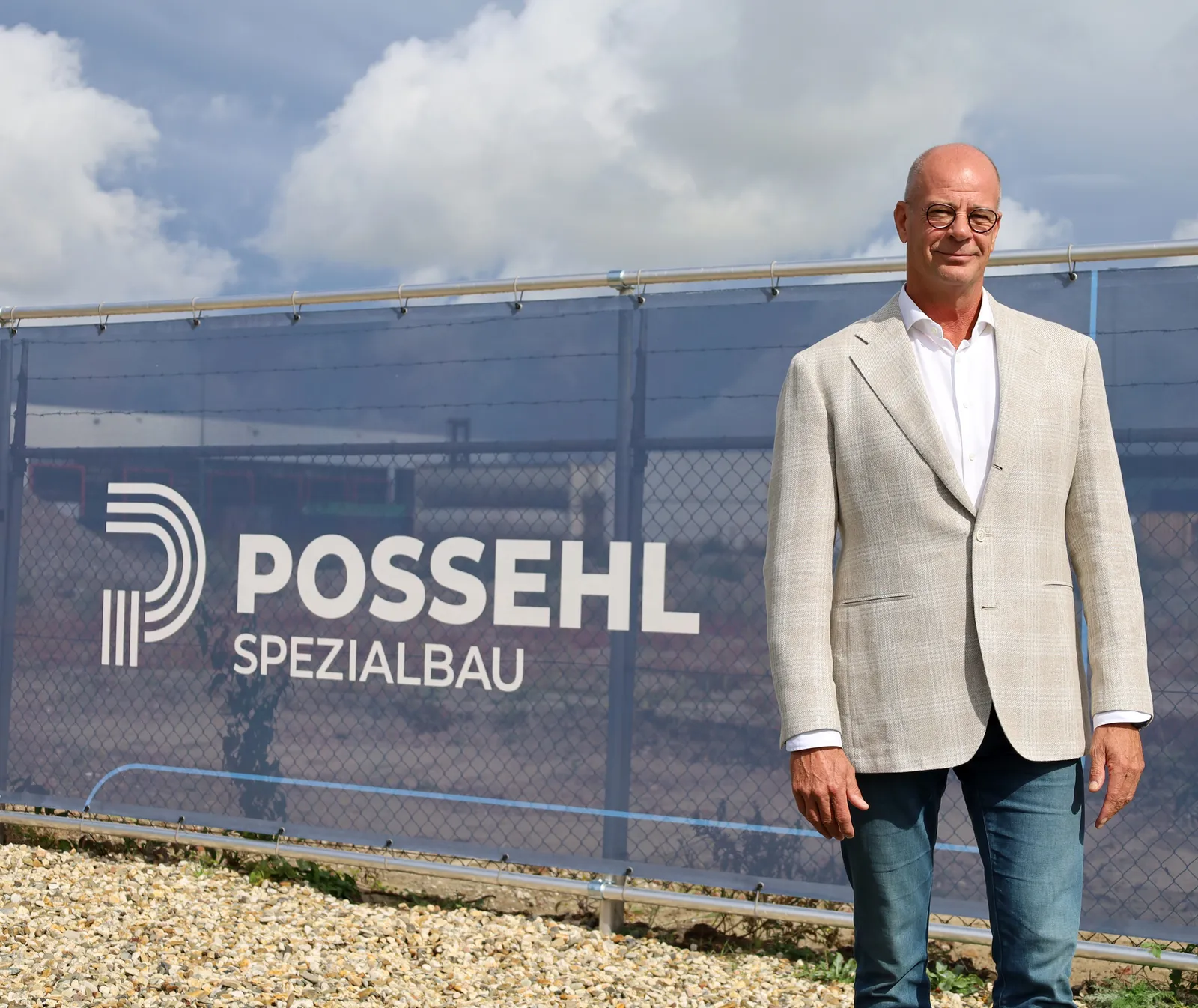
An asphalt surface course typically lasts around twenty years. With a well-planned maintenance strategy, its service life can be extended to thirty to forty years, and sometimes even longer. Traffic plays an important role. “One pass by a lorry puts the same load on the road as around 14,000 passenger cars,” says Erik de Leeuw, director at POSSEHL Spezialbau. “Oil, fuel, animal carcasses, aphids, pollution, rain and even Saharan sand also attack the bitumen. As a result, the asphalt gradually loses its flexibility.”
Deterioration starts before it becomes visible
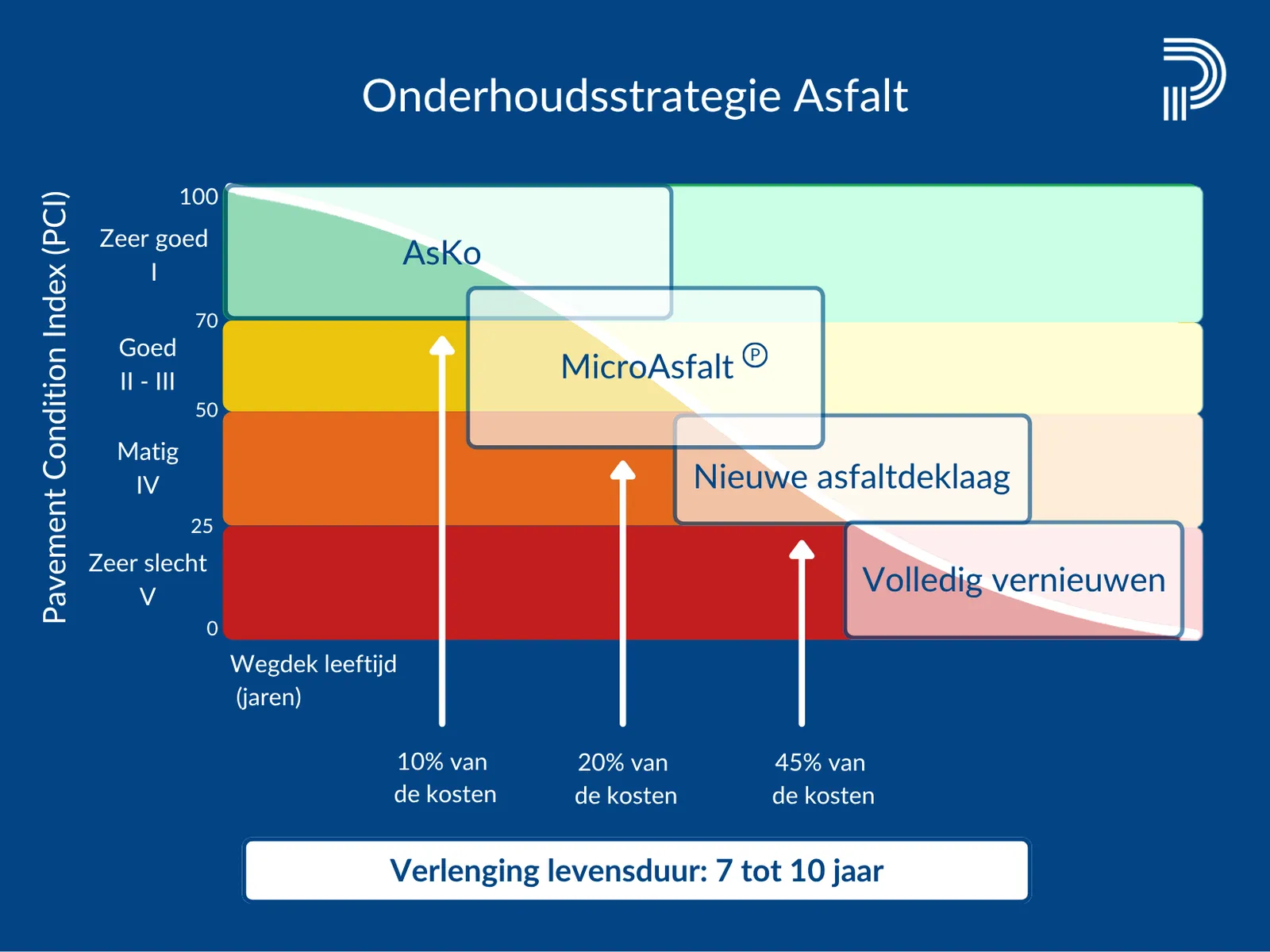
The first signs of ageing occur in the bitumen, long before any damage becomes visible. Yet maintenance is often postponed because the road surface still looks sound. Rejuvenating agents can slow this process by restoring flexibility to the bitumen. “Ideally, this should be done three to four years after laying,” says Erik. “A product such as AsKo (LVOv) can extend the service life by seven to eight years, and the treatment can be repeated later.” This keeps the asphalt in good condition for longer.
From ravelling to intervention
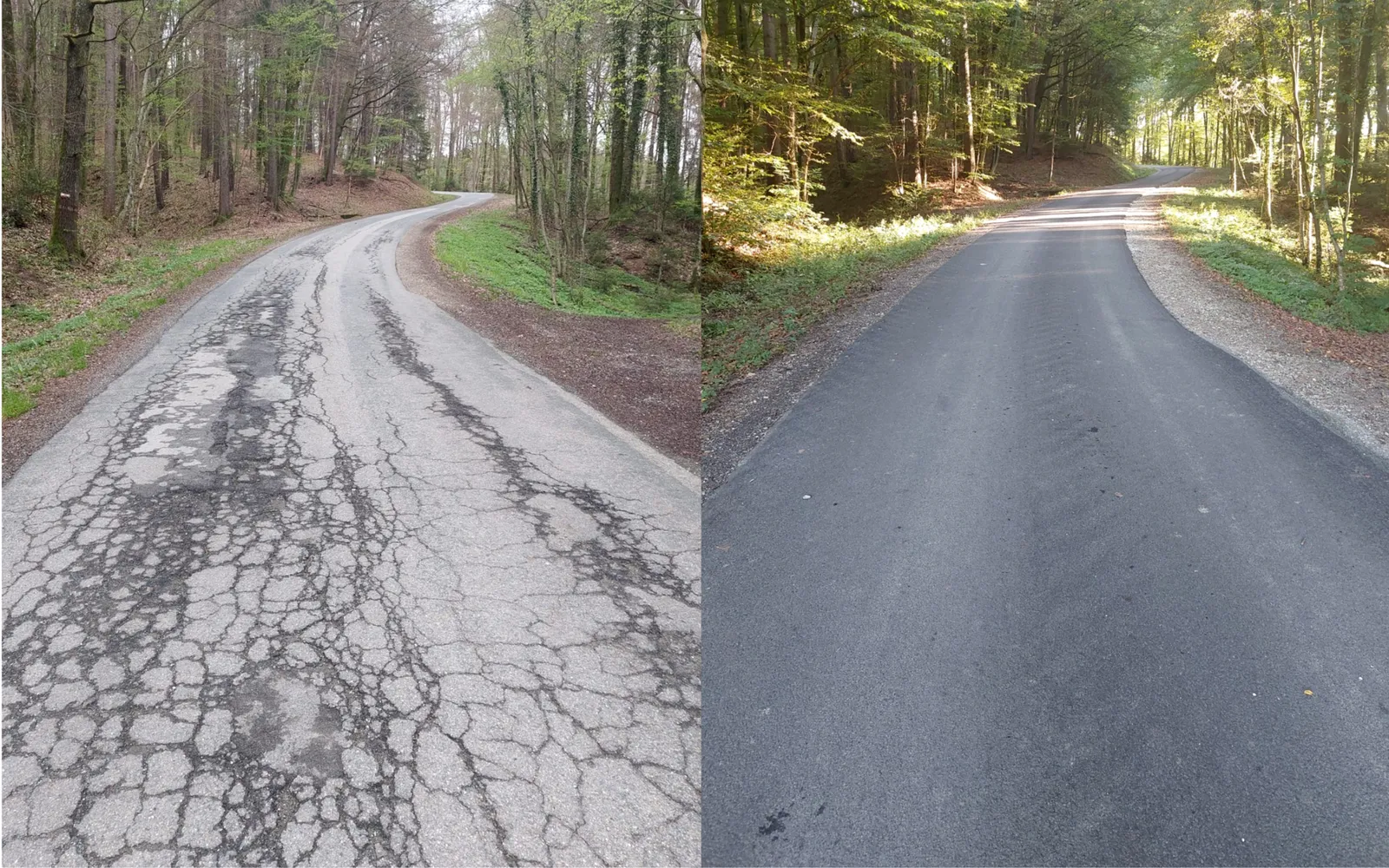
Once cracks appear, water and de-icing salt penetrate deeper into the asphalt. Freeze-thaw cycles cause the damage to spread and lead to ravelling. At this stage, rejuvenation alone is often no longer enough. The traditional approach is then to mill off the surface and lay new hot-mix asphalt: effective, but costly, energy-intensive and disruptive to the surrounding area.
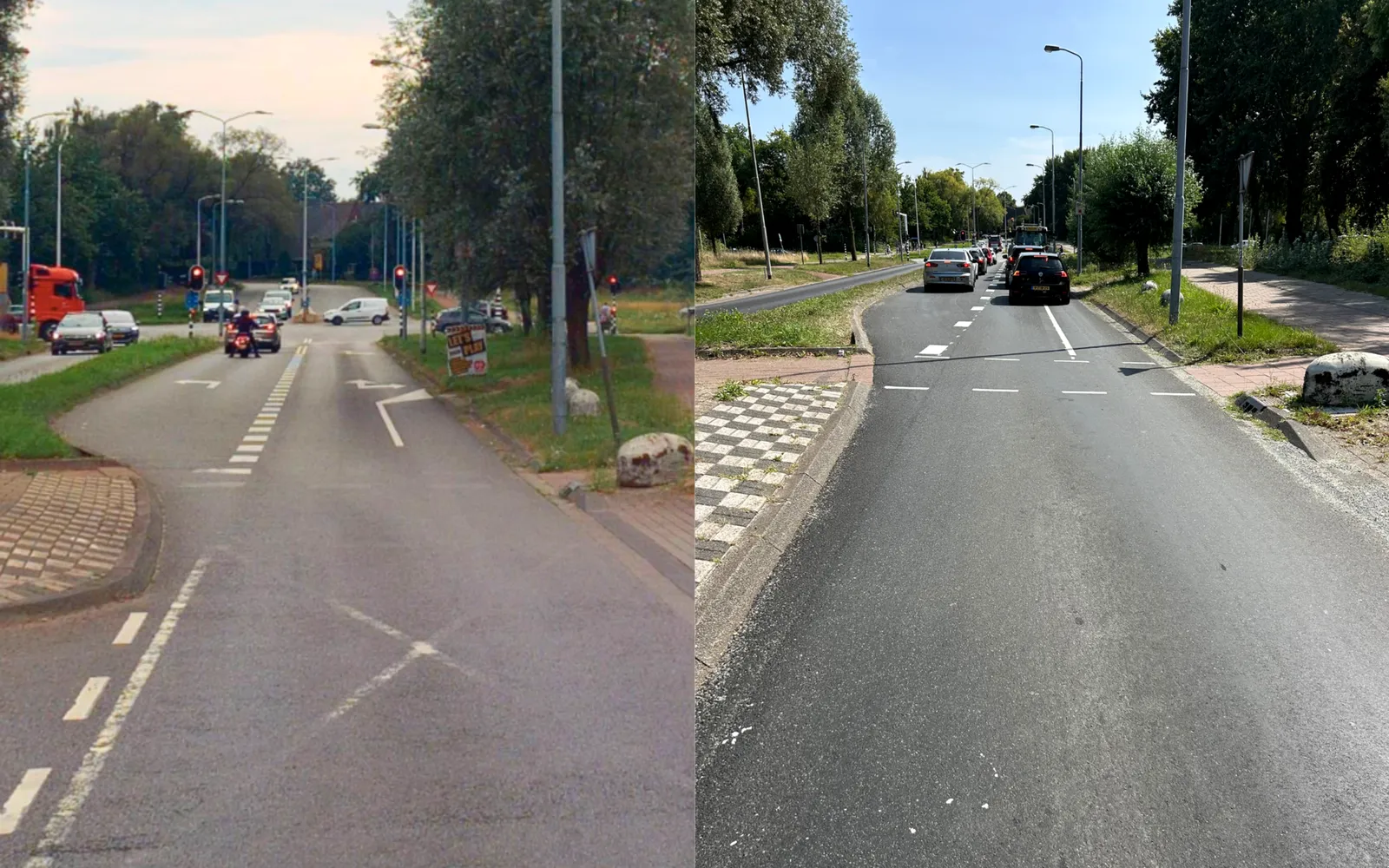
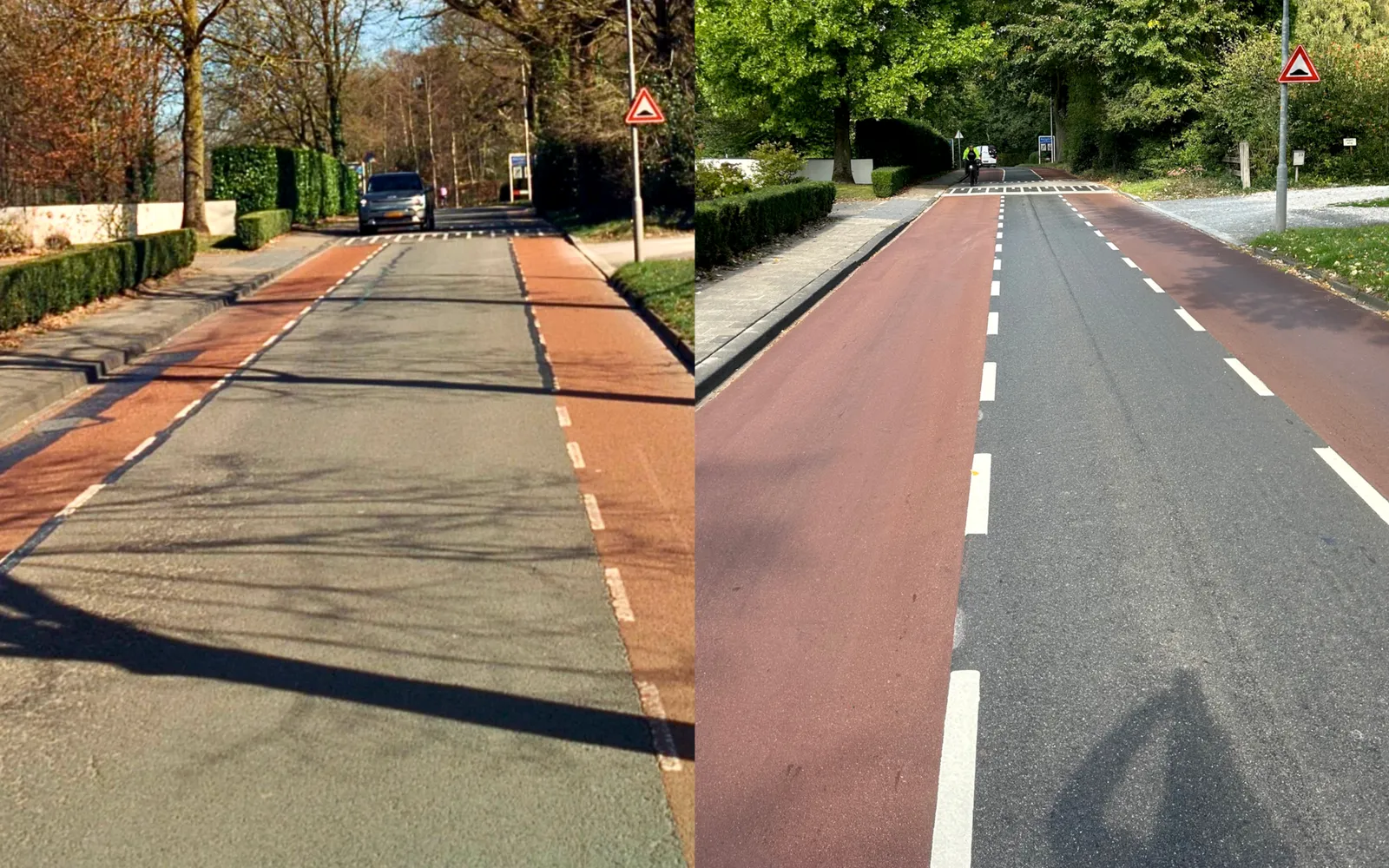
A good alternative at this stage is MicroAsfalt, which involves applying two thin layers of emulsion asphalt concrete. The first layer levels irregularities and cracks; the second protects the asphalt and seals the surface. Cold application and rapid execution also mean a considerably smaller impact on the environment and traffic than conventional replacement.
Maintenance as a strategy, not a one-off intervention
The benefits lie not in a single measure, but in using the right combination at the right time. As the illustration shows, phased maintenance can create a completely different service-life strategy:
- early rejuvenation;
- use of MicroAsfalt when the first signs of damage appear;
- more substantial measures only at a later stage.
This keeps the road surface in good condition for longer and postpones replacement.
This brings immediate benefits:
- lower costs (a fraction of the cost of full replacement);
- less traffic disruption thanks to short execution times;
- significant CO2 reductions, by limiting milling, asphalt production and transport.
The greatest environmental benefit comes from avoiding replacement. By keeping asphalt in service for longer, the most energy-intensive stages in its life cycle are avoided.
Cost-effective and future-proof
The combination of lower costs and reduced impact makes this approach attractive to many local authorities. Much of the road network dates from the 1960s and 1970s, while traffic loading has increased considerably since then. At the same time, maintenance budgets are under pressure. By prioritising maintenance that extends service life rather than replacing roads reactively, it becomes easier to manage costs, planning and quality. Roads remain safe and reliable for longer, without the need for major reconstruction projects.
“The greatest benefits do not come from replacement, but from preserving what is already there for as long as possible,” Erik concludes. “By intervening at the right time, you can avoid more extensive and costly work. Carry out maintenance at the right time and you can achieve more with lower costs, less CO2 and less impact.”
Een zakelijke vraag aan Possehl Aannemingsmaatschappij B.V.? Get in touch
Companies in this story

Keep following this
Get an email when a new story is published. No account needed.
- ThemeExtending the life of roads and civil engineering structures
- SubjectRoad construction
- CompanyPossehl Aannemingsmaatschappij B.V.