Who will renew the Netherlands?
Text Armand Landman Beeld Rijkswaterstaat, Haitsma Beton, Armand Landman, Adobe Stock
The Netherlands faces an unprecedented volume of infrastructure work in the coming decades. Bridges, locks, tunnels and viaducts built in the 1950s and 1960s are nearing the end of their technical service life. Roads are carrying more and heavier traffic than ever. At the same time, energy networks must be expanded, cities made more climate-resilient, and infrastructure better able to withstand extreme weather and geopolitical threats. Money and technology are no longer the only constraints. An increasingly pressing, much more fundamental question is: who will actually do all this work?
Rijkswaterstaat now describes this as the largest maintenance challenge in its history. Many bridges, tunnels, locks and roads urgently need to be renovated or replaced. Some maintenance has even been deferred in recent years due to a lack of funding and qualified workers.
The backlog is growing beyond the national network, too. TNO estimates that central government, provinces, municipalities and water authorities collectively manage tens of thousands of civil engineering structures. An estimated €260 billion will be needed for maintenance, renovation and replacement up to 2100. According to TNO, meeting this challenge in the current decade alone will require more than doubling delivery capacity. Municipalities also manage around 66,000 bridges. And this is where the problem lies. The volume of work is growing, but technical staff remain scarce.
Plenty of work, not enough skilled workers
In the second quarter of 2026, UWV counted 28,600 vacancies in construction. Civil engineering and infrastructure stand out in particular: nine of the 15 construction occupations facing the greatest labour shortages are directly linked to infrastructure work. These include consultants, structural engineers, work planners, site managers and fitters. One key reason is the low number of people graduating from civil engineering and infrastructure courses, while experienced workers are also retiring.
The picture becomes even clearer in the study ‘Extreme toekomstscenario's arbeidsmarkt’, published earlier this year and conducted by TNO Health & Work on behalf of NGinfra. Alliander, Havenbedrijf Rotterdam, ProRail, Rijkswaterstaat, Schiphol and Vitens work together within NGinfra on long-term infrastructure issues.
The report cites an earlier McKinsey estimate that, if current trends continue, there could be a shortfall of 100,000 to 150,000 technically qualified FTEs in 2030. At the same time, the researchers warn that the labour-market challenge cannot simply be projected into the future in a straight line. Climate change, AI, geopolitics and labour shortages affect both the volume of work and the skills required.
TNO therefore developed four extreme future scenarios. In a green world, demand grows mainly for skills related to the energy and climate transitions. In a world dominated by AI and economic growth, a global race for engineers, AI specialists, cybersecurity experts and other technically qualified professionals takes shape. A geopolitically fragmented world calls for more expertise in security and resilience. Only a combined economic and climate crisis reduces pressure on the labour market overall.
The common thread is that human capital is not just about finding more people. It is equally about reaching different people, retaining knowledge, providing continuous training and making smarter use of scarce expertise.
NextGen Plein: from watching to getting involved
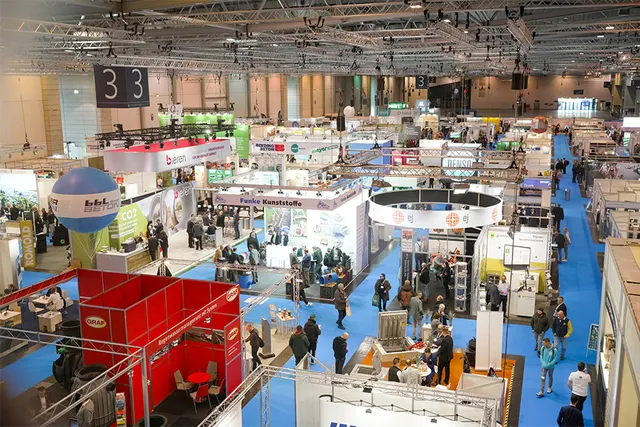
This is precisely where InfraTech 2027 aims to make a difference with its new NextGen Plein. Human capital is one of the exhibition’s six central themes. From 12 to 15 January 2027, the event will once again welcome around 500 exhibitors and more than 23,000 industry professionals to Rotterdam Ahoy.
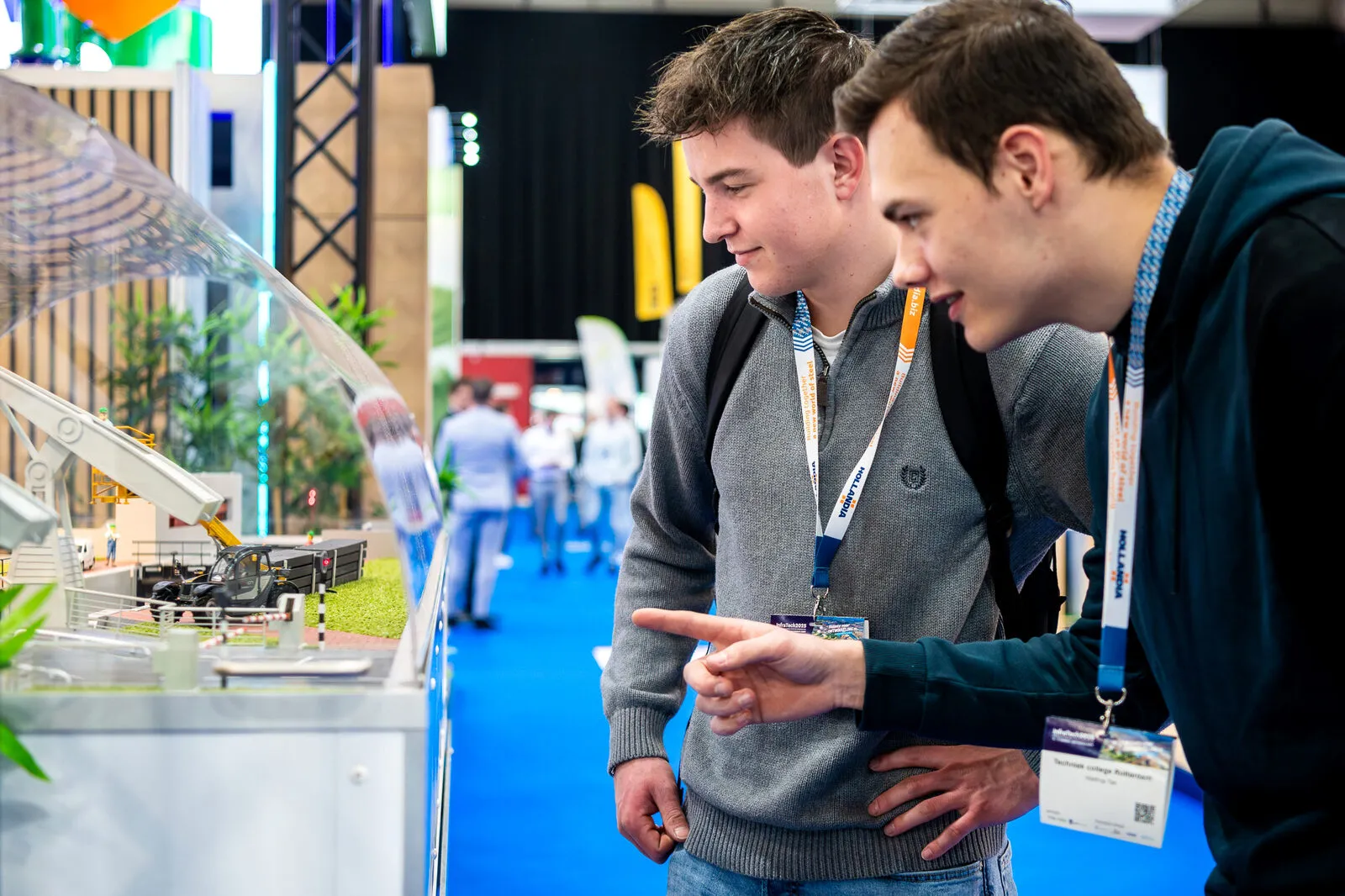
At present, around 10 per cent of InfraTech visitors are under 30, including students and young professionals. NextGen Plein aims to cater more specifically to this group, while also reaching people changing careers. It will be a meeting place where they can discover the variety of the infrastructure sector in an enjoyable, interactive way.
“With NextGen Plein, we want not just to tell young people how great the infrastructure sector is, but above all to let them experience it,” says Annemieke den Otter, Exhibition Manager for InfraTech. “It should be a place where they can drop in, try something, talk to someone and then think: I want to find out more about this.”
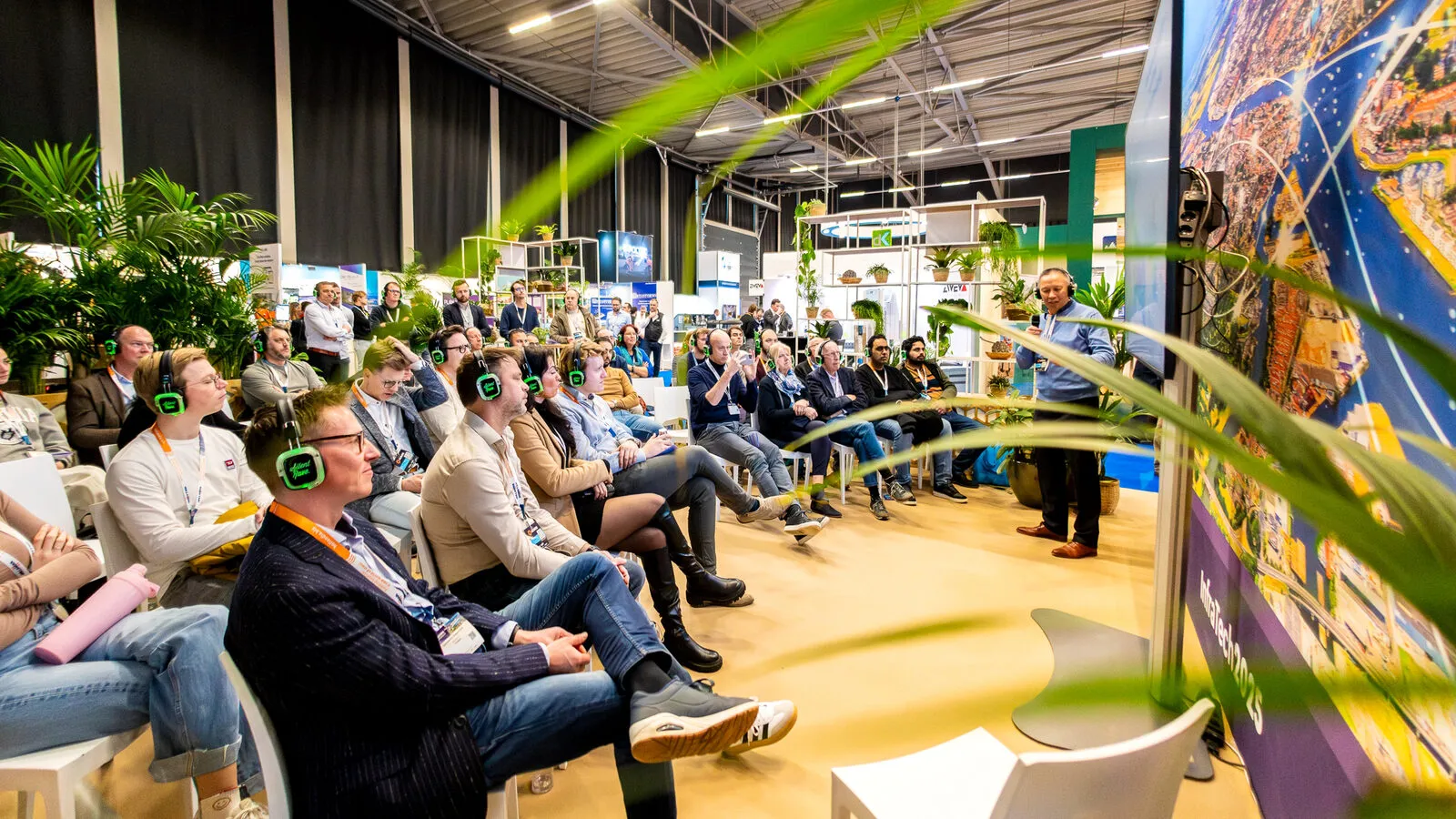
That experience will take a very practical form. Visitors can attend short presentations on human capital and play infrastructure games in a converted site canteen trailer, discovering the many opportunities the sector has to offer. More than 400 Technasium pupils will also take centre stage. During InfraTech, they will work on an Onderzoek & Ontwerpen (O&O) challenge. They will go on a ‘safari’ across the exhibition floor, completing assignments with exhibitors, before presenting their findings on the square. There will be a careers fair, while Techniek Nederland will set up a mobile podcast studio in a Volkswagen van for conversations about human capital. ¢ KIVI is developing sessions for career changers, and Bouwend Nederland will also contribute to the programme. A small theatre space will host presentations and discussions.
NextGen Plein is an initiative by and for the sector. Staff from the participating partners will run the space and work together to inspire young talent and strengthen the link between education and industry.
This focus on career changers is no luxury. Techniek Nederland expects the technology sector to need 121,000 new workers between 2025 and 2029 to cover both growth and staff leaving the workforce. According to its forecast, around 70 per cent of new entrants will need to come from other sectors.
“With NextGen Plein, we want to show the different routes into the sector,” says exhibition manager Den Otter. For some, it starts at a Technasium, for others with an internship, and for others still after ten or twenty years in a completely different profession. The infrastructure sector cannot afford to look for talent only through traditional routes.
Setting up training programmes ourselves
Meanwhile, companies are not waiting for mainstream education to resolve all the shortages. In various places, they are setting up their own trade schools and work-based learning programmes, and forming partnerships with companies that compete with them in the market.
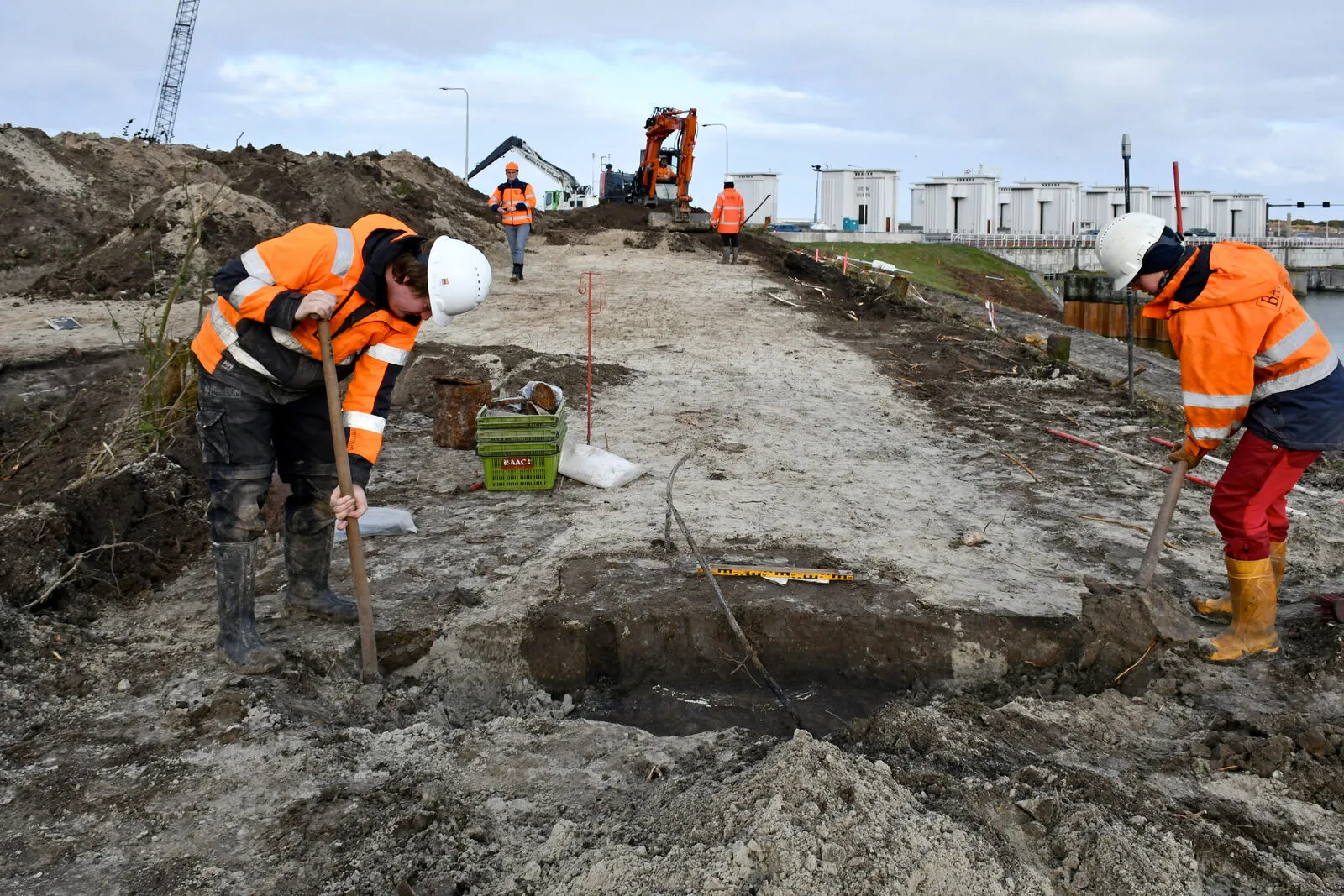
A notable recent example comes from Friesland. Haitsma Beton, an exhibitor at InfraTech 2027, has set up its own BBL training programme for concrete carpenters, together with Noppert Beton, Spaansen and Van der Hauw Betonbouw. The reason is simple but telling: there was no specific MBO course for the concrete trade in the northern Netherlands. According to the initiative’s partners, the nearest option was in Barneveld.
The first five participants started at Haitsma in Kootstertille in September. Every ten weeks, the training moves to a different participating concrete company, giving students practical experience in different areas and specialisms. Betoncoöperatief Noord-Nederland U.A. was even established to formalise the partnership.
What makes this particularly interesting is the joint approach. Companies that normally compete for contracts and staff have agreed not to poach each other’s people and to invest together in recruitment and skills. Haitsma director Wim Comello puts it aptly: “all the companies have their own interests, but ultimately they all benefit from having enough well-trained staff.”
This closely echoes the findings of the NGinfra study. TNO identifies three measures that hold up across almost all the future scenarios examined: investing together in technology, developing joint training and knowledge initiatives, and sharing staff more flexibly through labour pools. According to the researchers, failing to collaborate will only intensify competition for the same scarce workers.
More routes into the same profession
Haitsma is not alone. A few years ago, Mourik launched the Mourik Vakschool to give people without relevant training or work experience, as well as those facing barriers to employment, a way into infrastructure, industry and technology. Participants start with an eight-week Werkfit Bootcamp covering safety, trade skills and workplace skills. Those who complete this stage successfully receive a contract and progress to a tailored work-based learning programme towards roles such as civil engineering worker, concrete repairer, pipefitter or industrial cleaner.
Civilion has also long followed the principle that the sector itself needs to organise training capacity. The training centre was founded by civil engineering contractors and combines work at companies with recognised MBO and HBO programmes. Civilion now reports around 80 affiliated companies and 1,500 graduates. Candidates who already hold another qualification or want to retrain can also fast-track their entry into civil engineering.
Another route is offered by De Nieuwe Ingenieurs, mentioned earlier, which is developing Starterstrajecten with educational institutions and employers in areas including energy and rail. These programmes focus much less on a candidate’s original qualification and more on their potential and the skills they still need to develop. Experienced technicians are also involved: retired tradespeople can pass on their knowledge to career changers as mentors.
At an even broader level, the Aanvalsplan Techniek aims to tackle the labour-market challenge collectively. Bouwend Nederland, Techniek Nederland, FME, Metaalunie and other employers’ organisations are working together with FNV and CNV. Their goal is to fill 60,000 technical vacancies on a lasting basis over ten years. The sectors will invest €50 million a year collectively and are asking the government to double that amount.
A clear shift is taking shape: waiting for ‘the labour market’ to supply new staff is no longer enough. Companies, industry bodies and infrastructure owners are increasingly building their own routes into the sector.

Technology helps, but knowledge remains a human endeavour
Increasing recruitment alone will not solve the equation either. If the renewal programme alone requires a substantial increase in delivery capacity, productivity will also need to rise. Digital twins, AI, prefabrication, sensor technology, robotics and data-driven asset management can help make more effective use of scarce staff.
At the same time, this is changing the profession. The NGinfra study anticipates further automation of routine physical and cognitive tasks, with more complex work remaining. Digital and technical skills will become more important, while continuous development will increasingly be taken for granted.
TNO therefore advocates lifelong development, joint training programmes and, potentially, a shared Infra Academy. In this view, technology and human capital are two sides of the same challenge: working smarter is only possible if people also learn to work with the new technology.
“Human capital is inseparable from digitalisation, sustainability, and replacement and renovation. Ultimately, people are responsible for delivering all these programmes. You can come up with the most impressive innovations, but you still need skilled workers who can design, build, maintain and renew with them,” says Annemieke den Otter.
The people behind the biggest maintenance programme ever
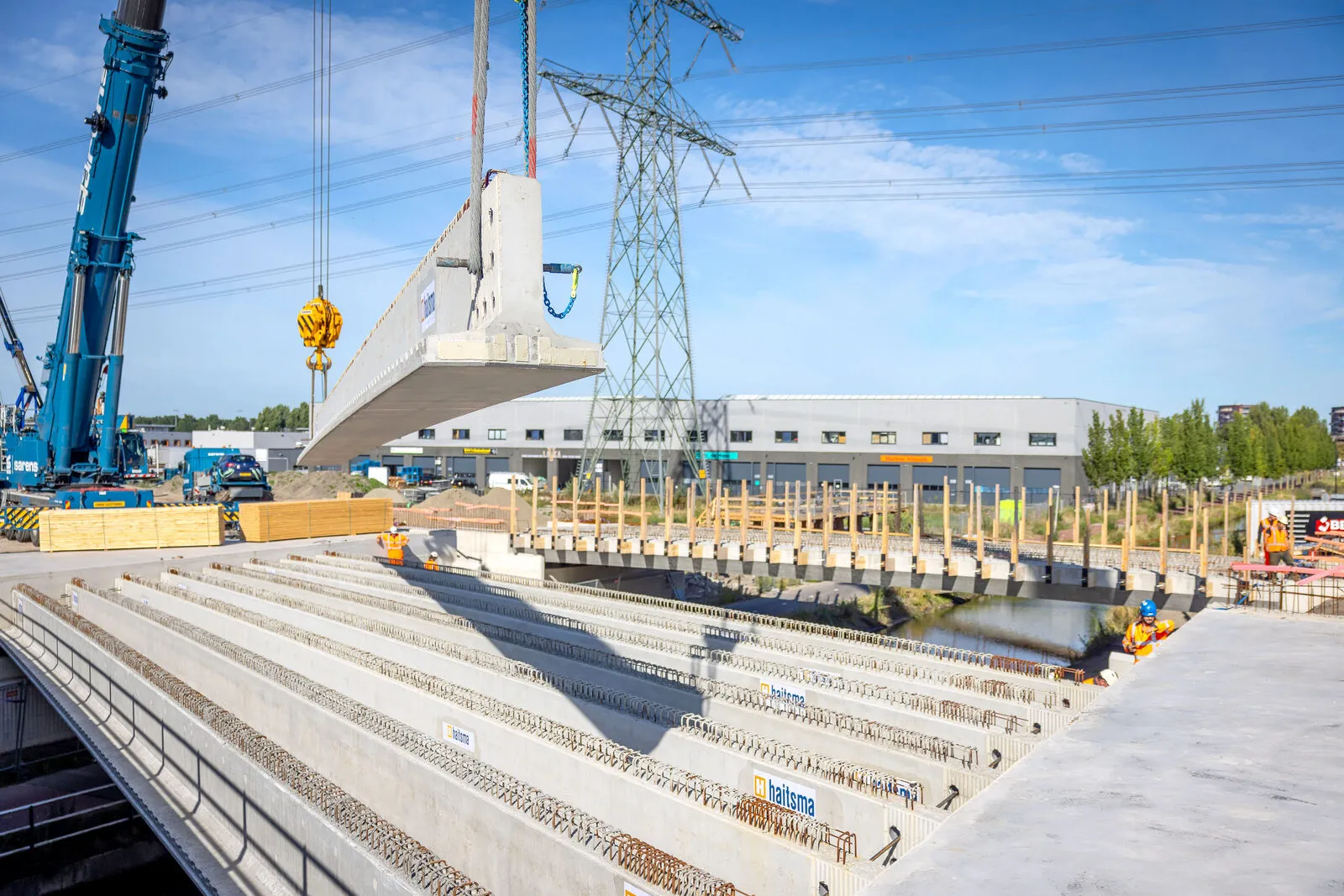
The urgency is growing rapidly. On Prinsjesdag 2026, the government added €5.1 billion to the Mobility Fund through to 2040, including an extra €1.5 billion for major maintenance. Tough choices are still needed, however, and funding is shifting from new construction to renovation and maintenance.
This has made the sector’s challenge remarkably tangible. The Netherlands knows which bridges are ageing. The investment required is becoming increasingly clear. Technology can speed up and automate processes. And there is no shortage of work for the foreseeable future. But the most uncertain factor of production now has a name: people.
That makes human capital at InfraTech no soft HR issue among concrete, asphalt, steel and heavy machinery. It is a prerequisite for almost everything discussed on the exhibition floor. No bridge renovation without structural engineers. No movable structures without technicians. No smart asset management without digital specialists. And no succession without new recruits to carry on the expertise that thousands of experienced employees are set to take out of the sector in the coming years.
The NextGen Plein shows that the solution will not come from any one direction. Students, new entrants, career changers, experienced professionals, employers and training providers will need to connect earlier and more often. Ultimately, the Netherlands’ biggest infrastructure challenge still has to be delivered by people.
Een zakelijke vraag aan InfraTech? Get in touch
Companies in this story
Keep following this
Get an email when a new story is published. No account needed.
- ThemeExtending the life of roads and civil engineering structures
- SubjectInfraTech
- CompanyInfraTech
- CompanyMourik