









Wastewater temporarily diverted at a capacity of 10,000 m3 per hour
Text Heidi Peters Images GW Leidingtechniek BV
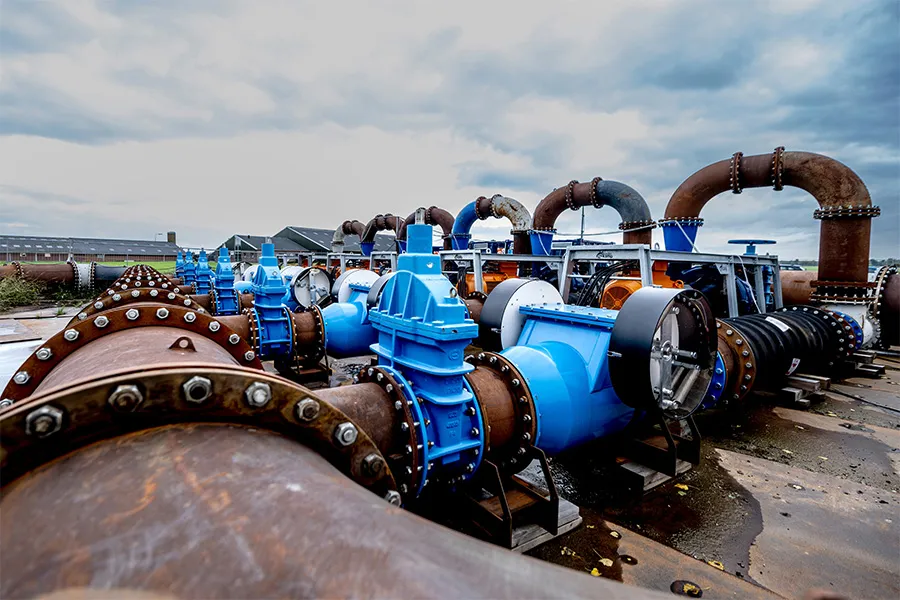
GW Leidingtechniek BV carried out most of the Oss-Oijen sewer renovation, learning lessons throughout. “A unique project in which we had to temporarily divert a flow of 10,000 m3 per hour without interrupting the discharge. We succeeded thanks to our ingenuity and pumping installations.”
In total, 4,300 metres of concrete sewer conduit running from Oss to the wastewater treatment plant was repaired on behalf of Waterschap Aa en Maas. The final phase, around 1,300 metres, was renovated in 2022. H2S corrosion had reduced the wall of the conduit, built around 1960, to just 7 cm thick in some places, from its original 25 cm. The conduit, 2.45 metres wide and 1.65 metres high, with a discharge capacity of 10,000 m3 per hour, was renovated from the inside.
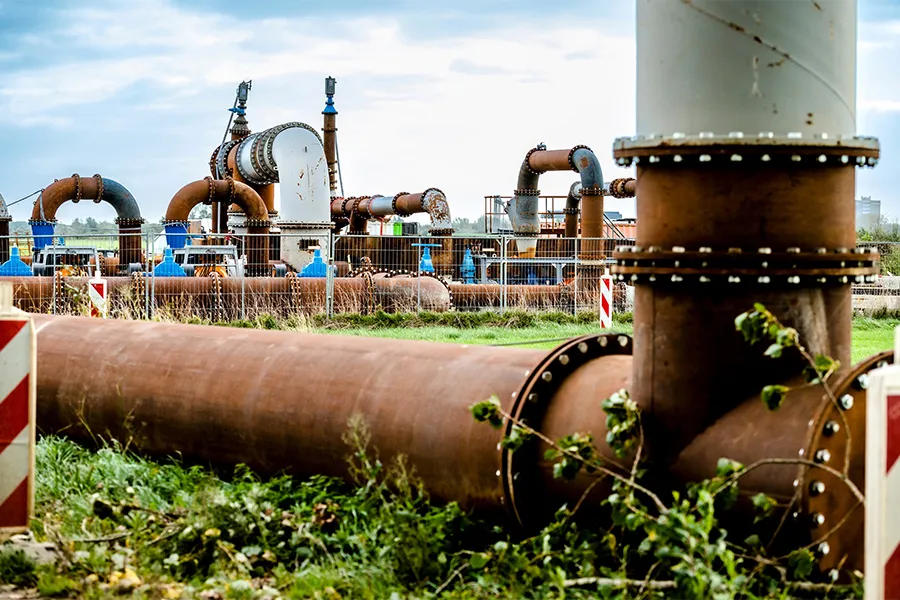
Right through the neighbourhood
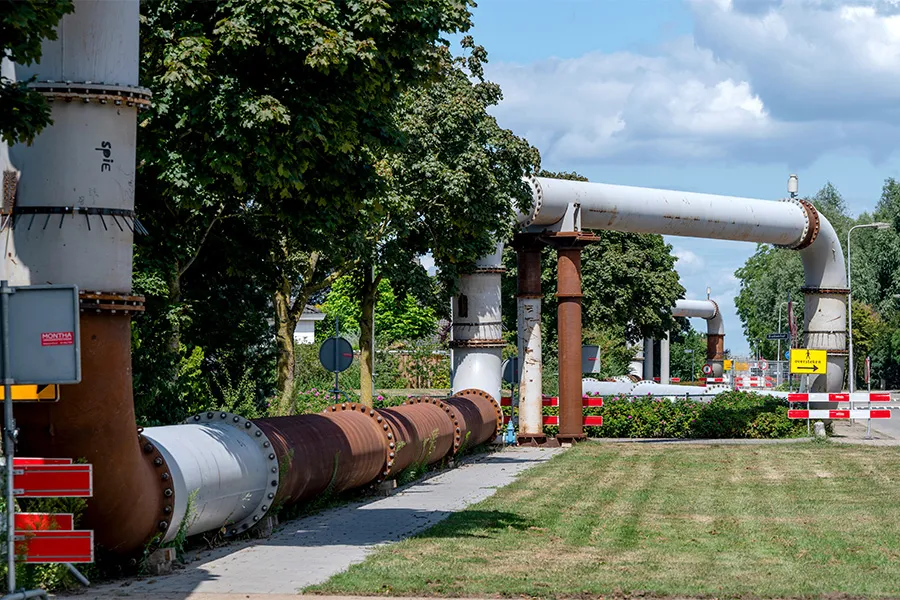
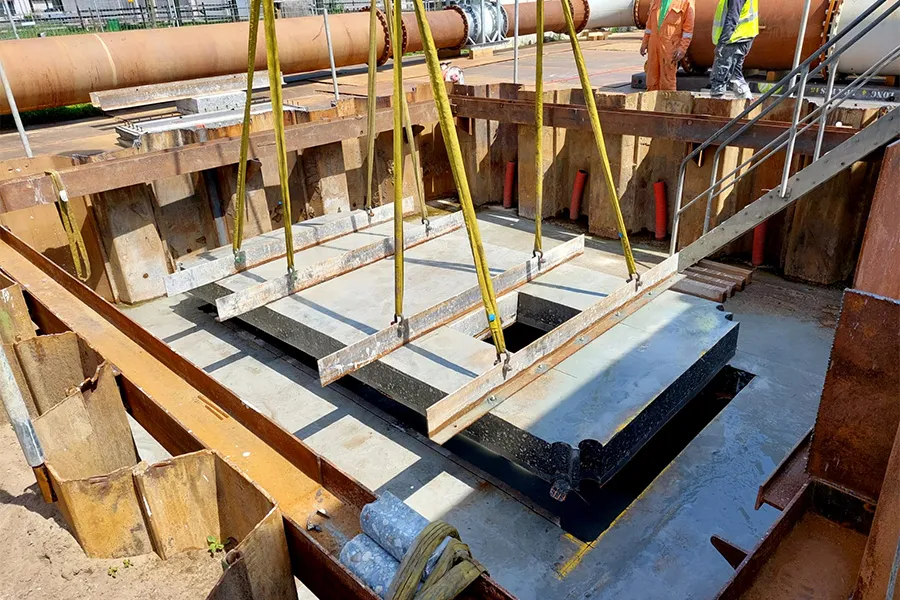
To provide access for the renovation, the top of the sewer was opened over a length of 6 metres. Bulkheads were installed inside the conduit to enable the repairs and installation work. A pumping installation was built to transfer wastewater from a point before the first bulkhead to a point beyond the last one. From there, a temporary pipeline ran right through the city, via jumpers, along paths and through residential areas.
Wastewater from one of the neighbourhoods flowed into the section being renovated. This situation called for the company’s expertise. Site manager Gijs van Kessel: “We installed a wall inside the conduit at that point and built a separate pumping installation. This meant the entire conduit could be renovated in one go.”
Unique construction
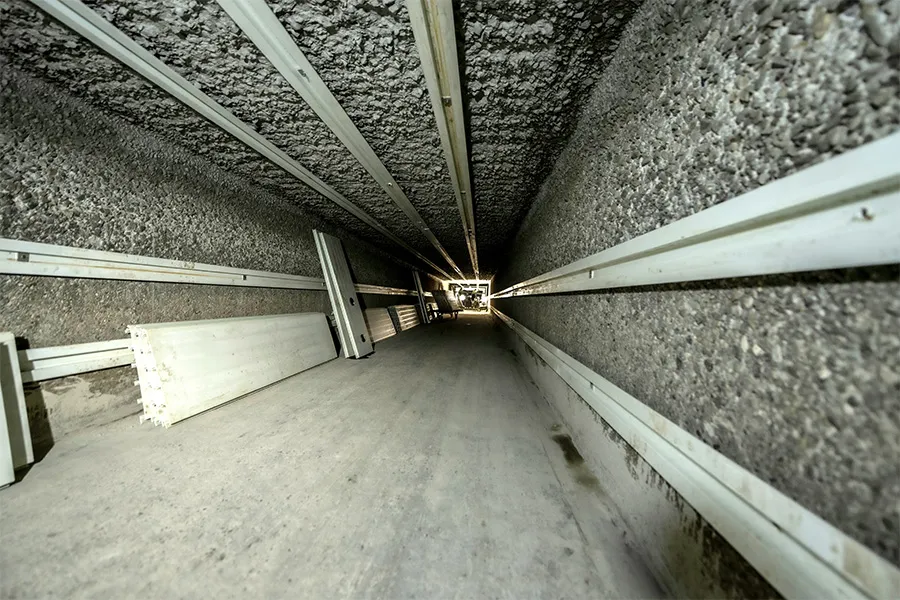
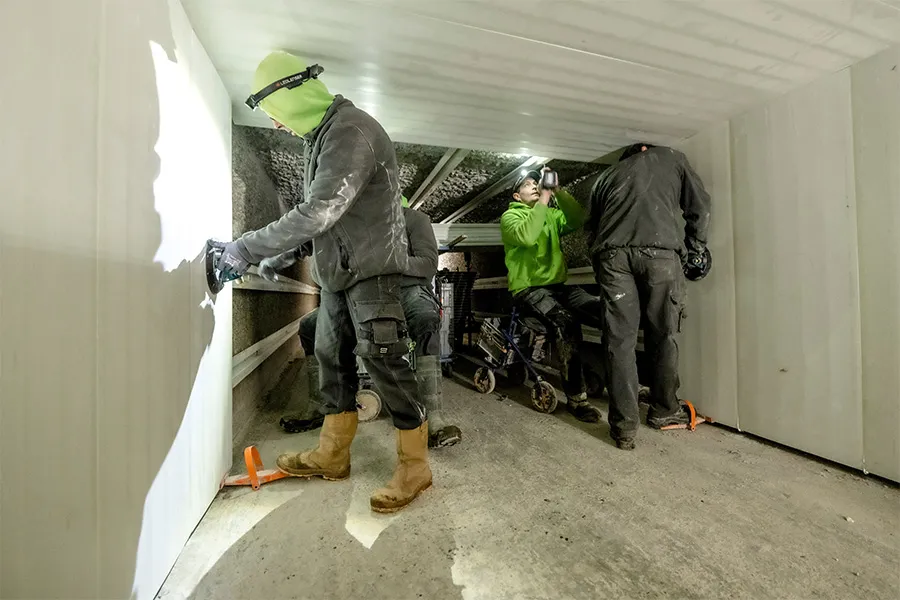
First, the conduit is cleaned: mini-loaders push around 1,000 tonnes of sludge together, enough to fill 350 lorries. A jetting robot then uses high-pressure water to remove all loose concrete. Once the concrete has been repaired where necessary, GW Leidingtechniek BV starts work on its construction: a unique system developed by the company that preserves the conduit’s capacity. “It consists of seven omega profiles mounted on the ceiling and walls,” Gijs explains, “onto which the GRP panels are then screwed. We completely conceal the fasteners. That means they cannot be damaged and sewer odours cannot get through.” Once all the panels are in place, the void behind them is filled with foam concrete.
Lessons learnt along the way
Overall, GW Leidingtechniek BV learnt a great deal during the various phases. In phase 4, for example, the company took responsibility for cleaning the conduit itself, and the new lining was built slightly differently. “In the previous phase, we fitted an angle section to the floor of the concrete conduit to secure the GRP lining. Filling the space between the concrete and new GRP conduit walls with foam concrete had caused quite a few problems in the past because the floor was not completely level,” says Gijs. “We changed our approach: instead of fitting the angle section to the floor, we installed it against the wall.” In the final phase, a complete GRP lining was also not used. Instead, a GRP lining without a floor was installed. Because there is always a layer of water on the floor, it is not affected by (H2S) gases.
20 weeks underground
The project took around 35 weeks in total. The workers spent about 20 weeks working inside the conduit. Gijs: “You have to bear in mind that the conduit is 1.65 metres high, which means almost everyone has to walk bent over. So we used rollators to get around inside the conduit and carry out the work in a healthy posture. Mobility scooters with trailers transported materials through the conduit. You work out on site what is needed and what is possible. In total, 100,000 A4 stainless steel screws, 30,000 A4 stainless steel anchors and 3,500 drill bits were used over a length of 3 kilometres.”
Remarkable
Gijs considers it a remarkable project. “The pumps are controlled to match the treatment plant’s intake. We managed to route a flow of 10,000 m3 per hour through the city in this way, while the treatment plant continued to operate as normal. Any power cuts were covered by a dedicated transformer, and there were no disruptions. That makes this a project we can look back on with pride.”
Een zakelijke vraag aan GW Leidingtechniek BV? Get in touch
Who worked on it
Sewer renovation Oss-Oijen in Oss, renovation
- sewer renovation
 GW Leidingtechniek
Keep following this
Get an email when a new story is published. No account needed.
- ProjectSewer renovation Oss-Oijen
- SubjectUnderground infrastructure
- CompanyGW Leidingtechniek BV







