Quality, sustainability and the future of site fencing
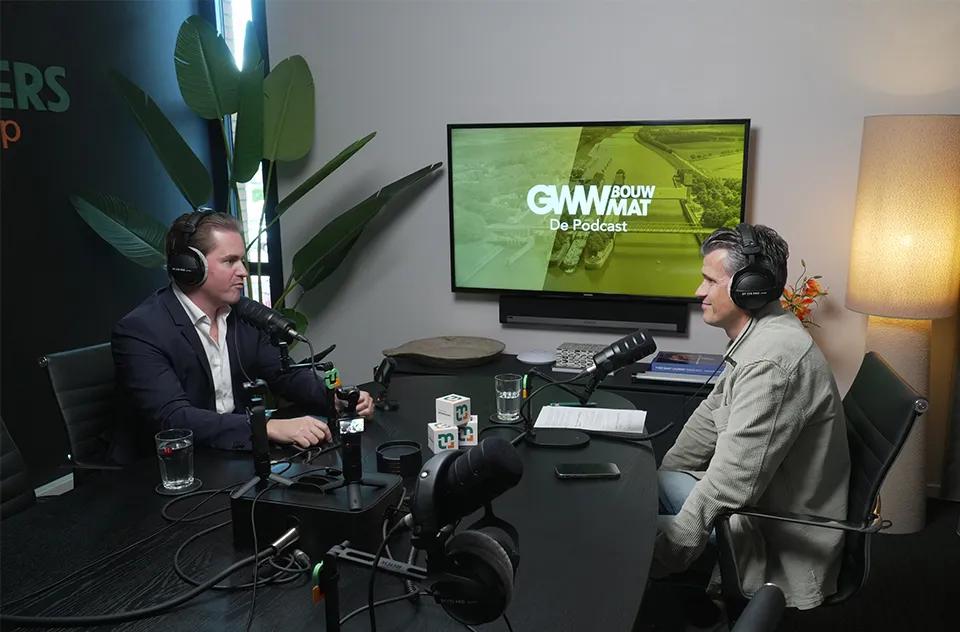
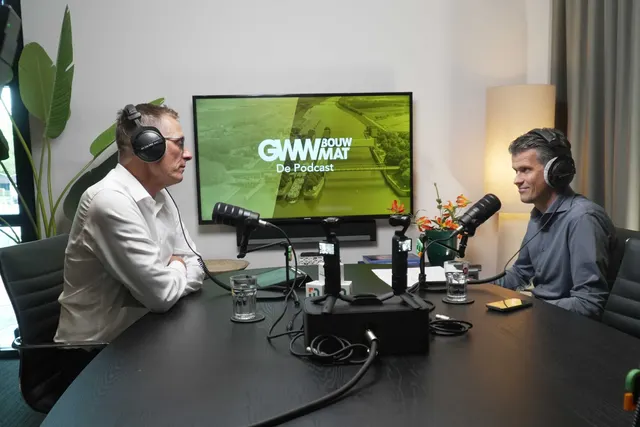
Guests: Aschwin van Creij and Oleg Grooten | Host: Roel van Gils
A site fence may seem like a simple product at first glance, but behind the fencing lies a world of raw materials, geopolitical tensions, rising costs and increasingly stringent sustainability requirements. How can you ensure that site fences are not only affordable, but also last for years? And what impact are international developments and European regulations having on the market?
In this episode of the GWW Bouwmat Podcast, host Roel van Gils speaks to Marco de Tombe, founder of Q-Fence. He explains why he set up his own company in 2019, with quality and service life as key priorities.
The discussion covers, among other things, the impact of the steel market and European CBAM regulations, the potential of certified green steel and the importance of responsible production. The risks of chromium-6, working conditions at overseas suppliers and innovative site fences with replaceable components are also discussed.
Marco also looks ahead to opportunities for growth in Belgium and France and the development of the site fence of the future. After all, is a cheap site fence really the most cost-effective choice in the long run?
Een zakelijke vraag aan Q-Fence? Get in touch
Full transcript
All chapters (24)
- Introduction: The world behind site fencing
- Setting up Q-Fence and the first challenges
- Thinner site fences and choosing quality
- The steel market and geopolitical tensions
- Changing requirements from customers and contractors
- CBAM and the impact on importers
- Bringing production closer to home and opportunities for Europe
- More sustainable steel and Q-Fence’s carbon footprint
- Sustainable site fencing and replaceable components
- Combiwood and Citywood site fences
- Hexavalent chromium in site-fence accessories
- Responsible sourcing and working conditions
- The motivation behind Q-Fence
- Service life versus purchase price
- Guarantees and the service life of site fences
- Quality requirements and wall thicknesses
- Quality control with European and overseas suppliers
- Responsibility and trust in suppliers
- CO2 reduction and certified green steel
- The price premium for sustainable steel
- Expansion plans for Belgium and France
- What will the site fence of the future look like?
- Quality as the key consideration when choosing site fences
- Closing
Introduction: The world behind site fencing
Roel van Gils Welcome to another episode of GWW Bouwmat, the podcast. Today we’re talking about site fencing. At first glance, a site fence seems like a fairly straightforward product. You put it somewhere and that’s that. But behind this product lies a world of raw materials, energy prices, geopolitical tensions, potential regulation, working conditions and, above all, sustainability. Joining me at the table is Marco de Tombe from Q-Fence. Marco, welcome.
Marco de Tombe Thank you.
Roel van Gils Would you like to introduce yourself?
Setting up Q-Fence and the first challenges
Marco de Tombe Yes, I’m Marco de Tombe. I started Q-Fence in 2019. Before that, I worked for a manufacturer for 15 years. I began to see certain trends emerging, with most of my colleagues starting to downgrade the specifications. The quality of the fencing was also steadily declining.
Roel van Gils Of standard fencing.
Marco de Tombe And, well, at a certain point I saw an opportunity there. I thought: I can simply do this better. Of course, I couldn’t start straight away. But I left that company in 2017 and was able to get started in 2019. The business was very well received almost immediately. Unfortunately, we also faced challenges right from the start. When you become an entrepreneur, you soon realise that things come up that you have no control over. We had the nitrogen crisis, which is still ongoing. Then, just a few months later, came COVID, which brought the whole country to a standstill. So those were real challenges.
Roel van Gils So you faced a few hurdles at the start.
Marco de Tombe Absolutely, absolutely. It was very nerve-racking. While all this was going on, I thought: is this going to be the end of my company? Fortunately, that didn’t last long.
Roel van Gils Yes.
Marco de Tombe But opportunities were also emerging at the time. For example, we saw a lot of hire companies selling off their fencing to generate liquidity. I jumped on that straight away.
Roel van Gils Did you buy it from them?
Marco de Tombe We bought it back from them. And we were able to sell it on very easily at the time, because we soon realised that people were staying at home. They couldn’t go out for meals or go out in the evenings. So people had a bit of spare cash. What did they do? They renovated their homes and bought houses. And so the construction industry really took off. And, well, that was a great opportunity for us…
Roel van Gils So you seized that opportunity.
Marco de Tombe We did. And I think that really helped Q-Fence get through that period.
Roel van Gils Yes, okay. That’s good.
Marco de Tombe Yes, definitely.
Read the full transcriptCollapse transcript22 more chapters
Thinner site fences and choosing quality
Roel van Gils But you raised an important point right at the start, I think. Fences are getting thinner and thinner. What can you do about that?
Marco de Tombe It’s mainly to do with weld quality and the tube material, which was getting thinner and thinner. I remember that when I was still at [unclear], the standard wall thickness for a pre-galvanised site fence was 1.5 millimetres. If you bought wire that was 4 by 3, it was actually 4 by 3. We saw more and more companies in the market using a wall thickness of 1.25 millimetres for welding.
Roel van Gils Really?
Marco de Tombe Thinner wires, so instead of 4, it was 3.8 or 3.5.
Roel van Gils All to cut costs.
Marco de Tombe To cut costs, of course.
Roel van Gils So they were pushing the limits, basically.
Marco de Tombe Yes, basically. But prices weren’t adjusted accordingly. And, of course, you can understand that to some extent, because the company may be facing higher costs elsewhere. So it’s understandable in a way. But it’s not entirely fair to the customer. I saw an opportunity there: let’s guarantee the quality. Let’s offer a product that’s honest. And whether you supply 6 mm, 4 mm or 3 mm wire, make sure that’s what you actually use.
The steel market and geopolitical tensions
Roel van Gils Right, okay. But we may come back to that in a moment. Looking at the bigger picture, how is the steel market developing at the moment, and what impact is it having on your market?
Marco de Tombe Well, it’s very unsettled at the moment. I don’t need to explain everything that’s happening in the world right now, especially in Iran and the Middle East and so on. A lot of the raw materials we use, or the materials used to make them, such as hot-rolled coils, which are used to make the tubes we then use, all come from Asia. They would normally travel through the Suez Canal, but now they all have to be rerouted. So that’s causing a lot of…
Roel van Gils Extra costs as well.
Marco de Tombe Extra costs, but it’s also causing delays.
Roel van Gils Yes.
Marco de Tombe And affecting the availability of materials. So the market is very unsettled at the moment. We’re also seeing prices come under pressure as a result. At the same time, demand isn’t consistent either. We’re facing all sorts of factors here, too. As I said, there’s the nitrogen issue. If construction projects aren’t approved and permits aren’t granted, nothing can be built, even though demand is high. That also creates a lot of uncertainty. And when I was still at [unclear], you could more or less map out the year. You knew that January and February would be quiet, then the events season would start, followed by construction. Then came the summer holidays, when things slowed down a bit. After the holidays, activity would pick up again until October. Then November and December would be quieter. But since I started Q-Fence, you can no longer predict it at all. Last December, for example, was a fantastic month for us, when normally it would be a very poor one.
Roel van Gils And was that because…
Marco de Tombe Yes, it could have been partly down to events, but also to construction. That’s not usually the norm at that time of year. You can’t really plan for it the way you used to.
Changing requirements from customers and contractors
Roel van Gils Right, okay. How are these global developments showing up, so to speak, in the site fencing being installed in the Netherlands?
Marco de Tombe What exactly do you mean?
Roel van Gils For example, are customers looking at price and security of supply differently?
Marco de Tombe Yes, definitely. But you can also see that the larger contractors in the Netherlands are now paying more attention to sustainability. They’re also looking at continuity, as well as sustainability. At Q-Fence, we’ve been responding to that over the past few years. It’s becoming an increasingly important consideration for manufacturers and suppliers…
Roel van Gils So price is no longer the main consideration?
Marco de Tombe It’s becoming less important.
Roel van Gils Yes, the origin of the steel really matters…
Marco de Tombe That’s becoming increasingly important, yes.
CBAM and the impact on importers
Roel van Gils And that brings us to the next topic, I think: the Carbon Border Adjustment Mechanism, or CBAM. What impact will it have, and how are you responding?
Marco de Tombe Well, it’s still a rather uncertain and unclear situation for us as an importer. We also buy our accessories directly from Asia. Under CBAM, the Carbon Border Adjustment Mechanism, we’ll have to pay for carbon allowances on goods we buy from outside Europe. That includes our site-fence accessories, to give you an example.
Roel van Gils Yes.
Marco de Tombe Suppliers used to provide certain data, which you could then enter in your CBAM declarations. We’ve been submitting CBAM declarations for the past two years. But now the European Union has determined that certain countries have a particular indicator. Some countries are more favourably placed than others.
Roel van Gils And what does that depend on?
Marco de Tombe The indicators have been drawn up by the European Union, so we have no say in them. But they have a big impact on the…
Roel van Gils Goods from outside…
Marco de Tombe Well, on the price the product will eventually have. Say you import a product from China or India and its indicator is less favourable. That has a big impact on your selling price.
Roel van Gils But you pay that afterwards, don’t you?
Marco de Tombe Yes, afterwards. So everything we import this year will have to be paid for in 2027. But we don’t yet know exactly how it will work. And our suppliers… They’re currently accrediting companies. So bodies will be appointed to accredit our manufacturers in China or India, allowing them to use the data they provide.
Roel van Gils It doesn’t make things any easier, does it?
Marco de Tombe It certainly doesn’t. No, definitely not.
Roel van Gils But what will actually change? Prices will probably go up.
Marco de Tombe Prices will go up, yes. We just don’t know by how much yet. But we do need to plan for it. We’re already seeing competitors, including companies we do business with, setting aside and reserving budgets so they can pay their CBAM bill next year.
Bringing production closer to home and opportunities for Europe
Roel van Gils But does that also make it more attractive to manufacture products closer to home?
Marco de Tombe Definitely, absolutely. We also look at products that are less attractive to import because of their volume. Take a site-fence clamp, for example. It is a very small item, a real volume product. You would not make that here any more, because I do not think anyone would want to assemble and turn out site-fence clamps. Ultimately, I think products such as crowd-control barriers, which are also imported in large quantities at the moment, will at some point stop being imported.
Roel van Gils Yes, they are becoming too expensive to import.
Marco de Tombe Because you are transporting a lot of air. So, looking ahead, I think that will change for certain types of fencing used in Belgium and France. They still all come from countries such as Turkey or Saudi Arabia, I have heard.
Roel van Gils They are made there.
Marco de Tombe They are then transported here. But I do think that will eventually disappear, and that some of that production will return to Europe. That is obviously a positive development. And I think that if you get ahead of it, and that is something we are working on, it is certainly an opportunity.
More sustainable steel and Q-Fence’s carbon footprint
Roel van Gils But is this also an incentive to use cleaner steel? Or cleaner, in that sense?
Marco de Tombe Yes, definitely. We at Q-Fence had a CO2 dashboard prepared last year, because sustainability is an issue that is becoming increasingly important. I do not think sustainability just means putting a few solar panels on your roof, running HVO-powered lorries and then saying we are all doing a great job. No, I think you need to make it much more concrete. Our Scope 1 and 2 emissions are virtually negligible. So we can make the biggest gains in Scope 3, which means our products. Our steel supplier can supply us with certified green steel, and we are currently looking into that seriously. That would allow us to demonstrate that we are…
Roel van Gils Acting sustainably.
Marco de Tombe That we are acting sustainably. This relates to the raw materials we use.
Sustainable site fencing and replaceable components
Marco de Tombe Take the sustainability of the fencing itself, for example. In recent years, we have seen a huge increase in the use of half-wooden panels. These are known as Combiwood site fences. We have developed them to be durable, with a hot-dip galvanised frame. Our competitors’ frames are all Sendzimir-galvanised. That means they are made from pre-galvanised steel, which is cheaper to weld. It is not particularly good for you, though. Welding Sendzimir-galvanised material releases toxic substances, which are not good for your respiratory system. We weld ours from ungalvanised steel and then hot-dip galvanise them. This protects the frame from rust for the next 20 or 30 years. The bottom section can be detached, so if it breaks, you can replace it very easily. We are also working on making it possible to replace individual components when a fence is damaged, rather than having to throw the whole thing away, so that the fence can be used for many more years.
Roel van Gils And the existing products do not have that?
Marco de Tombe No, because Sendzimir-galvanised steel twists very easily. Or it rusts, and then you have to throw it away.
Roel van Gils So at first glance it looks sustainable, but actually it is not at all?
Marco de Tombe No, far from it. And it is not sustainable in another respect either. The production process, the welding method, is not particularly healthy for you.
Roel van Gils No, no.
Marco de Tombe But that is how it is sold on the market.
Combiwood and Citywood site fences
Roel van Gils And what is that product range called?
Marco de Tombe Those are our Combiwood fences and Citywood site fences. The Citywood fence is a fully boarded wooden site fence.
Roel van Gils So you cannot see through it. It is not transparent.
Marco de Tombe No. It is assembled, so there is no welding involved.
Roel van Gils OK.
Marco de Tombe We have all the components hot-dip galvanised and then assembled. So if something breaks, you can just…
Roel van Gils Yes, that is one type. And then there is the half-wooden one, the Combiwood.
Marco de Tombe Yes, that is the Combiwood. It has a mesh panel at the top and a wooden panel at the bottom.
Roel van Gils That is replaceable too.
Marco de Tombe Yes, absolutely.
Hexavalent chromium in site-fence accessories
Roel van Gils But you are still finding site fences, or at least accessories, being offered with hexavalent chromium. Is that right?
Marco de Tombe Yes. Site-fence clamps in particular, although there are other clamps used in construction for scaffolding, which I do not know much about. But even today, we still come across site-fence clamps that contain hexavalent chromium. How can you tell? The zinc coating has a sort of pink sheen. Site-fence clamps are generally yellow-passivated, which means they are electrogalvanised. Hexavalent chromium is needed for the passivation, and its use is prohibited.
Roel van Gils It is prohibited.
Marco de Tombe The European Union banned hexavalent chromium, or its use, in 2022, I think. I do not want to get that wrong. A few weeks ago, one of my account managers happened to come in with a clamp and ask, ‘Can we make a copy of this type of clamp?’
Roel van Gils Yes.
Marco de Tombe I looked at the clamp and said, ‘Robin, this contains hexavalent chromium, so we are not going to copy it. But we can make one to our specifications.’ We explained the issue to our customer, and they were obviously very shocked too.
Roel van Gils Yes, because they thought they were doing the right thing for sustainability too.
Marco de Tombe Exactly. They were shocked, so they immediately cancelled their agreement with their current supplier. We are going to supply them now.
Responsible sourcing and working conditions
Roel van Gils Where did those products come from, then? Outside Europe, I assume.
Marco de Tombe They all come from outside Europe. Some countries still have no restrictions at all on the use of hexavalent chromium. As a rule, we only do business with companies that do not use hexavalent chromium in their production processes. We also do not want to work with producers outside Europe that, for example, use child labour. One example is a gate wheel for a site fence, used to make a site-fence gate. It is a plastic wheel. In India, for example, it is very common to make these from recycled plastic. But in India, that recycled plastic is often collected by young children from rubbish dumps.
Roel van Gils That is incredible.
Marco de Tombe It is then melted down to make a gate wheel, and I want nothing to do with that. Our gate wheels are made from virgin material. I know that costs a little more to buy, but I want nothing to do with practices like that. I would rather pay a few euros more than put a product on the market without knowing how it was made or who worked on it.
Roel van Gils From a sustainability point of view, though, you might say that recycled material could be used, as long as it was processed by adults in this case.
Marco de Tombe Yes, but you cannot guarantee that, can you?
Roel van Gils No, exactly.
Marco de Tombe No.
The motivation behind Q-Fence
Roel van Gils That brings us to how Q-Fence came about. You were seeing all of this happen in the market, of course, and you wanted to do things differently, driven by genuine conviction. Where did that come from?
Marco de Tombe As I said, I saw more and more developments emerging in the market. When I visited customers, they would say, ‘Fences used to be much better quality. These days, they break after being used just twice.’
Roel van Gils Yes.
Marco de Tombe I have also learned a lot from event-hire companies in particular. They are our customers who handle the fencing frequently and use it intensively. It is constantly being picked up and taken to another event every three weeks. I have always listened closely to them. If you listen to them and take note of what to look out for, then apply that, it benefits the construction sector too, of course. We weld our fences more extensively. There are not just two welds at the top. This applies in particular to hot-dip galvanised site fences. We weld the fences, or the tubular frame, three-quarters of the way round. The wires sit inside the frame, so they do not damage your [unclear]. These are all small details, but they are hugely important. If the wires protrude from the tube, you can catch your hands on them too.
Roel van Gils Yes, always.
Marco de Tombe Yes, they leave a sharp edge, especially after galvanising.
Roel van Gils Yes, OK.
Service life versus purchase price
Roel van Gils So the market has spent years asking, ‘How cheap can the fencing be?’ without asking, ‘How long should it last?’
Marco de Tombe Yes, and people never really look at that. I saw those questions starting to come up. I know that a major equipment-hire division at a large construction company in the Netherlands investigated this itself at one point. At the time, it was buying these fences from a competitor. Then one of its buyers was told to order another lorryload of fences. They said, ‘But we bought three or four lorryloads six months ago. How can that be?’
Roel van Gils And they are already worn out.
Marco de Tombe Broken. At one point, they started marking the fences so they could track them. They had just bought new fences and wanted to see how long they lasted. The alarming conclusion was that after a year, 40 per cent of those fences were already unfit for use.
Guarantees and the service life of site fences
Roel van Gils What guarantee do you offer, and how long do your fences last?
Marco de Tombe Well, guarantees are always a bit… You can offer a guarantee on the zinc coating. We cannot guarantee how the product is used.
Roel van Gils No, of course.
Marco de Tombe It is probably the galvanising that is covered. I would need to check the galvaniser’s documentation, but I think a hot-dip galvanised site fence like the ones we make would still be standing after 30 years if you put it out in a field.
Roel van Gils But it would not be exposed to damage or handled, of course?
Marco de Tombe No, not really. You often see contractors, especially when they don’t store the site fences in stillages, driving into them with a forklift. Well, no fence can withstand that, of course. Even if you made them out of solid steel, they’d still get damaged. So that’s a bit of a problem.
Roel van Gils Yes.
Marco de Tombe But in principle, as far as the quality of the fence is concerned, I’d be happy to offer a ten- or fifteen-year warranty on our site fences.
Quality requirements and wall thicknesses
Roel van Gils What quality requirements do you set for a fence? Are there specific things you focus on?
Marco de Tombe For our hot-dip galvanised site fences, we always use tubes with a standard wall thickness of 1.5 millimetres. We do that because the strength of a site fence is essentially determined by its frame. The mesh is really just there visually, to show people that they can’t get through. A 6-wire or 4-wire mesh on a hot-dip galvanised site fence does, of course, contribute significantly to its strength. But it’s the tubular frame that really determines how strong it is. The welds and the material’s wall thickness are also very important. They mean a fence is less likely to bend than a pre-galvanised site fence.
Roel van Gils And what’s your minimum? The absolute minimum tube thickness?
Marco de Tombe Well, there are always certain standards. So there’s always a plus-or-minus tolerance, which we can’t control. We have to comply with it. But generally, when the material comes in, we measure it. If it’s well below the required thickness, which hardly ever happens, and is outside the tolerance, we reject it and send it back to the supplier.
Quality control with European and overseas suppliers
Roel van Gils Okay. And with those suppliers, you don’t just check the product itself to see if it meets the specifications. As you mentioned, you also set requirements for the suppliers, don’t you?
Marco de Tombe Yes, particularly for suppliers outside Europe.
Roel van Gils Right, and you also have suppliers in Europe for the fences, for production?
Marco de Tombe Yes, some of the crowd-control barriers come from Europe. They’re a consistent quality, so we know what to expect. We can also have a bit more influence there. But supplies from outside Europe are more difficult. If you’ve got a container full of clamps here and they’re no good, you’ve got a problem, because you can’t just send them back. So it’s very important that we keep a close eye on them. And we do that with every delivery we receive. I also have chromium-6 test kits in Eindhoven.
Roel van Gils Oh, really?
Marco de Tombe We take a clamp from every pallet as a sample and test it for chromium-6.
Roel van Gils Yes.
Marco de Tombe It’s practically never present, but we test for it anyway.
Roel van Gils Better safe than sorry.
Marco de Tombe Better safe than sorry, yes, absolutely.
Roel van Gils How far do you go with these checks, then? I already think this is pretty thorough.
Marco de Tombe Well, I do think you have to check these things. You have to check the wall thickness of the clamp shell too. You have to make sure you’re not being… There’s a trend now for clamps to be sold as 3 millimetres, when they’re actually 2.5. We [unclear] that too. We don’t do any of that.
Roel van Gils No, you stand for quality.
Marco de Tombe We do stand for quality.
Responsibility and trust in suppliers
Roel van Gils The question is, of course, how much responsibility can a Dutch supplier take for what happens thousands of kilometres away?
Marco de Tombe Yes, exactly. It’s difficult. Our supplier does come to the Netherlands in person every year, though.
Roel van Gils Oh, really?
Marco de Tombe Yes, definitely. I haven’t been to that factory myself. Of course, you can’t cover every eventuality.
Roel van Gils No.
Marco de Tombe Yes, sometimes you have to have a bit of trust in what… And they are a well-established manufacturer of these kinds of products.
Roel van Gils Yes.
Marco de Tombe So I don’t think they would… No, that seems highly unlikely to me.
CO2 reduction and certified green steel
Roel van Gils Let’s come back to sustainability for a moment. You’re clearly working to reduce your carbon footprint. What has actually changed so far, and what’s still planned?
Marco de Tombe Well, as I said, we’ve changed over our fleet. But that falls under Scope 1 and 2, which I don’t think is very… I also think it’s a bit of a watered-down version. We’re mainly looking at the raw materials we use. But we put the question to the customer. I understand that our trade customers are less focused on this. But you do see that it’s becoming increasingly important to some of the really large contractors in the Netherlands. And we want to offer them that option. So if they say, “We want you to use fully CO2-neutral steel for the site fence storage racks,” then we’ll buy it in for them. And they’ll receive the certificates as well.
Roel van Gils Yes. So it’s not greenwashing. It’s actually backed up by figures.
Marco de Tombe Absolutely. It’s properly certified. And that’s an option we want to offer our customers. There’s a lot you can achieve that way. The next step for us might be to use electric lorries too, if that’s important to those customers, so that the emissions are completely…
Roel van Gils Down to zero.
Marco de Tombe Yes, well, down to zero. You can’t do that for everything… Galvanising will always involve a certain amount of CO2 emissions, of course. But we can put the parts we can influence to the customer. Do you want that?
Roel van Gils Yes. And you’ll make sure it’s possible.
The price premium for sustainable steel
Roel van Gils And what are the biggest challenges in that respect?
Marco de Tombe Well, if you want to use CO2-neutral steel, there’s a price tag attached to it. So the question is whether the market is ready for it at the moment. Does the customer want to pay for it now?
Roel van Gils Perhaps that will ultimately be driven by regulation.
Marco de Tombe Yes, I think so. I think it’s becoming increasingly important, especially in major Dutch cities such as Amsterdam, Utrecht and Eindhoven. When those large contractors have major projects there, it will become increasingly important. But there will be a price tag attached. And the question is, though it’s not something we can decide, whether the customer is willing to pay.
Roel van Gils Yes, that’s the question.
Marco de Tombe Yes, definitely.
Expansion plans for Belgium and France
Roel van Gils Looking ahead, you’re mainly active in the Netherlands, I think. Do you have any plans?
Marco de Tombe We’re currently looking into expanding further into Belgium. We already have some Belgian customers, mainly in the events sector. But there are still plenty of opportunities in Belgium, and perhaps in France too. We’re still very much at the research stage there, though. We’re a bit further along with Belgium.
Roel van Gils But is that market at the same level as here?
Marco de Tombe No, not at all. You can’t compare them. We sometimes talk about one Europe, but if you look at the fencing used in France, it’s shocking.
Roel van Gils Not in terms of quality, then.
Marco de Tombe It’s all disposable.
Roel van Gils Really?
Marco de Tombe Yes, unbelievable.
Roel van Gils Even on major projects?
Marco de Tombe It’s unbelievable. That’s all I hear about it. A site fence there weighs less than ten kilos.
Roel van Gils That’s good for ergonomics, at least.
Marco de Tombe Yes, exactly. And here we have site fences that weigh thirty kilos. So there’s quite a difference.
Roel van Gils They’ve still got some way to go.
Marco de Tombe Yes, absolutely. But then again, we don’t know how they’ll see things in ten years’ time. So a whole new market could open up for us there.
What will the site fence of the future look like?
Roel van Gils That’s a good question. What do you think a site fence will look like in ten years’ time, here in the Netherlands?
Marco de Tombe That’s an interesting question. I still think it’ll be made of steel. Steel is a raw material that can be recycled and, in principle, doesn’t lose quality. So I don’t think it will disappear. But perhaps more variations will come onto the market.
Roel van Gils Do you mean made from other materials as well?
Marco de Tombe Yes, for example, Combiwood fences have appeared in recent years and have grown explosively in popularity with us.
Roel van Gils Yes. But is that also about showing that you’re sustainable?
Marco de Tombe Yes, it’s sustainable, but it also looks very good. Last summer, we also completed a very large project in Brussels. It’s called Lakeside and is right in the heart of Brussels. They specifically wanted those Citywood site fences to suit the surroundings.
Roel van Gils And those are the ones with wooden panels, right?
Marco de Tombe Yes, entirely made of wood. They look great.
Roel van Gils What kind of wood is used?
Marco de Tombe [Type of wood unclear].
Roel van Gils But are they made of steel, or not? What about other materials, plastic, I don’t know, is that an option?
Marco de Tombe That has been used. In Belgium, in what they call the Brussels-Capital Region, they have low site fences. They have a mesh panel and a profiled steel sheet panel.
Roel van Gils Made of plastic?
Marco de Tombe No, it’s steel now. It has a sort of profiled steel sheet panel. I don’t know exactly what alloy it is, but it’s blue, yellow, blue.
Roel van Gils Is that the colour of the city or the municipality?
Marco de Tombe Yes, of the municipality, I think. And I think the municipality of Mechelen and others come under that as well.
Roel van Gils So it’s basically the Belgian alternative to Combiwood, but with…
Marco de Tombe Yes, well, I think you have to use those fences in the centre of Brussels.
Roel van Gils Yes.
Marco de Tombe And I know someone came up with the idea of using plastic panels, but apparently the City of Brussels rejected it. So it’s no longer allowed. But perhaps in the future they’ll switch from profiled steel sheet to wood. That wouldn’t surprise me. The Netherlands is a bit of a pioneer in this. And you can already see that there’s more demand for wood in Belgium too. So it wouldn’t surprise me if…
Roel van Gils We really do head in that direction.
Marco de Tombe And perhaps if Belgium gets started, France will follow. Yes, who knows.
Roel van Gils Okay, well, exciting. Sounds like some great developments for you.
Marco de Tombe Yes, absolutely.
Quality as the key consideration when choosing site fences
Roel van Gils If you could change one thing about the current site fencing market, what would it be?
Marco de Tombe What would that be? Well, if I were a construction company and needed to buy fencing, I’d always buy a hot-dip galvanised site fence panel. But do they have that knowledge? Or do they just say: yes, we need site fencing? That’s often how the request comes in, from what we see. We often get an email saying: yes, we need 200 site fence panels. But does it specify what type? Or is it: yes, it doesn’t matter, as long as it’s cheap? Oh, right, so it comes down to price. If you show the customer what you have and ask: well, do you have time to come and have a look at our range? You often hear: yes, no, we don’t want those lightweight panels. We need something of good quality… And in the end, they go for the more expensive option after all.
Roel van Gils But you need to be given the time to explain it, of course.
Marco de Tombe Definitely. So one thing we often do, especially with new customers, is send them a demo panel free of charge. Then they can try it out for themselves. And we can explain the differences in a face-to-face conversation. You’ll also have far fewer failures, especially after a few years. And we often see customers come round to our way of thinking.
Roel van Gils Yes, they come round to it. They actually get the cost savings.
Marco de Tombe Yes, the initial investment may be higher, but over the longer term you can see that it saves you a lot of money.
Closing
Roel van Gils Yes, well, that’s great. I think we’ve got a good picture of who you are and what you do.
Marco de Tombe Yes, I hope so too.
Roel van Gils Thanks for the conversation, Marco.
Marco de Tombe You’re welcome.
Roel van Gils And thank you for listening, everyone.
Marco de Tombe Yes, absolutely. Thank you.
Companies in this story

Keep following this
Get an email when a new story is published. No account needed.
- ThemeMaterials and techniques for infrastructure
- SubjectSustainability & innovation
- CompanyQ-Fence