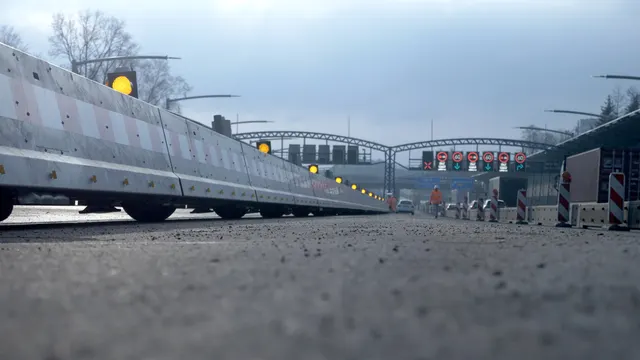
Cold plastic is gaining ground
Text Armand Landman Images Triflex
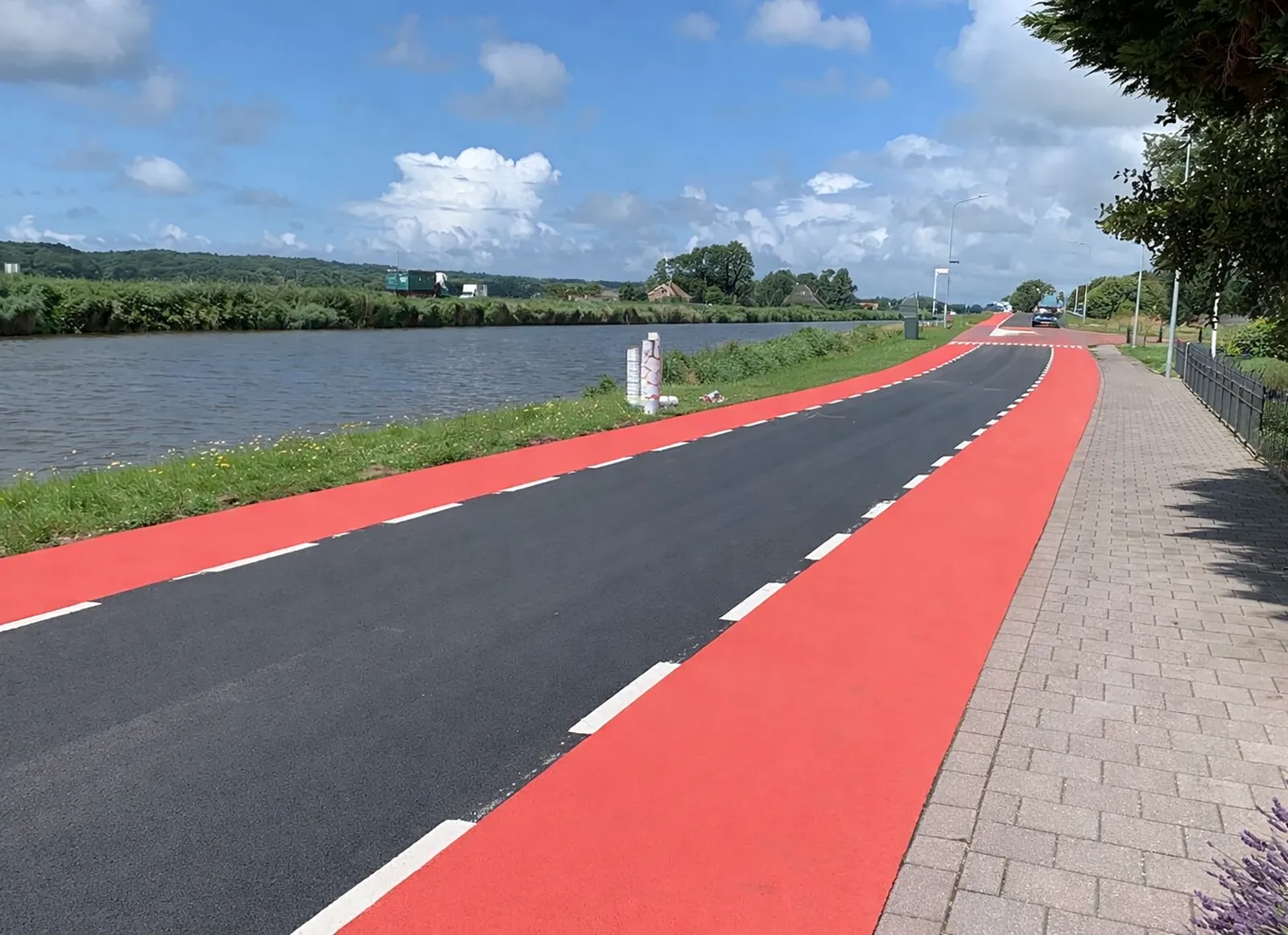
Sustainable markings are increasingly becoming the standard
Good road markings play a major role in the safety and legibility of public spaces. Yet their function is greatly undervalued. Stephan Daams, Business Development Manager Markeringen at Triflex, believes this is unjustified. “Without markings, we would be lost. They give the road structure and make it functional.”
Daams sees the market debate gradually shifting. Thermoplastic markings were the norm for years, but interest in cold plastic is growing. He says the technique performs better on almost every front. “We’re firmly committed to cold plastic. If you look at the total cost of ownership, it’s simply the best option right now.”
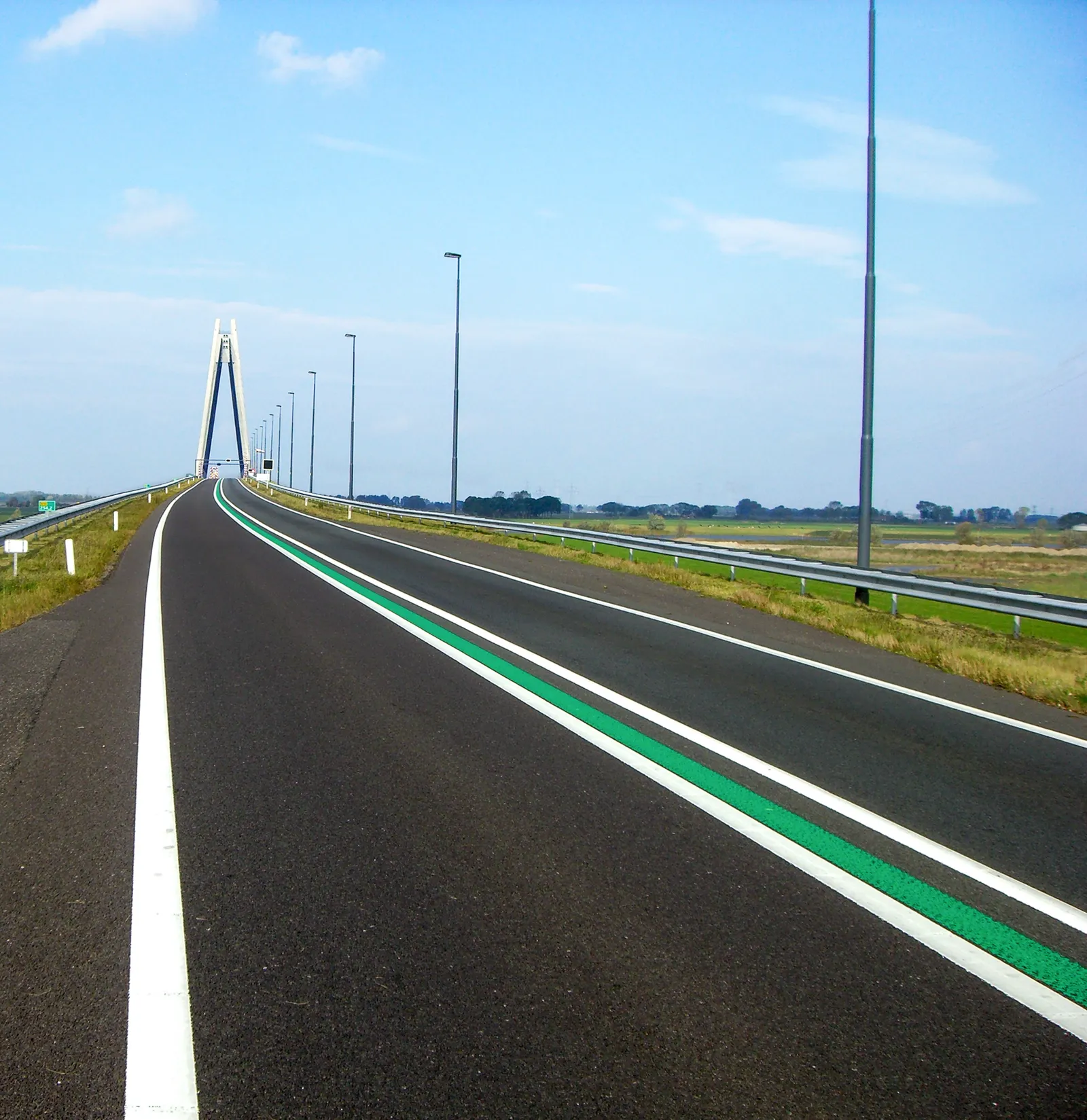
From heating to curing
One fundamental difference lies in how the materials are applied. Thermoplastic must be heated to temperatures above 180 degrees Celsius, requiring energy and generating emissions. Cold plastic, by contrast, cures without heating. “We don’t need to heat anything up. That brings major environmental benefits and there are no fumes during application,” says Daams.
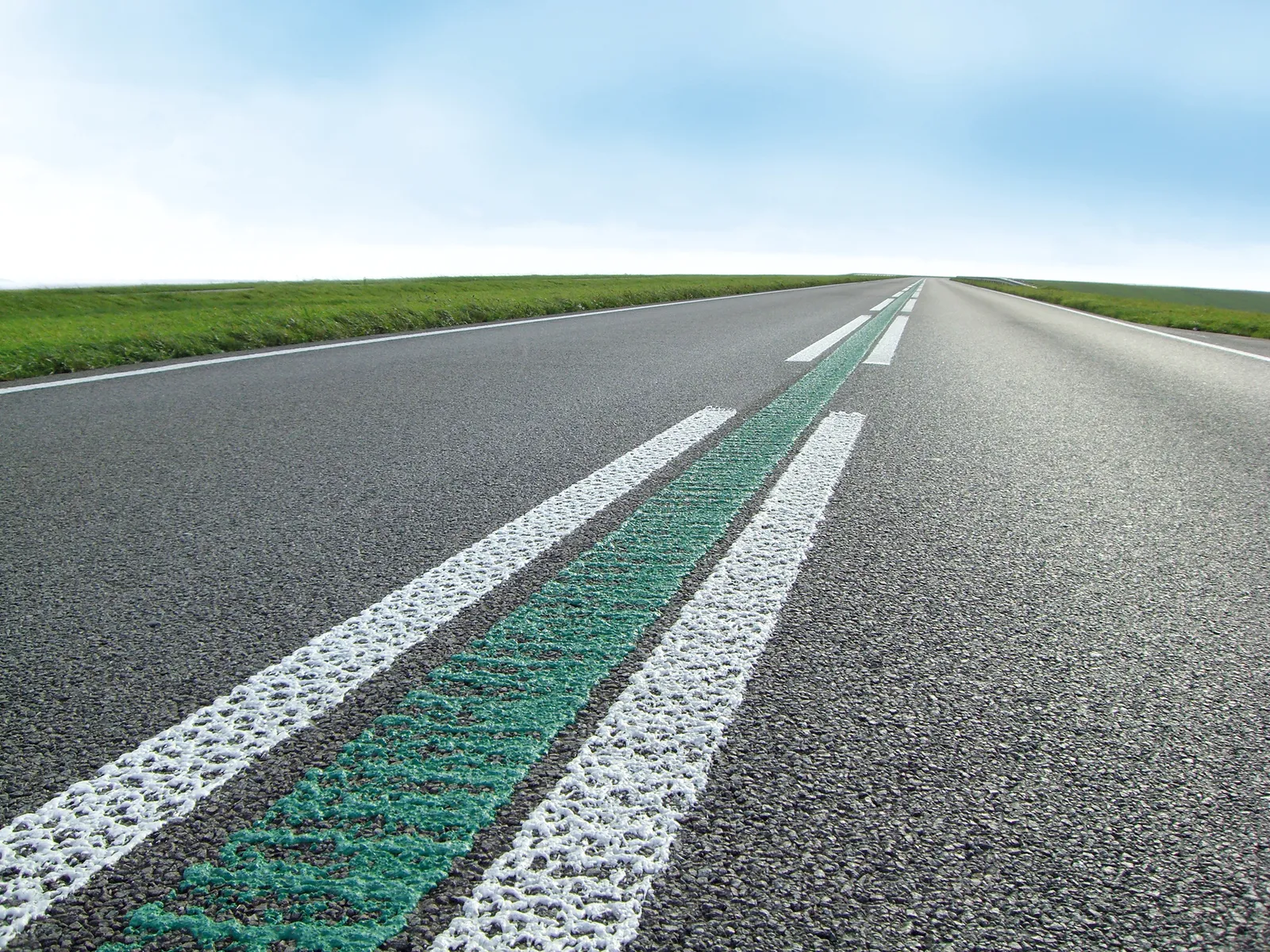
Cold plastic can also be applied in a thinner layer because the material is more wear-resistant. Using less material and achieving a longer service life reduces costs over the full life cycle. “It stays visible for longer, is UV-resistant and retains its colour. These properties make a direct contribution to road safety.”
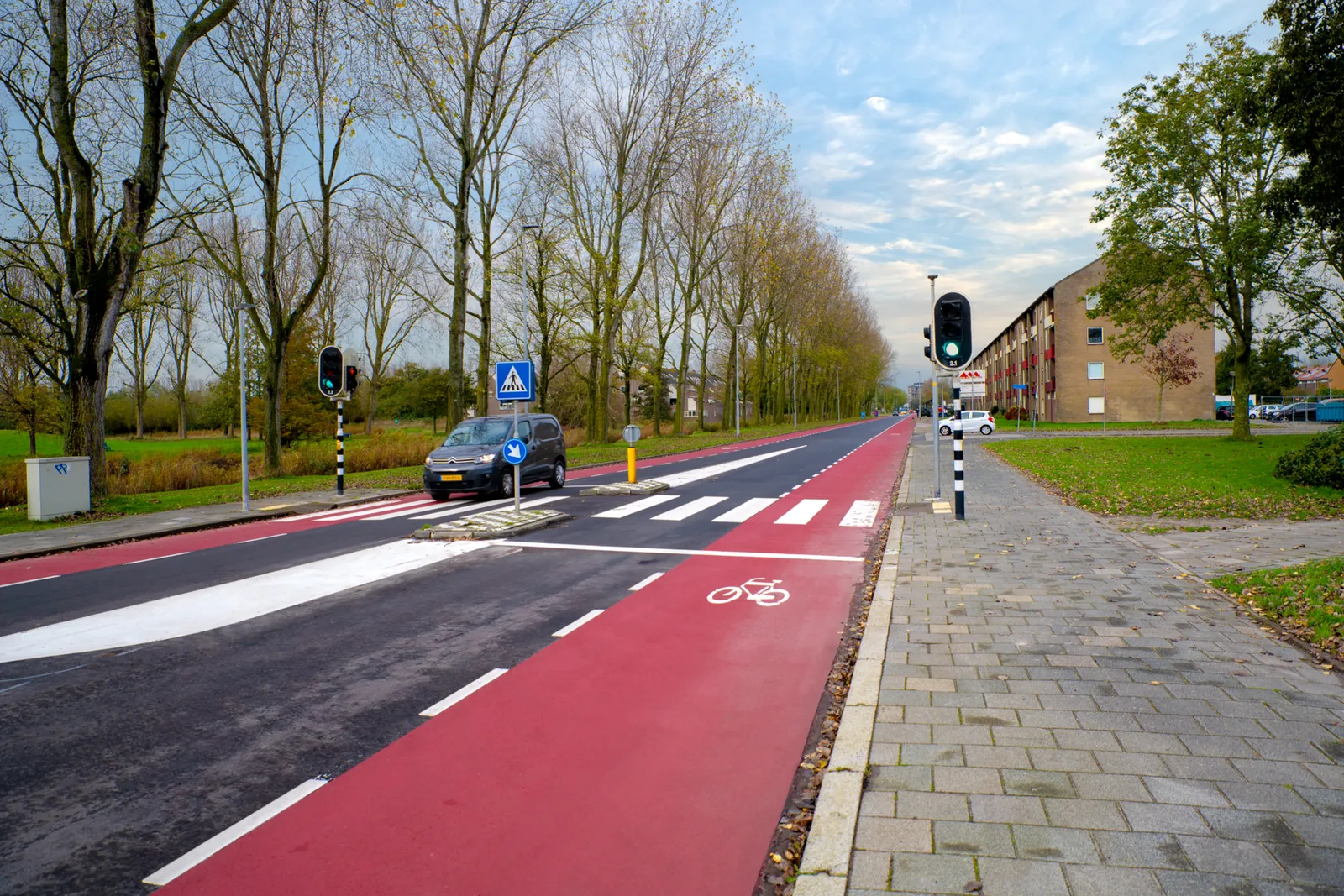
Surface coatings: safety without joints
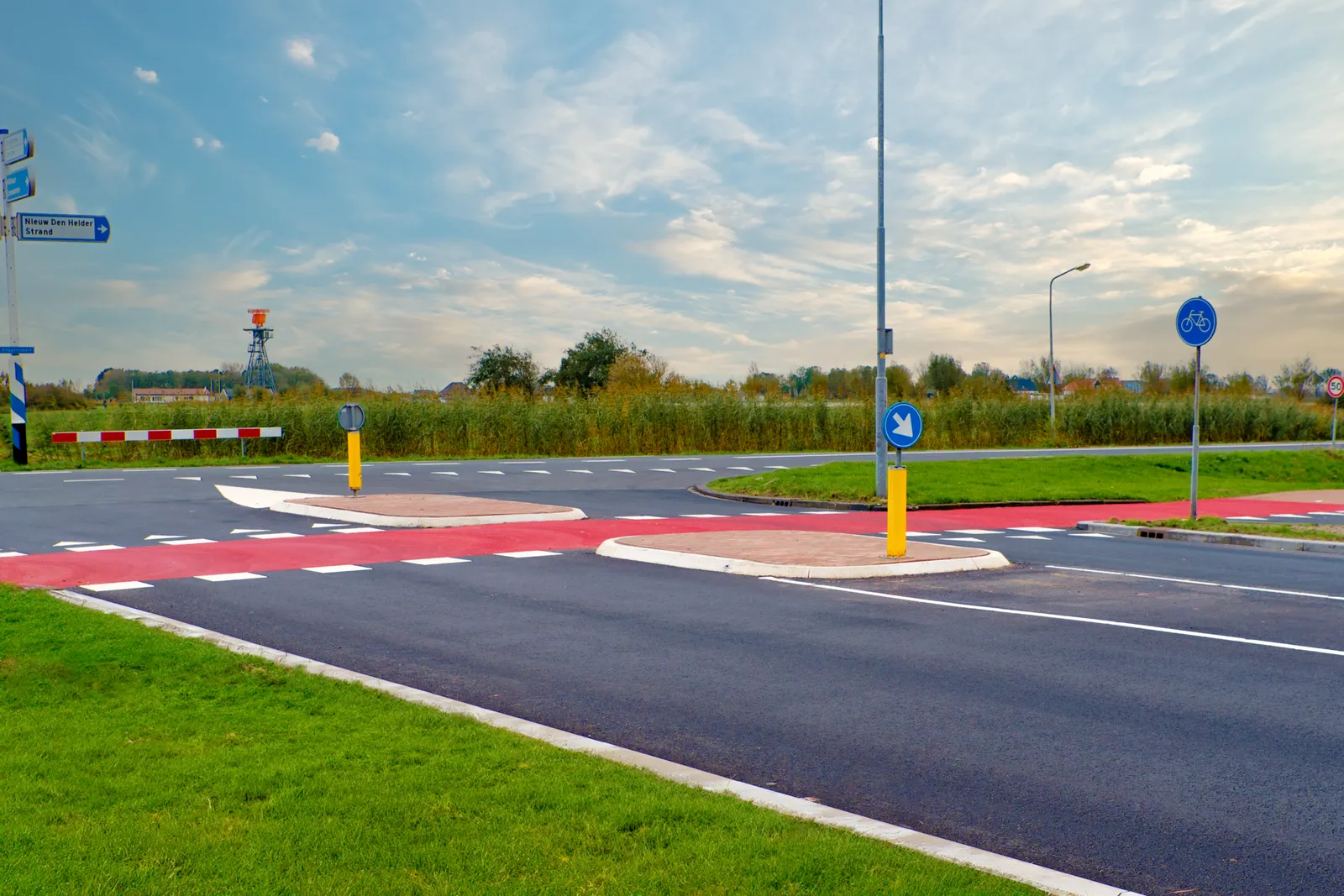
Another key application is the layout of cycle paths and advisory cycle lanes. Traditionally, red asphalt is often used alongside black asphalt, but Daams sees clear disadvantages. “That always creates a joint. It may look small, but it soon gets worn open. This can lead to genuinely dangerous situations, especially for cyclists.”
Cold plastic is applied as a coating over the existing asphalt, so this problem does not arise. The material is also slip-resistant, even in wet weather, and slightly elastic. “It can bridge cracks to some extent. Everything on the road moves, so this helps limit damage and wear.”
The application process also matters. The coating is mixed from two components and applied. This can be done by hand with a squeegee or using mechanical spray equipment, making it flexible to apply.”
Reopens to traffic sooner, causing less disruption
Another practical advantage is the short curing time. The surface is ready to take traffic again within 45 minutes to an hour. “The road can reopen quickly. That limits disruption and economic damage,” says Daams.
This makes the technique attractive for busy urban areas, where road closures are becoming less acceptable. At the same time, it aligns with the growing emphasis on sustainability in tenders.
Public authorities are increasingly driving the shift
Daams says road authorities are increasingly making the move to cold plastic explicit. “They want safety and sustainability. These are precisely the areas where these systems excel. You can see it in specifications too.”
The possibility of reusing the material at the end of its service life is an important factor. Cold plastic markings and surface coating can be milled off along with the old asphalt pavement and used as filler in the new asphalt mix, saving costs and emissions once again. “That means you score highly on the circularity ladder.”
Quality requires skilled workmanship
Triflex does not carry out application work itself, but works with specialist contractors. To safeguard quality, the company invests heavily in training. Its own Academy, which will soon be expanding into a new building in Heino, trains applicators in handling and application.
“You can have a good product, but if it’s applied incorrectly, it’s no use to you,” says Daams. “That’s why we train people and support them where necessary.”
He says this hands-on approach provides valuable feedback. “We hear what applicators find challenging and can respond to it. That’s genuinely part of the way we work.”
A step towards sustainability
Despite its advantages, cold plastic is not yet the obvious choice in the Netherlands. The picture is different in countries such as Germany. “There it is much more established as the standard, with sustainability as the guiding principle,” says Daams.
He believes that is where the biggest challenge lies in the coming years. Not only in terms of technology, but also, and especially, in sharing knowledge. “When you weigh up all the advantages, choosing cold plastic really isn’t surprising.”
Een zakelijke vraag aan Triflex BV? Get in touch
Companies in this story
Keep following this
Get an email when a new story is published. No account needed.
- ThemeExtending the life of roads and civil engineering structures
- SubjectRoad construction
- CompanyTriflex BV