Foundations / Site investigation
4.8 kilometres of sheet piling under strict noise and vibration limits
Text Suzanne van Gaale Beeld Kandt BV
A challenge for a foundation specialist on ViA15
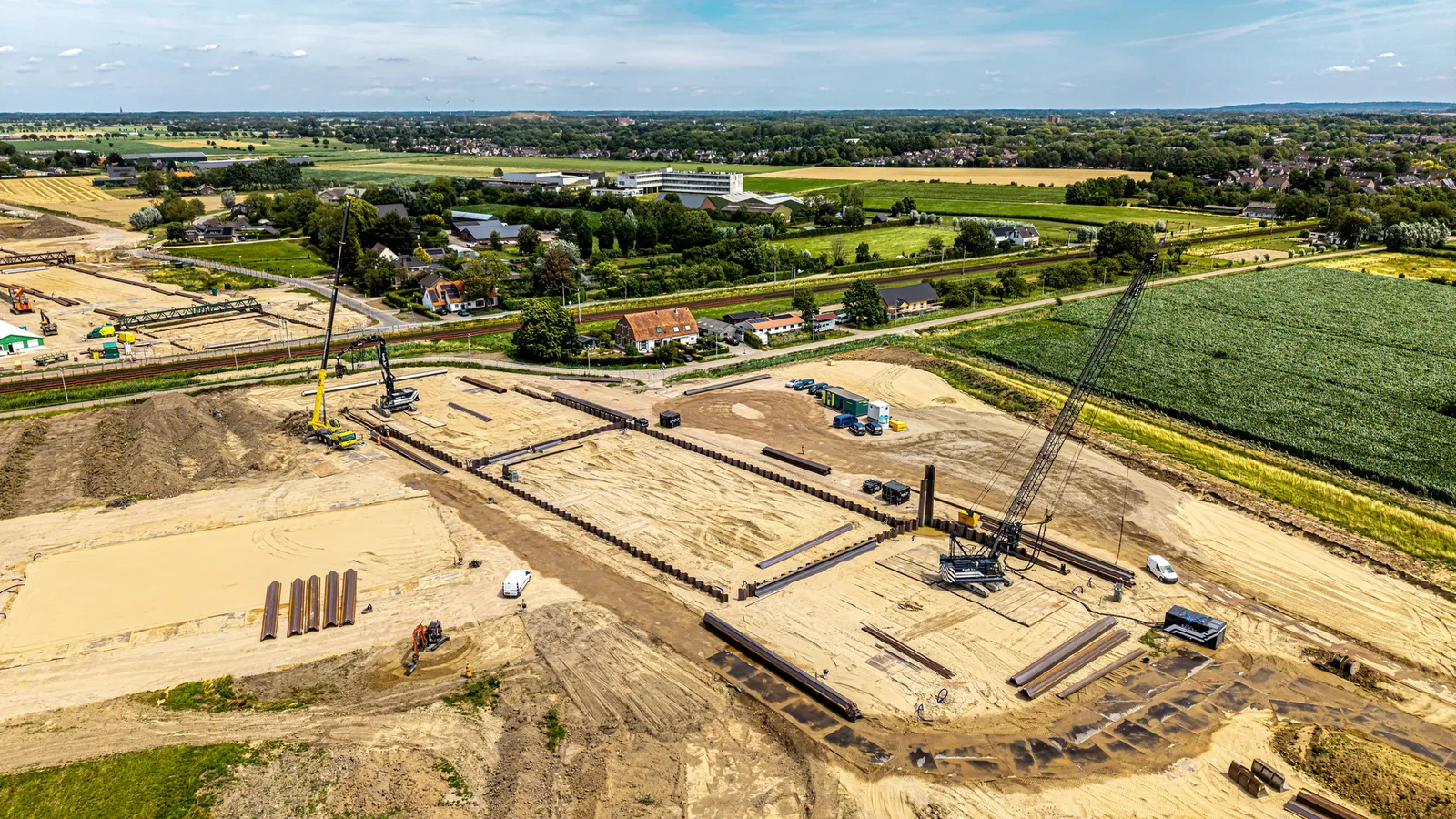
How do you install almost five kilometres of sheet piling on one of the Netherlands’ largest infrastructure projects when noise and vibration levels have been tightly restricted in advance because of nearby homes? For foundation specialist Kandt BV, this was the key question when carrying out the foundation work on one of the routes of the ViA15 project.
Commissioned by Rijkswaterstaat, the GelreGroen consortium, comprising Dura Vermeer, BESIX, HOCHTIEF, Van Oord and John Laing, is working on the ViA15 project. This involves widening the A12, extending the A15 to the A12 and widening the existing A15. On one of the routes, the A15 is being extended from the Ressen interchange to the A12 between Duiven and Zevenaar. From this spring, Kandt is installing a total of 4,850 metres of sheet piling for seven structures between Groessen and Boerenhoek. The sheet piles range in length from 10 to 25 metres.
Execution shaped by environmental requirements
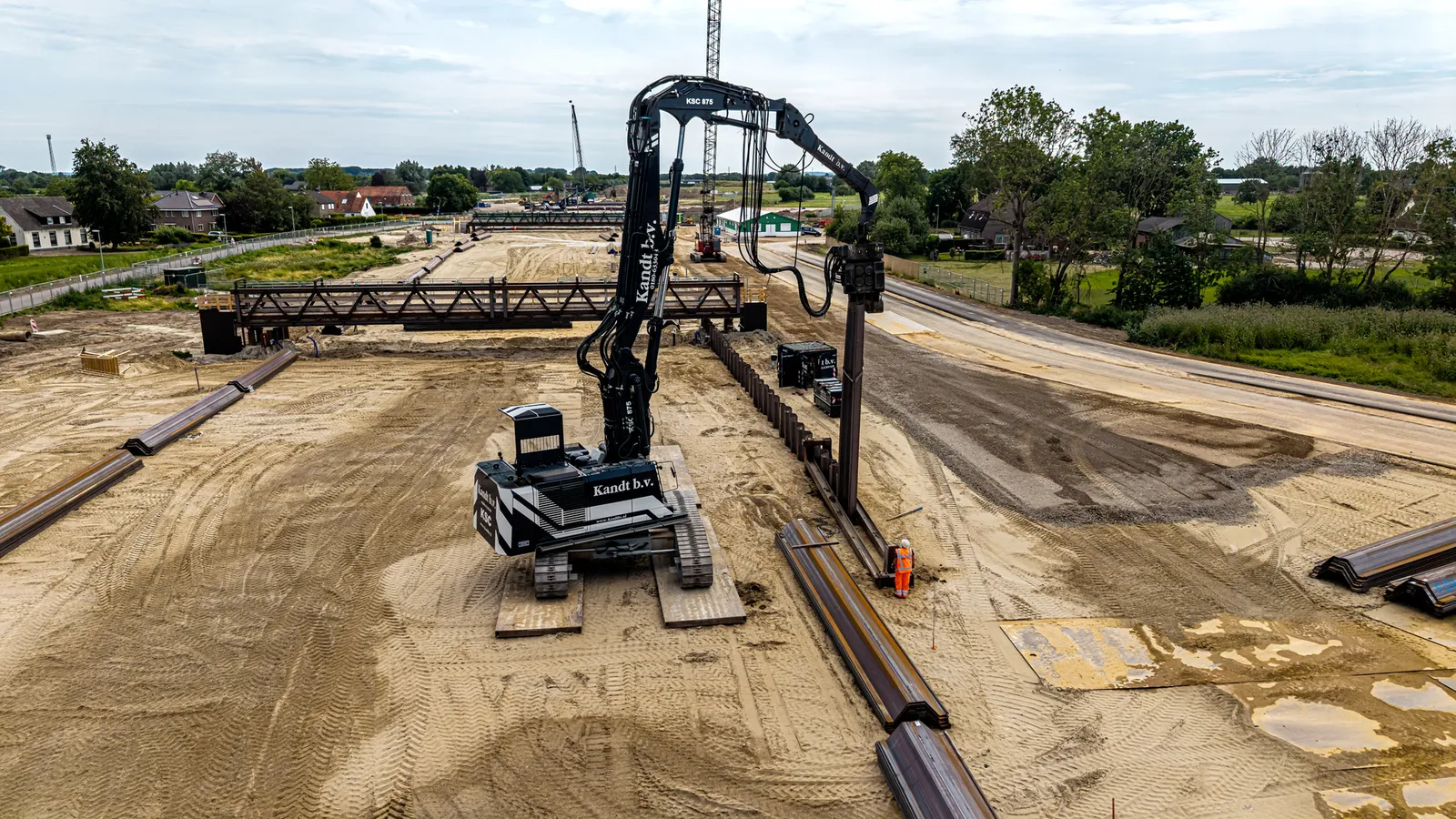
Although installing sheet piles is everyday work for Kandt, this section of ViA15 presents its own particular challenges. Rijkswaterstaat and the GelreGroen construction consortium had agreed with local residents in advance on maximum noise and vibration levels during the works. For Kandt, this meant the main challenge lay in how to organise the work. One question was central: how could the required output be achieved while staying within the noise and vibration limits?
Managing the schedule, work sequence and equipment
“You can’t turn down the noise from a vibratory hammer, and the energy needed to drive a sheet pile into the ground can’t be adjusted without limit either. So you have to manage things in other ways,” explains Bastiaan Verheul, head of the business office at Kandt. This was done through a combination of control measures. Working hours were adjusted from the usual 07.00 to 16.00 to a work window of 08.00 to 17.00. GelreGroen also carried out extensive preliminary research into the effects of different activities on noise levels. This was used to determine which activities could take place at the same time and which needed to be kept separate to avoid exceeding the noise limits. For Kandt, this meant that the work schedule was largely fixed, leaving no realistic option to shift activities. Bastiaan says: “Our people are normally focused on achieving the highest possible output during the day. On this project, we had to pay much closer attention to when we were actually generating noise and how we could spread it across the day.”
Three machines for controlled output
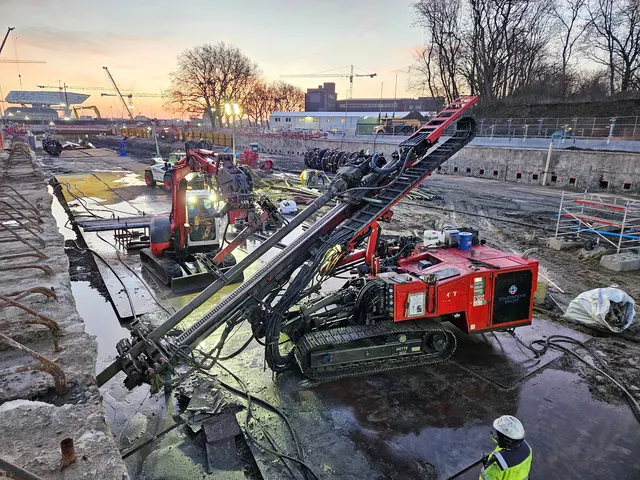
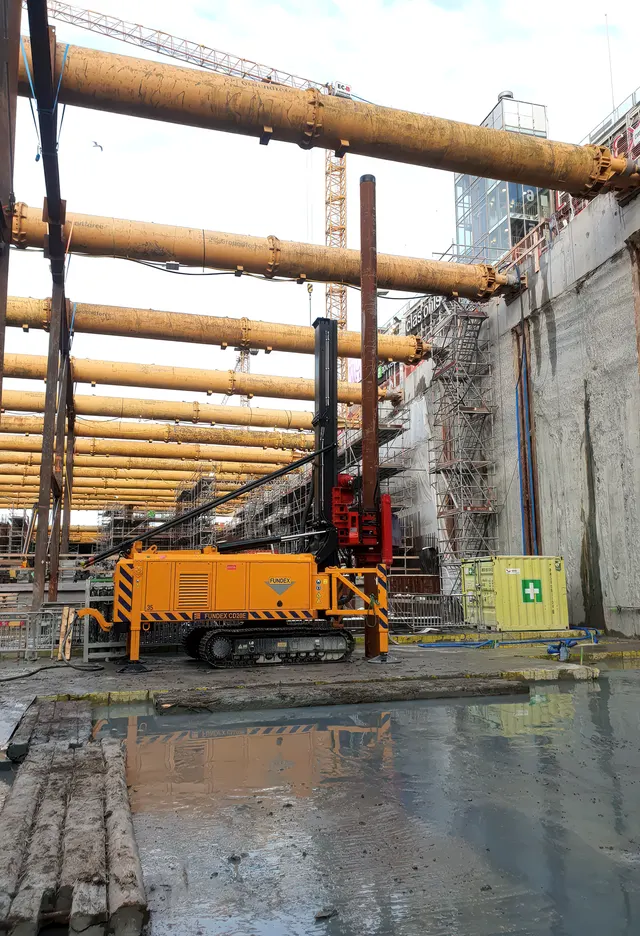
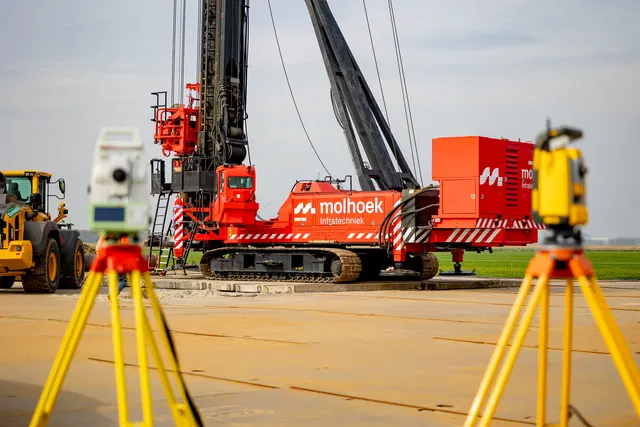
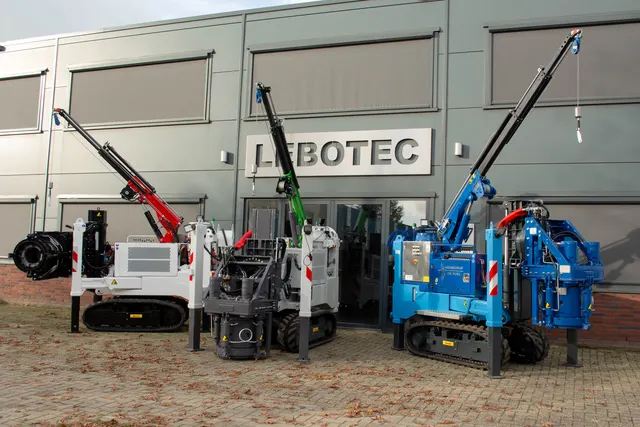
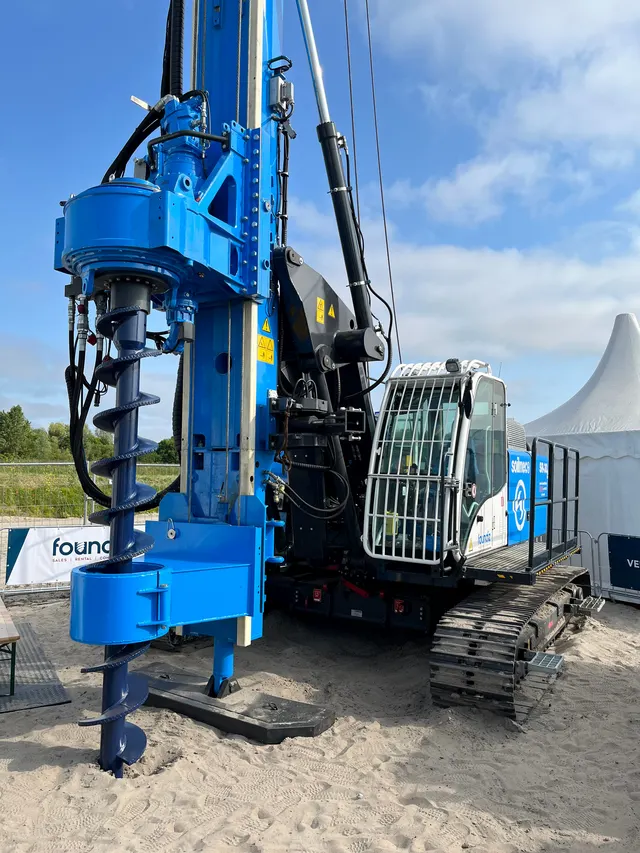
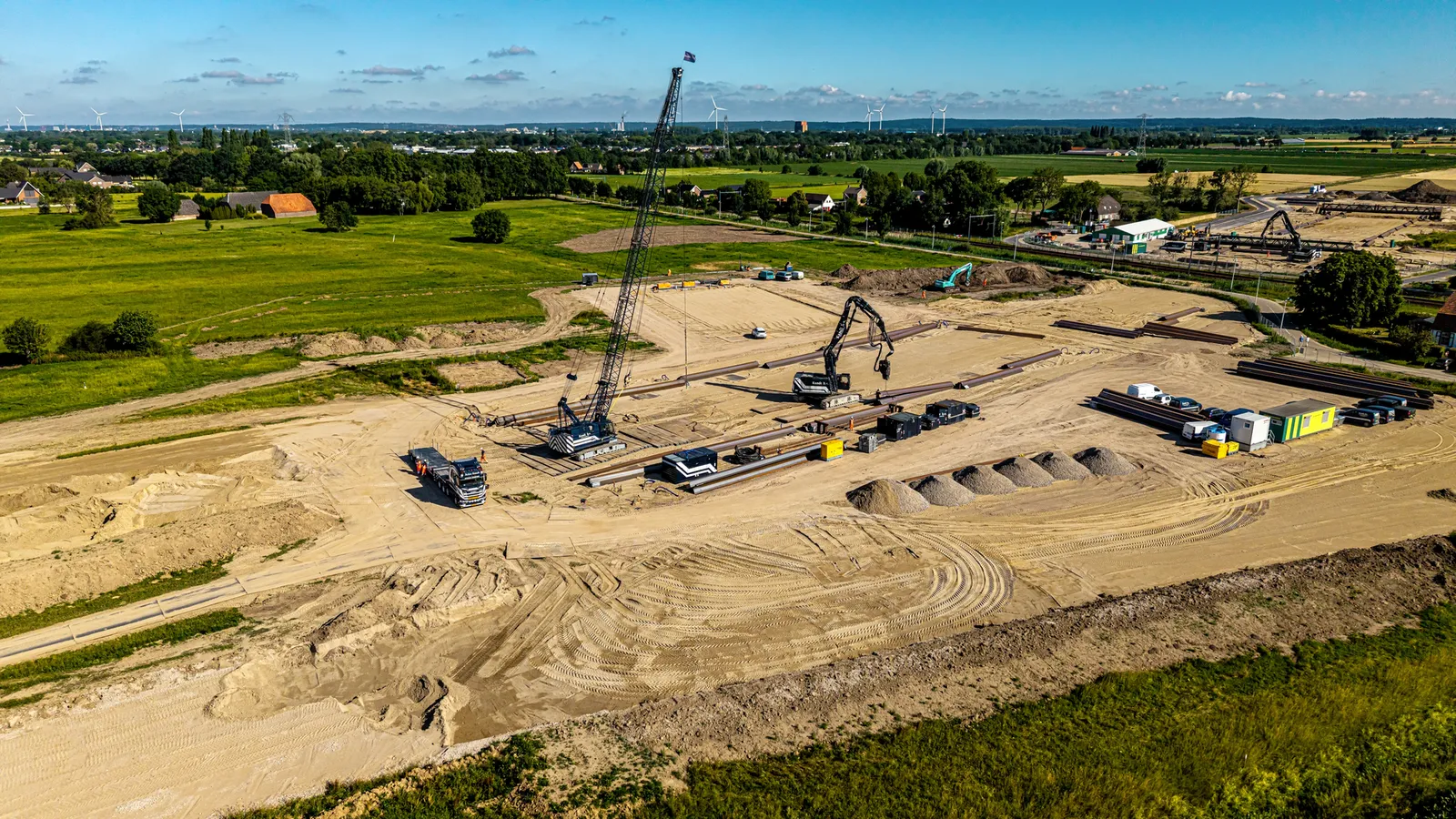
Based on the available noise allowance, Kandt set minimum and maximum daily output levels. Three machines were then deployed simultaneously to spread the work evenly across the day in a controlled way. The choice of equipment also played an important role. “Where possible, we used hydraulic piling rigs. They make it possible to manage output effectively and work efficiently on shorter sheet piles. However, longer sheet piles required a crawler crane with a suspended vibratory hammer. This technique produces less output, but is technically necessary for the longer elements.”
Close collaboration
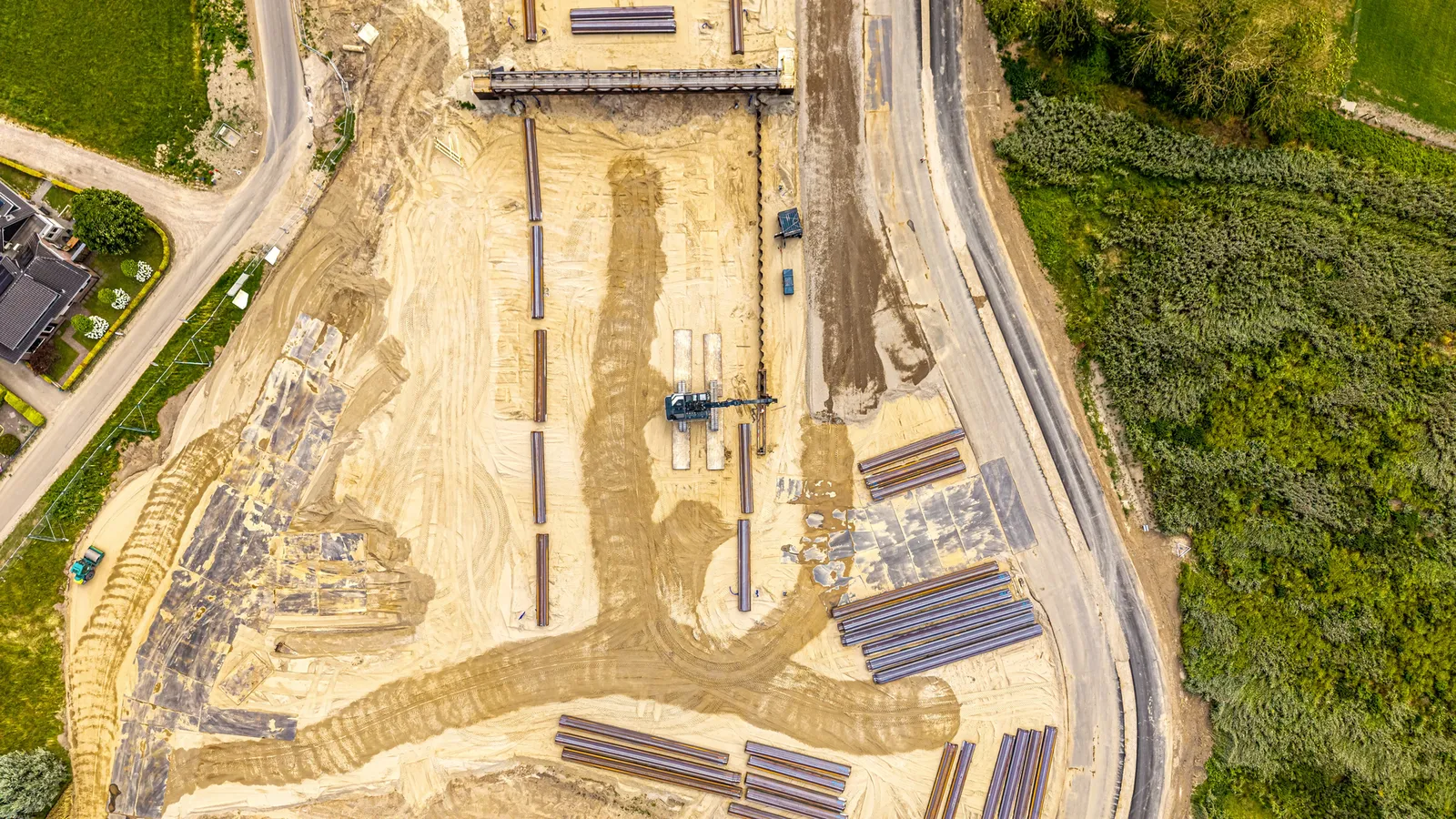
According to Bastiaan, the biggest challenge was ultimately not just technical, but above all a matter of collaboration. “We held discussions and coordinated with the GelreGroen team almost every day on the schedule, monitoring and progress of the work. This meant we could adjust activities where necessary without losing sight of the schedule or the surrounding area.”
A business enquiry for Kandt Aannemings- en Funderingsbedrijf BV? Get in touch
Wie aan ViA15 werkte
- zusteronderneming
 De Vries WerkendamMentioned in 25 years of expertise in foundations and (specialist) anchoring
- modulaire bruggen
 Retro BridgeMentioned in Eight modular bridges keep the complex ViA15 infrastructure project moving

Keep following this
Get an email when a new story is published. No account needed.
- ProjectViA15
- ThemeUnderground construction
- SubjectFoundations / Site investigation
- CompanyKandt Aannemings- en Funderingsbedrijf BV
- CompanyVan Oord