Open collaboration in innovative research into zero-emission dredging
Text and images Rijkswaterstaat
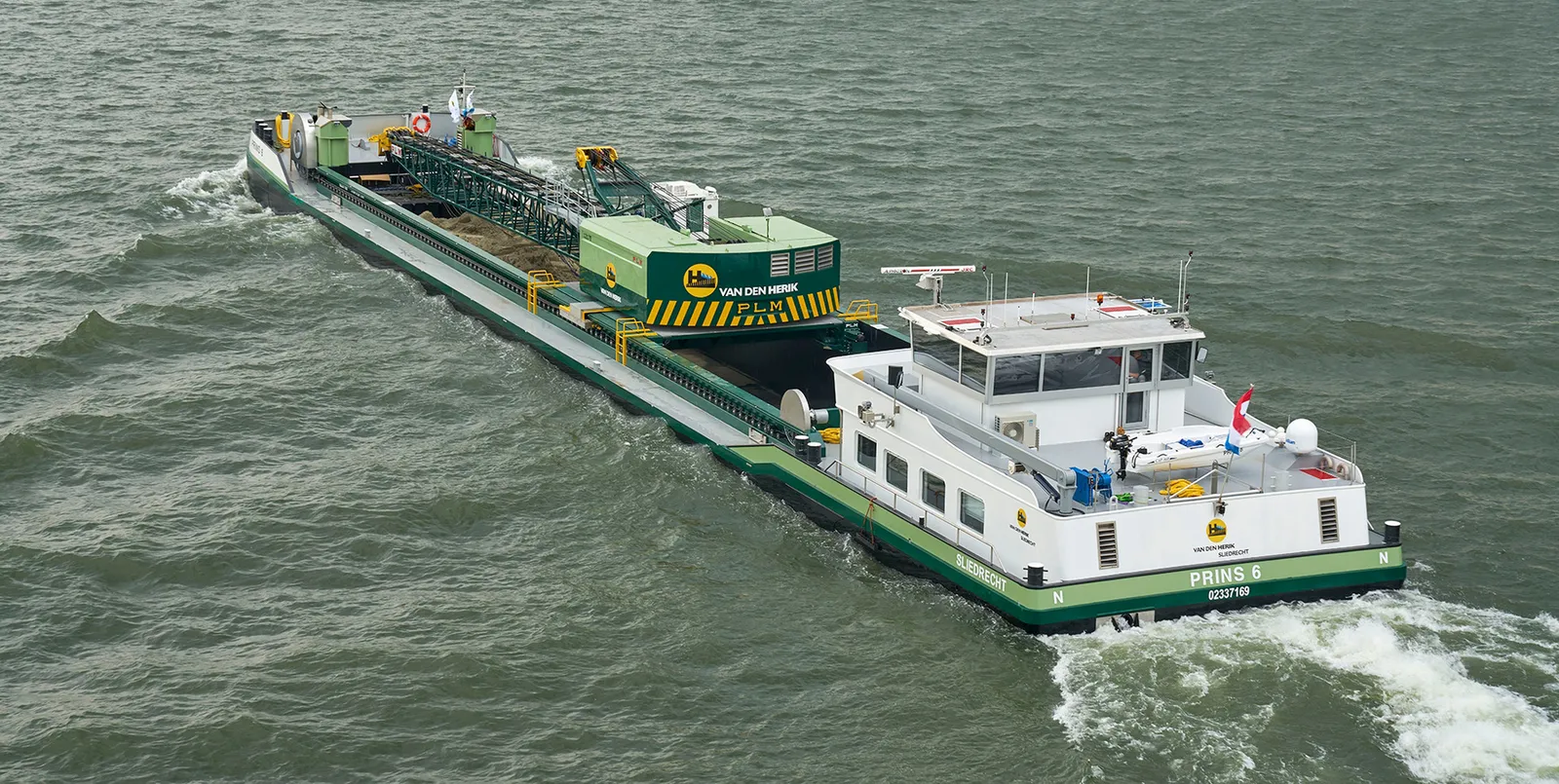
The dredging sector can only make the desired transition to zero-emission dredging through broad, open collaboration. Rijkswaterstaat and collaboration initiative ZEDHub are leading the way. Three research projects will start in September 2026 to fill knowledge gaps. Their findings will make future decisions more precise, realistic and less risky.
To enable climate-neutral and circular operations, Rijkswaterstaat encourages the parties involved to pursue targeted innovation. This is done in collaboration with partners through so-called transition pathways. The Coastal Maintenance and Navigation Channel Maintenance transition pathway focuses specifically on zero-emission dredging. “This requires major innovations that involve significant investment for individual parties in the dredging sector,” explains Rijkswaterstaat innovation adviser Maarten Molhoek. “That is why, as part of the transition pathway, we developed a Knowledge and Innovation Agenda that brings the entire sector on board. It follows three strands. We build knowledge through research projects. We seek out frontrunners who can use that knowledge to gain practical experience. And we share all the knowledge gained widely, with the ultimate aim of scaling up to large-scale application across the sector. We will soon take an important step in the first strand: research projects with a stronger focus on dredging in salt water.”
Sector-wide collaboration
Rijkswaterstaat has entered into a multi-year partnership with ZEDhub to support the transition to sustainable dredging. ZED stands for Zero Emission Dredging. The foundation was set up by businesses (Boskalis, Damen, Royal IHC and Van Oord) and aims to make zero-emission dredging possible by 2030, technically, economically and in terms of regulation. “To achieve this, we facilitate and encourage collaboration across the golden triangle of government, knowledge institutions and industry,” says director Arjen de Jong. “As a government organisation, Rijkswaterstaat, and knowledge institutions such as TNO, MARIN and technical universities are already used to working transparently towards shared goals. We encourage companies to participate in the same way, despite their differing interests. This involves the entire value chain, from technology suppliers and shipbuilders to dredging contractors. Twice a year, we hold in-person meetings to bring all parties together to discuss sustainability. We have also developed an AI platform with the Association of Water Builders, where the sector can reliably share new insights and best practices.”
Filling knowledge gaps
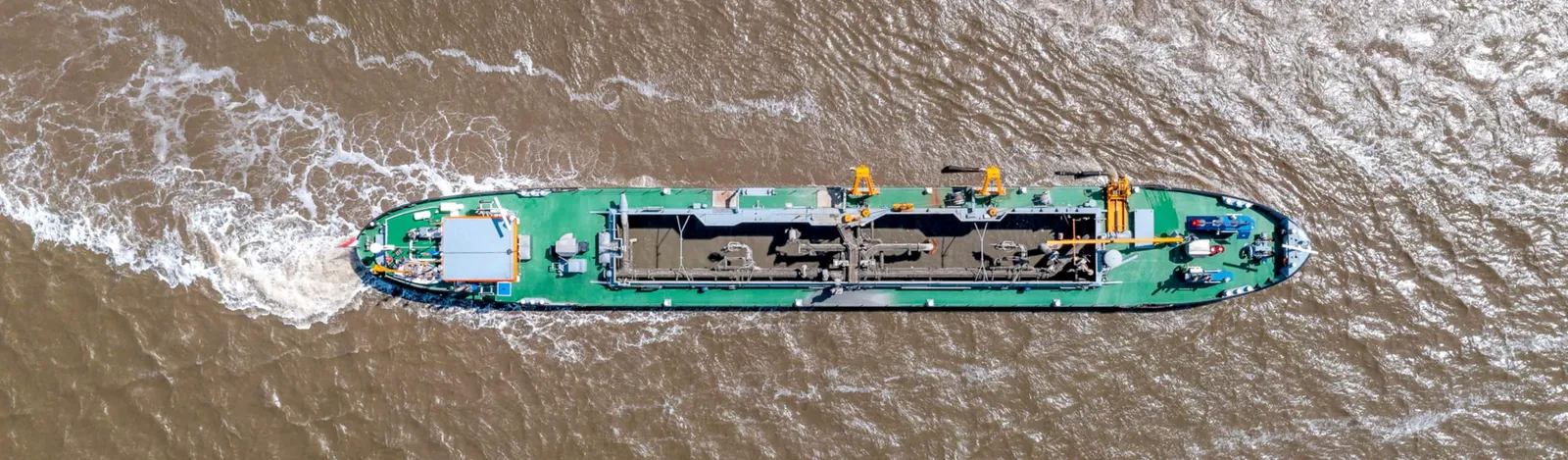
As part of the Knowledge and Innovation Agenda for the Coastal Maintenance and Navigation Channel Maintenance transition pathway, Rijkswaterstaat, ZEDHub and its partners have prepared three research projects. “These projects target important gaps in current knowledge,” Maarten emphasises. The focus is on dredging in salt water. “This is more challenging than in fresh water, where, for example, we already have experience with electric dredgers. We are researching innovations that are essential to enabling this transition, but which are unlikely to be taken up quickly by a single party, partly because it is difficult to recoup the investment. We have also selected research topics whose findings can be widely applied across the sector and for which the investment in time and money remains manageable.”
Open innovation: sharing knowledge
The research project plans are now complete and Rijkswaterstaat has given them the green light. They are expected to start in September 2026. The delivery partners were identified and selected through meetings organised by ZEDhub and Rijkswaterstaat. Maarten says: “What is particularly noteworthy is that all parties have agreed to make the findings available to a wide audience. We are proud of that.” Arjen adds: “Collaboration and knowledge-sharing can feel threatening, but open innovation is about making good agreements on what you do and do not share. We are pleased to be able to play a part in this.”
Taking things a step further
Alongside the research programmes, the Coastal Maintenance and Navigation Channel Maintenance transition pathway is working to bring frontrunner projects to market. Maarten says: “These are dredging projects, in this case in the Wadden Sea and the port of Rotterdam. We encourage market players to use sustainable, innovative techniques. The projects are not directly linked to the research, but there is a clear connection.” Arjen adds: “The market players awarded these projects can validate the research findings and take the techniques a step closer to commercial use. We will also share the lessons from these frontrunners as a basis for scaling up. This is how we will ultimately work with the entire sector towards zero-emission dredging.”
Question about this story? Ask your question
Companies in this story
Keep following this
Get an email when a new story is published. No account needed.
- ThemeFlood protection and climate-resilient water management
- SubjectRijkswaterstaat
- CompanyVan Oord