Protecting concrete structures extends their service life after repair
Text and images Fereb
Durable concrete repair can only be guaranteed if a number of essential steps are followed: a thorough diagnosis or preliminary investigation, the use of the right repair techniques and suitable products, and rigorous checks during and after the work. Additional protection is needed to extend the service life of the repaired concrete.
A Life Cycle Cost model based on project information and product properties compares the costs of concrete repair with and without protection. The report states that every euro invested in protection saves 3 to 5 euros in recurring repair costs, and that appropriate protection eliminates an average of three repair cycles over the structure’s service life.
Once the concrete repair has been completed, protection should be applied to prevent further damage over time. First and foremost, the protection must be suited to the environmental conditions described in EN 206-1 (the concrete standard). NBN EN 1504-2, in turn, specifies the different types of protective products.
Anti-carbonation coatings
In environments where there is a risk of corrosion caused by CO2, anti-carbonation coatings should be used. These are usually water-based acrylic emulsions. The most important property of anti-carbonation coatings is, naturally, their resistance to CO2 ingress. The material must be waterproof while remaining permeable to water vapour. In this way, these coatings protect the concrete against CO2 ingress and improve moisture control and the electrical resistance of the concrete.
Durable anti-carbonation coatings generally also have a high crack-bridging capacity and are weather-resistant. These coatings are available in a range of colours, providing an attractive finish to the structure.
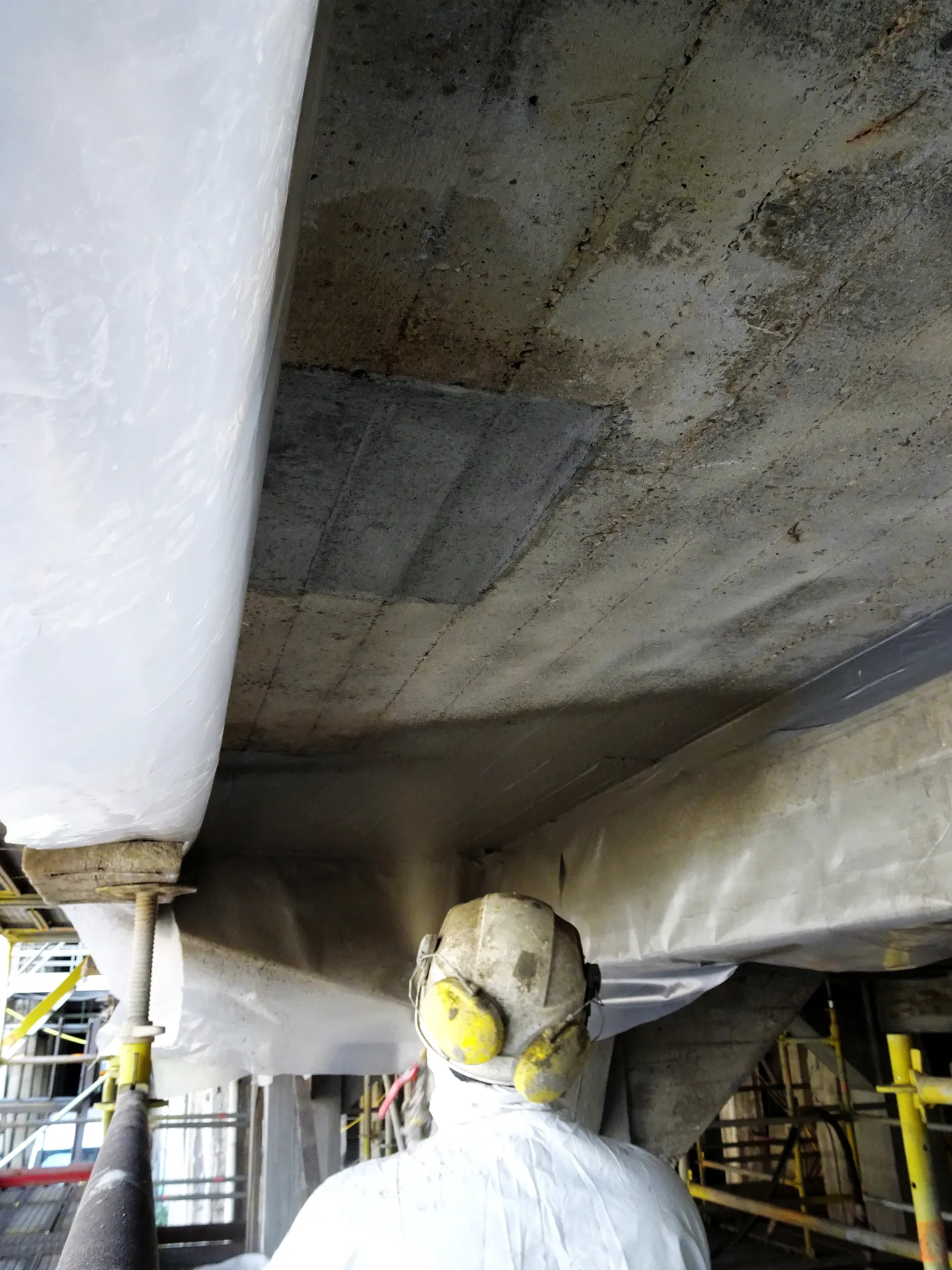
Hydrophobic impregnation
Corrosion inhibitors are molecules that prevent and slow corrosion of the reinforcement. These systems are mainly used on buildings along the coast, in ports, for example on quay walls, jetties and bridges, as well as on industrial structures in contact with seawater and chlorides, such as cooling towers, tanks and silos. To be effective, the inhibitors must reach the reinforcement. The molecules are therefore dissolved in a carrier that penetrates the concrete by impregnation. Carriers can be based on different technologies, including water- or alcohol-based systems. As with hydrophobic impregnation, the most effective systems are silane-based, as these ensure deep penetration. In this case, hydrophobic impregnation is combined with corrosion protection.
According to NBN EN 1504, the key properties of these systems are the same as those for hydrophobic impregnation. Manufacturers must demonstrate the electrochemical properties of the corrosion protection through on-site testing and references, and on the basis of independent test reports.
Chemical-resistant protective coatings
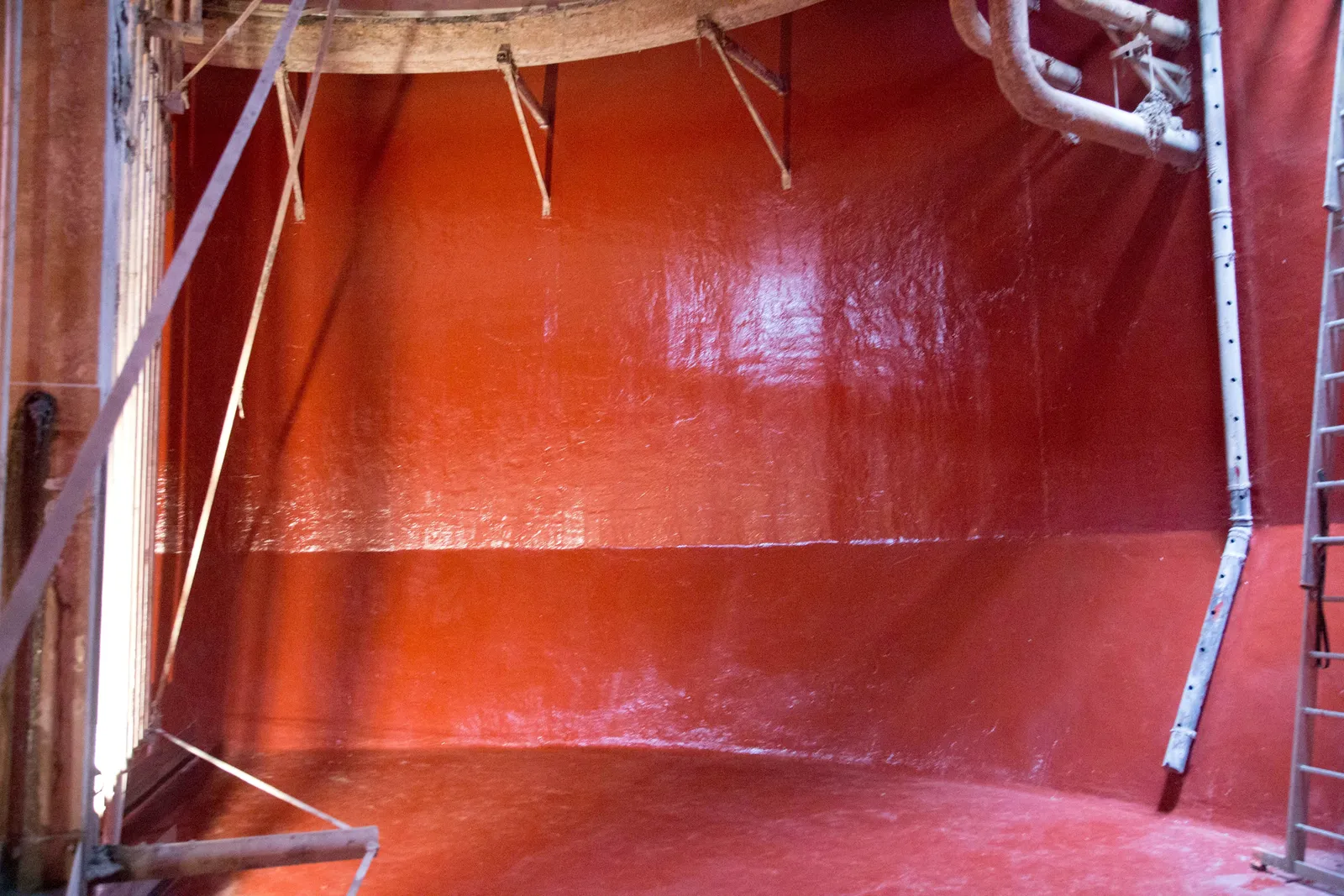
Protection against chemical attack is often needed in industrial settings, including bunds, containment basins and reservoirs, as well as to protect against biogenic sulphuric acid in wastewater treatment plants and sewer systems. A wide range of technologies is available on the market. Product choice depends on the application and environmental conditions, such as temperature, humidity and whether the environment is open or enclosed. Temporary or permanent exposure to specific chemicals is also an important factor. Always consult the supplier when making your choice.
Fire protection
In some circumstances, concrete must be protected against fire. High temperatures can cause spalling or lead to the failure of load-bearing concrete structures. The choice of solution depends on the conditions, the desired finish and the required fire resistance. In locations where appearance is of little importance, fire-resistant spray mortars can be used. In most cases, these mortars are applied mechanically. Fire-resistant paint may also be suitable in some cases. Finally, concrete columns, walls and floors can also be protected against fire using board materials.
This article was produced in collaboration with Steven Van den Wyngaert, Sika Belgium
Question about this story? Ask your question
Keep following this
Get an email when a new story is published. No account needed.
- ThemeExtending the life of roads and civil engineering structures
- SubjectConcrete