Pilz introduces MYZEL, a digital safety dossier for bridges and locks
Text Susan Peek Beeld Pilz
A digital overview as the foundation for demonstrably safe management
Moveable bridges and locks require increasingly rigorous management. Technology is becoming more complex, regulations stricter and pressure to maintain availability greater. The introduction of the new EU Machinery Regulation is changing the requirements for demonstrating safety. At the same time, ageing installations are increasingly being combined with new digital components. Knowledge often rests with a handful of specialists, while staff shortages make knowledge transfer more difficult. This calls for a clear overview and structure for both people and machines. Pilz is addressing this with its new MYZEL Lifecycle Platform. The platform helps operators organise safety, documentation and authorisations systematically and digitally.
Working safely is nothing new in the world of bridges and locks. What is changing is the extent to which safety must be demonstrable. “You have to be able to show how you went through the design process,” explains Arjan van Bommel, Director Services at Pilz. “From control systems and sensors to drives and access systems, they are all critical components. The documentation behind them is key to CE marking.” In practice, that documentation is precisely where the challenge lies. “We regularly work with parties renovating bridges and locks. We see them struggling with version control and compliance. Where is the relevant documentation? What has been changed? And who has access to it?”

Connecting people, machines and authorisations
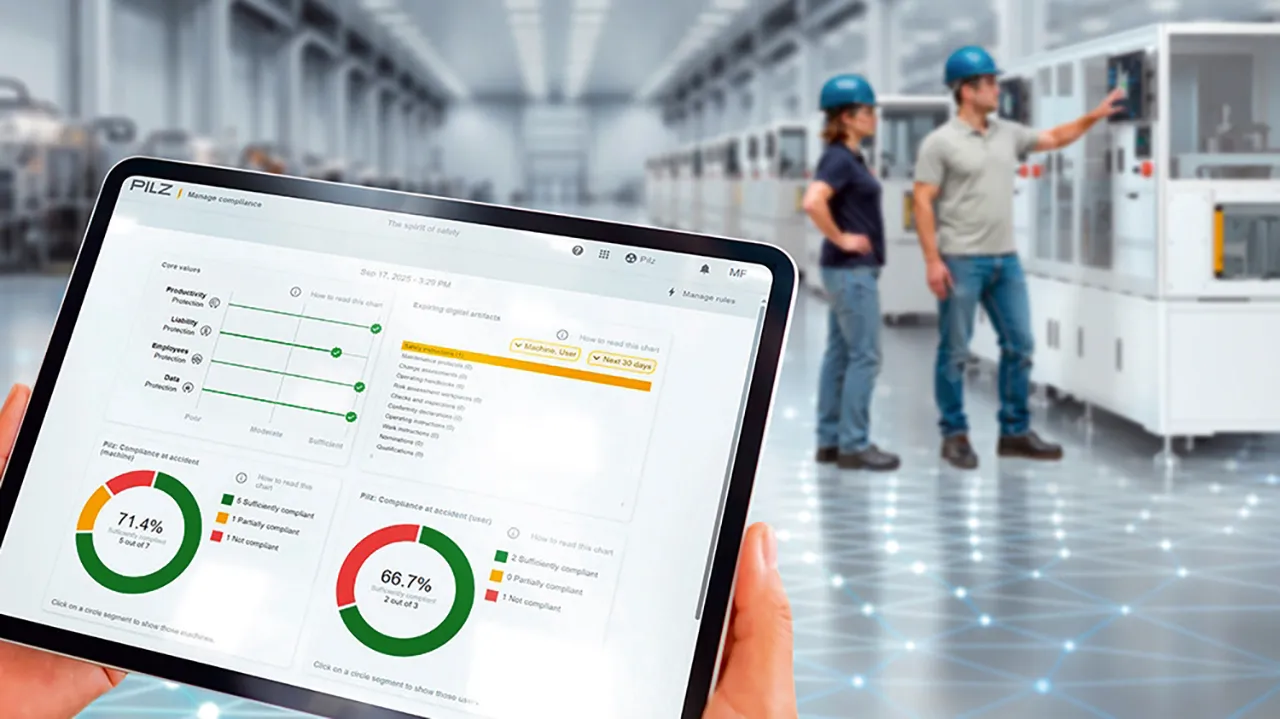
MYZEL brings all relevant information together in one central location. Design documentation, SIL and PL calculations, inspection reports, maintenance data and software versions are managed digitally and remain traceable.
The platform links assets such as bridges, locks, drives and components with employee data and safety documentation in a single, structured lifecycle overview.
According to Van Bommel, a key consideration is the connection between technology, operation and authorisations. “You want to know not only how an installation is built technically, but also who, for example, has access to it.” Access control and industrial security are playing an increasingly important role, particularly in light of the new Machinery Regulation. “It is not just about designing safely. You also have to be able to demonstrate that it has been set up and is being managed safely.”

Four core values as a compass
The platform is built around four core values: productivity, employee protection, liability protection and data protection. Productivity focuses on minimising downtime by keeping maintenance and emergency documentation, as well as software, always available. Employee protection means having an up-to-date overview of machine inspections and employee qualifications. Liability protection means that safety documentation is recorded fully and systematically, demonstrating that statutory obligations have been met. Data protection ensures information is stored securely and access rights are managed in a controlled way.
Availability as a prerequisite
Although all four are important, Van Bommel sees availability as the area with the greatest potential benefits for the civil engineering sector. “In this sector, availability is not a luxury but a prerequisite. Every unexpected outage has an immediate impact on traffic and flow.” He says the platform’s greatest strength lies in its preventive approach. “By keeping documentation, authorisations and software versions up to date and centrally available at all times, safety management remains systematically under control. If something happens, you do not want to have to search through archives first. With MYZEL, you can immediately see design decisions and software versions, and act more quickly, preventing unnecessary downtime.”
Not asset management, but safety
MYZEL is explicitly positioned as a management tool for critical infrastructure, not as a general asset management or maintenance system. “This is about safety: people, machines and safety,” says Van Bommel. He expects digital lifecycle management to become increasingly non-optional when the new regulations take effect in 2027. “The urgency is growing. It starts with awareness, but ultimately this will become a prerequisite for keeping safety and availability systematically under control.”
Een zakelijke vraag aan Pilz? Get in touch
Companies in this story
Keep following this
Get an email when a new story is published. No account needed.
- ThemeExtending the life of roads and civil engineering structures
- SubjectDigitalisation & software
- CompanyPilz