AI and autonomous transport are transforming logistics in the civil engineering sector
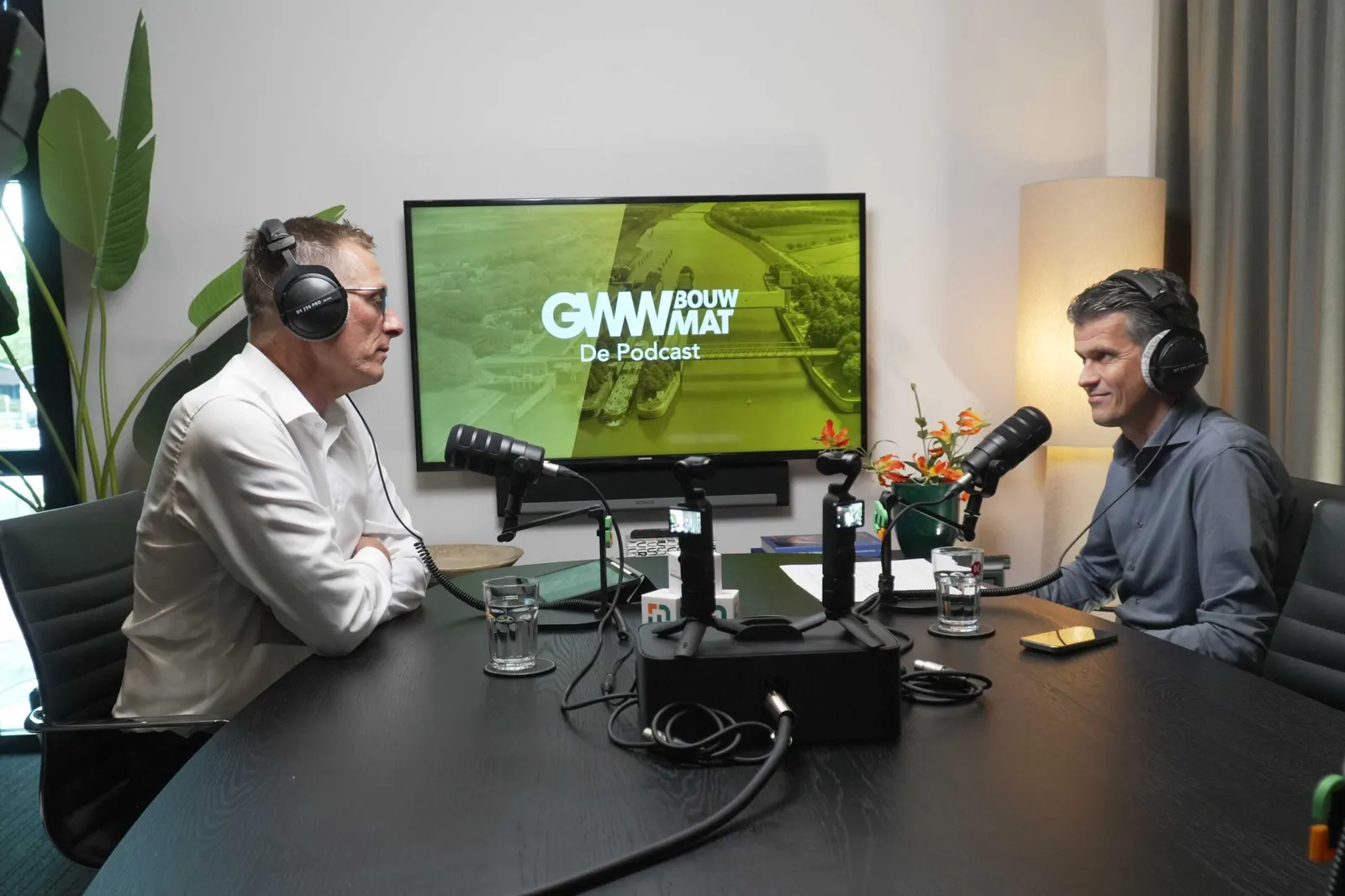
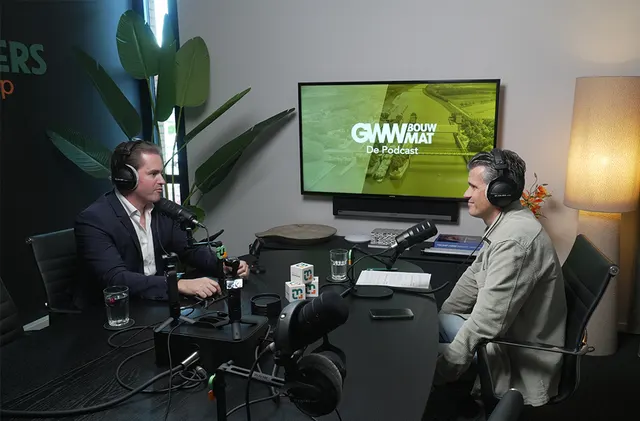
Fewer empty miles, smarter planning and perhaps autonomous lorries on public roads in the future. Millenaar & Van Schaik Transport is making a major push into AI, data sharing and electrification to organise transport in the civil engineering sector more efficiently. Operations director Marcel Vermeulen explains how digital assistants are already supporting drivers, why the planner is increasingly becoming a coordinator and why collaboration is crucial to the logistics of tomorrow.
Speaker(s): Marcel Vermeulen, operations director
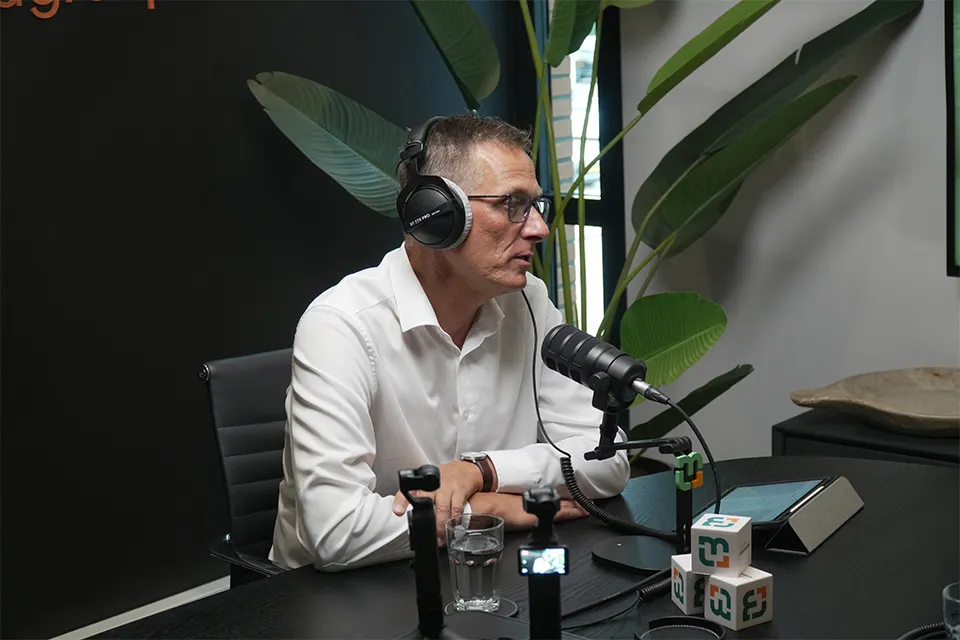
Host: Roel van Gils
Full transcript
All chapters (13)
- AI, data and automation in transport
- Making the fleet more sustainable
- AI as a digital coach for drivers
- The planner of tomorrow
- A denser transport network and fewer empty miles
- Data sharing takes trust
- Autonomous transport
- Autonomous transport in civil engineering
- Safety and autonomous driving
- The construction site of the future
- Collaboration as a prerequisite for innovation
- Electric, diesel and future powertrains
- Is the organisation ready for the autonomous truck?
AI, data and automation in transport
Roel van Gils Welcome to another episode of GWW Bouwmat, the podcast. Joining me today is Marcel Vermeulen from Millenaar & Van Schaik Transport. Today we’re talking about a subject that by now everyone knows something about and has an opinion on: AI. But when we talk about AI, data and automation in transport, what are we actually talking about? Marcel, welcome.
Marcel Vermeulen Thank you.
Roel van Gils Tell us a little about yourself.
Marcel Vermeulen I’m Marcel Vermeulen, operations director at Millenaar & Van Schaik in Oude Meer. The yellow and black vehicles, as we always say. We’ve been in business since 1923. For more than 103 years. That’s a good stretch of time. And we’re still doing it with plenty of enjoyment, passion and dedication.
Roel van Gils And you’ve made big strides in recent years in particular?
Marcel Vermeulen Yes, the world doesn’t stand still. And neither does the traditional construction industry. So we’ve shifted from diesel to electric vehicles. And then the next developments naturally follow. That means charging hubs, charging points and software that needs to work together and communicate with other systems. So developments follow one another very quickly, and things move fast.
Making the fleet more sustainable
Roel van Gils Can you give us a glimpse of what you’re working on at the moment?
Marcel Vermeulen In our sector, we work with asphalt and planings for our four largest clients, who also happen to be our fellow shareholders. We operate across 50 per cent of the Netherlands, in the west and the centre of the country. We work in a number of niche areas. For example, all our drivers are equipped to access Schiphol, including the areas beyond customs. Our vehicles are equipped for that too. We have electric vehicles. A large part of our fleet has now been made more sustainable, more than 25 per cent. And each year we add a number of vehicles. But that brings new challenges too, and software is needed to plan around them. Planners also need software that gives them better insight into forecasting how long a vehicle can operate. All these developments come our way naturally. And, as I said, they follow one another very quickly.
Read the full transcriptCollapse transcriptnog 11 hoofdstukken
AI as a digital coach for drivers
Roel van Gils We mentioned AI in the introduction. It’s not an end in itself for you, of course. But how can AI help?
Marcel Vermeulen The latest application we’ve gone live with helps our drivers avoid tachograph infringements and learn from them.
Roel van Gils Right.
Marcel Vermeulen So if someone uses a tachograph incorrectly, they get a message from Alex. Alex is the digital assistant. It starts a dialogue with the driver: “Hey, at this time you committed this infringement or made this mistake. Are you aware of it? It was in this vehicle, which has this tachograph model. Here’s a video. If you’re not familiar with it, do you now have enough information to avoid it?” That leads to a whole dialogue. The driver works through it. So we no longer need to bring in someone who isn’t based at our depot but works remotely to make sure the driver is corrected and coached within 24 hours: this is what went wrong, this is how to put it right. Do you understand how it works? It all happens autonomously, using AI.
Roel van Gils So it’s a digital coach?
Marcel Vermeulen Basically, yes, Alex is.
Roel van Gils But that’s not all, is it?
Marcel Vermeulen No. The next AI development we’re preparing will be for the administrative side of things. Our logistics administration is very demanding because asphalt planings are a waste stream. Waste streams are heavily regulated in the Netherlands, which brings a substantial administrative burden. That requires a great deal of coordination with everyone involved in the chain, and so the logistics administration has a lot of tasks to handle. Unfortunately, our TMS environment doesn’t support this. So at the moment we do it outside our TMS environment, and we’ve hired someone to write AI agents specifically for us, so that it can be automated outside the software.
The planner of tomorrow
Roel van Gils Is that also what the planner of tomorrow will be?
Marcel Vermeulen The planner of tomorrow takes things a step further. Under our current business model, we plan vehicle allocation. A vehicle goes to a job for the day. We do see that changing. In the civil engineering sector, vehicle productivity is simply low, and it will stay low rather than increasing, because all kinds of developments are creating obstacles. There isn’t a surplus of asphalt plants. A vehicle always has to wait. There are production schedules. There’s always some kind of disruption, always some reason why a vehicle is standing still. But if you map things properly and look carefully at where the opportunities to generate value lie, which you can now do very well using our own data, you can see there are definitely possibilities. If you shift to a different way of operating, a different model, a different approach, you can use AI very effectively to create a kind of distribution network with a denser network. I could say a lot more about that.
Roel van Gils We might come back to that later. Perhaps we could make it clearer with a concrete example.
Marcel Vermeulen Here’s an example. Normally, we drive from Amsterdam, where our depot is, to an asphalt plant to collect asphalt, travelling there empty. At the moment, with water levels so low, we’re seeing tonnes of material being transferred from ships to road transport. But there aren’t any more vehicles available. So this is what we’re doing: from Amsterdam, we transport aggregate to the asphalt plant in Deventer. We load asphalt in Deventer and take it to the A6. After unloading the asphalt on the A6, we load asphalt planings to take back to the lake, to a site in the centre of the country. We tip it there, then load construction materials and take them back to the asphalt plant.
Roel van Gils All with the same vehicle?
Marcel Vermeulen All with the same vehicle. Traditionally, that would never happen. The vehicle would just go back and forth carrying either asphalt or asphalt planings. It would be dedicated to that job. Now, we can see that there are lots of possibilities as tonnes of material shift from water to road. We want to make the most of that. But a planner can’t do it with the tools available to them. That’s why we’re actively looking for an AI-enabled TMS on the market to take the pressure off the planner.
Roel van Gils So the planner of tomorrow will really be more of a coordinator?
Marcel Vermeulen Yes.
A denser transport network and fewer empty miles
Roel van Gils So the example you just gave isn’t possible yet?
Marcel Vermeulen In practice, it doesn’t happen at the moment because we don’t know about those flows, we don’t have the right set-up and we don’t have the monitoring in place. In the distribution sector I come from, retail distribution, there’s a control tower. It’s not a given that a vehicle will be assigned to one customer for the whole day. Instead, you’re talking about legs planned one after another. And AI is very good at that.
Roel van Gils So you are talking about making the network denser. In other words, fewer empty runs?
Marcel Vermeulen That’s right.
Roel van Gils So you look more efficiently at the movements that are already taking place.
Marcel Vermeulen Exactly. There’s a shortage of drivers in the Netherlands. Not of work, but of drivers and available hours. We can make very good use of those hours this way. And the next development is on the horizon, and it’s already making its way into the country. I’m referring to the announcement DAF made this week. DAF and Einride are going to work together on autonomous transport. That’s a topic in its own right.
Roel van Gils We’ll touch on that in a moment too. But can you give us an idea of how much driving is currently done empty?
Marcel Vermeulen As a percentage? More than 50 per cent.
Roel van Gils Seriously? Really more than 50 per cent?
Marcel Vermeulen The vehicle drives empty from the depot to the first job. Then it goes back and forth. Nine times out of ten, it’s empty.
Roel van Gils But you need to know, for example, that the asphalt planings are there. So every party in the chain needs to have data too.
Marcel Vermeulen Yes. The words that go with that are: collaborate, collaborate and collaborate. Then come transparency, courage and commitment. Those are the words that describe collaboration. I’m very pleased that we’ve already made great strides within our company with our four shareholders: BAM, Heijmans, Dura Vermeer and [inaudible]. They already allow us to combine a great many things. You can see them working together on major construction projects too, but there’s scope to extend that further.
Data sharing takes trust
Roel van Gils Where do you think the biggest challenge lies when it comes to sharing data?
Marcel Vermeulen People need to let go. People in the field currently see a lorry as something they own. I’ve hired that vehicle for the whole day, so it’s mine all day. At some point, they need to believe and trust that if you order a load of asphalt through a planning system, a control tower, it will arrive on time.
Roel van Gils That it will be there when you need it.
Marcel Vermeulen That it will be there. We always point to the concrete sector. They’ve been working in exactly this way for years. In the distribution sector I come from, this is how things are always done. There’s a loading bay slot at ten past seven. You think it’s your bay, but it turns out another vehicle was there at half past six. And at [inaudible] there’s another vehicle. That supply chain mindset hasn’t yet been fully adopted in the construction industry. Other factors come into play there: trust, courage and commitment.
Roel van Gils What does that offer customers?
Marcel Vermeulen The professional skills of the driver, because that really is what we need to talk about. Every driver I see in the Netherlands is a skilled professional. These are people who love diesel, a good-looking truck and driving. That is what they want to focus on. They certainly do not want to be administrators. So keeping the driver's working environment attractive is key. That's one thing. Safety is also top priority. In fact, it shares first place. People need to be pleasant to work with, and the working environment must be and remain safe. You are not going to find enough drivers in, let's say, less developed foreign countries. Because being able to communicate in Dutch is absolutely essential in our work zones. People need to be able to speak Dutch. They need to understand each other with just a word or two. Stop means stop. Up and down mean up and down. There are too many serious accidents in our work zones. Especially in the work zone. I do not want to go into that, because it is simply horrific.
Roel van Gils So safety really is top priority.
Marcel Vermeulen Safety is top priority. So you need skilled professionals. And we have them in the Netherlands. But we need to make good use of them. We must make sure they do not make just two trips a day and drive for only four hours out of the ten hours available. We need to ensure that people do the work in a way they are comfortable with, making full use of their professional skills. Let them drive. Client A, client B or client C. It really does not make much difference.
Autonomous transport
Roel van Gils And drivers will always be needed too.
Marcel Vermeulen Drivers will always be needed. Yes, there are developments in automation.
Roel van Gils That is actually where I wanted to go. Perhaps the most spectacular aspect: autonomous driving.
Marcel Vermeulen A few weeks ago, our Minister of Infrastructure and Water Management, Vincent Karremans, said he expects to be able to issue the first permits in 2029. I think a great deal is already happening in Europe, America and China that points in that direction. And if you want to remain viable as a transport operator in the future, you need to look for your added value. That added value is not simply getting a vehicle to drive, but making it drive in the best way, with maximum productivity and efficiency, and keeping it moving. An electric vehicle costs us almost three times as much as a diesel one. I would ideally have it working day and night, with a good driver behind the wheel. But if it can work without a good driver, autonomously, then that is what we will choose. And if that requires a major investment, which it does, Millenaar & Van Schaik wants to be and remain a frontrunner. We want to commit to this too and make our interest clear. And we are doing so. We see that our parent company Heijmans is already working with autonomous asphalt rollers. [Inaudible], perhaps with a safety driver at least.
Roel van Gils How close are we to that in transport, in terms of autonomous driving?
Marcel Vermeulen The first small steps have already been taken in Europe. And you can simply extrapolate developments in America or apply them here. Because it is already common practice in America. Between Dallas and Houston, you can see an operator running a scheduled service. It covers 230 miles every day with uncrewed vehicles carrying parcels for a major parcel carrier. And there is a large mining operation under way in Texas. In fact, those very large trucks have been driving autonomously there for years. Volvo has a series of autonomous vehicles operating at a mine in Norway, 24/7.
Roel van Gils Yes, but all of that is still in closed-off areas, isn't it?
Marcel Vermeulen There are also sections on public roads. In Antwerp. At Efteling, there was an autonomous bus recently. So you can already see developments in the Port of Antwerp. And I see that DAF and Einride are now going to work together. I will be visiting them soon. I hope to hear what they themselves expect to happen on public roads here. And I hope Vincent Karremans is listening, and that he [inaudible].
Roel van Gils So we can be a frontrunner in that, essentially.
Marcel Vermeulen And permits. The permitting process is something I find quite exciting.
Autonomous transport in civil engineering
Roel van Gils Why is this particularly interesting for infrastructure and civil engineering?
Marcel Vermeulen People very much want work to be carried out at inconvenient times, so that people travelling along the road are disrupted as little as possible. You see that people in road construction would rather work at convenient times and avoid those inconvenient hours. [Inaudible] on the day shift. Last Monday, we closed the A1 [inaudible], which had been closed for six weeks. You can see that this is the best and most efficient way to do it.
Roel van Gils Yes, but you cannot close every road for six weeks.
Marcel Vermeulen That simply is not possible. It is not realistic either. So I think there is definitely a place for autonomous transport in the Netherlands at inconvenient times and for certain types of work. I really do. And in infrastructure too. I am convinced of that.
Roel van Gils Do you think we are really ready for that?
Marcel Vermeulen Internally, we are starting to digitise and ensure that we move to a different business model for hiring out and deploying trucks. And I think that once we reach that level, we will also have reached a scale where autonomous trucks can be deployed in 2029.
Roel van Gils Yes.
Marcel Vermeulen Millenaar is very committed to horizontal collaboration, that is, collaboration across the industry. [Inaudible] can join us and contribute their ideas, because this is about software that needs to be installed or designed.
Roel van Gils So autonomy does not start with the vehicle, but with the processes behind it.
Marcel Vermeulen Of course, that is the whole point. We cannot shoulder those development costs alone. We work with very large contractors, yes, but it still needs to be a viable business case. And I think the whole industry will benefit if we do this. And once again: no drivers will be made redundant.
Roel van Gils There are already too few of them.
Marcel Vermeulen There are already too few of them. And this will complement what we have, fitting in alongside and between it.
Safety and autonomous driving
Roel van Gils And what does this mean for safety?
Marcel Vermeulen If I am to believe the figures and reports from America, autonomous driving on public roads is safer than having a truck driver drive. The incident rate is lower than the rate they normally see. The vehicle drives autonomously, finds its own position on the road and nothing unpredictable happens with it. And if we think this is just because it is all so new, so there is not yet much data to go on... A few million miles have already been driven by autonomous vehicles in America. That is on busy motorways.
Roel van Gils What else will your organisation need to do internally?
Marcel Vermeulen Our organisation works with the models we know today, using the vehicles and carrying out the work we know today. There is nothing wrong with that. But GPS, geofencing, AI, data sharing, Basic Data Infrastructure: these are all terms used at Millenaar & Van Schaik every day. So we work on them every day. Topsector Logistiek supports us with data sharing. People still find it a little daunting. Because data is gold. It may well be that data is gold. But for us, data sharing is mainly about learning. Making sure other parties can work with our data and develop models that we can use. I have no secrets. You can see the x and y coordinates of a completed trip. You can also see the temperature during that trip. It is all stored. We make all of that available through BDI. There is one issue, of course: NIS2. We do need to protect security. And we do. But within those boundaries, within those parameters, we can see that we are getting our organisation ready with all the things that go with it.
Marcel Vermeulen It is a shame that our industry is characterised by a higher average age. Not everyone is ready for it yet. Not everyone automatically [inaudible] and not everyone is interested. At home, we all use ChatGPT and make fun photos and pictures. But when it comes to work, it feels threatening, unfamiliar or confronting. Or it stirs up emotions you do not want to have. Even though it is being introduced specifically to take the burden off people and help them. To move our organisation forward, towards the future.
Roel van Gils So that mindset needs to shift too.
Marcel Vermeulen Yes. And once again, I have been saying this for years: come and see what is happening in logistics. There is a lot of development taking place. People always leave amazed and astonished after visiting us. At how much data flows through our company and what we are doing with it. And at the developments that are still possible.
The construction site of the future
Roel van Gils If we bring all these developments together, what will a construction site look like in ten years or so?
Marcel Vermeulen I think the same driver will still come to the construction site. The same finishing worker will still be there. [Inaudible] will then be replaced by a digital alternative. Whether that is on the planning side, the operational side, invoicing or delivery notes. A driver will be able to follow instructions to a work zone they have never visited before and work there safely. From the control tower, the site manager will be able to see to the minute when each vehicle is arriving and what it is carrying. Is it sand? Soil? Gravel?
Roel van Gils Yes.
Marcel Vermeulen These are all things that are common practice in certain industries, but not yet in road construction. They need to come together. We can bring them in just like that.
Roel van Gils There is no need to reinvent the wheel, of course. Look at other sectors and what they already have and what works well.
Marcel Vermeulen Yes. So the construction site of the future will be one where people, skilled professionals, can work comfortably and enjoyably. And still enjoy their work, simply. Because that is very important too.
Collaboration as a prerequisite for innovation
Roel van Gils It has been great to get a glimpse of your work at Millenaar & Van Schaik. One final question: if you could give some advice to companies active in transport or civil engineering in general, what would it be?
Marcel Vermeulen Above all, seek collaboration. You can move faster on your own, but together you can go further. That still holds true. Look for ways to work together, even on the smallest things. Take a simple example for Millenaar. However big we are, we once had 105 diesel vehicles. Now we have just 80. That means the amount of diesel we need to buy, each month and each week, keeps getting smaller. As a result, our purchasing position in the market is getting weaker. So I need someone else to work with if we are to retain the benefits of economies of scale. We don’t have to formalise everything on paper straight away. Just sit down first and get in touch with a competitor. They face the same challenges and the same problems.
Marcel Vermeulen You can’t stop developments. The truck toll is here. And not everyone passes on all the costs of the truck toll. Maybe you need to share journeys with one another. Maybe you need to approach clients and look for a solution together. Seek collaboration, that’s the message.
Electric, diesel and future powertrains
Roel van Gils Electric and diesel, that’s no longer a debate for you, is it?
Marcel Vermeulen No. We see diesel and electric vehicles coexisting. And perhaps a third option will join them in the future. Whether that will be hydrogen, and whether it happens in ’28 or ’38, we’ll see. You can’t roll out electricity infrastructure and charging hubs without limits across the whole of the Netherlands, so that will certainly be a challenge.
Roel van Gils Diesel isn’t a cure-all either.
Marcel Vermeulen No, it will be a combination. And if one of our competitors calls and needs electric transport for a client, we always agree to those requests. We would never take advantage of the situation. We always work together, because collaboration matters. That’s really the message I want to give everyone for the future.
Is the organisation ready for the autonomous truck?
Roel van Gils So the autonomous truck may soon be right on your doorstep. But the question is: is your organisation ready to put that truck to work?
Marcel Vermeulen We’re working hard on that now. I hope it won’t be on our doorstep. I hope it’s already on its way.
Roel van Gils Oh, right, it’s already on its way.
Marcel Vermeulen But you do need to prepare your organisation and culture for it, and bring people along. People see those images and think they’re AI. But they’re not AI. They’re real images of real trucks driving on public roads. I recently saw Johnny Nijenhuis. He’d been to China. You get into a driverless taxi there, and you see driverless lorries driving along the road. It’s already completely normal.
Roel van Gils Now we just need it here.
Marcel Vermeulen My pleasure.
Roel van Gils And thank you for listening.
Companies in this story
Keep following this
Get an email when a new story is published. No account needed.
- SubjectSustainability & innovation
- CompanyVermeulen Groep