Geotextile designed to disappear
Text Roel van Gils Beeld Joosten Groep
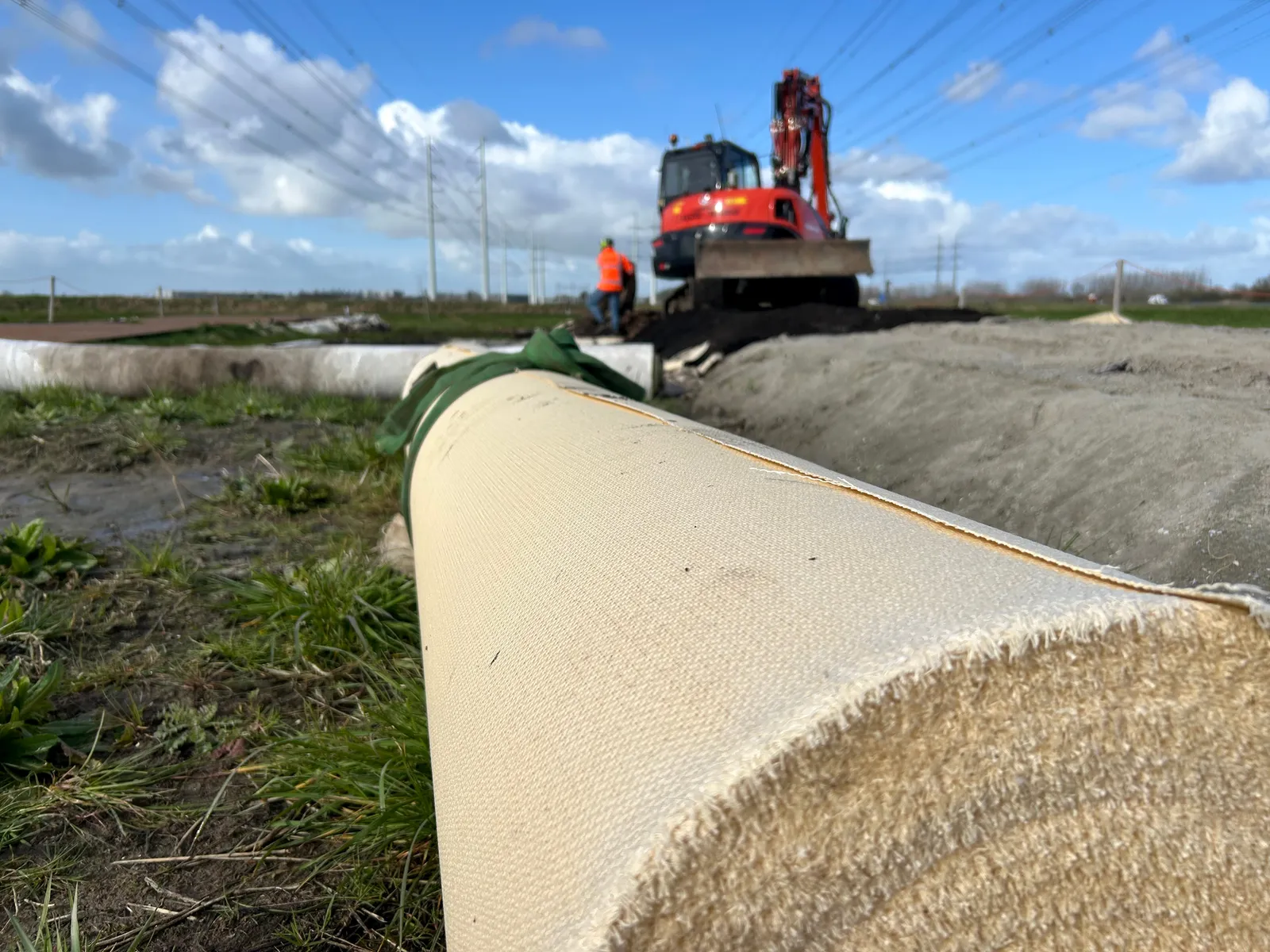
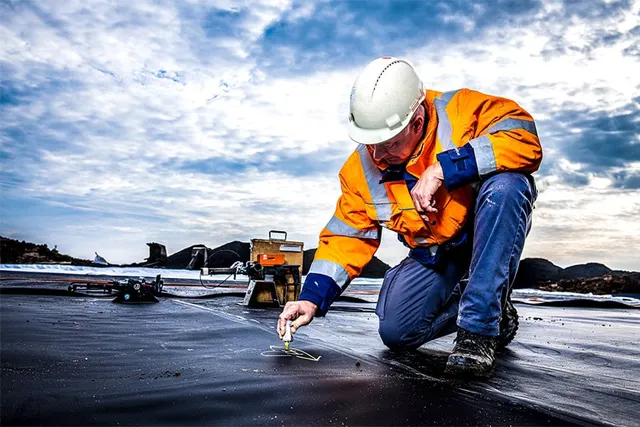
Why design geotextile to last a hundred years if it will be removed after just five? That question was the starting point for an innovative development by Joosten: JSTN Jogetex HV. Made from wood fibres, it is a fully biobased and biodegradable geotextile. It is being trialled alongside the usual synthetic alternative on the Neder-Betuwe dike reinforcement project.
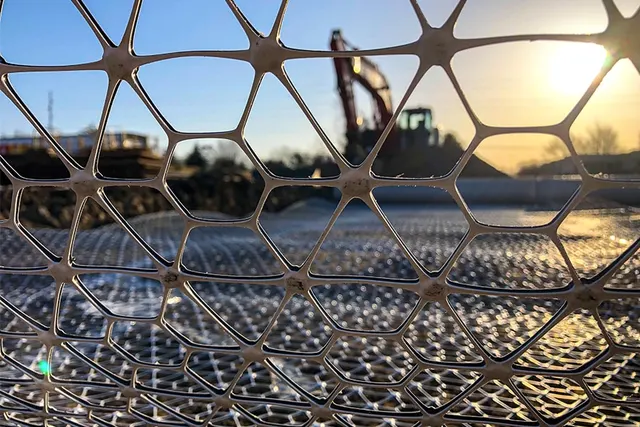
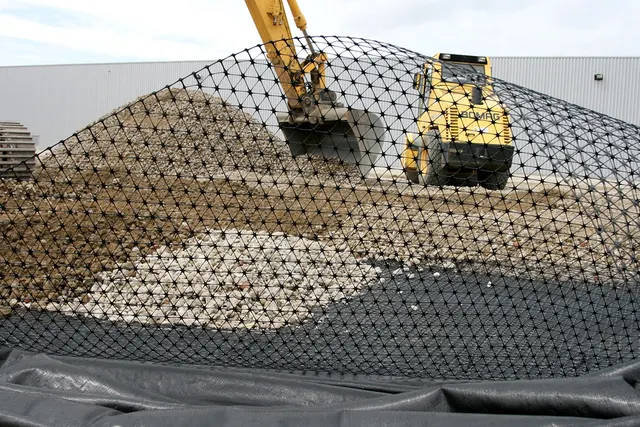
Geotextiles are indispensable in civil engineering. “They stabilise construction roads, reinforce structures and separate different soil layers,” says Marco Hazenkamp, Manager IDeA at Joosten Groep. “Traditionally, these materials are made from synthetic plastics and designed for a functional service life of a hundred years. That makes sense for applications beneath bridges, roads or hydraulic engineering structures that need to perform for decades.”
A waste of valuable resources
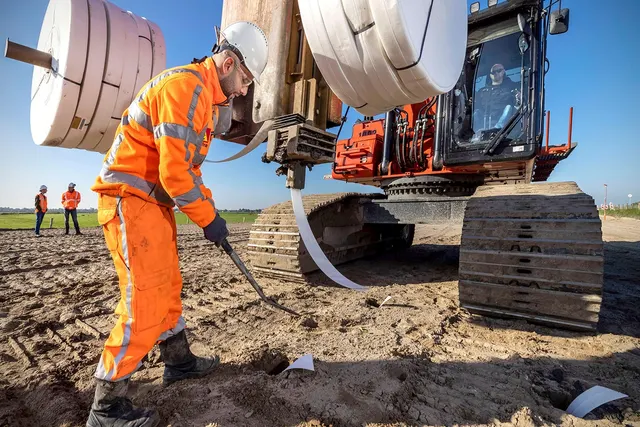
But not every application calls for such a long service life. “Temporary construction roads and crane platforms, for example those used when building and maintaining high-voltage connections or wind turbines, create a striking paradox,” Hazenkamp rightly points out. “Here, the geotextile only needs to perform its function for a few years. Once the project is complete, the site must be restored to its original condition. The material is then removed and often incinerated. A product designed to last a century thus enters the waste stream after just a few years. That is a sheer waste of valuable resources.”
Wood fibre
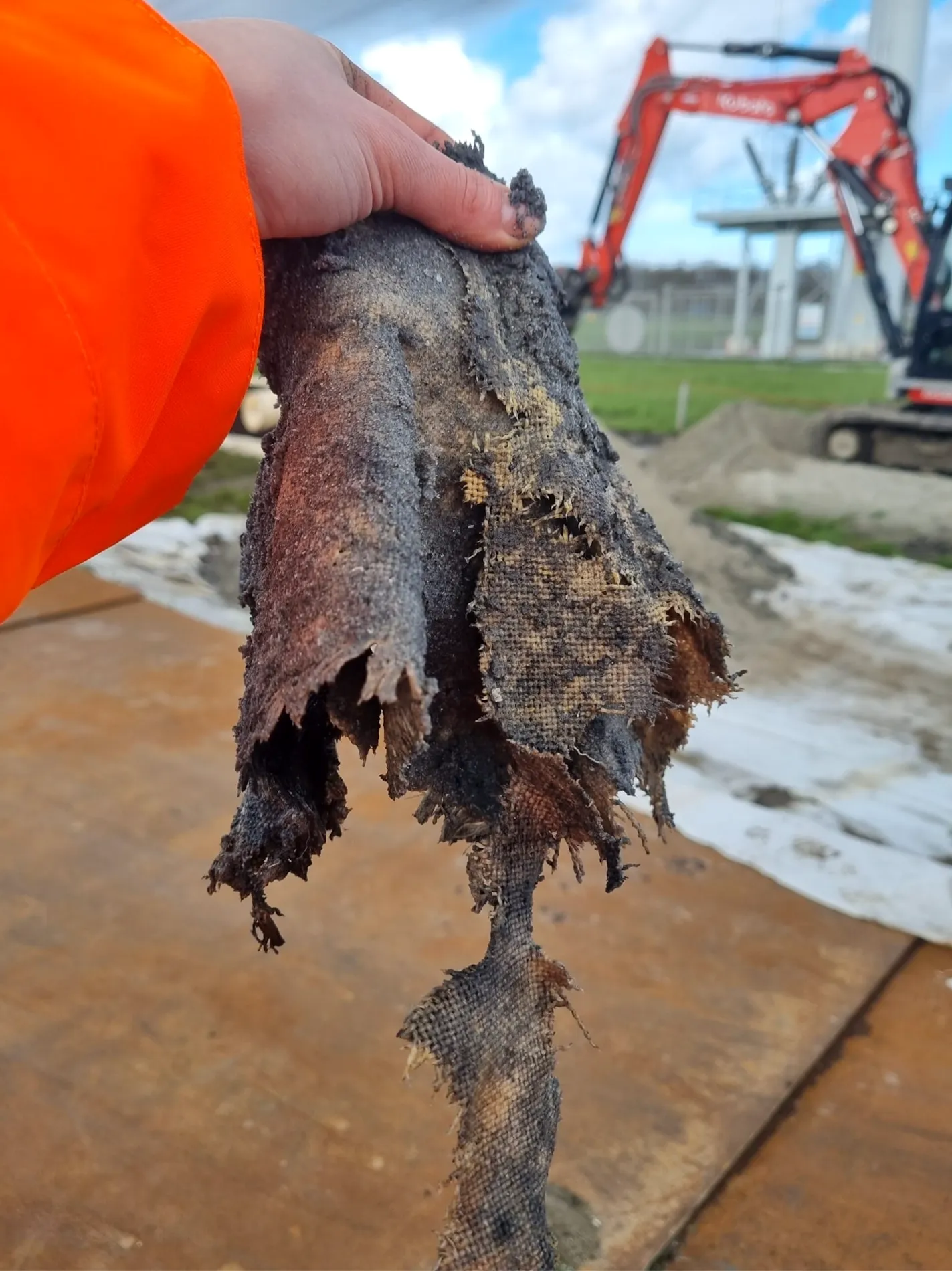
BAM, at TenneT’s request, was the original party to request development of the HV product. Joosten worked with these parties to find a sustainable alternative to synthetic geotextile for temporary applications. That search led to the development of JSTN Jogetex HV, with HV standing for wood fibre. “The material is made from Tencel fibres sourced from FSC-certified prunings. Zwartz Textiel processes the wood chips into fibres, which are then spun into yarn and ultimately woven into a geotextile that performs the same structural functions as traditional alternatives,” Hazenkamp explains. The biggest challenge turned out not to be the material’s strength, but its biodegradability. How long would the geotextile retain its function before nature took over?
Third generation
The first pilots, carried out on TenneT projects, produced surprising results. “At some sites, an untreated version was broken down by soil fungi within just three months,” says Hazenkamp. “That might sound like a setback, but it wasn’t. It confirmed that our concept worked. Extending the service life is easier than shortening it.” A third generation of JSTN Jogetex HV is now in development, with natural additives to slow down biodegradation in a controlled way. “We expect this to make a functional service life of several years achievable without losing its biodegradability.”
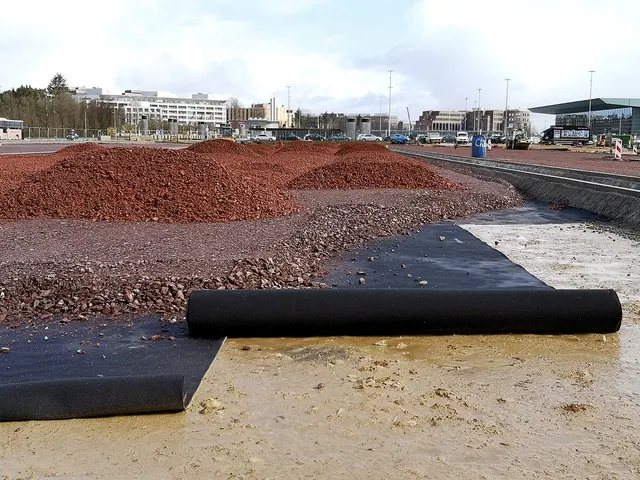
Dijkalliantie Neder-Betuwe heard about the sustainable geotextile and, alongside large quantities of synthetic geotextile, is using several hundred metres of JSTN Jogetex HV in a pilot beneath temporary construction roads. “The idea is that, in time, it will break down and give the site added ecological value.” With JSTN Jogetx HV, Joosten shows that innovation is not always about stronger or more durable materials. “Sometimes progress lies in designing materials that last just long enough, and then disappear naturally.”
Een zakelijke vraag aan Joosten Groep? Get in touch
Companies in this story

Keep following this
Get an email when a new story is published. No account needed.
- ThemeMaterials and techniques for infrastructure
- SubjectGeotextiles
- CompanyJoosten Groep