600,000 tonnes of circular concrete feedstock per year
Text Armand Landman Beeld Van de Beeten
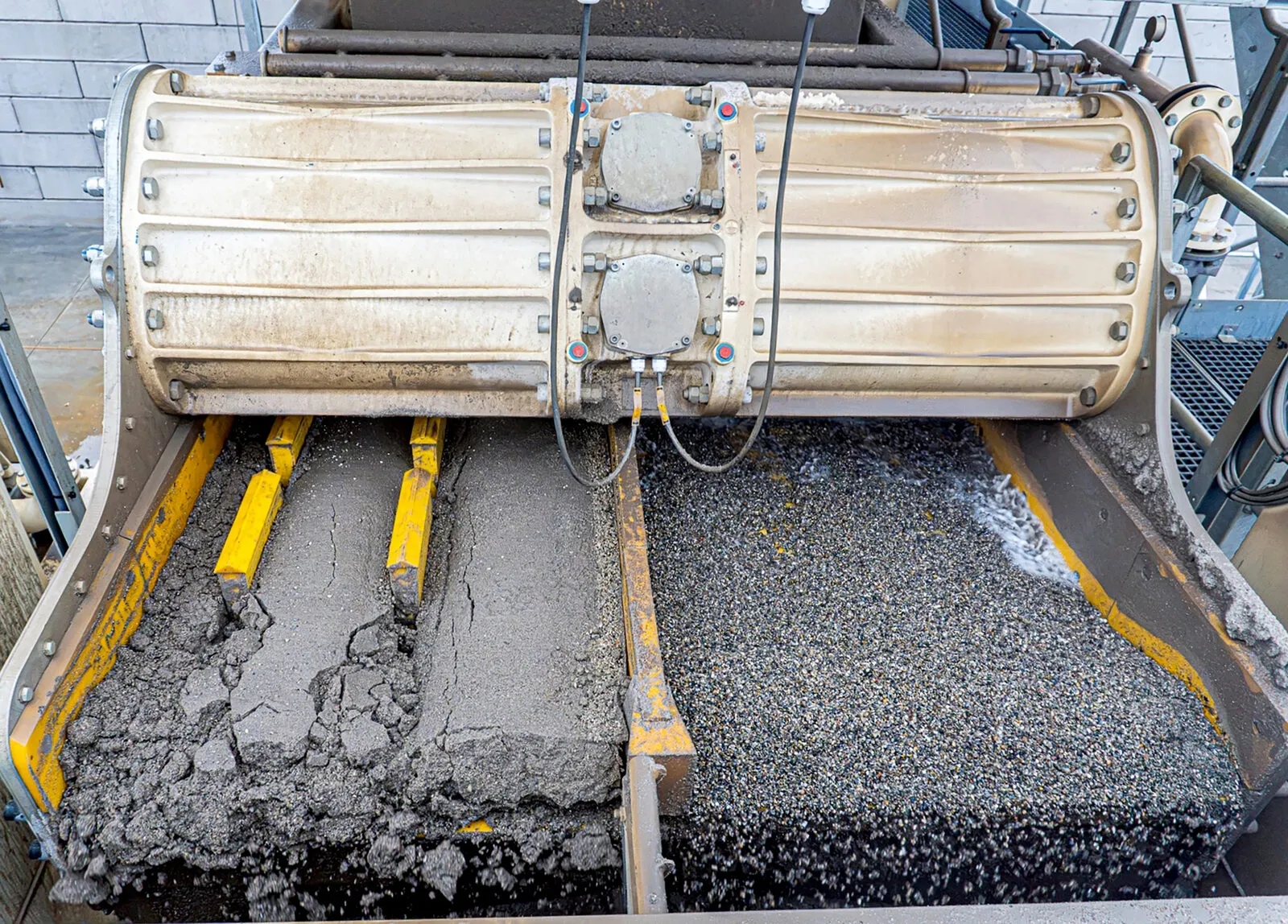
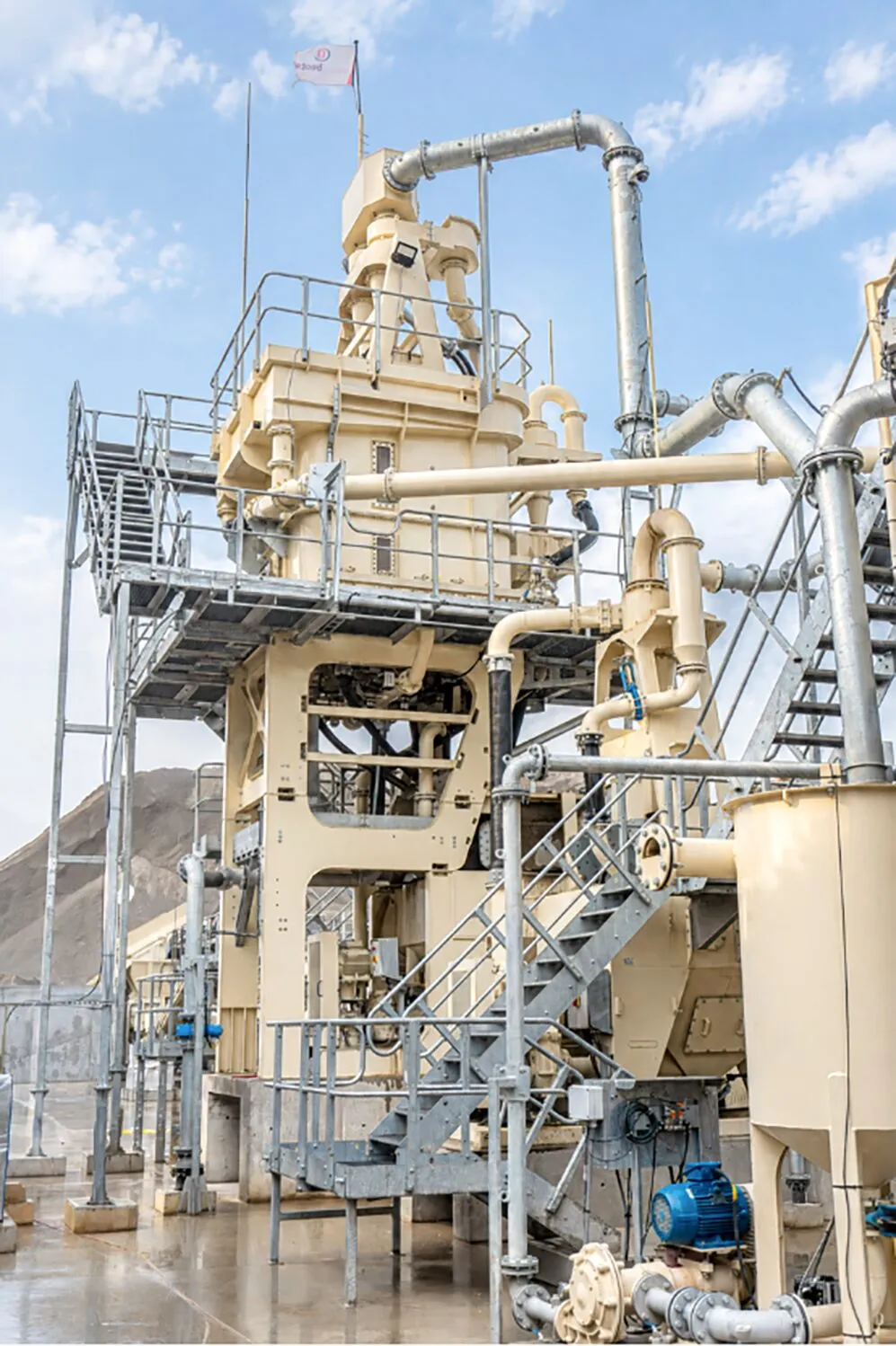
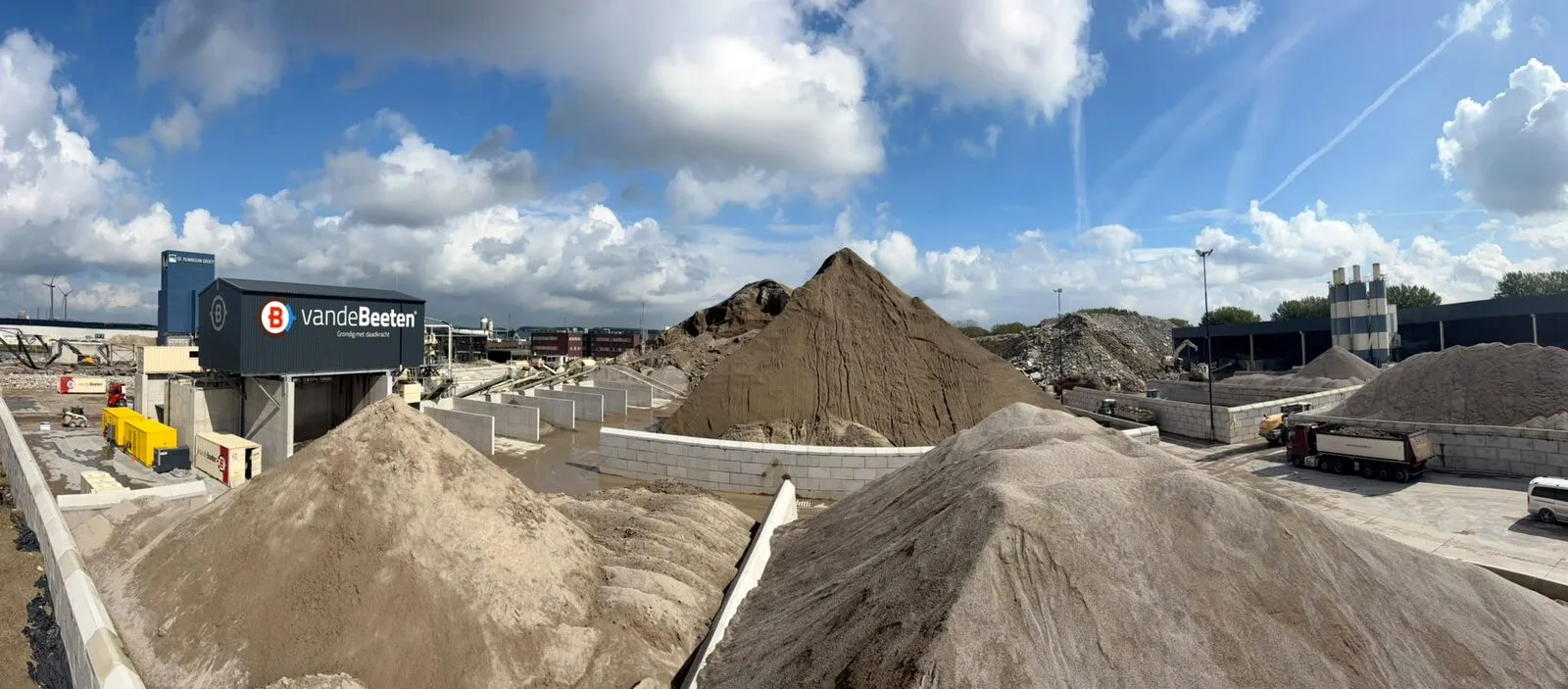
Van de Beeten’s new classification plant in Oosterhout is set to transform concrete rubble recycling. By wet-washing and accurately separating fine fractions, the company aims to process almost all incoming concrete rubble into high-quality raw materials for the concrete industry and civil engineering. Production manager Ted Kees and R&D coordinator Daphne Sijtsma explain how technology, process control and market development come together.
Concrete rubble has been an important raw material for civil engineering for decades. It is crushed, screened and processed into mixed aggregate, for example for foundations and paved surfaces. However, this is a low-value application that makes only limited use of the material’s potential. Fine fractions in particular have been difficult to put to higher-value use. Van de Beeten is addressing this with a new classification plant in Oosterhout, designed specifically for the company.
The plant processes pre-treated fine fractions from concrete rubble into clean, consistent sand and stone aggregates. These can replace primary materials in the concrete industry, precast concrete products and road construction. The ambition is considerable: to upgrade the entire incoming stream of concrete rubble into usable products, with no low-value residual stream left over.
“The key is to keep the input consistent, the output consistent and the process running at the intended production rate,” says production manager Ted Kees. He oversees the entire production process. A dedicated operator monitors the plant while it is running; Kees and the chief mechanic handle detailed settings and further optimisation. “We want to know exactly what happens at the other end when we change something in the process.”
Getting the input right
It starts with the feed. The plant receives, among other materials, the pre-screened fraction from the company’s own rubble crusher and wet concrete aggregate streams. The composition of these streams varies. Feeding in only fine or only coarse material does not necessarily produce the desired product quality.
“You need the right mix of input going into the plant to get the right mix of output,” Kees explains. “The feed mix has to be consistent to produce a consistent end product.” The particle-size distribution of the incoming stream is therefore checked daily. Experience also plays a major role. “Visual assessment is entirely based on experience.” ¢
In principle, the plant can accept concrete rubble of varying quality. Acceptance and pricing are adjusted to reflect the processing required. Material with more contaminants needs more treatment and is therefore charged at a different input price. The basic requirement is that the material must be suitable concrete rubble that can be upgraded through the process.
The initial pre-treatment takes place during crushing and pre-screening. This reduces the load on the crusher, while the fine fraction is sent directly for wet classification. “The crusher mainly handles the coarse material,” says Sijtsma. “Most of the fine material is screened out and goes straight to wet classification.” This fine stream often contains organic matter, EPS and other lightweight contaminants, which the new plant is specifically designed to remove.
Washing for purity
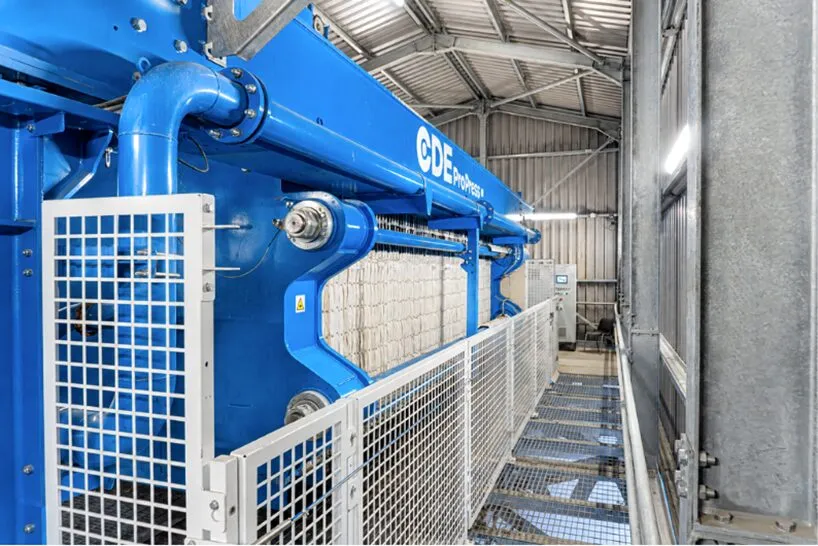
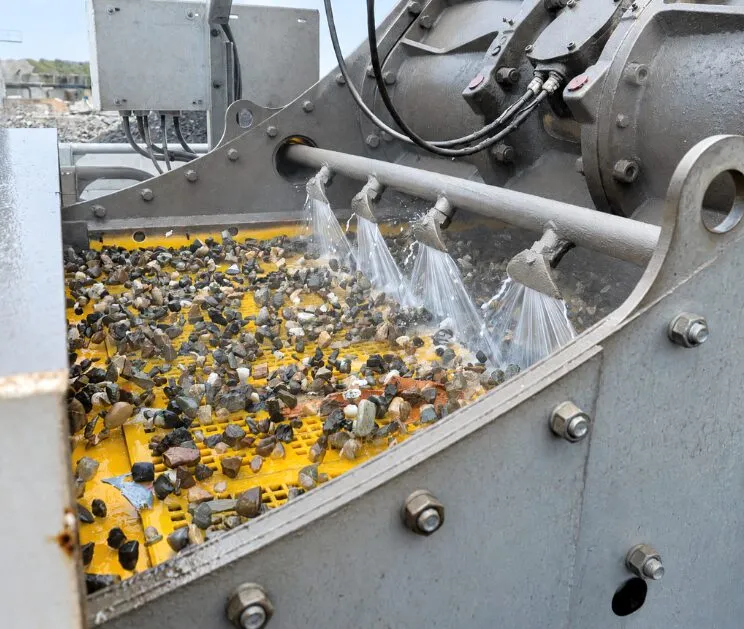
Wet classification goes a step further than conventional dry screening and crushing. With dry processing, fine sand particles, stones and organic material can stick together. This limits the purity, and therefore the potential applications, of the end product.
“The entire output is washed completely clean,” says Kees. “Normally, all sorts of things stick together: sand to a stone, organic matter in the sand. We wash that out now. This makes the secondary material a full substitute for primary material.” Particles larger than 6 millimetres are used as recycled aggregate in the concrete industry. Some of the fine fractions can be used as high-quality crusher sand in road construction. Van de Beeten is also seeking high-value applications for the filter cake, the dewatered fine residue from the process, for example in the brick industry. The company wants to prevent a technically usable stream from ending up in a low-value application.
The plant is now operational and is being further tuned. According to Kees and Sijtsma, no major surprises emerged during start-up, thanks to extensive preliminary research. Laboratory tests and site visits were carried out, and the plant was designed using knowledge of existing technologies and the company’s specific material streams. One adjustment proved necessary: too much air was getting into the water, increasing the amount of additives required. That problem has been resolved.
“A lot of thought really went into the design,” says Sijtsma. “As a result, we didn’t encounter any unexpected deviations during construction and commissioning. Now it’s mainly about fine-tuning: increasing production while maintaining consistent quality.”
Surface layer made from recycled aggregate
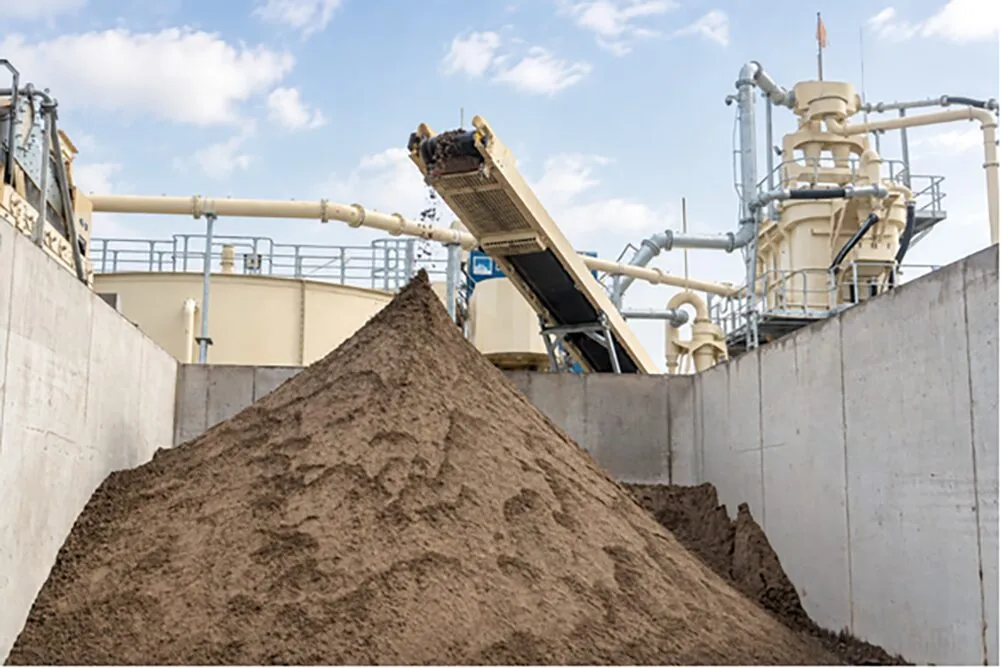
That quality is needed to open up new markets. One specific example is the use of recycled 1-5 mm crushed stone in the surface layer of concrete paving blocks and paving slabs. Such a product typically consists of a base concrete and a visible top layer. Traditionally, primary material was often used for this surface layer. The high purity of the washed aggregate now makes it possible to produce the layer using 100 per cent recycled material.
“The 1-5 mm crushed stone has to be really clean and consistent,” says Kees. “That’s precisely why this application was difficult before. Paving blocks are now being produced with a surface layer made entirely from recycled material.”
Van de Beeten sees the greatest sales potential in precast concrete. Precast plants generally operate all year round and use relatively consistent mix designs. This suits a producer able to supply a consistent stream of raw material. Ready-mix concrete plants are more dependent on projects, seasons and construction activity. “A precast plant runs all year and often uses the same mix design,” says Sijtsma. “That makes production more consistent and predictable.”
At the same time, precast often focuses on structural concrete, which must meet stringent requirements for safety, durability and service life. “Everything has to last fifty years or more,” says Sijtsma. “That’s why the market is cautious, and why performance data and research are so important.” For concrete paving blocks, kerbs and other concrete products, there is currently more scope for high replacement rates.
Capacity for a growing market
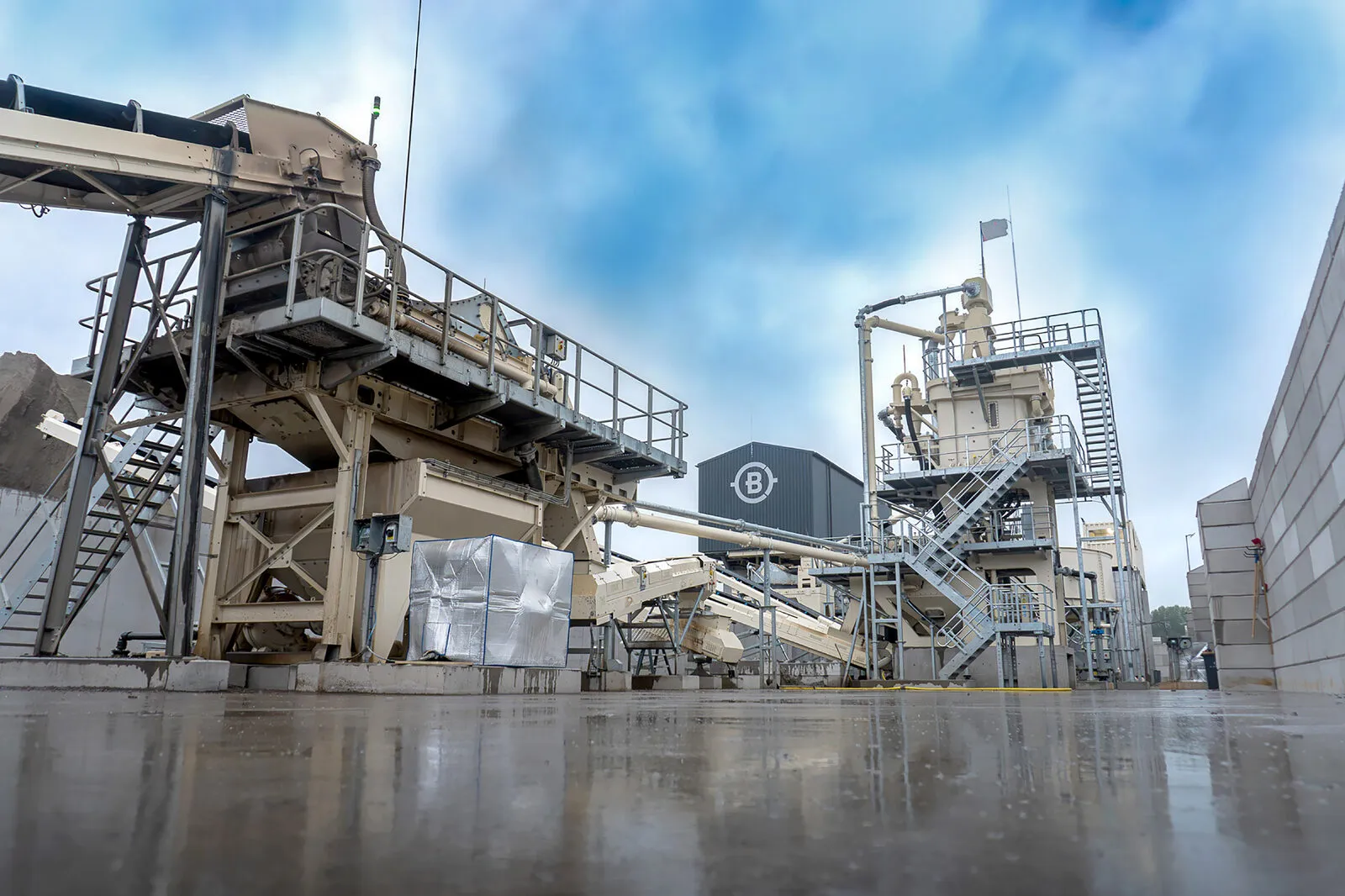
Van de Beeten ultimately aims to process 600,000 tonnes a year at the classification plant. The plant currently runs for ten hours a day; the company plans to scale up to twenty hours a day, operating a two-shift system. The available capacity also addresses a structural market issue: many recyclers have limited volumes, while high-quality wet processing requires scale. Kees says: “We produce between 200,000 and 250,000 tonnes of recycled aggregate for the concrete industry each year. The average producer in the Netherlands often produces between 30,000 and 60,000 tonnes. Around 30 to 40 per cent of that stream is fine material, which is usually put to low-value use. We have such large quantities of fine fractions that we have to upgrade them.”
The scale of the company’s own stream makes continuous production possible. It is also less affected by the weather. Many traditional processing methods run into problems in winter, when wet material starts to cake. “This process means we can keep producing in winter,” says Kees. “That’s important if you want to supply concrete plants all year round.” Sijtsma adds: “We can supply a consistent product, even when others struggle in wet conditions.”
Van de Beeten says demand for alternatives to primary material is growing. Permits for primary extraction are harder to obtain, and existing permits are expiring. At the same time, acceptance in parts of the concrete sector is lagging behind what is already technically possible. “Those who want to make the change look for the maximum scope within the guidelines,” says Sijtsma. “But the guidelines sometimes lag behind technological capabilities.”
According to Kees, the Netherlands could theoretically even face a shortage of primary material if all non-structural concrete products made maximum use of recycled raw materials. “So there is enormous scope to use more circular materials. The technology is there. The next step is in applications, regulations and confidence.”
CO₂ uptake and new streams
Van de Beeten is also investigating the potential for concrete aggregate to absorb CO2. It is established that concrete can absorb CO2 during storage and processing. Finer fractions are of particular interest because of their greater specific surface area. The question is how to measure this uptake reliably and what value can be assigned to it.
“The uptake can be demonstrated, but it has hardly any economic value in the Netherlands yet,” says Kees. “The CO2 Performance Ladder focuses mainly on reducing annual emissions. Proven CO2 uptake in our aggregate is not yet valued in the same way.” Certification schemes and tradable CO2 credits are emerging internationally, but for Van de Beeten, the technical evidence comes first.
The plant has also been designed with further development in mind. Van de Beeten is investigating whether other mineral residual streams can also be upgraded. The company is looking at streams containing usable mineral particles that are often mixed in with other materials under the broad label of ‘rubble’. Expanding the plant could eventually make it possible to remove PFAS from incoming material as well.
For now, the focus is on concrete rubble. The plant is already showing how recycling can shift from processing volumes to producing raw materials. Sijtsma says: “Compared with conventional fine aggregate, our aggregates have had the very finest particles and the hydraulic properties removed. As a result, they are more consistent and more suitable for use in concrete. That quality has to convince the market.”
This project is being carried out with funding from the Ministry of Climate Policy and Green Growth as part of the Demonstration Energy and Climate Innovation (DEI+) programme.
Een zakelijke vraag aan Van de Beeten B.V.? Get in touch
Companies in this story
Keep following this
Get an email when a new story is published. No account needed.
- ThemeLower emissions and more reuse
- SubjectDemolition & recycling
- CompanyVan de Beeten B.V.