









Julianakanaal: A mega-project involving 180 machines, 200 workers and nearly 1.5 million tonnes of earth
Text Suzanne van Gaale Beeld Van den Herik/Rijkswaterstaat
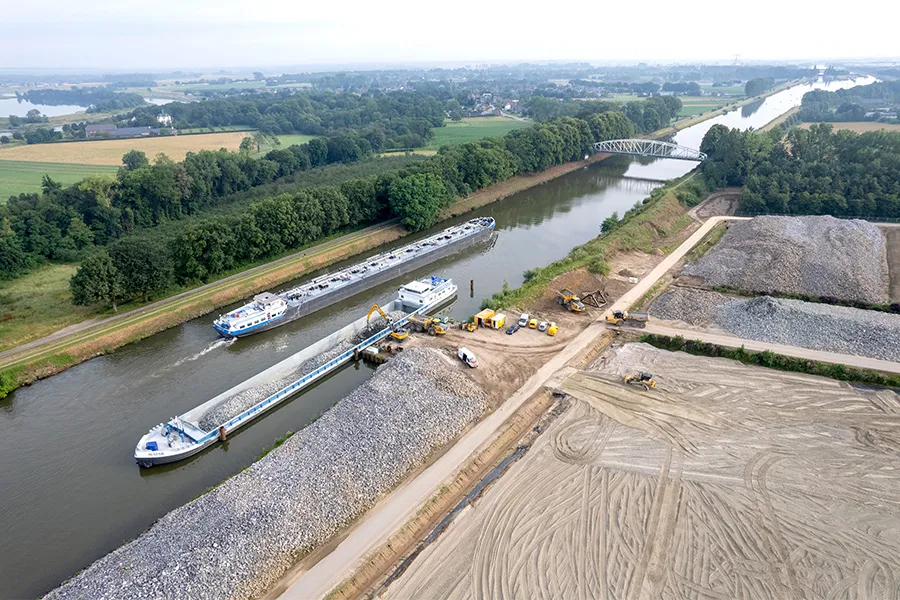
In South Limburg, Rijkswaterstaat is working with contractor Van den Herik-Sliedrecht to widen the Julianakanaal. A 4-kilometre stretch of the canal between Berg aan de Maas and Obbicht has been drained. This is a remarkable and unique project, with time and scale posing the biggest challenges. That makes it a major logistical puzzle. How do you keep everything on track? Rijkswaterstaat project manager Krijn Drijvers and Van den Herik-Sliedrecht project leader Robin Koorengevel explain.
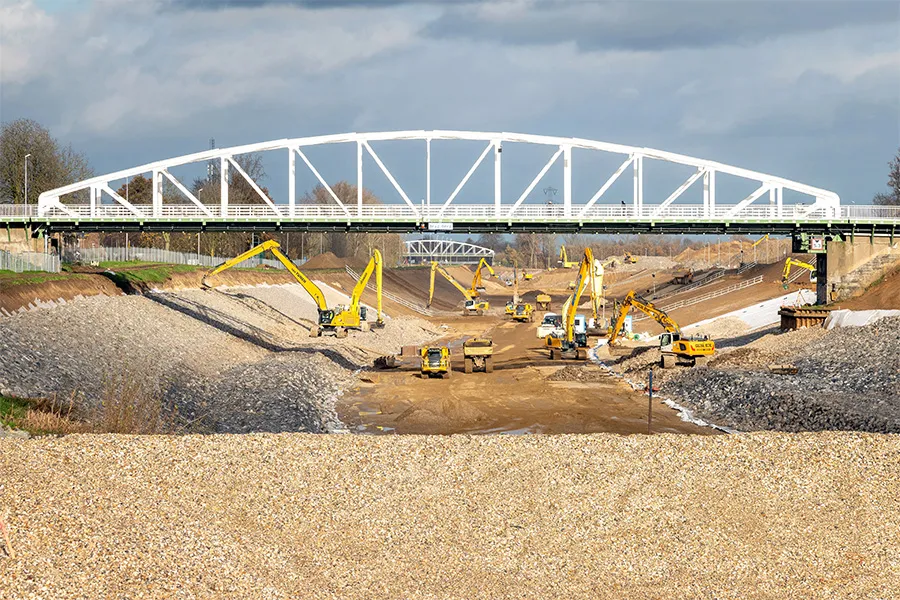
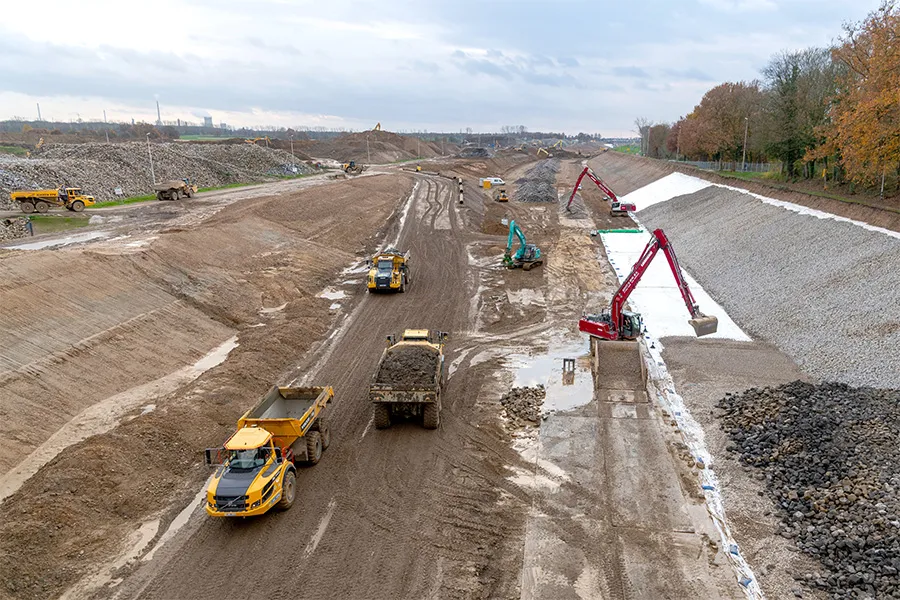
It will not be long before the first inland vessel sails through the Julianakanaal again in April. Widening and deepening the canal will make it suitable for two-barge push tows 190 metres long, 11.40 metres wide and with a draught of 3.50 metres. Reopening the canal will be an important milestone. A huge amount of work has been completed since March last year. An average of around 200 people are working on site every day. Add the many machines, with 180 in operation at the peak of the work, and it is fair to call this a mega-project
Tight scheduling and logistics
At the end of March 2024, Rijkswaterstaat received permission from then minister Mark Harbers to drain the Julianakanaal. The ink on the signature was barely dry when Rijkswaterstaat and Van den Herik got the project under way at speed. “Time is pressing,” says Krijn. “We received official permission in March 2024 and wanted to have all the preparatory work completed by the end of August, before pumping out the canal. That included bringing in stone and equipment, setting up the site and dredging the canal near Sluis Born.” Work that would normally take at least one to two years to arrange was completed in four months. “We started preparing the two storage sites straight away in March. To do this, we rented 30 hectares of land from farmers and other landowners in the area. The sites are being used to store armourstone and other types of stone, around half a million tonnes in total. These materials are brought in by water, so the sites had to be ready before the canal was drained.”
Silt
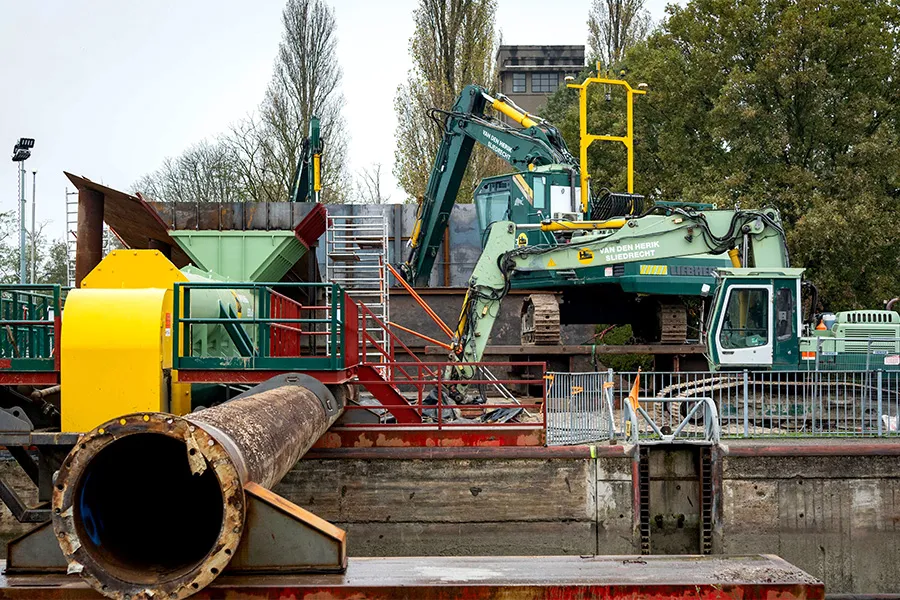
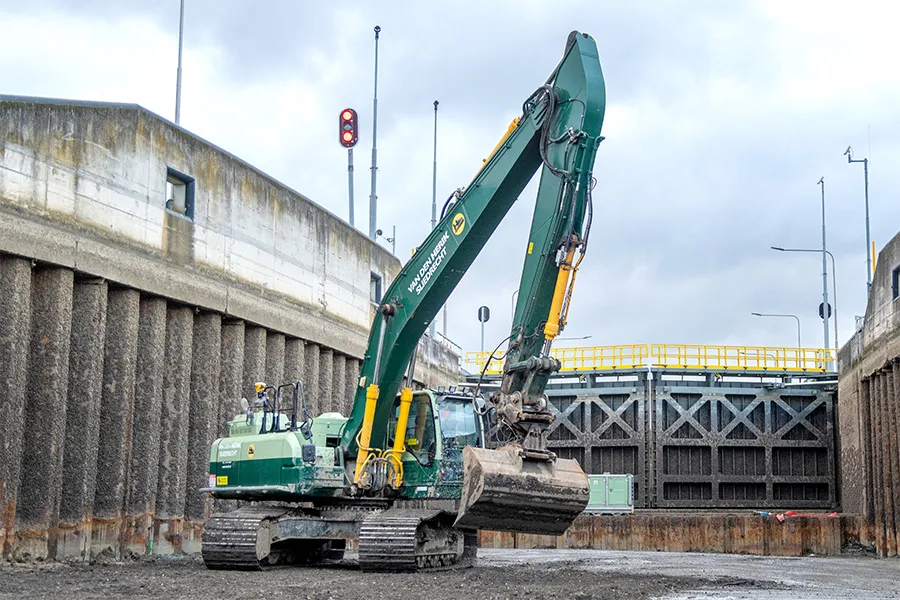
When the Julianakanaal was built ninety years ago, thick layers of clay (and anything resembling it) and soil were brought in for the bed. Over the years, a natural layer of silt formed on top. All of this material now has to be excavated. Given the scale of the work and the time pressure, the project has been divided into three sections: North, Central and South. Van den Herik is responsible for all three sections, but has brought in Boskalis and Jac Rijk to carry out the earthworks in the Central and South sections. Krijn says: “This means we can get three times as much work done in the same amount of time. Work also continues in the evenings and at night. That is when all the lorries are refuelled and we carry out maintenance on the machines and haul road.” Soil investigations had already been carried out in the Central and South sections at an earlier stage. “We expected the North section to contain a similar amount of silt. However, there turned out to be more. Removing it required some creative thinking to keep to the schedule.” The contaminated silt is transported directly from three locations by 22 vessels to the two state depots, Hollandsch Diep and De Slufter. Robin says: “We developed a special soil pump. Hopper barges can enter the Sluis Born from the north. The soil pump is positioned on top of the lock and conveys the silt horizontally over a distance of around 25 metres, then feeds it into the vessels through a hopper. That is faster, safer and more efficient than using an excavator to scoop up the silt each time.”
Safety
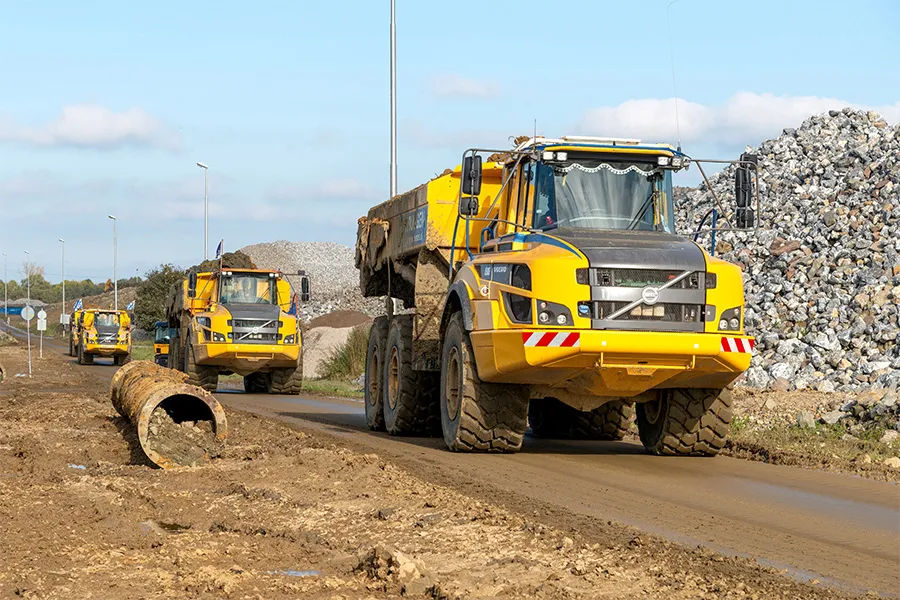
Many people and machines are working at the same time in and around the Julianakanaal, so safety is a high priority. Krijn says: “We have given a lot of thought to how we can reinforce each other’s safety awareness. Every weekly meeting starts with a safety update: has anything happened in the past week, and if so, how do we prevent it from happening again? Are there any specific points to focus on in the coming week?” Various safety measures have been put in place on site. Anyone wishing to enter the site must have a site pass. You can only get one if you can demonstrate that you have completed certain safety training courses. Every new construction team receives safety instructions. In addition, there is one-way traffic along the entire route, the haul road has two lanes, the entire route is enclosed by 12 kilometres of fencing and lighting, and the site is generally off-limits to visitors. Visitors are shown around in a vehicle to prevent collisions with large machines such as dumpers and lorries.
Still work to be done
When the first vessels sail through the Julianakanaal in April 2025, the work will not yet be finished. Rijkswaterstaat and Van den Herik expect to need another year or so to complete everything. This includes removing the temporary dam, reinstalling the floating fender system, preparing the land at the storage sites and landscaping the banks. Krijn says: “In April, we will not be saying ‘the work is finished’. Over the past few months, we have stockpiled 1 million tonnes of soil, which will have to be removed. We will then restore the storage sites for arable farming and build a lovely walking path along the canal.”
Constructive collaboration
Close communication and quick decision-making are crucial in a project like this. Krijn and Robin say it is important that everyone knows what is happening on site, at all times. “From day one, everyone recognised the need to work together quickly and constructively. That also applies to the local authority and other organisations that had to issue permits, among other things. To keep communication channels short, we are working from temporary offices and training units on site. If a decision needs to be made at any point, we can respond and act quickly.” Both men say what they like about the project is that it has been taken on and delivered jointly by the earthworks, water and road construction sector. “It is certainly a flagship project, delivered through collaboration across the sector and bringing together the real civil engineering contractors from the Netherlands to make it happen.”
The Julianakanaal: a key shipping route
The Julianakanaal forms part of the Maasroute, an important shipping route to ports in Belgium, Germany and the Netherlands. The works are intended to make the route navigable for vessels up to 190 metres long, 11.4 metres wide and
a maximum of 3.5 metres deep. The canal is being widened by 15 to 20 metres and deepened by 1 metre in some sections. During the
works, parts of the Julianakanaal are inaccessible. Vessels will therefore have to take a temporary diversion. The canal is expected to
reopen to vessels in April 2025. More information at www.rijkswaterstaat.nl.
Have a business enquiry for Boskalis Nederland? Get in touch
Who worked on Julianakanaal
- Trimble dealer
 SITECHMentioned in Efficient excavation on the Julianakanaal thanks to Trimble machine control
- setting outPS SurveyMentioned in Efficient excavation on the Julianakanaal thanks to Trimble machine control
- main contractorVan den Herik-SliedrechtMentioned in PS Survey deploys a range of surveying techniques on the Julianakanaal
- groundworksJac RijkIn this story
- earthworks partnerFL BVMentioned in Complexity of Julianakanaal calls for flexibility and quick decision-making
- earthmoving companiesErmersMentioned in Complexity of Julianakanaal calls for flexibility and quick decision-making
- earthmoving companiesBC van der VisMentioned in Complexity of Julianakanaal calls for flexibility and quick decision-making
- project control
 Count & CooperMentioned in Project controls demonstrate their value on the Julianakanaal project
- clientRijkswaterstaatMentioned in Project controls demonstrate their value on the Julianakanaal project
- natural stoneRoxx InternationalMentioned in 500,000 tonnes of natural stone used in the Julianakanaal
- water management
 VanderkampMentioned in The challenge for Van der Kamp: how do you keep the Julianakanaal dry?
- earthworksErmers GrondverzetMentioned in Working as one team in the northern section of the Julianakanaal
- earthworks
 Van Schaik GrondverzetMentioned in Van Schaik deploys heavy equipment for earthworks on the Julianakanaal
Keep following this
Get an email when a new story is published. No account needed.
- ProjectJulianakanaal
- SubjectWater infrastructure
- CompanyBoskalis Nederland
- CompanyJac Rijk







