Dredging at a depth of 80 metres with a twin cutter
Text Suzanne van Gaale Images Bell Dredging Pumps
A bespoke solution for a reservoir in Italy
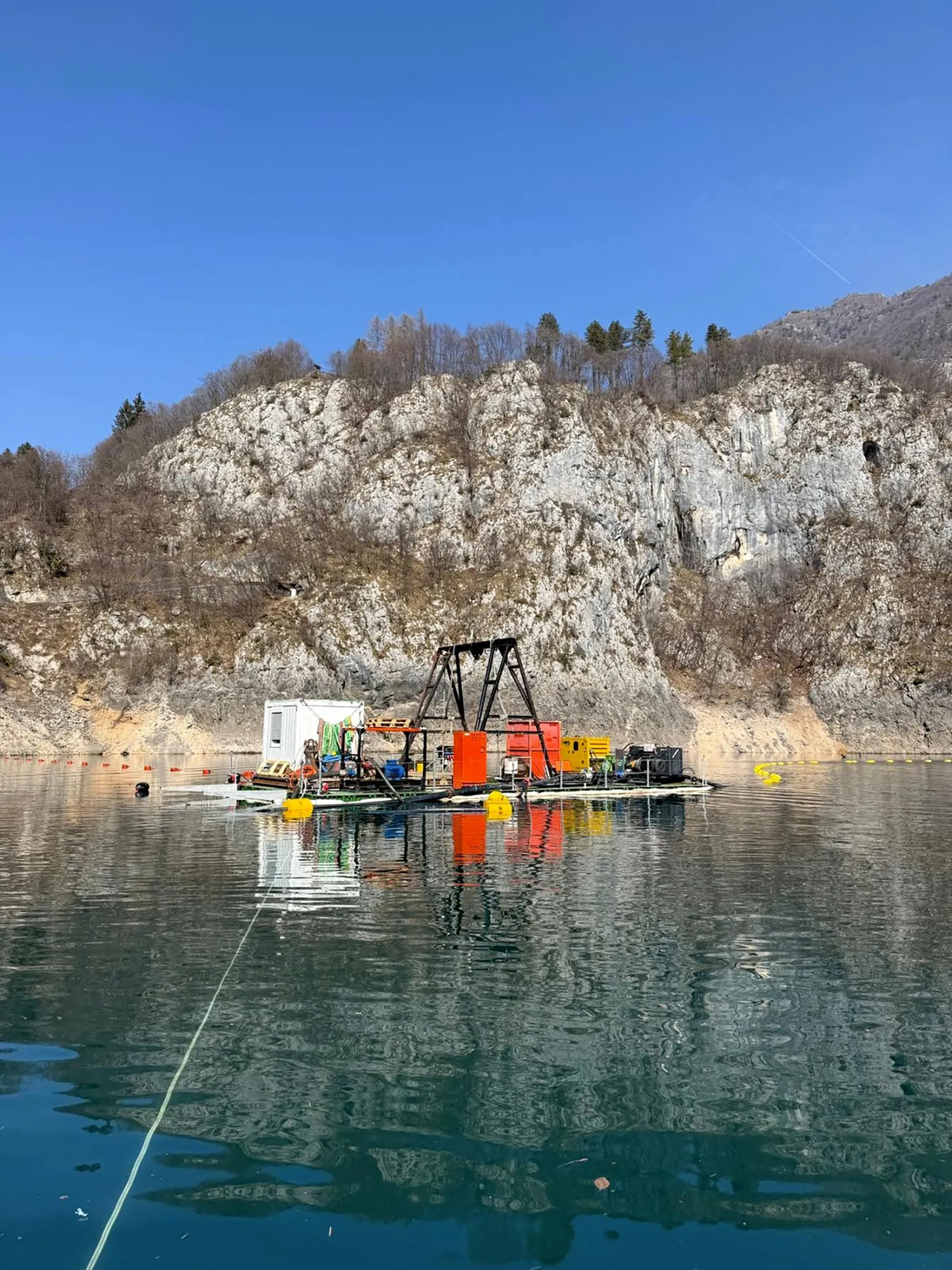
Removing sediment at a depth of 80 metres is a challenge in itself. When the equipment also has to be flown to the worksite by helicopter, a bespoke solution is needed. At a reservoir in Italy’s South Tyrol, Bell Dredging Pumps supplied a hire package that enabled a French contractor to clear accumulated sediment from the water intake of a hydroelectric power station.
“We regularly supply dredging equipment to this French contractor,” says Thijs van den Outenaar, sales engineer at Bell Dredging Pumps BV. “Based on the project information they provided, we supplied a complete pump configuration. The challenge on this project was not just the great depth, but also access to the site.”
Accessible only by helicopter
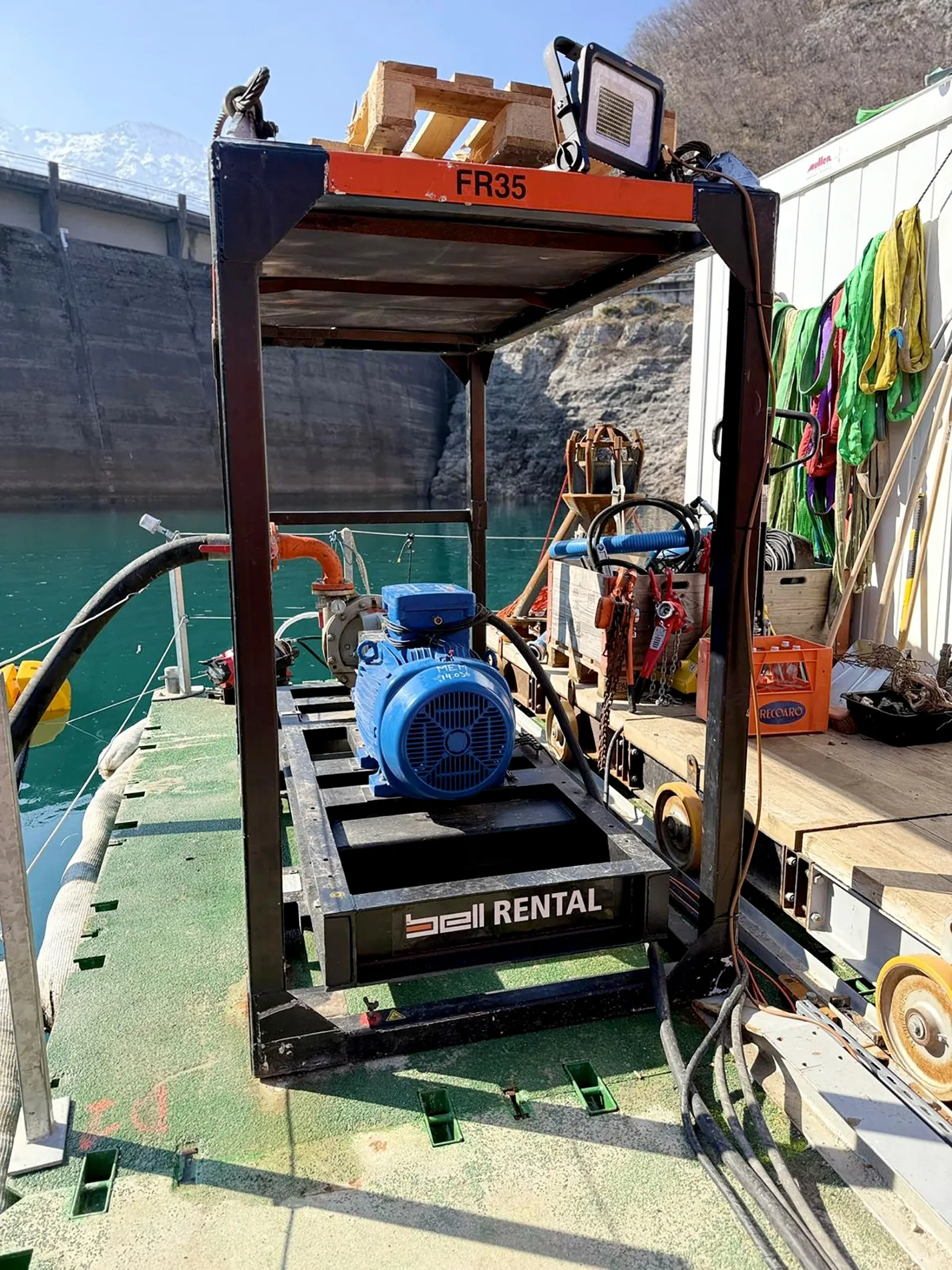
This became clear as soon as the equipment was mobilised. It could only be transported to the reservoir by helicopter, ruling out conventional solutions. A diesel-powered power pack, for example, was simply too heavy to fly in. “Instead, we opted for an electro-hydraulic solution,” Thijs explains. “The electro-hydraulic power pack was positioned on a pontoon on the water and connected by a cable approximately 350 metres long to a generator on the shore. Given the limited access, this was the only viable solution.”
Designed for compacted ground
The hydraulically powered Bell 150 was fitted with a twin cutter, or twin cutting head. Over the years, sediment around the hydroelectric power station’s intake had become heavily compacted. Extra cutting force was needed to loosen it effectively. “A single cutter is not suitable in this situation. If you lower it on a winch, it catches in the bottom. The whole pump then starts turning with it, making it impossible to dredge. With a twin cutter, the cutting heads rotate in opposite directions. This keeps the pump stable, allowing the sediment to be loosened in a controlled way and sucked away immediately.
Working at a depth of 80 metres
The dredging took place approximately 80 metres below the water surface, where the ambient pressure is around 8 bar. A pressure compensation system was used to ensure the pump operated reliably under these conditions. A compensator keeps the pressure in the bearing housing equal to the ambient pressure at depth. The Bell 150 was also fitted with a sensor package that continuously collects data on parameters including discharge pressure, suction pressure, speed and depth. “When the pump is suspended at a depth of 80 metres, you can hear and see very little,” says Thijs. “These sensors are literally the eyes and ears of the installation.”
Hire as a flexible solution
According to Thijs, this project clearly demonstrates the value of an extensive hire fleet. “Almost all our machines, from dredge pumps and cutter dredgers to amphibious excavators and power packs, are available for both sale and hire, with an operator if required. This allows us to quickly put together a suitable solution for a wide range of projects, even when conditions, as in South Tyrol, are anything but standard.”
Question about this story? Ask your question
Keep following this
Get an email when a new story is published. No account needed.
- ThemeFlood protection and climate-resilient water management
- SubjectWater infrastructure