









Renovating the Netherlands’ largest concrete structure
Text Roel van Gils Image Combinatie ZEEKR
Balancing act for the experts
One of the Netherlands’ most important shipping hubs is undergoing a major upgrade. At the Krammersluizen, Rijkswaterstaat and the ZEEKR consortium are working over the coming years on a renovation designed to prepare the lock complex for the next fifty years. All the while, commercial and recreational shipping, nature functions and flood protection must continue uninterrupted. A major operation at a location where everything converges.
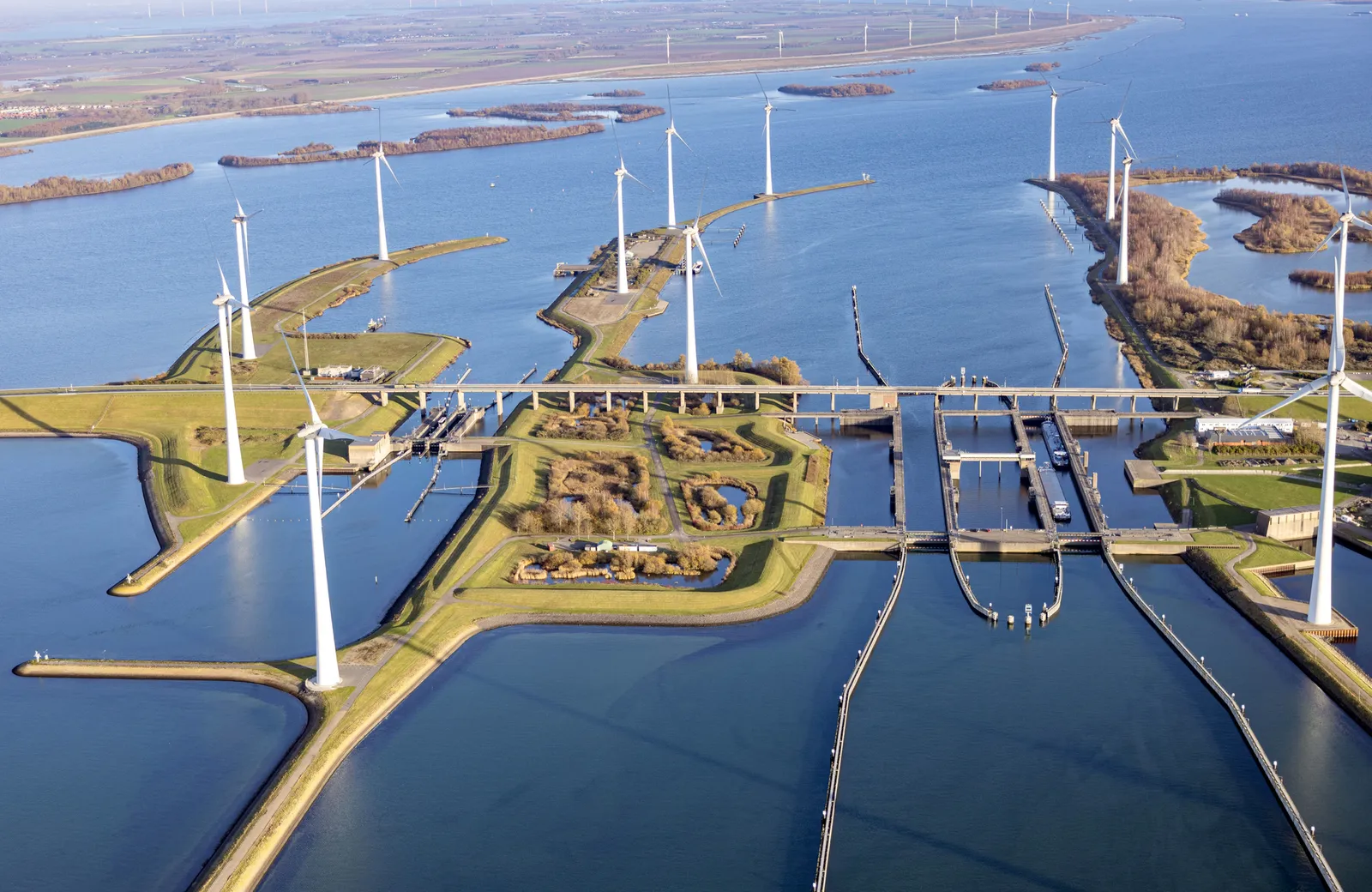
The Krammersluizen form part of the Philipsdam and, in turn, the Delta Works, built in the wake of the 1953 North Sea flood. The complex is a crucial link in the shipping corridor between Rotterdam, Antwerp, Ghent and the hinterland. Around 60,000 vessels pass through the locks each year, including about 40,000 commercial vessels and 20,000 recreational craft. “For many vessels, this is an indispensable route,” says Olivier Elseman, stakeholder manager at Rijkswaterstaat. “For recreational boaters in particular, anyone travelling from inland to Zeeland will almost always pass through the Krammersluizen.”
A vast underground bunker
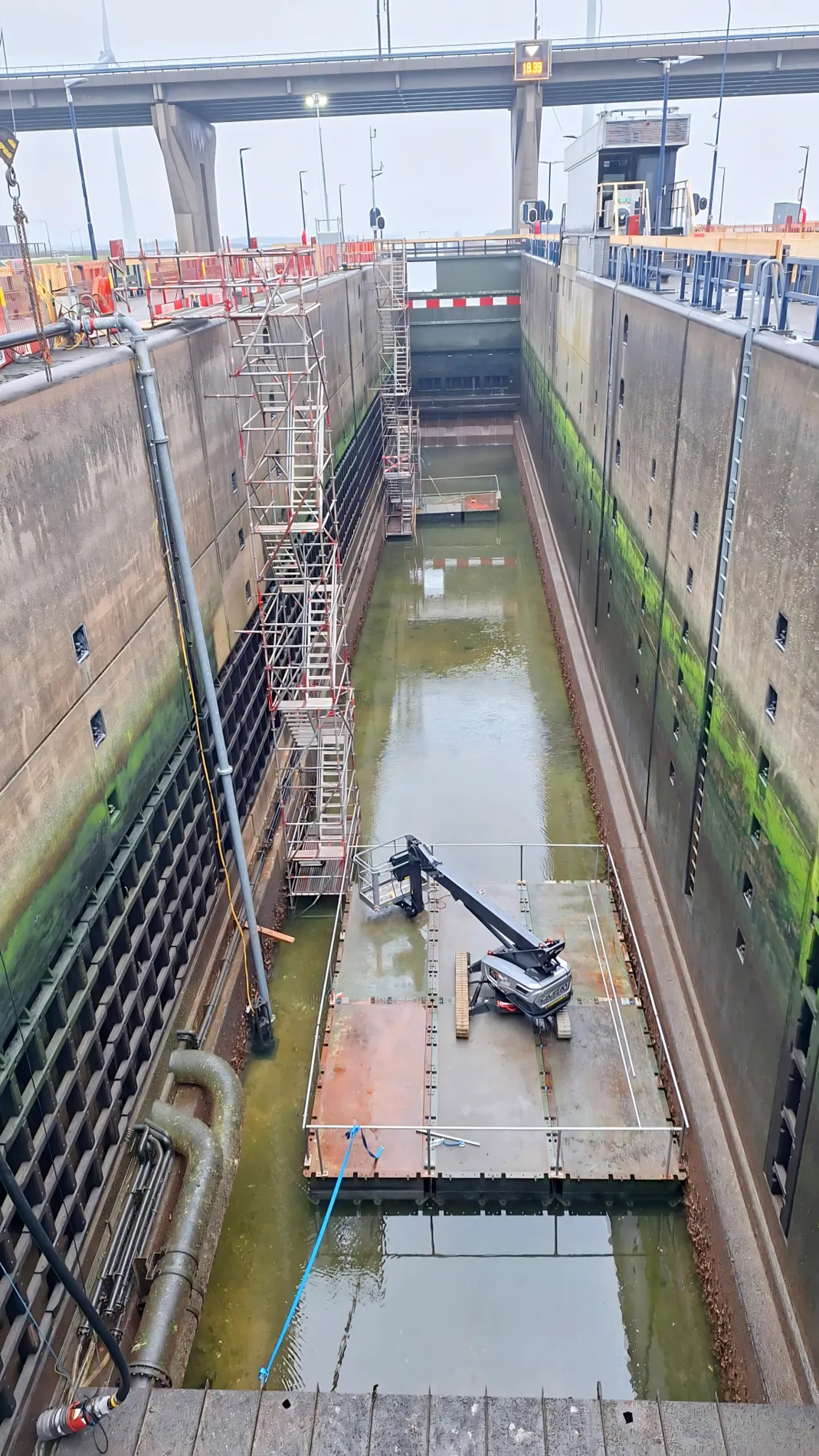
The major maintenance programme at the Krammer lock complex, built between 1977 and 1987, covers almost everything: civil structures, mechanical installations, electrical engineering and industrial automation. “What few people realise is that most of the complex is underground. Ninety per cent of the structure is beneath the water or ground level,” says Olivier. “You can literally walk from one lock to another through a huge network of concrete spaces. It is essentially a vast bunker. It is also the largest concrete structure in the Netherlands.”
The renovation is not just about replacing ageing components. Rijkswaterstaat is also using the project to fundamentally improve how the complex operates. The existing fresh-salt water separation system will be replaced with a new, more energy-efficient solution that also speeds up the lockage process.
A smarter fresh-salt water separation system
As well as handling vessel lockages, the Krammersluizen serve another purpose: they separate fresh water from salt water. This function is becoming increasingly important as fresh water grows scarcer. The current system uses a perforated floor and various sluice gates. In the upgraded system, the wall gates will be removed and replaced by a bubble screen and modified lock gates with openings that regulate the flow of water. “The new system will make lockages about thirty per cent faster and cut energy use by around thirty per cent,” explains Edwin Wiek, project manager at the ZEEKR consortium. “Maintenance requirements will also fall significantly, as many moving parts are eliminated.”
A key part of the upgrade is the new air plant that supplies the bubble screen. This installation will also be built largely below ground level.
The lock gates
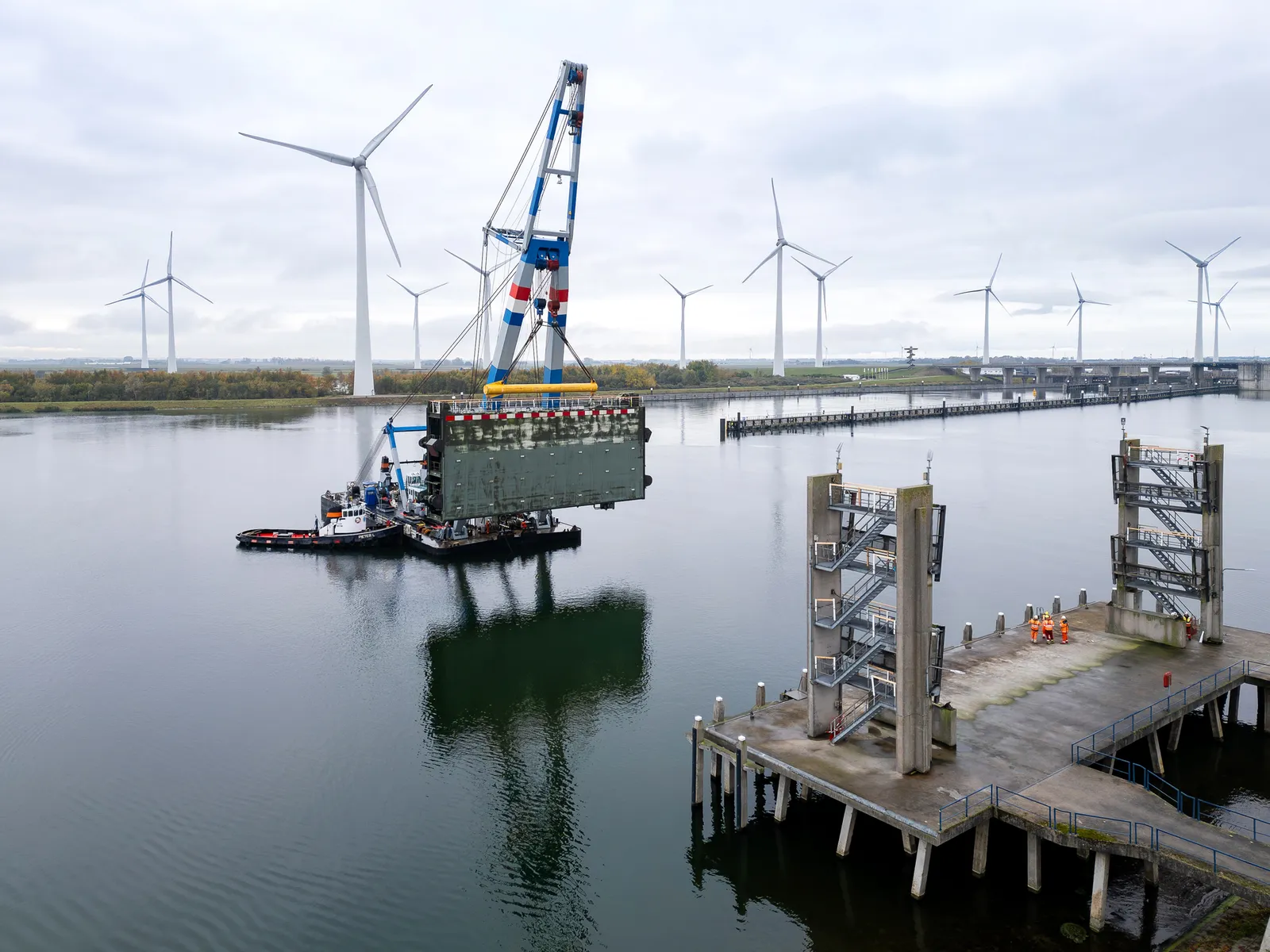
One of the most complex parts of the renovation is converting and modifying the huge rolling gates of the barge locks. “The gates really are at the heart of the project,” says Olivier. “We cannot move on to the lock chamber they serve until a gate has been renovated.” The first gate was removed last year and transported to Smulders’ yard in Vlissingen for renovation. There, it is being fully adapted to the new system. The first refurbished gate will return to the complex in October, when the first gate exchange will take place.
According to Edwin, this type of work involves a great deal of uncertainty. “You only see the true condition of a gate once it has been lifted out of the water. Shell growth, hidden wear or unexpected damage can all come as a surprise.” The same applies to the renovation project as a whole. For example, inspections revealed cracks in hard-to-reach areas. “Although contingencies like these are factored in from the outset, they do test the flexibility of the schedule,” Olivier notes. “But that is also part of the appeal of complex renovation projects like this, where you uncover problems and work together to solve them.”
Primary flood defence
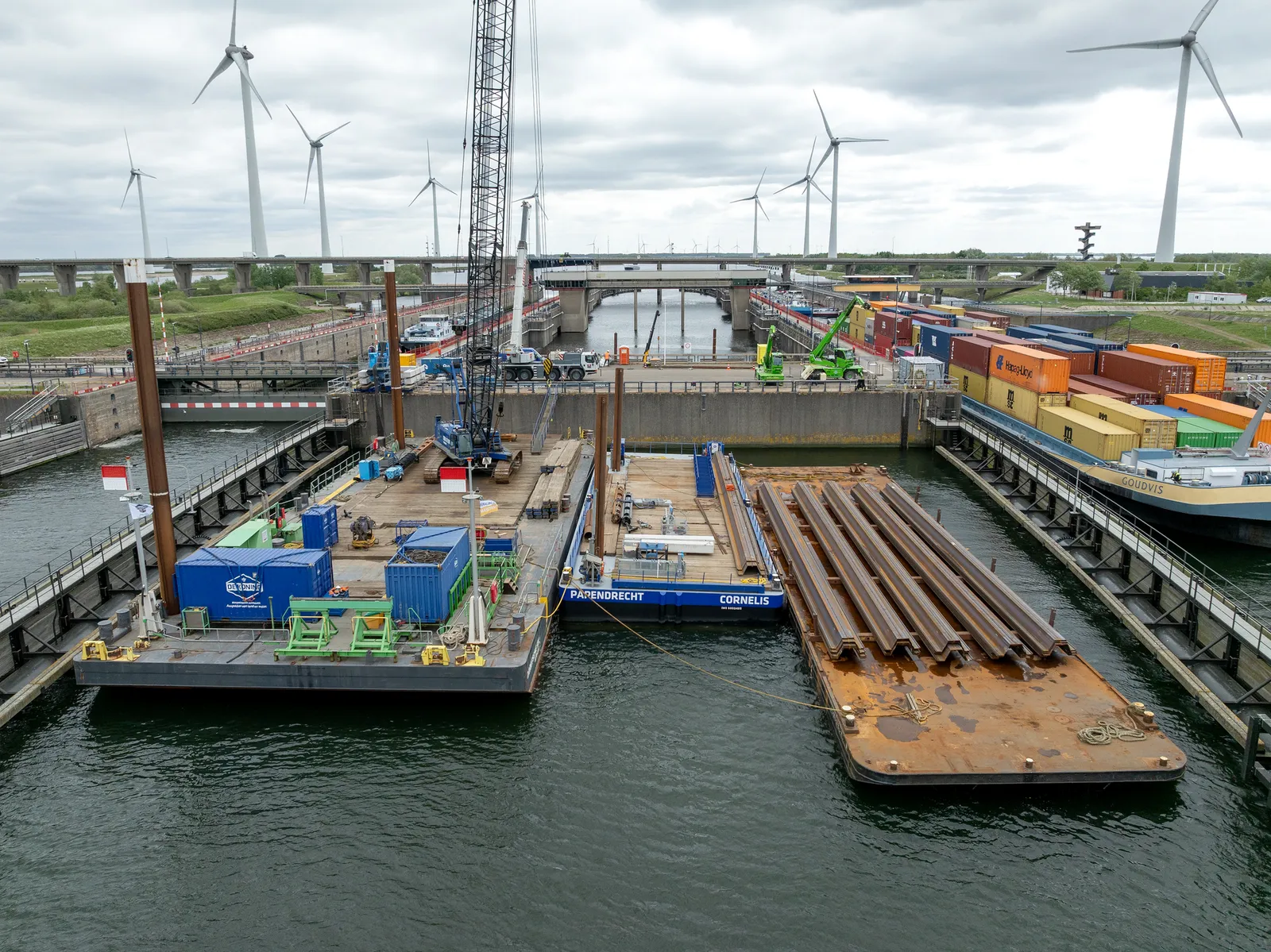
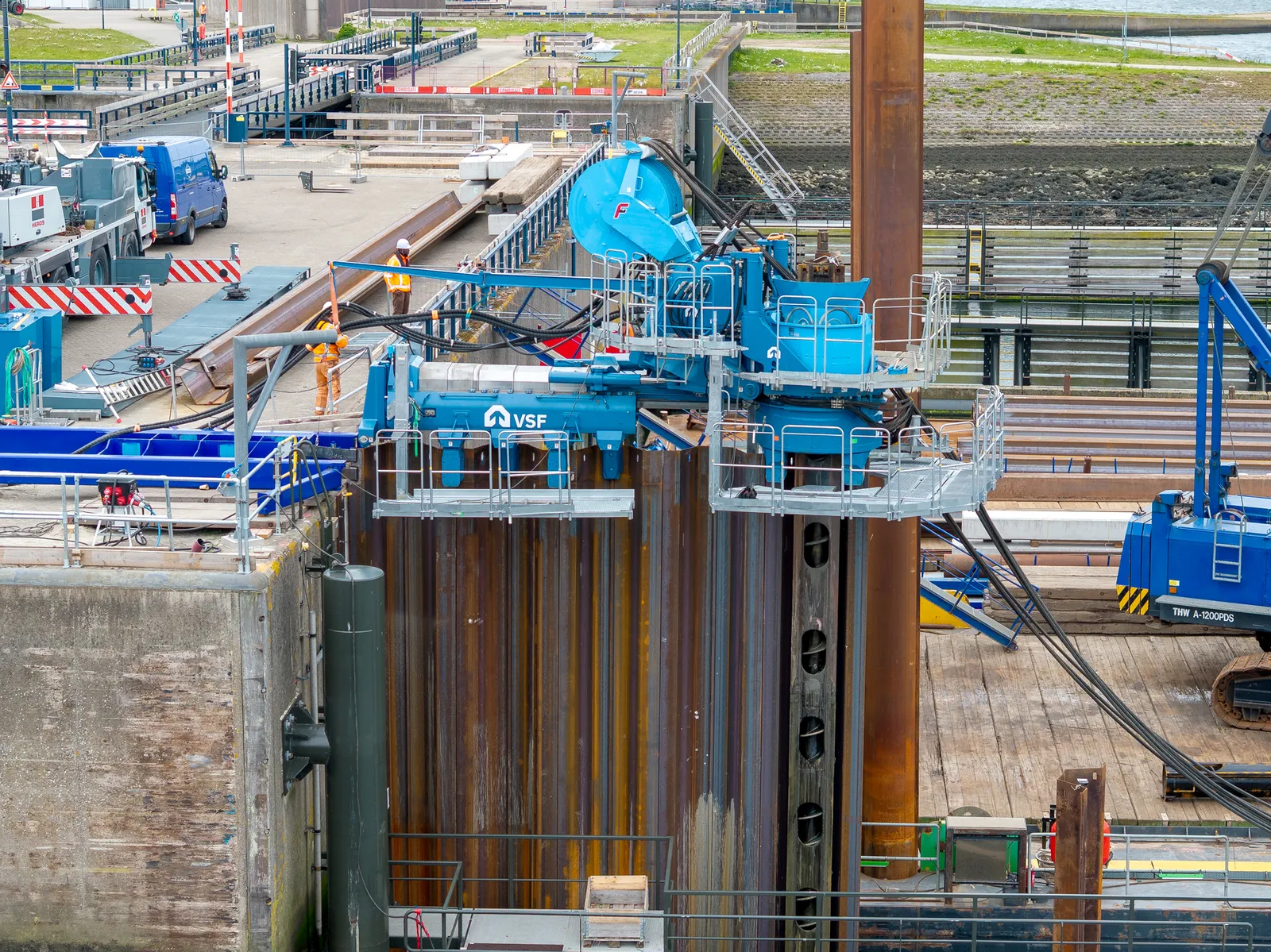
Alongside work on the lock gates, a new sluice and fish passage is being built between the barge locks. This structure will discharge surplus water and give fish a better migration route. A huge temporary cofferdam is being built for the work. It will temporarily take over the function of the primary flood defence, enabling work to be carried out safely on existing concrete structures that were never designed for this purpose. “It can make for some striking scenes for passing vessels,” says Edwin. “Sheet piles up to 27 metres long are installed while ships pass by, and the locks remain in operation throughout.”
Renovating the yacht locks
As if work on the barge locks and fish passage were not enough, renovation of the first yacht lock chamber will also begin in October. The work will take about eight months. It will include replacing large quantities of electrical cable and upgrading installations. Several projects are therefore running in parallel at the Krammersluizen. “Everything converges here,” says Olivier. “It is a crossroads of work, users, interests and technical disciplines. At the same time, commercial and recreational vessels continue to use the complex. It really is a balancing act for the experts.”
Working together for the future
The contract was awarded to ZEEKR in May 2024. The consortium comprises BESIX, BESIX Unitec, Croonwolter&dros, Iemants, Demako and Bosch Rexroth. Work will continue until mid-2030, followed by a maintenance period. Edwin praises the close collaboration. “You cannot manage this project from an office. We meet every day with Rijkswaterstaat and all the partners to resolve challenges. That collaboration is essential.” The ambition extends beyond the Krammersluizen. Rijkswaterstaat sees the project as a model for future renovations of ageing locks in the Netherlands. Although the world cannot be entirely controlled and surprises are inevitable, the central goal is clear: a future-proof lock complex that will contribute to the Dutch economy, flood protection, nature and recreation for at least another fifty years. As Olivier puts it: “We are renovating and maintaining the locks while keeping shipping moving. That is what makes this project so special.”
Have a business enquiry for BESIX Nederland BV? Get in touch
Who worked on Krammersluizencomplex
- main contractor
 BESIXMentioned in The power of systems integration in the renovation of the Krammer Locks complex
- constructionZEEKRMentioned in The power of systems integration in the renovation of the Krammer Locks complex
- system integrationINNOCYMentioned in The power of systems integration in the renovation of the Krammer Locks complex
- system integrationCPM ConsultancyMentioned in The power of systems integration in the renovation of the Krammer Locks complex
- replacement, renovation and modificationIemantsMentioned in Modified 400-tonne lock gates improve the lockage process
- renovationSmuldersIn this story
- subcontractor
 DISA InternationalMentioned in The foundations for a new pumping station are being laid underwater
- independent baseline inspection
 A-QuinMentioned in Independent baseline inspection prevents surprises
- machinery safety consultant
 KaderMentioned in CE marking for one of the Netherlands’ most complex lock projects
- lead hydraulic engineering engineerHessel Voortman Engineering ConsultancyMentioned in A masterclass in hydraulic engineering


Keep following this
Get an email when a new story is published. No account needed.
- ProjectKrammersluizencomplex
- ThemeFlood protection and climate-resilient water management
- SubjectWater infrastructure
- CompanySmulders
- CompanyBESIX Nederland BV
- CompanyCroonwolter&dros
- CompanyDEMAKO NV
- CompanyBosch Rexroth







