









Independent baseline inspection prevents surprises
Text Roel van Gils Image A-Quin
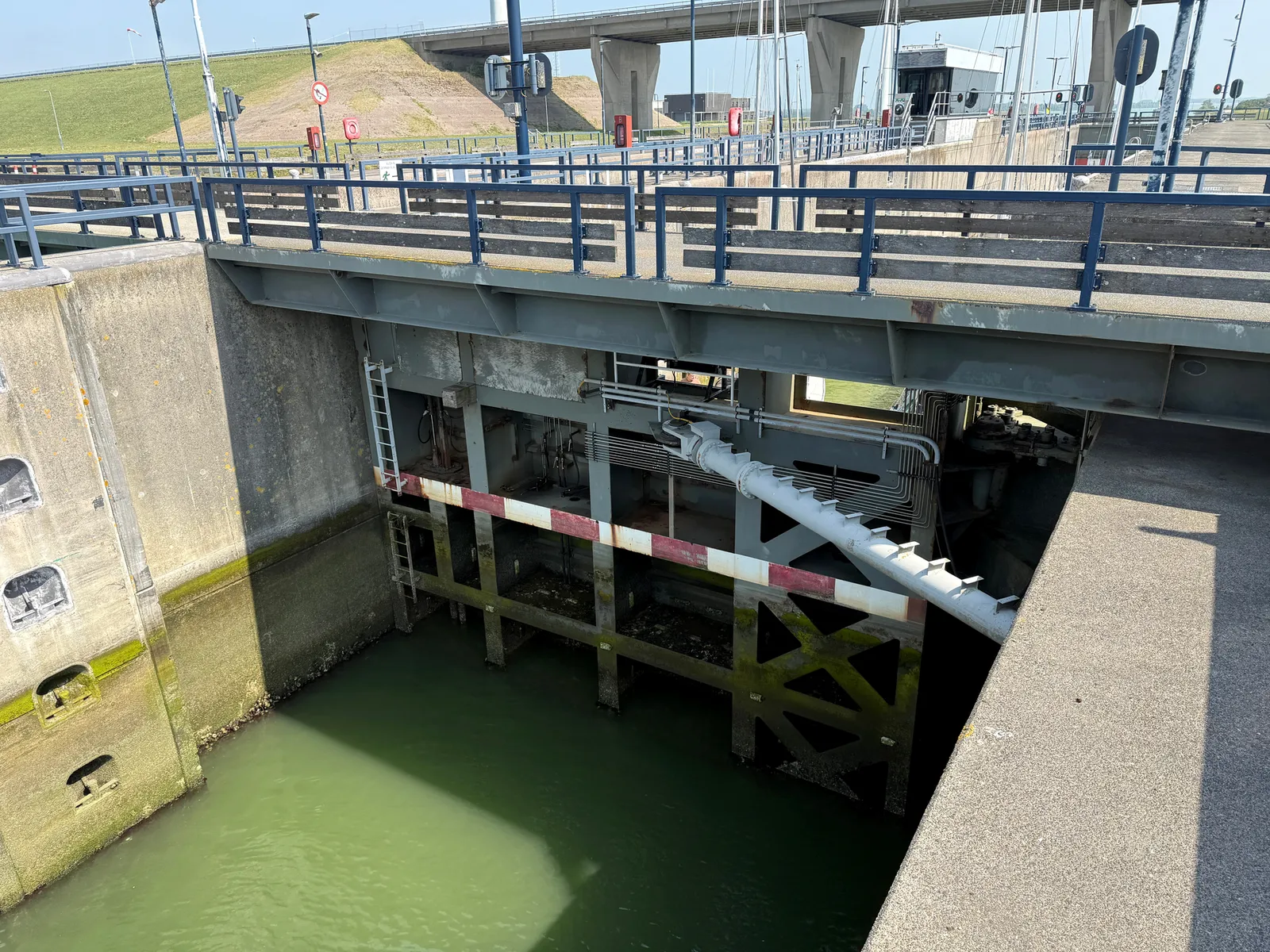
From a few hundred to more than 1,000 risks
When the contract for the renovation of the Krammersluizen complex was awarded to the ZEEKR consortium, Rijkswaterstaat provided a so-called ‘risk register’ covering the condition of the asset. The contractor consortium then engaged A-Quin to carry out an independent baseline inspection, verifying all known risks and identifying any new ones. The results were striking: more than 1,000 potential risks were ultimately identified, assessed and prioritised.
“We started by carrying out an extensive desk study,” says Olivier Dolk, project manager at A-Quin. “Maintenance records, drawings, maintenance plans, risk registers and other historical documentation formed the basis for this initial inventory. We looked not only at the existing risks identified by Rijkswaterstaat, but also at potential missing risks and the underlying failure mechanisms.”
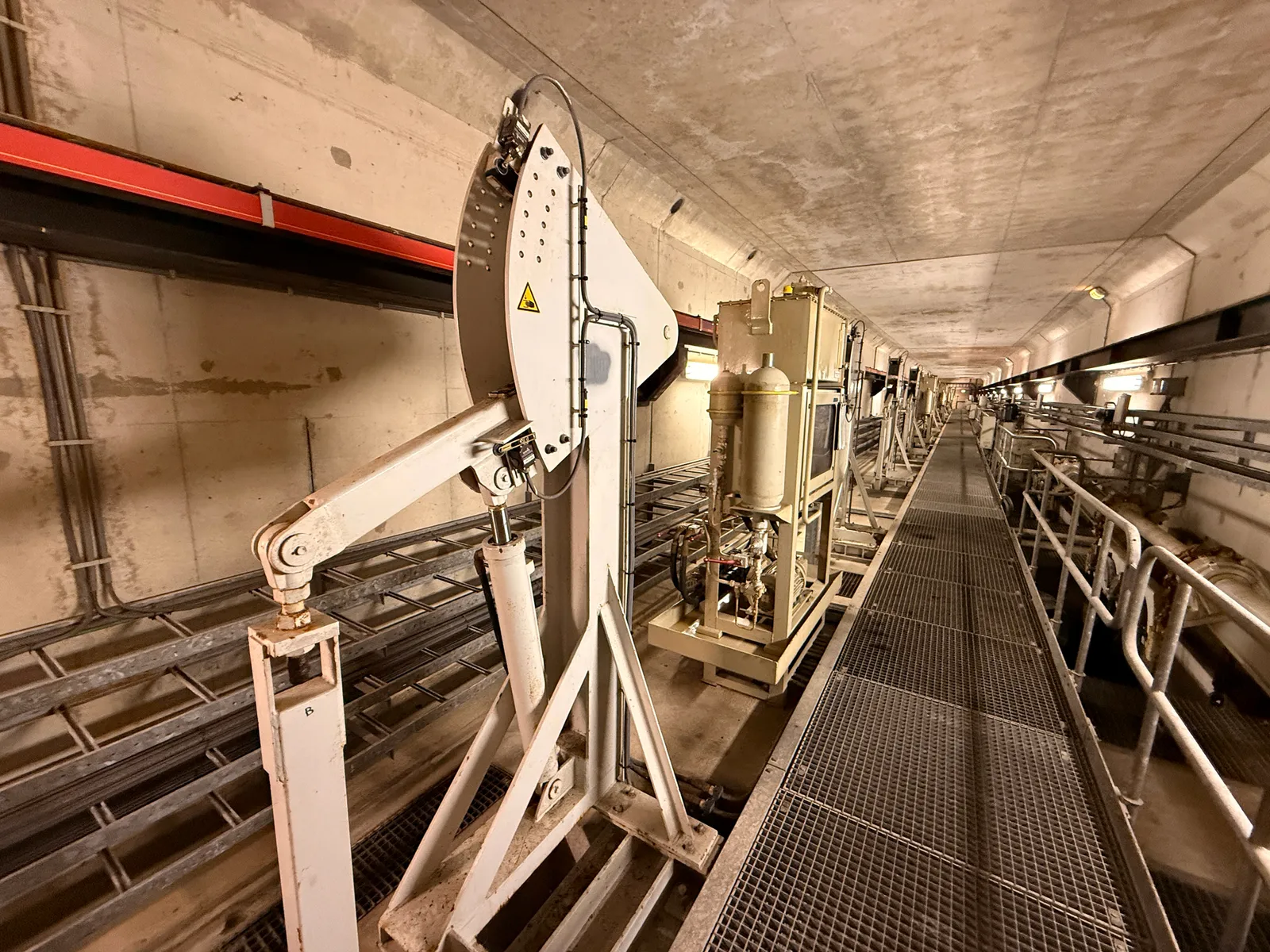
Baseline inspection
A team of six A-Quin specialists then spent three weeks ‘in the field’. “During the baseline inspection, we recorded the asset’s current condition. We used the NEN2767 methodology, which makes it possible to record and assess defects consistently and objectively,” explains Olivier Dolk. “The focus was on mechanical
and electrical installations, supplemented by civil engineering inspections. These also brought to light several issues that were outside the original renovation scope. For example, significant corrosion was found on the wall-gate drives and cable guide structures. This degree of corrosion had not been identified in the desk study. We recorded these findings as risks and made them visible to both ZEEKR and Rijkswaterstaat.”
Prioritising risks
According to Olivier Dolk, the strength of the approach lay in its independence. “With no interest in additional work or contractual disputes, we looked solely at the asset’s actual condition and the potential impact on its future performance,” he says. “Each risk was assessed using Rijkswaterstaat’s standard methodology and assigned a priority. This gave us a clear picture of which maintenance and renovation measures required attention first.” The inventory also revealed that some risks could be downgraded or even ruled out. “Ultimately, this resulted in a complete, evidence-based overview, which we presented in person to both Rijkswaterstaat and ZEEKR.”
What is the greatest benefit of this kind of exercise? “Making risks a topic of discussion before the contract work begins,” stresses Olivier Dolk. “Looking at the facts together in advance creates a shared starting point for the renovation and prevents disputes later on.”
A business enquiry for A-Quin B.V.? Get in touch
Who worked on Krammersluizencomplex
- main contractor
 BESIXMentioned in The power of systems integration in the renovation of the Krammer Locks complex
- constructionZEEKRMentioned in The power of systems integration in the renovation of the Krammer Locks complex
- system integrationINNOCYMentioned in The power of systems integration in the renovation of the Krammer Locks complex
- system integrationCPM ConsultancyMentioned in The power of systems integration in the renovation of the Krammer Locks complex
- replacement, renovation and modificationIemantsMentioned in Modified 400-tonne lock gates improve the lockage process
- subcontractor
 DISA InternationalMentioned in The foundations for a new pumping station are being laid underwater
- machinery safety consultant
 KaderMentioned in CE marking for one of the Netherlands’ most complex lock projects
- lead hydraulic engineering engineerHessel Voortman Engineering ConsultancyMentioned in A masterclass in hydraulic engineering



Keep following this
Get an email when a new story is published. No account needed.
- ProjectKrammersluizencomplex
- SubjectWater infrastructure
- CompanyA-Quin B.V.







