









Modified 400-tonne lock gates improve the lockage process
Text Roel van Gils Image Iemants
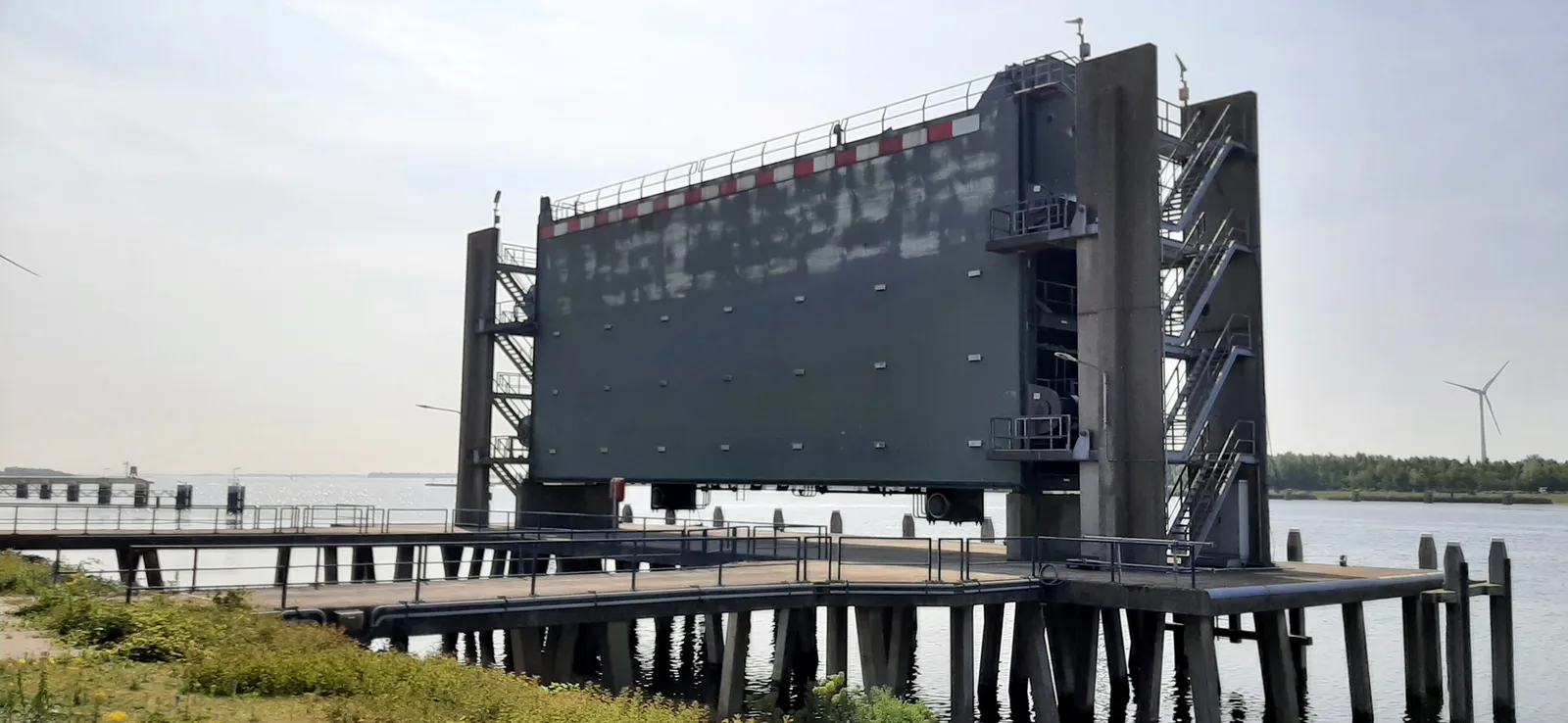
How do you renovate a 400-tonne lock gate without increasing its weight, while also making major technical changes? This is the challenge facing Iemants, part of Smulders, which is responsible within the ZEEKR consortium for replacing, renovating and modifying the lock gates at the Krammersluizencomplex. The enormous gates are not only being given a new coating and upgraded safety features, but are also being fitted with a completely new system that will significantly speed up the lockage process.
Each gate is no less than 23 metres wide, 12 metres high and 4 metres thick. “Despite their size and the many new components, the total weight must not exceed 400 tonnes,” says Martijn Kuzee, project manager at Iemants. “The reason is that the gates must always be replaceable using relatively simple equipment, namely floating sheerlegs. This calls for precise calculations and clever modifications to the internal structure.”
New lockage process
The biggest change concerns how water is transferred during lockage. “Previously, this was done through sluices in the lock walls. Now, six large flow openings are being built into the gates themselves,” Martijn explains. “Butterfly valves will be fitted in these openings to control the flow of water through the gates. This will reduce lockage time from around 45 to 30 minutes.” To make this possible, Iemants is modifying the entire internal structure of the gates. “The modifications include new technical rooms, six flow pipes with drive shafts and extensive safety features. Redundancy is also maintained: should a butterfly valve fail, an emergency sluice can temporarily close the opening.”
Rearranging the air chambers
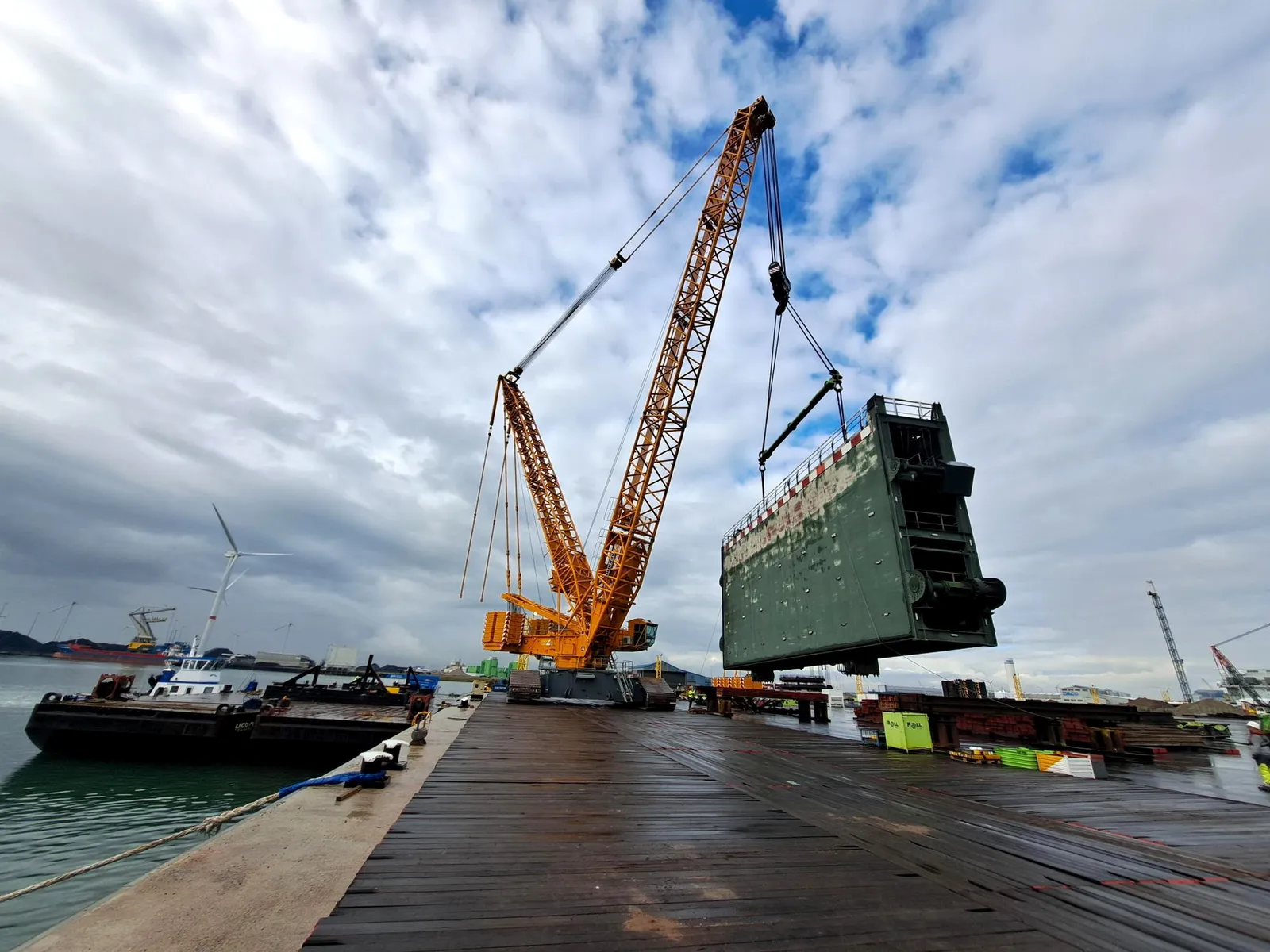
The first gate has already undergone extensive work at Smulders’ yard in Vlissingen. It was thoroughly cleaned first, and all components requiring refurbishment were dismantled. For gates that have been in service for many years, up to 35 tonnes of marine growth and silt are taken into account. “Because the gates will have new, much larger technical rooms, the internal air chambers are being rearranged to maintain optimal weight distribution,” Martijn explains. “This will ensure that the wheels on the bottom roller carriages, which the gates move on in the lock chamber, are all subjected to equal pressure. At ZEEKR’s request, we will also carry out a test lift with the first gate at our yard to check that reality matches the calculations.”
The preservation work is also carried out on site. “Our yard has several cranes that allow us to lift and turn the lock gate in one operation, so it can be moved into our coating facility,” says Martijn. “This means we can blast-clean and preserve it very efficiently in controlled conditions. The blasting dust is also collected immediately, so there is no risk of it entering the environment.” Once the new paint coating has been applied, the gate is moved back outside and various subcontractors reinstall and assemble all the components. “The gate is only released for transport to the lock after all the systems have been thoroughly tested at our site. This keeps the actual closure during the gate replacement to a minimum.”
Question about this story? Ask your question
Who worked on Krammersluizencomplex
- main contractor
 BESIXMentioned in The power of systems integration in the renovation of the Krammer Locks complex
- constructionZEEKRMentioned in The power of systems integration in the renovation of the Krammer Locks complex
- system integrationINNOCYMentioned in The power of systems integration in the renovation of the Krammer Locks complex
- system integrationCPM ConsultancyMentioned in The power of systems integration in the renovation of the Krammer Locks complex
- replacement, renovation and modificationIemantsIn this story
- subcontractor
 DISA InternationalMentioned in The foundations for a new pumping station are being laid underwater
- independent baseline inspection
 A-QuinMentioned in Independent baseline inspection prevents surprises
- machinery safety consultant
 KaderMentioned in CE marking for one of the Netherlands’ most complex lock projects
- lead hydraulic engineering engineerHessel Voortman Engineering ConsultancyMentioned in A masterclass in hydraulic engineering



Keep following this
Get an email when a new story is published. No account needed.
- ProjectKrammersluizencomplex
- ThemeExtending the life of roads and civil engineering structures
- SubjectWater infrastructure
- CompanyIemants







