









Locating prestressing reinforcement using radar technology
Text Roel van GilsImage TerraCarta
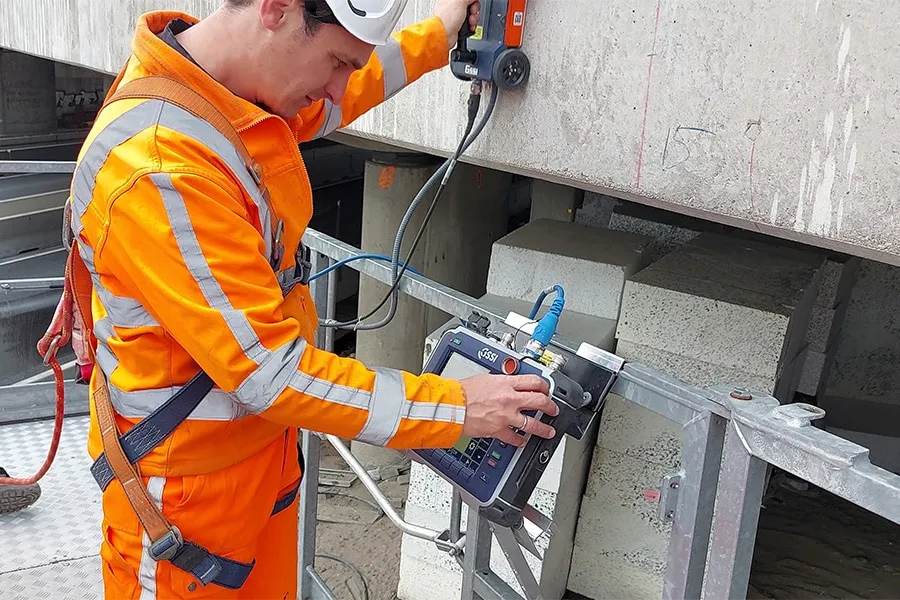
The Schipholbrug is part of the widening and sunken construction of the A9 between Badhoevedorp and Holendrecht. Naturally, it is also being upgraded and widened on both sides. To anchor the new sections to the structure, anchors up to 2 metres ‘deep’ are drilled into the existing structure. And, of course, they must not hit the prestressing reinforcement. TerraCarta was called in to map the reinforcement in the concrete using radar technology, so that the positions of the new anchors could be determined.
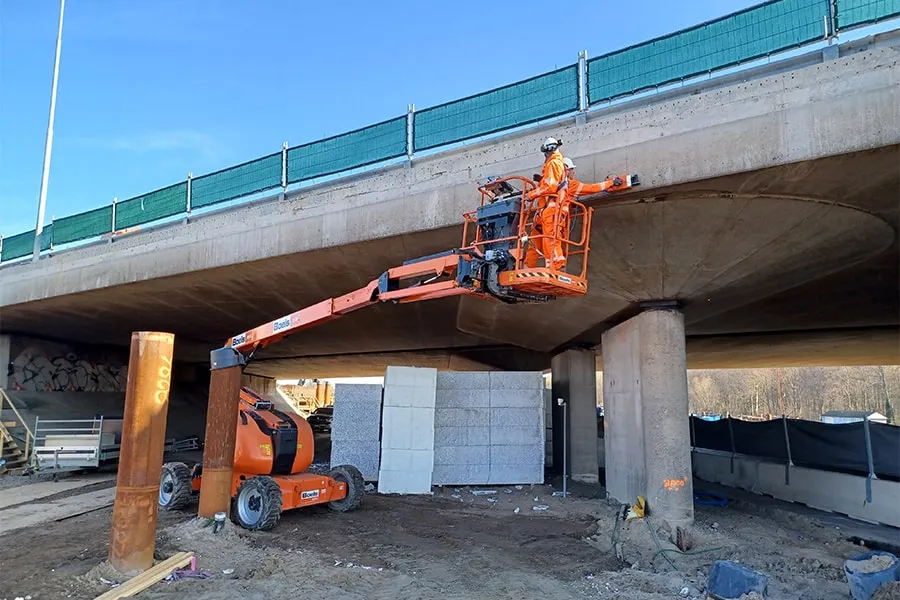
TerraCarta made its name mapping underground cables and pipes. “We use all kinds of detection equipment for this,” says Karel Meinen, CEO of TerraCarta. “A trench is then dug at the relevant location to identify the cables and pipes. Over the years, we have built up considerable knowledge and expertise in locating and identifying cables and pipes. With that experience and technology, we can also see inside concrete.” In response to problems with bubble-deck slabs, which culminated in the collapse of the car park at Eindhoven Airport, TerraCarta has now surveyed the reinforcement in numerous buildings. “For example, the floors of the JuBi towers on Turfmarkt in The Hague, the huge building housing the Ministry of Economic Affairs (ed.), were strengthened with 50,000 anchors. We reduced the margin of error in locating the existing reinforcement to virtually zero.”
GPR and EML
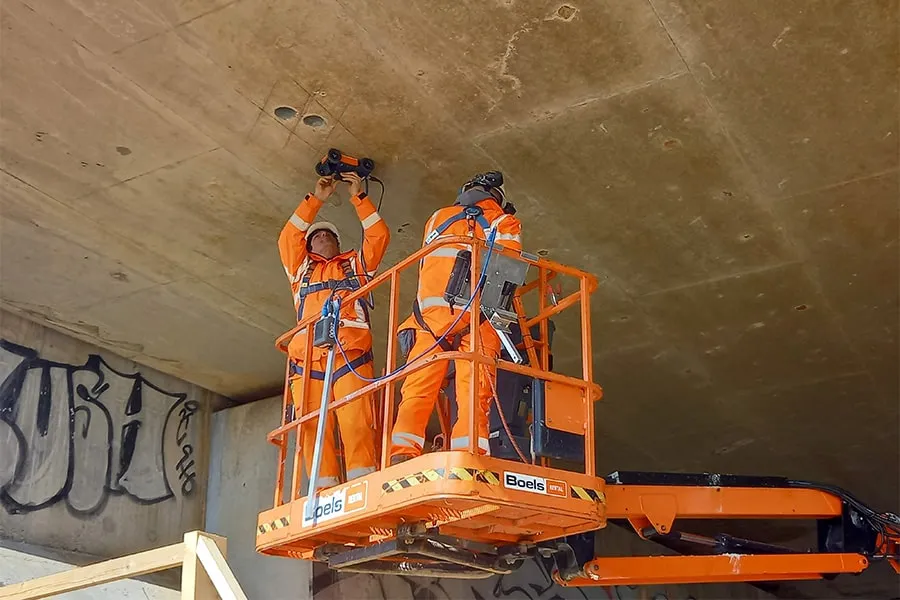
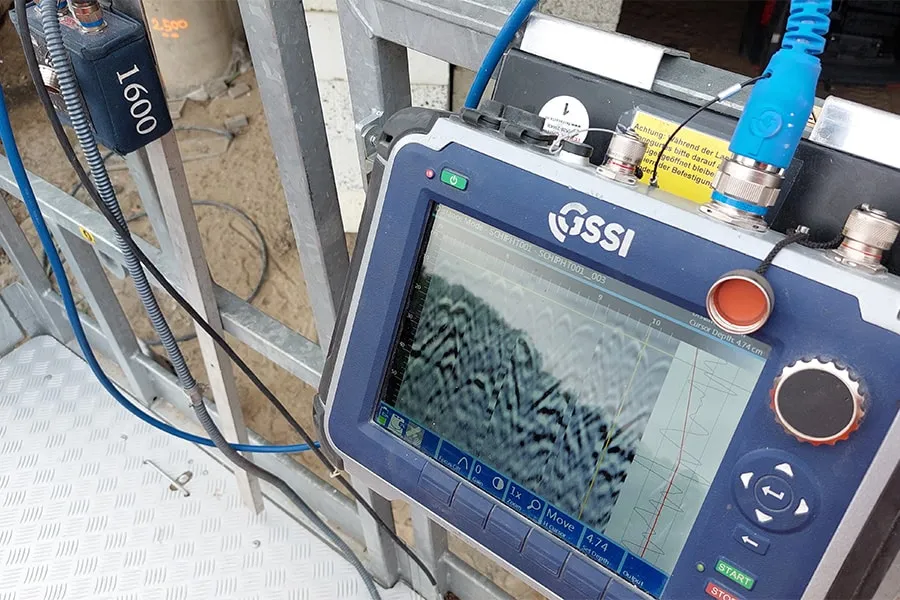
When widening the Schipholbrug, construction consortium VeenIX, working on behalf of Rijkswaterstaat, faces essentially the same challenge as with the bubble-deck slabs. “Here too, existing reinforcement is not visible from the outside, as you would expect, and its exact location is not specifically shown on the drawings,” says Meinen. “Our task is to map the prestressing steel with a high degree of accuracy, so that the anchors can be drilled safely and responsibly. The great thing is that we can use our regular instruments for this, the same ones we use to look digitally underground: ground-penetrating radar (GPR) and electromagnetic location (EML). Using measurement antennas across a range of frequencies, we look right through the concrete, like an X-ray. Higher frequencies allow us to detect the finer reinforcement, while lower frequencies give us a clear picture of the main reinforcement. We then use a 3D wireframe model to show visually what is happening inside the bridge.”
The highest possible level of certainty
In addition to GPR and EML, TerraCarta used other instruments to locate the reinforcement in the Schipholbrug as accurately as possible. “We have previously used EML equipment to map grout anchors,” Meinen continues. “The combination of measurement techniques determines how certain you can be about what you have mapped. After all, you need to be able to verify your findings. We also took measurements from both the top and the underside, so we could factor in any margins of error. We weigh up all kinds of factors to determine the accuracy we can achieve and the effort involved in mapping the reinforcement. The greater the certainty, the more work it takes. That is what we do: aim for the highest possible level of certainty. The drilling itself also has a certain tolerance.” The 3D wireframe model generated by TerraCarta is overlaid on the planned drill locations to check for clashes. “This allows us to indicate, for example, that a borehole needs to be moved 5 or 10 centimetres to avoid hitting the existing reinforcement.”
According to Meinen, this is the first time a structure has been surveyed in this way. “We knew it was possible and had experimented with it in the past, but this was the first time we had done it on this scale. And it was an immediate success.” No doubt there will be more to come!
A business enquiry for TerraCarta B.V.? Get in touch
Who worked on A9 Badhoevedorp – Holendrecht
- temporary bridges
 Janson BridgingMentioned in Temporary bridges on and over the A9 safeguard mobility
- precision drilling technologyInterboor MidslandMentioned in Widening the Schipholbrug: precision drilling between parabolic prestressing tendons
- foundation specialist
 KandtMentioned in Kandt, foundation specialist, delivers quality work on the A9
- welding sheet piles
 Marsé MontageMentioned in Specialist welding on the A9: welding 21 kilometres of sheet piling
- foundation contractor consortiumDe Vries TitanMentioned in The Netherlands’ largest anchor pile project
- foundation contractor consortiumBAUER FunderingstechniekMentioned in The Netherlands’ largest anchor pile project
- construction cost consultancy
 BKS SchagenMentioned in A9: BKS Schagen demonstrates the value of its expertise and approach
- UP scaffolding system
 PeriMentioned in Van der Panne installs special viewing tower alongside A9 Amstelveen
- scaffolding structuresVan der PanneMentioned in Van der Panne installs special viewing tower alongside A9 Amstelveen
- Type C self-drilling anchor pilesHigh 5 SolutionsMentioned in A9: Smart solution for testing anchor piles next to a sheet-pile wall
Keep following this
Get an email when a new story is published. No account needed.
- ProjectA9 Badhoevedorp – Holendrecht
- SubjectRoad construction
- CompanyTerraCarta B.V.







