









Reinforcement steel for the Rottemeren Tunnel’s underwater concrete floor
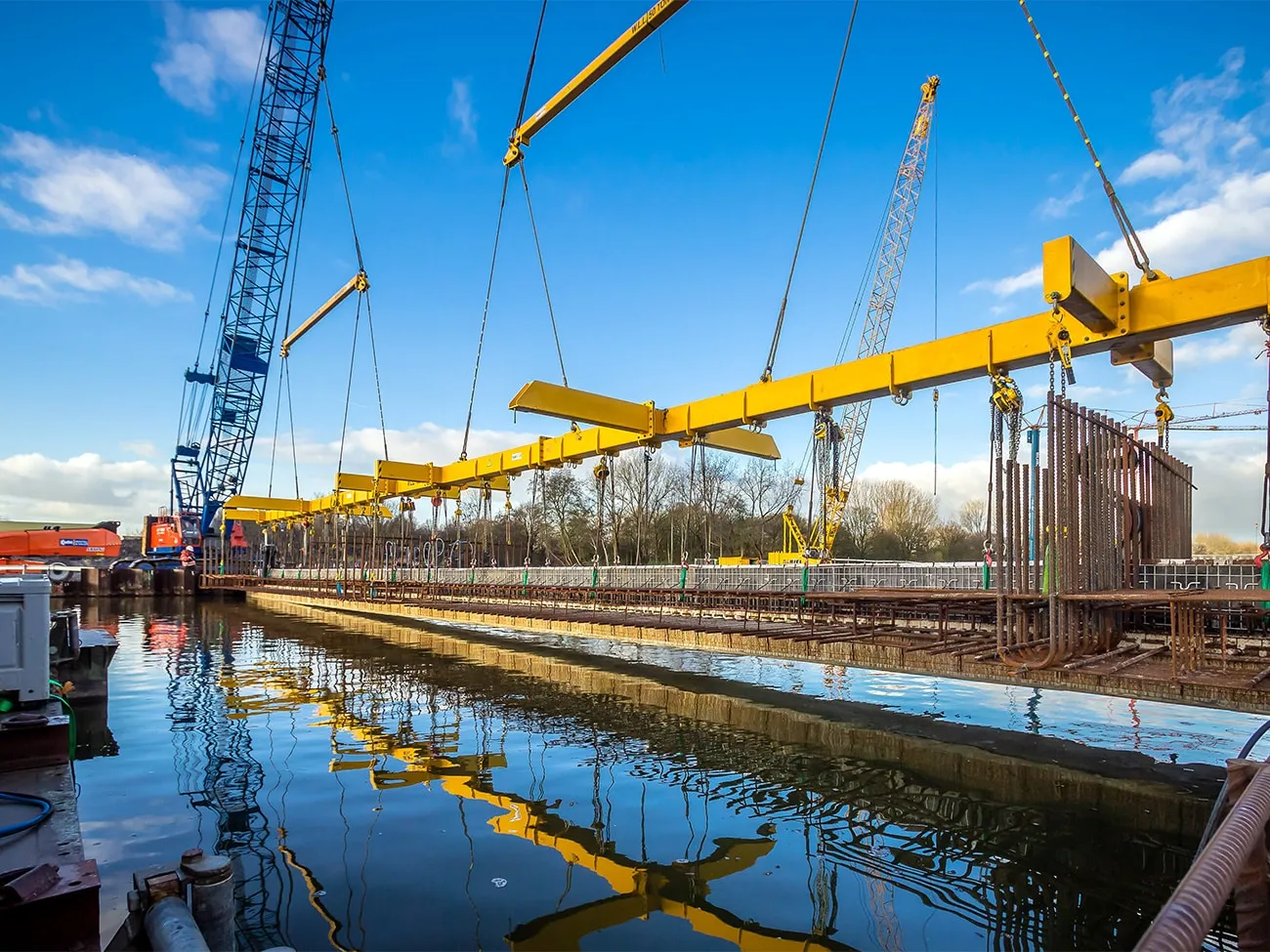
To build the Rottemeren Tunnel using the immersed construction method, construction consortium De Groene Boog opted for a reinforced underwater concrete floor. Given the complexity of working underwater, it was important to have as much of the reinforcement steel prefabricated as possible, with a perfect fit essential. Specialist BCS (Buig Centrale Steenbergen) from Hoogeveen was brought in for its extensive expertise and innovative approach. We spoke to Harry Steenbergen, Gerry Meijer and executive assistant Inge Oosting about the supply of around 30,000 tonnes of steel to De Groene Boog.
Eliminating design clashes before construction
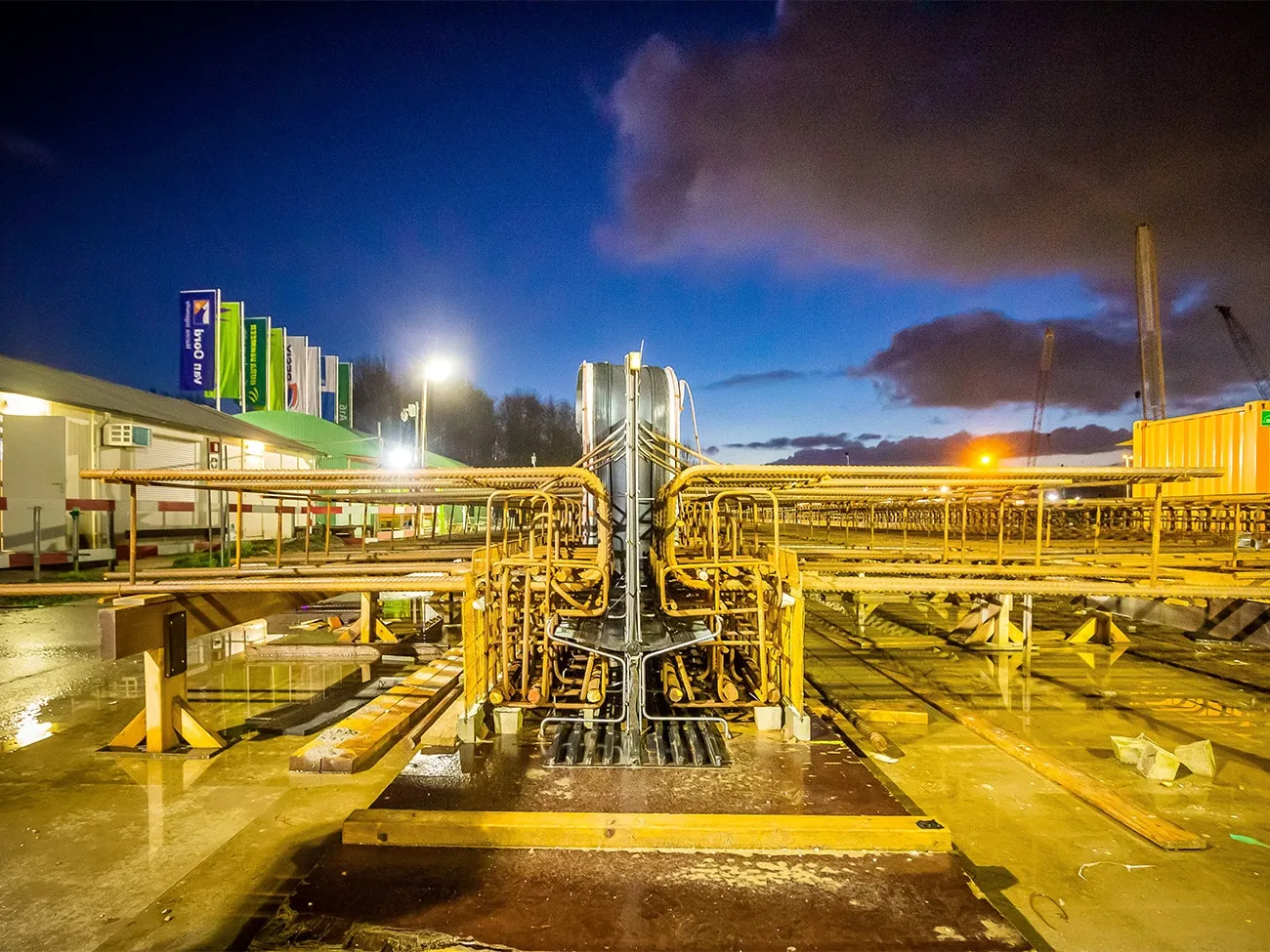
“We’re supplying all the reinforcement steel for the underwater concrete floor and the tunnel deck,” Steenbergen begins. “The walls and deck are assembled on site. We were involved early in the design process, developing everything in 3D so that we could identify and discuss any potential issues. For example, there is a pile structure with an anchorage extending towards the reinforcement steel. Working in 3D allows us to monitor clashes*. It’s precision work from start to finish.” Meijer outlines how much steel the tunnel requires: “Around 14,000 tonnes for the underwater concrete floor, another 14,000 tonnes for the walls and deck, and around 2,000 tonnes for the approach roads. That brings the total to approximately 30,000 tonnes of reinforcement steel.”
(*Clash detection identifies conflicts in the structure being built during the design phase)
As much as 90% prefabricated
Meijer continues: “We had to take account of the adjustable formwork designed for the walls. The starter bars for the walls are cast directly into the underwater concrete. It requires great precision, but designing in 3D means the process is well controlled. We began producing the reinforcement steel for the underwater concrete floor and the deck, and have made the first deliveries for them.
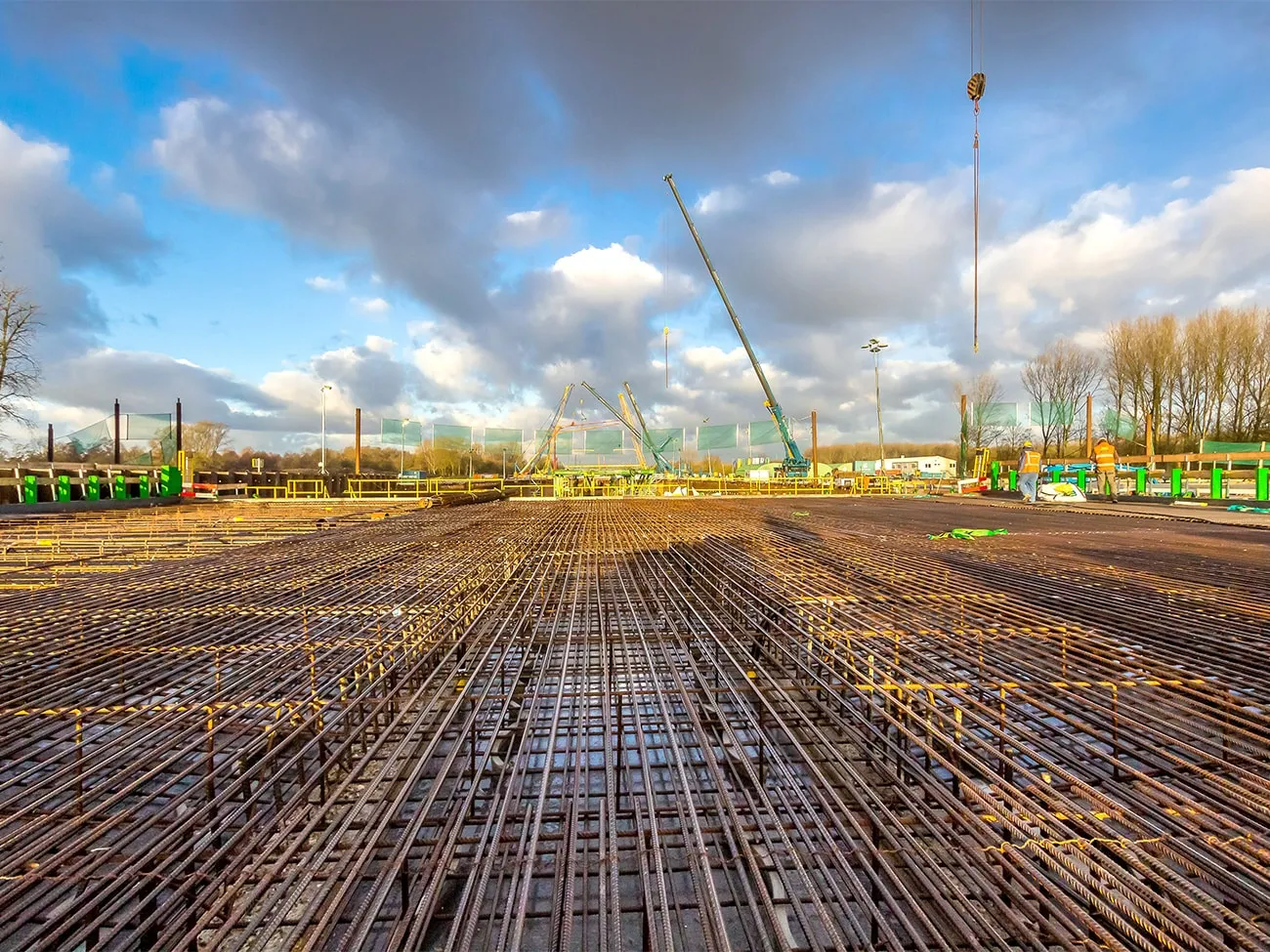
That means between 400 and 500 deliveries to the site, where we prepared everything on location.” Steenbergen adds: “As much as 90% of the supplies were prefabricated by us.”
Tunnel reinforcement steel specialists
“Divers assemble the prefabricated cages for the underwater concrete in situ,” says Steenbergen. “That’s why we felt it was important to develop our 3D model collaboratively. Our client brought the diving company into the design phase. After all, their people have to work with it in exceptional conditions.” BCS knows exactly what these complex projects require and has the experience to back it up. “We’re increasingly being approached by the infrastructure sector. Our reinforcement steel has been used at the Gaasperdammertunnel and the tunnel on the Groningen ring road,” Steenbergen continues. Meijer adds: “We’ve now developed specialist expertise in reinforcement steel for tunnels. Our plant is even configured for this type of work. The icing on the cake is the 3D design work carried out at the outset. By designing collaboratively at that stage, you can create a product that reduces the client’s workload and significantly cuts the risk of rework. Investing up front really does pay off further down the line.”
Fully automated production
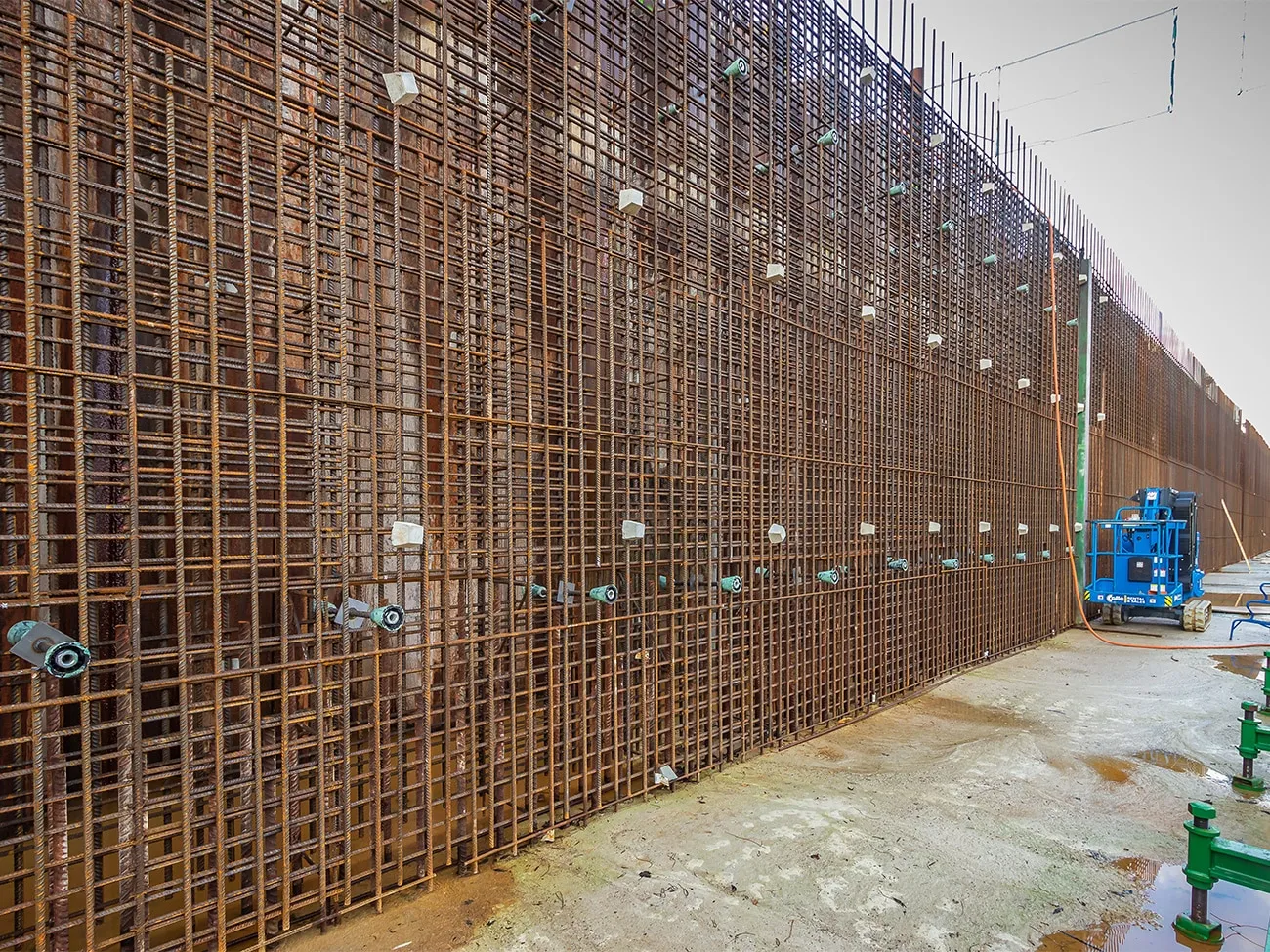
The project uses B500-grade reinforcement steel. Steenbergen explains: “For the underwater concrete floor, we mostly use bars with diameters of 32 mm and 40 mm. The walls use bars ranging from 16 mm to 25 mm in diameter, while the deck uses bars from 16 mm to 32 mm. In our factory, we produce reinforcement mats up to 40 mm thick fully automatically, using robot control. Mats measuring 3.5 metres by 14 metres in one piece are no problem.” Meijer points out that being able to process 40 mm steel fully automatically is truly unique, adding: “Transporting prefabricated mats of these dimensions is a Herculean task too.” By automating production, BCS can guarantee the quality of every mat leaving the factory. The machines are controlled directly from the 3D model. “Naturally, every item is also visually inspected before dispatch,” says Steenbergen. “By resolving all clashes in the 3D design in advance and manufacturing with great precision, we deliver a made-to-measure reinforcement solution. That’s sustainable.” The reinforcing steel used is made partly from recycled scrap, making production not only sustainable but also circular.
Always looking for innovative solutions
Oosting says: “Our expertise and way of working enable us to be innovative. That’s also necessary on projects such as A16 Rotterdam, where solutions have to be found for challenges arising from the innovative thinking of De Groene Boog’s designers. That’s why we actively contribute on a large scale from the outset. For this kind of work, our production capacity and logistics are just as crucial as our ability to innovate. We have several production sites and storage locations in the Netherlands, which is essential for projects like this. The schedule is sacrosanct. With 30 tractor units and 100 trailers, which we load directly at the production site, we can deliver just in time.”
‘Made in Hoogeveen’
“People here take pride in their work. Alongside ‘Made in Hoogeveen’, our work also carries the label ‘Since 1953’. The driving forces in our organisation always know how to get the whole team enthusiastic about projects like this. Everyone is pulling in the same direction. We do it as a team,” says Oosting.
To conclude, we ask Steenbergen whether the company, founded in 1953, now only takes on projects of this scale. Steenbergen laughs and says: “You won’t believe it, but if you want a small reinforcement floor for your new shower, we’ll be happy to help. The scale of the projects we work on these days says nothing about how approachable we are. We’re far too down-to-earth for that. He who despises the small is unworthy of the great!”
Question about this story? Ask your question
Who worked on Rottemerentunnel
- construction consortiumDe Groene BoogIn this story
- reinforcing steelBCS (Buig Centrale Steenbergen)In this story
- fire-resistant boardsPromatMentioned in Fire-resistant boards offer the new Rottemerentunnel optimal protection
- De Groene Boog construction consortium
 MobilisMentioned in Focus on fit-out works in the Rottemeren Tunnel
- lining walls and slatted claddingAldowaMentioned in Concrete structure ‘wrapped’ in aluminium acoustic screens and louvre cladding
- architectQWA-architectenMentioned in Concrete structure ‘wrapped’ in aluminium acoustic screens and louvre cladding
- installationKaeferMentioned in Rottemerentunnel concrete structure protected with fire-resistant cladding
- fire protection applicationsVan der Aa Brandwerende applicatiesMentioned in Flame barriers protect underside of service walkway in the event of a fire
Keep following this
Get an email when a new story is published. No account needed.
- ProjectRottemerentunnel
- ThemeMaterials and techniques for infrastructure
- SubjectWater infrastructure
- CompanyDe Groene Boog
- CompanyBCS (Buig Centrale Steenbergen)







