









Fire-resistant sliding doors for Rottemeren Tunnel
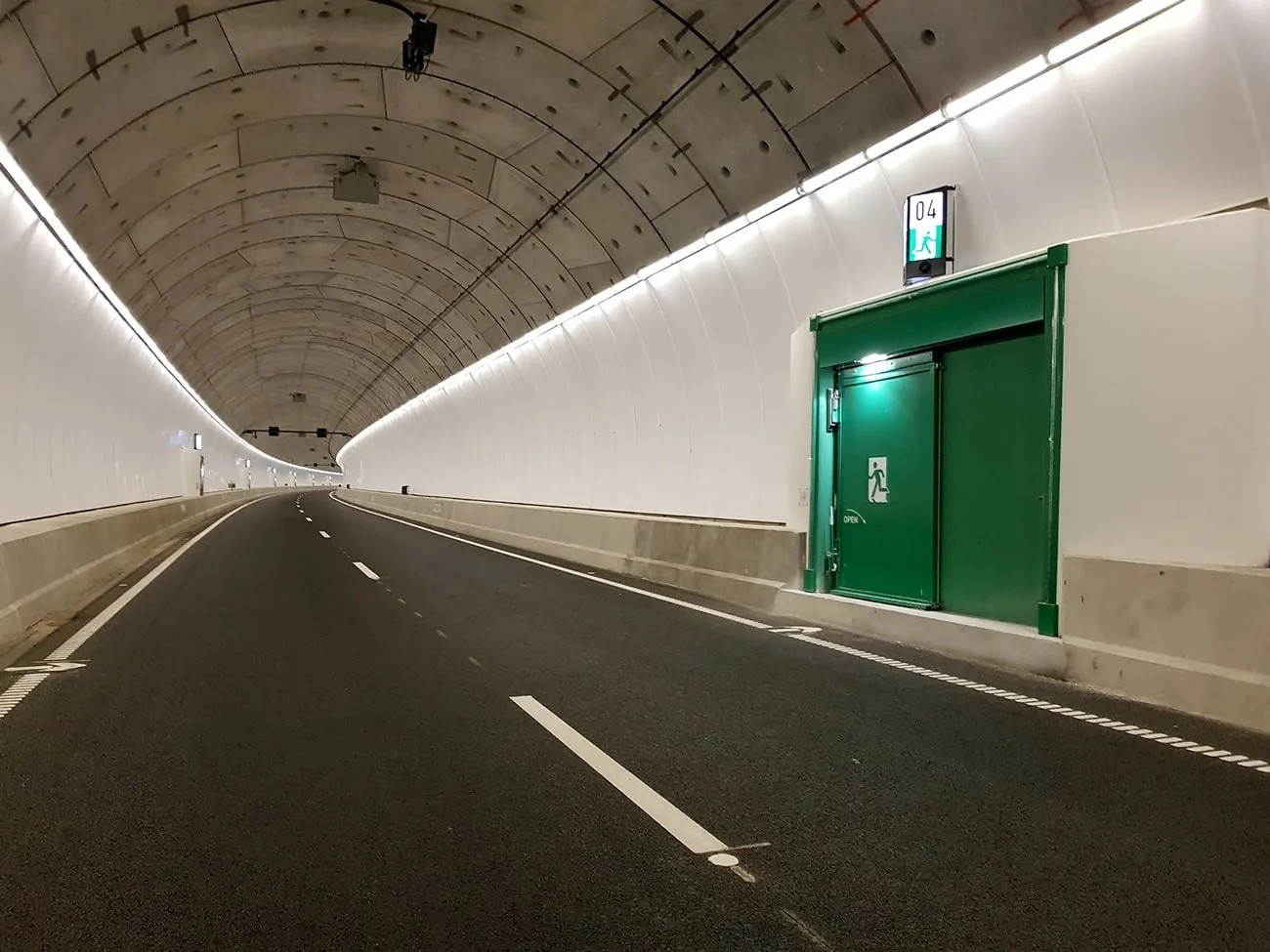
A key part of the A16 Rotterdam project is the construction of the twin-bore, 2,235-metre-long Rottemeren Tunnel. Once complete, the structure will be half-sunken in Lage Bergse Bos and fitted with a central tunnel passage that will enable users to leave the tunnel quickly and safely in an emergency. Keers, based in Mijdrecht, is developing, supplying and installing all 46 fire-resistant doors providing access to this central tunnel passage.
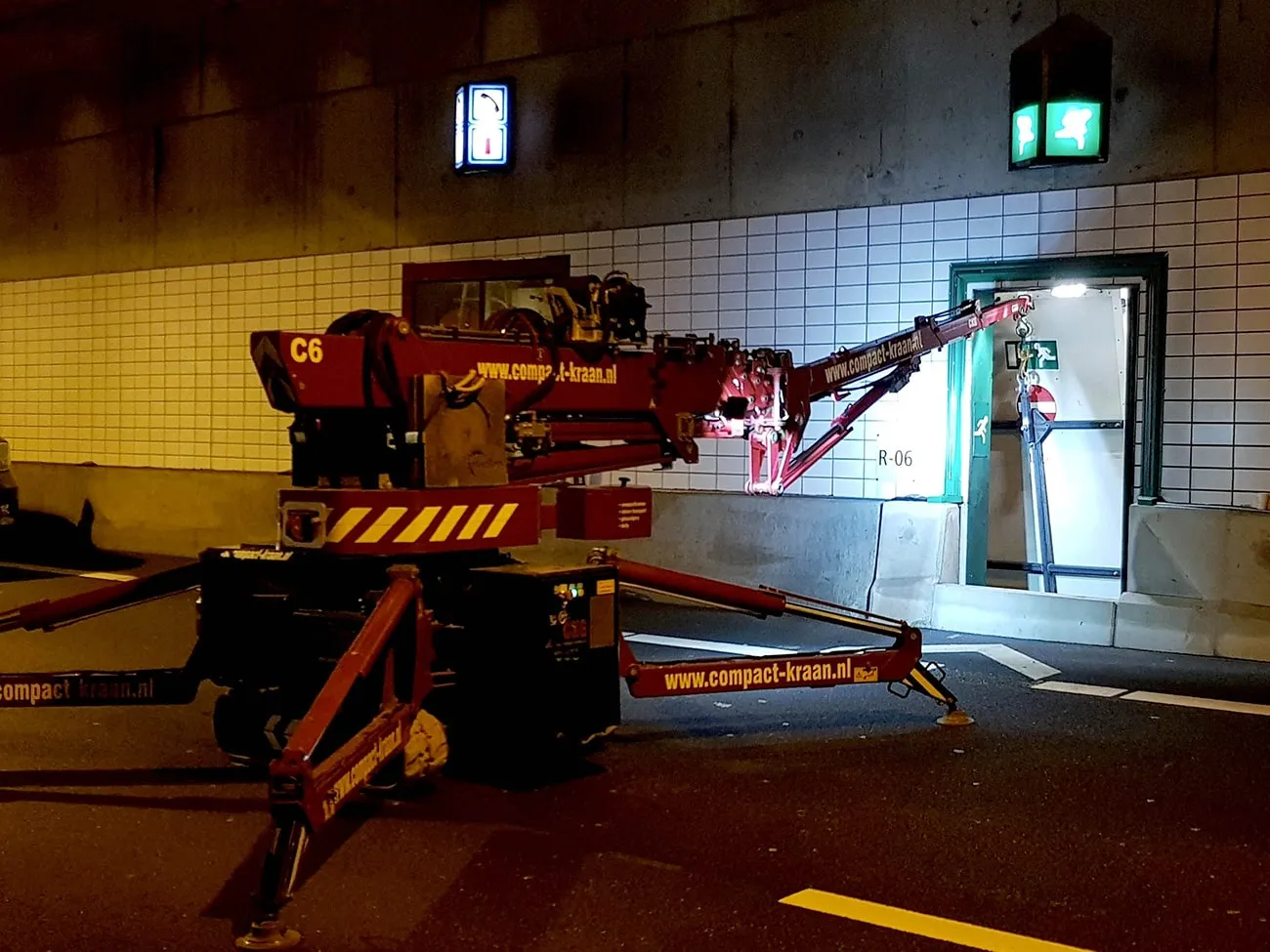
With around 60 years of experience, Keers specialises in doors for road, railway and metro tunnels, fire-resistant and security doors, and steel windows, doors and façades. Its products are supplied entirely to customer specifications, with a range of optional extras such as guide rails, sound insulation and panic bars. This enables Keers to offer an optimal door solution that excels in functionality, safety and ease of maintenance. The same applies to the green, fire-resistant doors the company is supplying in Rotterdam. “The door concept we are using here is based on one previously used for other projects, but has been fully modified and further improved specifically for this application,” says managing director and owner Jaap Biesheuvel. “The result is a 100% safe solution that is also easier to maintain.”
Special slide mechanism
One of the technical innovations Keers Special Doors is using in the Rottemeren Tunnel is a special slide mechanism fitted to a number of the tunnel’s escape doors. “At certain points, there is a gap at floor level where the tunnel meets the escape passage,” Biesheuvel explains. “To prevent users from getting their feet caught or tripping as they leave the tunnel, we fit the sliding doors with a special slide mechanism. When the doors open, it moves along at floor level with the door. This means everyone can leave the tunnel quickly, without difficulty and, above all, safely when necessary.”
Innovative partner
Keers is a true pioneer in steel, fire-resistant escape doors. In the 1980s, the company worked with Rijkswaterstaat to develop the first fire-resistant escape doors. “Following a fire in the Velsertunnel, the government drew up a specification at the time setting out the requirements for all fire-resistant doors in tunnels,” says Biesheuvel. “As these requirements were tightened and expanded, we continued to develop our escape doors. As a result, in recent years we have supplied more than 1,000 tunnel doors to clients in the Netherlands and abroad.”
Question about this story? Ask your question
Who worked on Rottemerentunnel
- construction consortiumDe Groene BoogMentioned in Reinforcement steel for the Rottemeren Tunnel’s underwater concrete floor
- reinforcing steelBCS (Buig Centrale Steenbergen)Mentioned in Reinforcement steel for the Rottemeren Tunnel’s underwater concrete floor
- fire-resistant doorsKeersIn this story
- fire-resistant boardsPromatMentioned in Fire-resistant boards offer the new Rottemerentunnel optimal protection
- De Groene Boog construction consortium
 MobilisMentioned in Focus on fit-out works in the Rottemeren Tunnel
- lining walls and slatted claddingAldowaMentioned in Concrete structure ‘wrapped’ in aluminium acoustic screens and louvre cladding
- architectQWA-architectenMentioned in Concrete structure ‘wrapped’ in aluminium acoustic screens and louvre cladding
- installationKaeferMentioned in Rottemerentunnel concrete structure protected with fire-resistant cladding
- fire protection applicationsVan der Aa Brandwerende applicatiesMentioned in Flame barriers protect underside of service walkway in the event of a fire


Keep following this
Get an email when a new story is published. No account needed.
- ProjectRottemerentunnel
- ThemeUnderground construction
- SubjectBridge construction
- CompanyKeers







