









Smarter design through digitalisation at the Rottemerentunnel
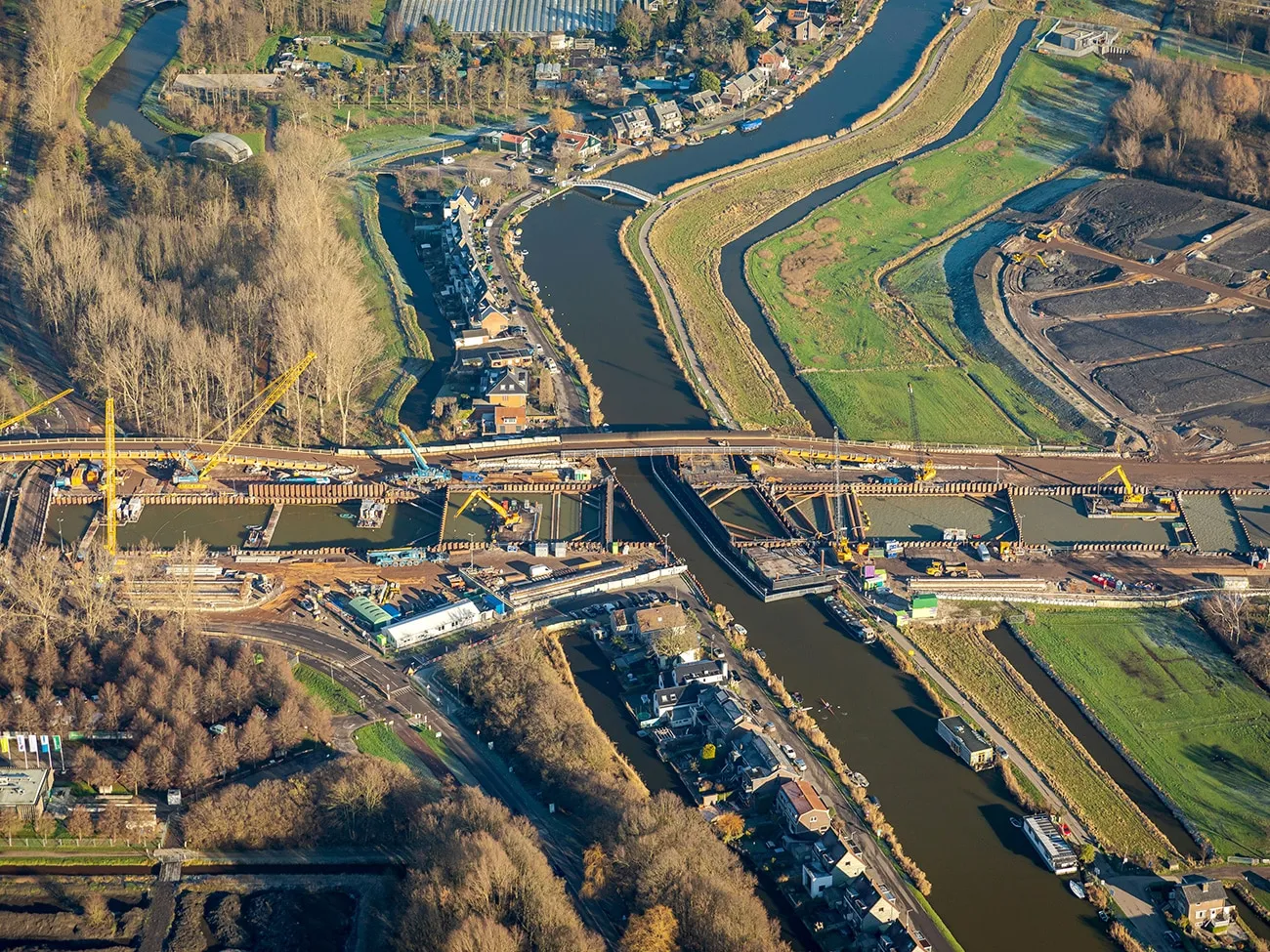
The construction of the Rottemerentunnel forms part of the A16 Rotterdam project. The tunnel is located in the connecting link being built between the A16 and the A13. BESIX is responsible for the tunnel’s engineering. When reviewing the preliminary design, the BESIX engineering team saw the need for flexibility. As a result, BESIX opted for the parametric design of the tunnel. An innovative approach that is very much of the moment. The A16 Rotterdam project is also setting a digital ambition through the use of a digital twin, ‘TWIN16’, with Virtual Reality and simulation actively deployed to mitigate risks. We spoke to BESIX employees André de Groen, TWIN16 coordinator, Kenneth Wyns, design manager, and Kelvin Roovers, computational designer, all working within the De Groene Boog construction consortium on the A16 Rotterdam project.
An innovative way of working delivers early insight and flexibility
Thinking about risk mitigation as early as 2017
André explains: “As early as 2017, we were thinking about how digital tools could help mitigate risks at the Rottemerentunnel. The question was where to use a digital tool. The project generates a huge amount of information in a variety of formats. How could we bring it all together? The idea emerged of converting the 3D model into a virtual model. By involving stakeholders early in the design process, such as the fire service, we could show traffic control staff how different scenarios would play out. The national tunnel standard already sets out how to engage with stakeholders. We are now doing this visually, even earlier in the design process. These new tools are changing the way we work together. The design process involves several stages, each with its own stakeholders. Autonomous logic is needed for 51 systems. We used this as the basis for enhancing the 3D model by adding the behaviour of these 51 systems. We linked this intelligent environment to the control system software designed by Croonwolter&dros.
The software for the 51 systems was written by lead engineers, and a full IFAT setup was created to test everything. The simulation is highly representative of the real world, with everything running according to the correct protocols. A virtual FAT test was also carried out, so testing was not limited to the systems suppliers: the simulation was also validated virtually.”
Road safety audit carried out during the design phase
Kenneth: “A road safety audit was carried out during the design phase, using images from the virtual model to support the road scene analysis. This enabled us to demonstrate that stopping sight distance was adequate throughout the tunnel from the eye level of car and lorry drivers, and to show that signs mounted on the tunnel roof were fully visible from a sufficient distance to ensure safe driving in the tunnel.” André: “We worked with Infranea and Soltegro on the tunnel’s digital twin. We expect the use of digital twins to become standard practice in the future. This new way of working affects the mindset of everyone involved, and you have to be open to it. A digital twin should foster collaboration, and that added value can only be achieved if the digital twin is at the heart of the process. We got off to a good start with TWIN-16, the digital twin of the Rottemerentunnel. The challenge was to have the information needed from the design process available in time to use the digital tool successfully and on schedule.”
Specific project conditions called for flexibility
“Specific project conditions called for flexibility in the design process,” says Kenneth. “It was not possible to carry out all the ground investigations in advance, because measures still had to be taken, such as draining a lake and clearing trees. We also knew that detailed information about suppliers’ products, such as escape doors, would only become available at a late stage, after the products had been purchased. The fact that the construction of the tunnel sections involves a great deal of repetition made parametric design particularly appealing.”
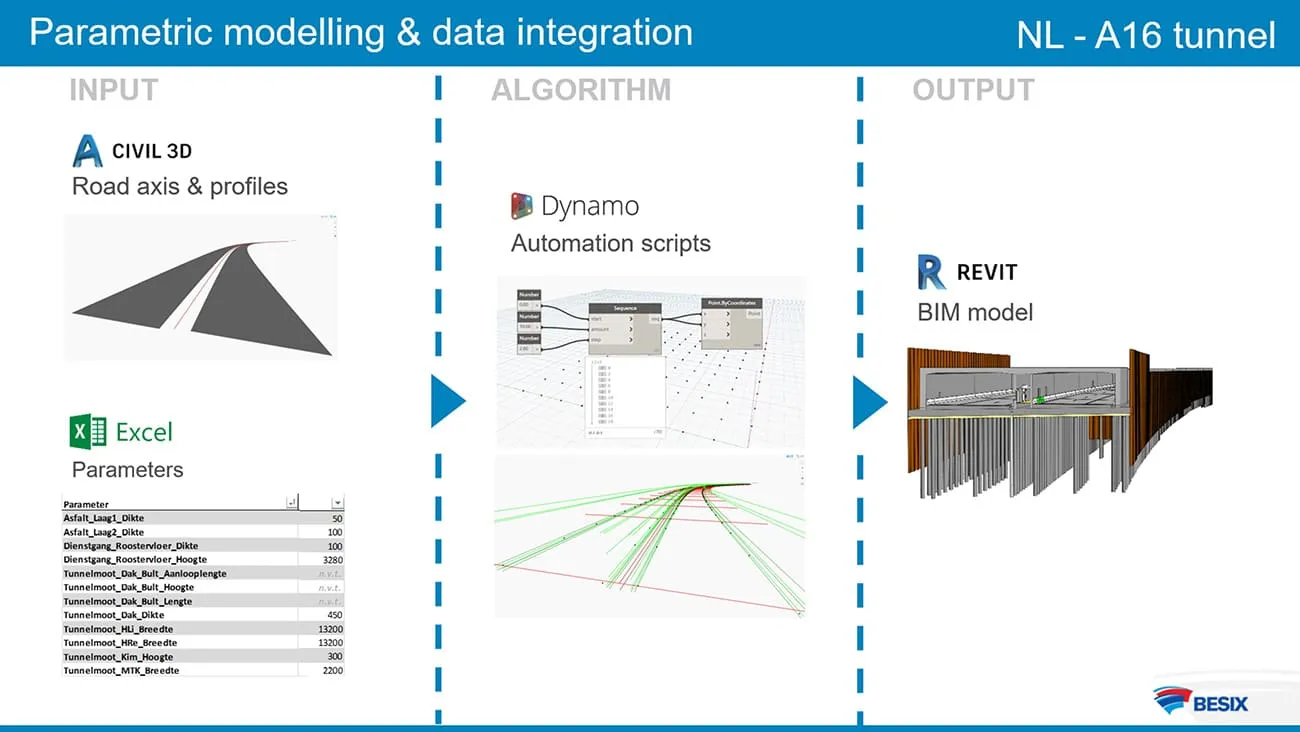
What does parametric design involve? Kelvin explains: “Parametric design breaks down design processes into algorithms that generate the required digital products in a highly standardised and automated way, based on parametric data and the relationships between different components. A typical product is a parametric 3D model that can be quickly and easily adapted when the initial parameters change. The benefit of parametric design is that a change made in one place is also applied elsewhere. This saves a lot of engineering hours. It allows the design process to be completed more quickly and creates scope to test alternative scenarios. Experts no longer need to spend time re-entering all the data when new information comes to light. The parametric process frees them up to focus on other things. Parametric design also prevents errors caused by people entering data. It allows you to anticipate changes that almost always arise unexpectedly during a project. Parametric design is particularly useful for repetitive work, such as at the Rottemerentunnel.” Kelvin supported the various design phases on behalf of BESIX. The whole De Groene Boog design team encouraged and supported this effort to optimise digital design processes.
Model developed using parametric design
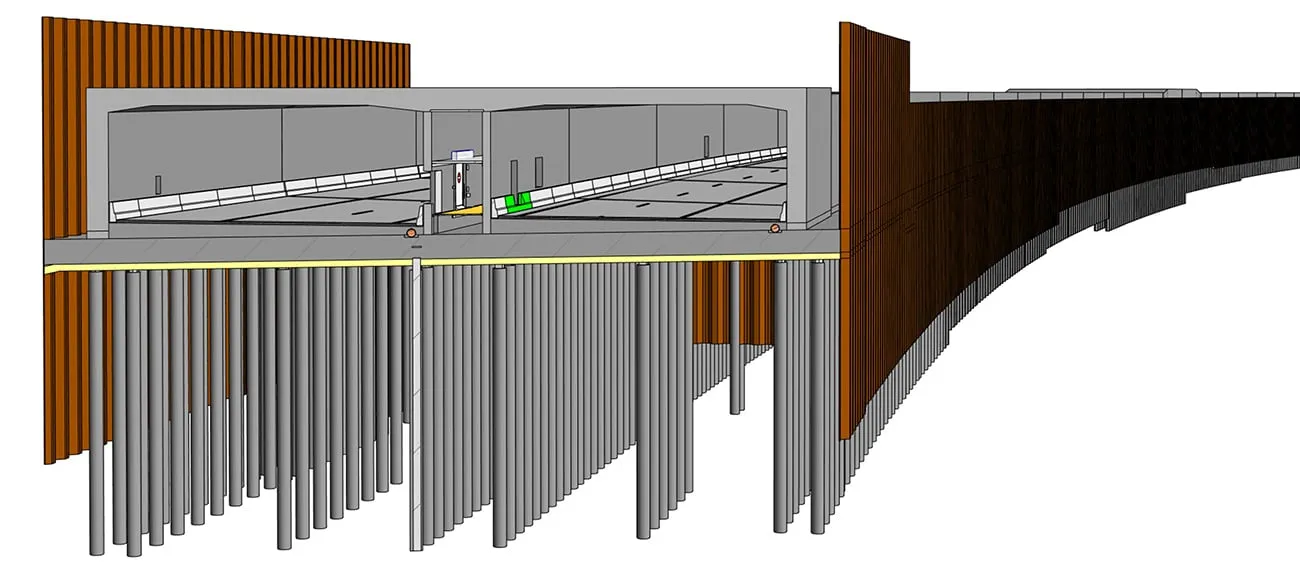
“The tunnel comprises 89 sections, so there is a lot of repetition. But not everything is 100% identical, and the conditions can vary from one section to another. That is why we applied parametric design from the outset, as the design had not yet been fully defined. To achieve the flexibility and accuracy required for the BIM model, it was important to write our own scripts. Using parametric building blocks, these scripts allowed us to automatically generate all the structural elements and other repetitive parts of the tunnel model. The same scripts also enabled us to quickly implement changes and alternatives and check them in 3D.”
Kelvin gives the pile foundations as an example of the benefits of this approach: “Thousands of piles were placed in the model using logic. Their positions, types and lengths were often changed based on ground data that only became available later. Parametric design means you do not have to carry out a separate investigation for every tunnel section.” Kenneth adds: “Thanks to the rapid insights provided by the parametric scripts, we were also able to predict potential clashes underground before the design was finalised. This gives you the clearest possible picture of interfaces, as early and as comprehensively as possible, and enables you as an engineer to respond more effectively to variables.” Kelvin: “Automation also promotes standardisation. By using scripts to create the model, we were also able to easily save the correct codes and other standard information (for example, information required for TWIN16) in all tunnel elements straight away. We carried this approach through to the next phase, producing the concrete structure’s formwork drawings in a largely automated and standardised way.”
A different way of thinking
Kenneth notes that this is the first time BESIX has applied parametric design on this scale within a project. Kelvin responds: “As a computational designer, this way of working is second nature to me, but getting everyone on board is a challenge. It requires a different mindset: you have to anticipate future changes and work out design processes in full, turning them into a logical sequence of steps that a ‘dumb’ computer can execute correctly, regardless of the conditions and exceptions that may arise. A well-designed algorithm is essential to ensuring the quality of the results.” Kenneth: “In that sense, it really is change management. Sometimes you are more of a psychologist than an engineer. We have found that the people with the greatest stake in the design process are the first to embrace the new way of working.”
BESIX is happy to take on the role of pioneer and has the right people on board to do so. Kenneth concludes: “We are now teaching people to use these new tools in their own areas of expertise. In addition to BESIX’s practical role in a design project, we also want to contribute to society by sharing our knowledge of parametric design. It is a future-proof way of working that will prove valuable in many more areas than those where we have used it so far.”
Have a business enquiry for BESIX Nederland BV? Get in touch
Who worked on Rottemerentunnel
- construction consortiumDe Groene BoogMentioned in Reinforcement steel for the Rottemeren Tunnel’s underwater concrete floor
- reinforcing steelBCS (Buig Centrale Steenbergen)Mentioned in Reinforcement steel for the Rottemeren Tunnel’s underwater concrete floor
- fire-resistant boardsPromatMentioned in Fire-resistant boards offer the new Rottemerentunnel optimal protection
- De Groene Boog construction consortium
 MobilisMentioned in Focus on fit-out works in the Rottemeren Tunnel
- lining walls and slatted claddingAldowaMentioned in Concrete structure ‘wrapped’ in aluminium acoustic screens and louvre cladding
- architectQWA-architectenMentioned in Concrete structure ‘wrapped’ in aluminium acoustic screens and louvre cladding
- installationKaeferMentioned in Rottemerentunnel concrete structure protected with fire-resistant cladding
- fire protection applicationsVan der Aa Brandwerende applicatiesMentioned in Flame barriers protect underside of service walkway in the event of a fire

Keep following this
Get an email when a new story is published. No account needed.
- ProjectRottemerentunnel
- ThemeUnderground construction
- SubjectBridge construction
- CompanyBESIX Nederland BV
- CompanyCroonwolter&dros
- CompanySoltegro







