









DC power in tunnels is worth considering
Text Roel van Gils Images Croonwolterendros
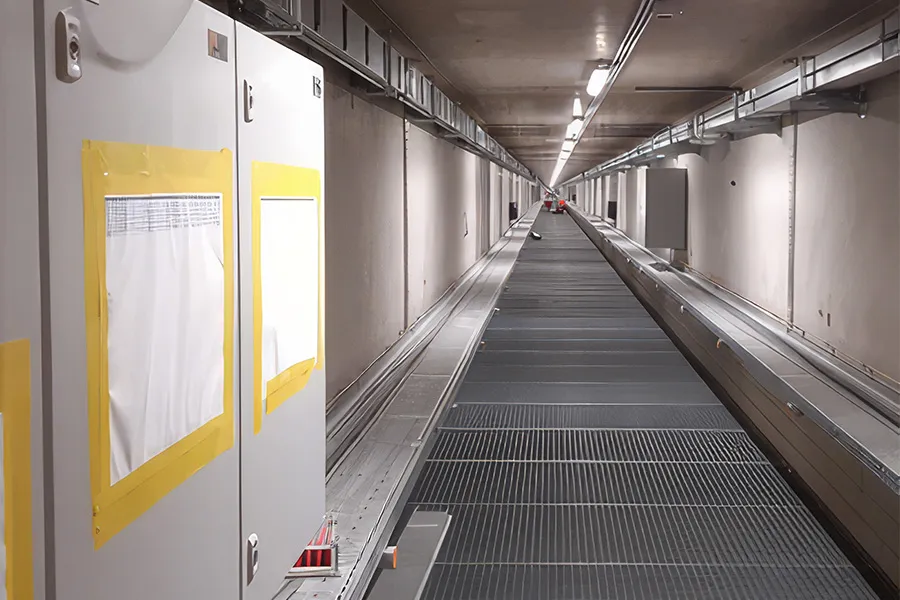
Sometimes it makes sense to take another look at an established concept. Is it still in line with the latest state of the art? A good example is the power supply for the Rottemerentunnel on the A16 Rotterdam. DC was deliberately chosen in combination with busbar trunking. According to its designers, this is not only more efficient, but also results in significant cost savings. The concept could also have potential for future tunnel renovation projects.
Given that 90 to 95% of a tunnel’s installations run on DC, it is odd to use AC for the power supply, says Hans Pos, design lead at Croonwolter&dros. “Why? Because we happened to come up with that a hundred years ago? But is it still a logical solution? No, not really. So we built the world’s largest DC installation in the Rottemerentunnel. The funny thing was, Rijkswaterstaat had confidence in it straight away too. They could find no grounds in the Landelijke Tunnel Standaard (LTS) for not doing it.”
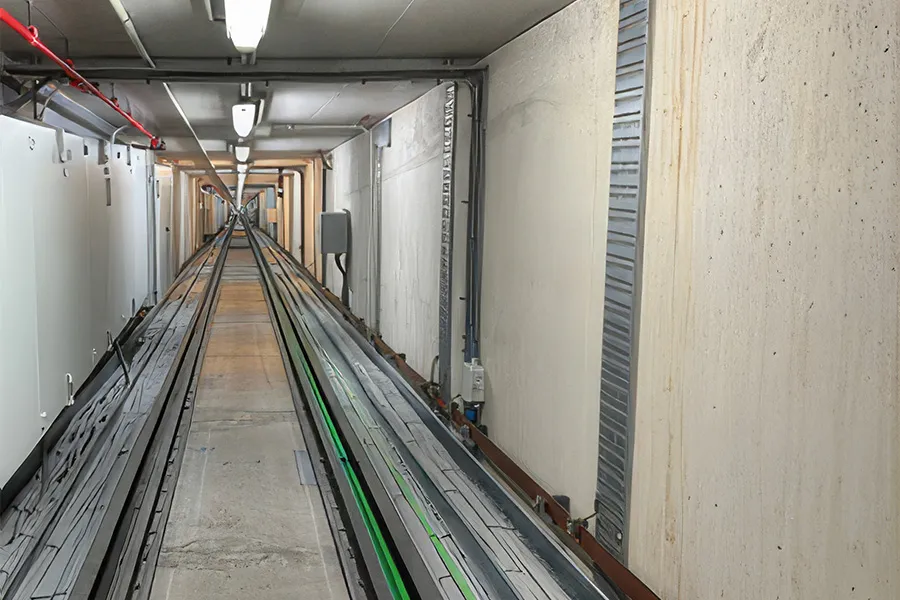
Spot the difference: on the left, a tunnel using AC, with lots of cables. On the right, the central tunnel duct in the Rottemerentunnel.
11-kilometre DC network
Deciding to use DC is one thing; actually putting it into practice is another challenge, Hans now knows from experience. “It was uncharted territory,” he says. “We had a certain idea of what the installation should look like, but it was still quite a puzzle. As we went along, for example, we discovered that connecting the solar farm caused problems when it came to creating a sound, stable network, even though it should have been possible in theory. The suppliers were not always on board either. We had expected more support from suppliers in the DC sector, but that was disappointing. As a team, we had to do all the research, design and planning ourselves. Naturally, we learnt a lot in the process, and we are proud to have built an 11-kilometre-long, stable DC network, with complete tunnel installations running on DC. Only the pumps and fans run on AC.”
Busbar trunking
The interesting thing about a project like this is that you do not know exactly how it will turn out in advance, says Hans. “Combining DC with busbar trunking meant we needed far fewer cables, and therefore less copper. We were also able to use much thinner cables. Another major advantage is that conversion from AC to DC takes place at a single central point, at a voltage level of 700 volts. Where it is needed, the voltage is reduced to 350 volts, for the lighting, for example. Because the conversion is done centrally, heat is lost at only one point. That heat is much easier to reuse. In theory, DC should also save energy, but the saving is only minimal. The biggest savings come from a completely different cabling layout, with far fewer and thinner cables. This saved us, and therefore our client Rijkswaterstaat too, many hundreds of thousands of euros.”
Smarter construction and renovation with new technologies
According to Hans, combining DC with busbar trunking also has potential for tunnel renovation projects. “Replacing installations and cabling in existing tunnels is often a nightmare. Cable trays are packed. With DC busbar trunking, however, all you need to do is install the trunking, hang the enclosures and roll out the network. When you want to replace any installation at a later stage, DC power is already in place, and it is fairly easy to tap into.” According to Hans, we should make construction and renovation smarter by using new technologies. He also argues for an amendment to the LTS. “At present, a complete AC busbar trunking system is installed because of the wall sockets for the emergency services, even though they are never used. The emergency services bring their own power supply. We would also like to open a discussion with Rijkswaterstaat about this.”
It is important to build a complete installation that works as a whole, rather than setting out to introduce something new for its own sake, Hans acknowledges. “DC is extremely interesting, and reliability also increases because it is much easier to ‘link’ power supplies. If one converter fails, the other takes over. And with busbar trunking in the central tunnel duct, it is also much easier to distribute power without having to use lots of thick cables. In short, taking a fresh look at a tunnel installation creates opportunities, including, and perhaps especially, for renovation projects.”
A business enquiry for Croonwolter&dros? Get in touch
Who worked on Rottemerentunnel
- construction consortiumDe Groene BoogMentioned in Reinforcement steel for the Rottemeren Tunnel’s underwater concrete floor
- reinforcing steelBCS (Buig Centrale Steenbergen)Mentioned in Reinforcement steel for the Rottemeren Tunnel’s underwater concrete floor
- fire-resistant boardsPromatMentioned in Fire-resistant boards offer the new Rottemerentunnel optimal protection
- De Groene Boog construction consortium
 MobilisMentioned in Focus on fit-out works in the Rottemeren Tunnel
- lining walls and slatted claddingAldowaMentioned in Concrete structure ‘wrapped’ in aluminium acoustic screens and louvre cladding
- architectQWA-architectenMentioned in Concrete structure ‘wrapped’ in aluminium acoustic screens and louvre cladding
- installationKaeferMentioned in Rottemerentunnel concrete structure protected with fire-resistant cladding
- fire protection applicationsVan der Aa Brandwerende applicatiesMentioned in Flame barriers protect underside of service walkway in the event of a fire
- clientRijkswaterstaatIn this story


Keep following this
Get an email when a new story is published. No account needed.
- ProjectRottemerentunnel
- ThemeUnderground construction
- SubjectUnderground infrastructure
- CompanyRijkswaterstaat
- CompanyCroonwolter&dros







