









Rottemerentunnel: the world’s first energy-neutral motorway with a tunnel powered by DC
Text Roel van GilsImage De Groene Boog
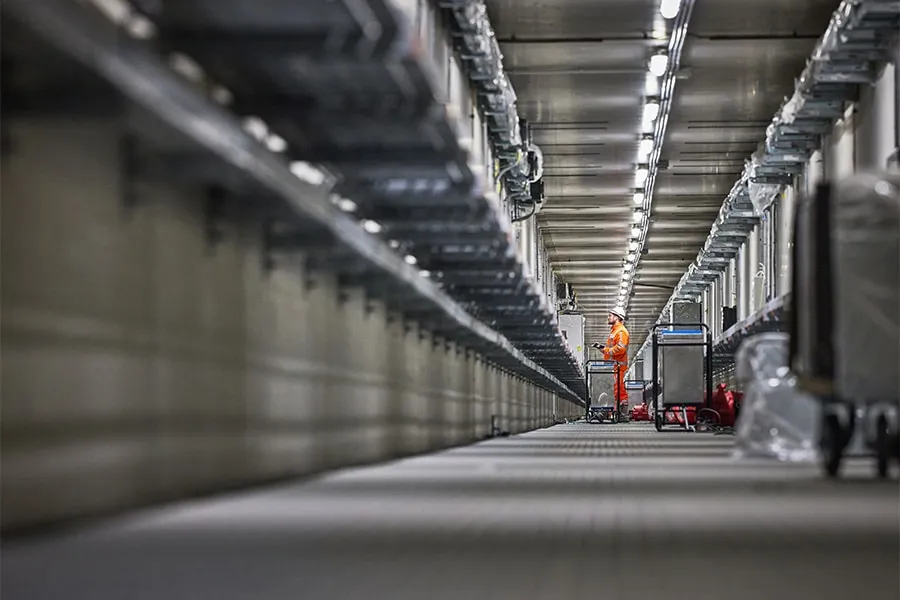
With 54 different types of technical systems
On 13 October, the Rottemerentunnel was energised for the first time. A special moment for construction consortium De Groene Boog, which is building the A16 Rotterdam and Rottemerentunnel on behalf of Rijkswaterstaat. Never before has such a large DC installation been built anywhere in the world. To test the functional operation of the systems and controls in advance, a digital twin of the tunnel was created, called TWIN-16.
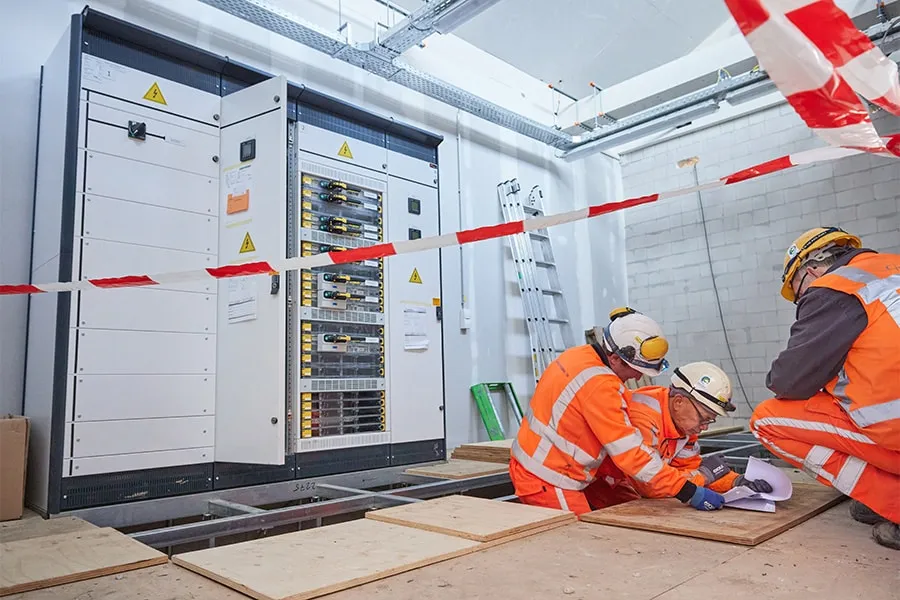
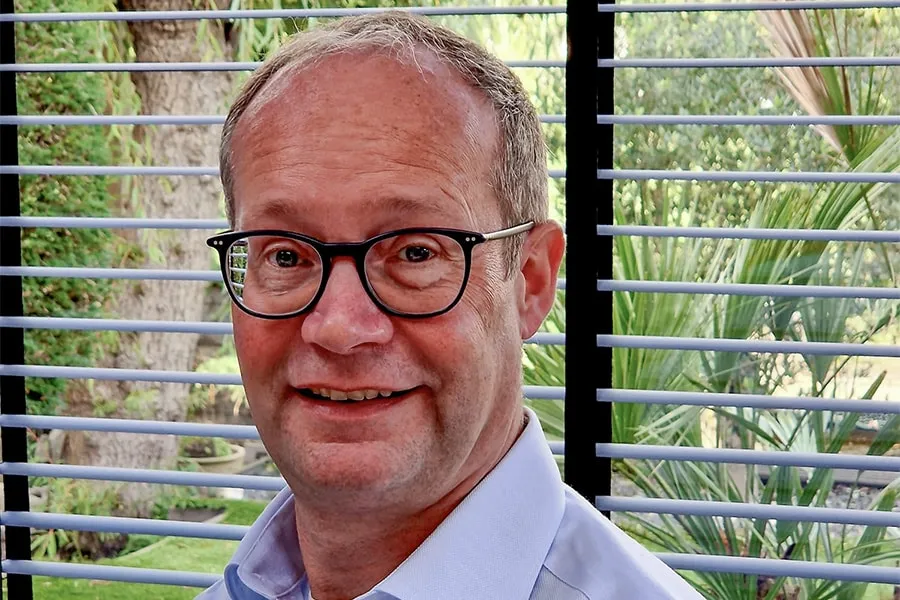
De Groene Boog came up with the concept for the world’s first energy-neutral motorway with a tunnel. “A tunnel is naturally the biggest energy consumer along a route like this,” says Hans Pos, test manager and co-designer of the overall design, together with Michel van Baar. “That is why, together with Rijkswaterstaat, we took another look at the concept used to build tunnels in the Netherlands and asked ourselves: ‘Is it still up to date with the latest technology?’ We soon concluded that things could be done better, starting with the power supply. Here, we chose to supply both the road and the tunnel with direct current (DC). After all, most electrical systems run on DC.”
From AC to DC
Alternating current (AC) is mainly used for motors (rotating machinery). “AC was chosen as the power supply in the past because it allowed us to achieve higher voltages using transformers. With today’s technology, we can also achieve higher voltages using DC to transmit energy,” says Hans. And as more power is generated from solar and wind (DC installations), the use of alternating current is becoming less self-evident. “The same thing is happening with the development of domestic electrical systems. The homes of the future will have a DC network, so you will no longer need an adapter to charge your phone or laptop. That makes DC cheaper and simpler for many systems. LED lighting is another good example, and it initially runs on DC. And lighting happens to be the biggest energy consumer in a tunnel. That is why we decided to do things differently on the A16 Rotterdam, helped by the fact that the latest technology also makes it possible to build a reliable and safe DC installation. A DC supply not only means thinner cables, it also reduces energy losses.”
350 V DC
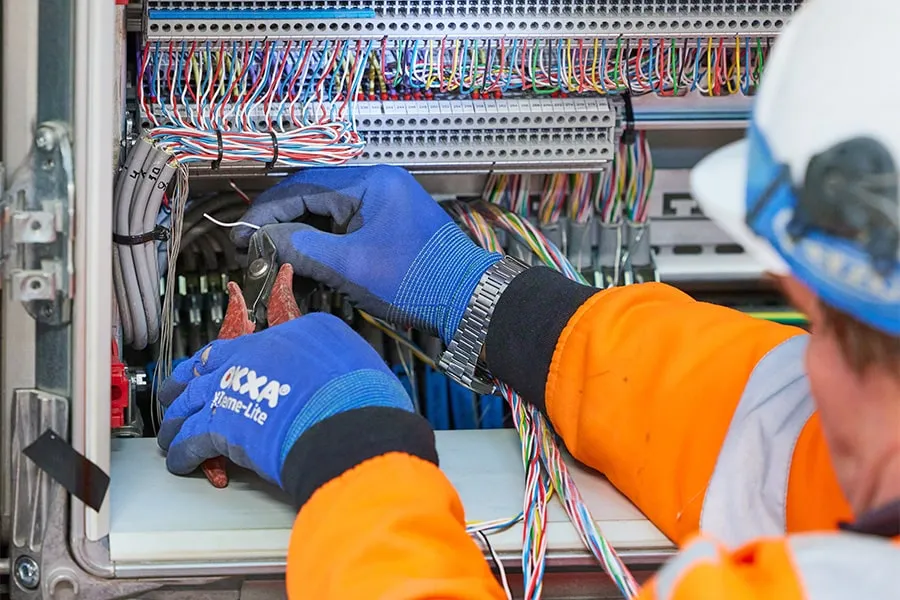
De Groene Boog did not make such a far-reaching decision overnight, of course. “We carried out a great deal of research into DC,” says Peter Ottervanger, project manager for procurement and contract management of tunnel technical installations at De Groene Boog. “We also looked for companies and suppliers in the market with demonstrable expertise in this field. The lighting is all LED, but the tunnel’s DC installation is designed for 350 V DC. Existing components, such as the driver for the LED lighting, for example, have to be adapted to work with this. In the end, we chose a supplier whose standard range included a driver that could be adapted for our DC application. We took the same approach for all the systems, looking for the best solution for this project.”
The ideal installation mix
The tunnel also has an AC supply alongside DC. Fan motors work best on AC, and the emergency call station cabinets also require a 230 V AC socket for the fire service. “At the start of the project, we made it very clear that we wanted to build the ideal mix of systems, with the right power supply,” says Hans. “We provide DC to systems that run on DC. By contrast, all rotating parts work best on AC, so we provide a suitable solution for those too.” It is worth noting that the fans only start up in an emergency, so they are far from being major energy consumers.

TWIN-16
You can plan and document a lot in advance, but in the end everything has to work. That is why De Groene Boog created a digital twin of the tunnel and all its installations. “Everything we build in real life is first built and tested digitally in the TWIN-16 model,” Hans explains. “We went quite far with this. All 54 systems are included in the digital model, which was connected to the control system and the road traffic operator’s workstation. This enabled us to test the entire control system in advance and simulate every scenario.” Peter adds: “As well as giving us ‘digital certainty’ about how the installations would work, we were also able to test the DC installation in the field at an early stage. Part of the A16 was brought into use earlier as the N209, with its lighting powered by DC. If that had caused problems, there would still have been plenty of time to resolve them before the tunnel was built, but that proved unnecessary.”
Changing the standard
The A16 Rotterdam is fully energy-neutral. The required energy is generated at three sites with a total of 11,000 solar panels. “We have also looked at every possible way to save as much energy as we can,” says Peter. “You might not expect it, but extra energy is needed on sunny days in particular. The transition to the dark tunnel has to be as gradual as possible, so the lights need to shine brightly. That is why we chose lighter-coloured asphalt at the tunnel portals, which reflects light better, and coated the walls with a reflective finish, so less light is needed to achieve the same effect. In addition, following extensive research in collaboration with Rijkswaterstaat, we revised the existing lighting standard, which was based on luminaires from 1960. This means we need less light to keep the tunnel safe.”
The Rottemerentunnel has been energised since 13 October. “We are commissioning the power supply until the end of December, after which we will bring the network and control system online in the first quarter of next year,” says Hans. “We will then commission and test the individual systems, followed by a series of integrated tests (Integral Site Acceptance Test, iSAT). Finally, the tests from the traffic control centre in Rhoon will be carried out, by which time it will be late next year or early 2025. Rijkswaterstaat will then take over from us. RWS will also carry out the necessary tests and exercises and apply to the municipality of Lansingerland for the permit to open the road. These are all steps that still need to be completed before the A16 Rotterdam and Rottemerentunnel can open to traffic later in 2025.”
Question about this story? Ask your question
Who worked on Rottemerentunnel
- construction consortiumDe Groene BoogMentioned in Reinforcement steel for the Rottemeren Tunnel’s underwater concrete floor
- reinforcing steelBCS (Buig Centrale Steenbergen)Mentioned in Reinforcement steel for the Rottemeren Tunnel’s underwater concrete floor
- fire-resistant boardsPromatMentioned in Fire-resistant boards offer the new Rottemerentunnel optimal protection
- De Groene Boog construction consortium
 MobilisMentioned in Focus on fit-out works in the Rottemeren Tunnel
- lining walls and slatted claddingAldowaMentioned in Concrete structure ‘wrapped’ in aluminium acoustic screens and louvre cladding
- architectQWA-architectenMentioned in Concrete structure ‘wrapped’ in aluminium acoustic screens and louvre cladding
- installationKaeferMentioned in Rottemerentunnel concrete structure protected with fire-resistant cladding
- fire protection applicationsVan der Aa Brandwerende applicatiesMentioned in Flame barriers protect underside of service walkway in the event of a fire

Keep following this
Get an email when a new story is published. No account needed.
- ProjectRottemerentunnel
- ThemeUnderground construction
- SubjectUnderground infrastructure







