









Rottemerentunnel concrete structure protected with fire-resistant cladding
Text Roel van GilsImage Promat
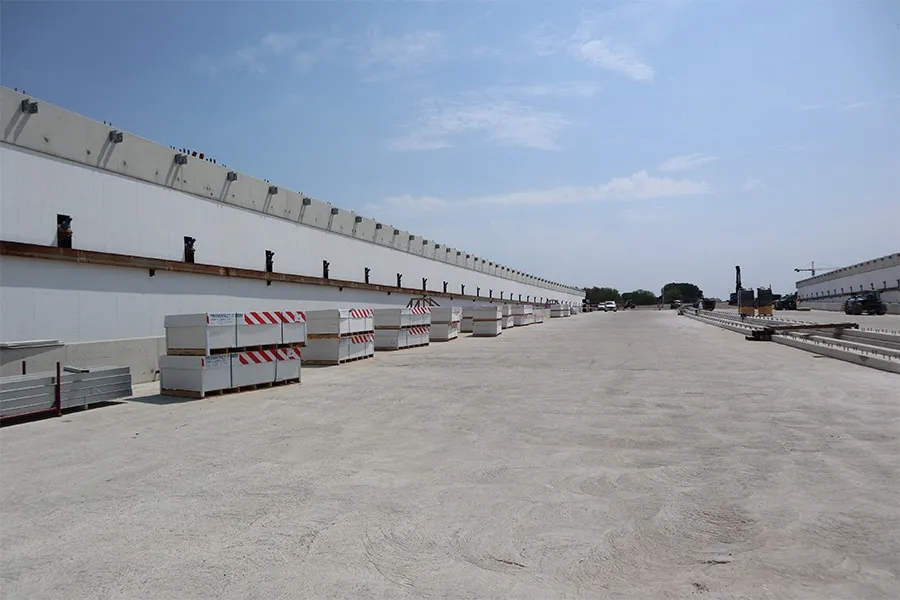
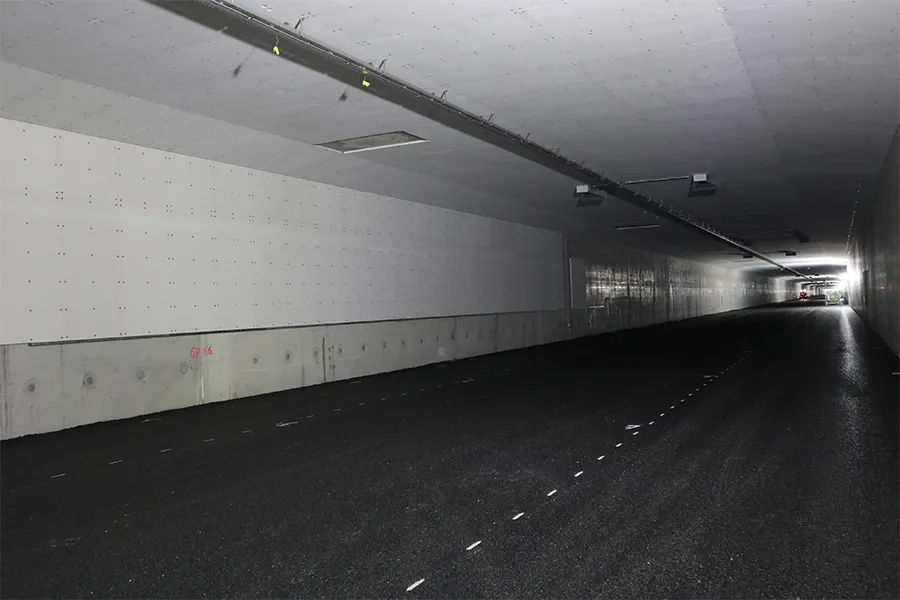
The concrete structure of the Rottemerentunnel on the A16 Rotterdam is fully protected with fire-resistant cladding from Promat. The PROMATECT®-T-FX boards were cut to length during production, minimising offcuts. Promat collected the small amount of sawing waste for reuse. “Rijkswaterstaat wants to work circularly by 2030. With this product, we are already ready for that,” says Frank van der Wal, Regional Tunnel Manager at Promat.
Promat was approached at an early stage to carry out fire tests on the concrete mix used in the tunnel. “Every concrete mix is different. The cladding is designed to prevent concrete’s main failure mechanism: spalling or even disintegration when exposed to excessive temperatures,” Frank explains. “The thickness of the cladding is determined on that basis. For this project, that ultimately led to two successful tests, for fire protection solutions rated for both the required 60 minutes and 120 minutes, in accordance with the RWS fire curve.”
A sustainable choice
The Rottemerentunnel is the first project in the Netherlands to use Promatect T-FX. “The boards are produced to length, in sizes ranging from 2 to 3 metres. This minimises sawing waste, which we collect free of charge and reuse in new products. Where the structure allows, as was largely the case in this tunnel, there is no need to use joint cover strips. The board’s thermal shrinkage is very limited, which saves a work step.” The PROMATECT® T-FX cladding also provides the finished surface. The wall lining is then partly coated with KEIM coating to improve light reflectance and make it easier to clean. “Using our fire-resistant cladding is therefore a highly sustainable choice in many respects,” Frank emphasises. “Especially considering the huge quantities involved. More than 107,000 m2 of board material was used in the tunnel in total, mostly at thicknesses of 40 mm and 30 mm. Our partner Kaefer was responsible for installation, following the layout plan we prepared.”
Promat not only supplies the fire-resistant cladding, but also carries out fire tests, provides technical support as needed, prepares layout plans and develops the details. “For the Rottemerentunnel, we also supplied fire-resistant penetration products tested in accordance with the RWS fire curve, as well as products to protect the steel sheet piles, segment joints and some of the open-grid flooring beneath the service duct in the central tunnel section,” Frank concludes.
Question about this story? Ask your question
Who worked on Rottemerentunnel
- construction consortiumDe Groene BoogMentioned in Reinforcement steel for the Rottemeren Tunnel’s underwater concrete floor
- reinforcing steelBCS (Buig Centrale Steenbergen)Mentioned in Reinforcement steel for the Rottemeren Tunnel’s underwater concrete floor
- fire-resistant boardsPromatMentioned in Fire-resistant boards offer the new Rottemerentunnel optimal protection
- De Groene Boog construction consortium
 MobilisMentioned in Focus on fit-out works in the Rottemeren Tunnel
- lining walls and slatted claddingAldowaMentioned in Concrete structure ‘wrapped’ in aluminium acoustic screens and louvre cladding
- architectQWA-architectenMentioned in Concrete structure ‘wrapped’ in aluminium acoustic screens and louvre cladding
- installationKaeferIn this story
- fire protection applicationsVan der Aa Brandwerende applicatiesMentioned in Flame barriers protect underside of service walkway in the event of a fire

Keep following this
Get an email when a new story is published. No account needed.
- ProjectRottemerentunnel
- ThemeLower emissions and more reuse
- SubjectUnderground infrastructure
- CompanyKaefer







