









Afsluitdijk renovation | Working safely in areas suspected of containing unexploded ordnance
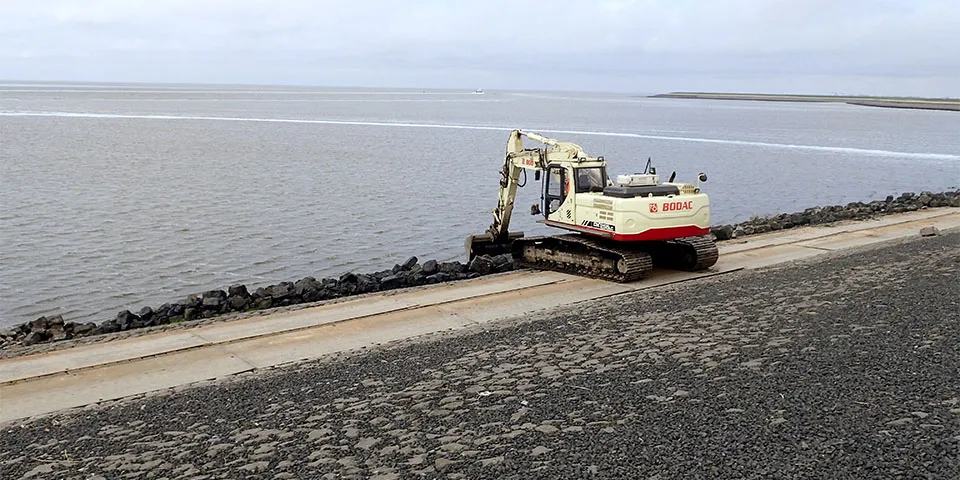
A sea mine, a 3.7-inch high-explosive shell and remnants of an incendiary bomb. These are just some of the first ‘finds’ from the search for unexploded ordnance around the Afsluitdijk. Some areas have been designated as suspected areas, where remnants of the Second World War may lie on both land and underwater. To ensure that work to reinforce the Afsluitdijk can be carried out safely, construction consortium Levvel, comprising BAM, Van Oord & Rebel, calls on Bodac Explosieven Opsporing as required.
Unexploded ordnance from the Second World War still lies scattered in the soil and seabed across the Netherlands. The area around the Afsluitdijk is no exception, with work taking place on the floodgates at Den Oever and Kornwerderzand, among other locations. “Ahead of the large-scale reinforcement of the Afsluitdijk, Levvel’s client, Rijkswaterstaat, commissioned extensive preliminary investigations into the presence of unexploded ordnance,” says Marc van Oers of Bodac Explosieven Opsporing. “Areas where the presence of unexploded ordnance could not be ruled out were designated as suspected areas. Construction consortium Levvel then invited companies to tender. The consortium was looking for a company that could determine and implement risk control measures, enabling it to work safely in these suspected areas. We came out as the most favourable bidder.”
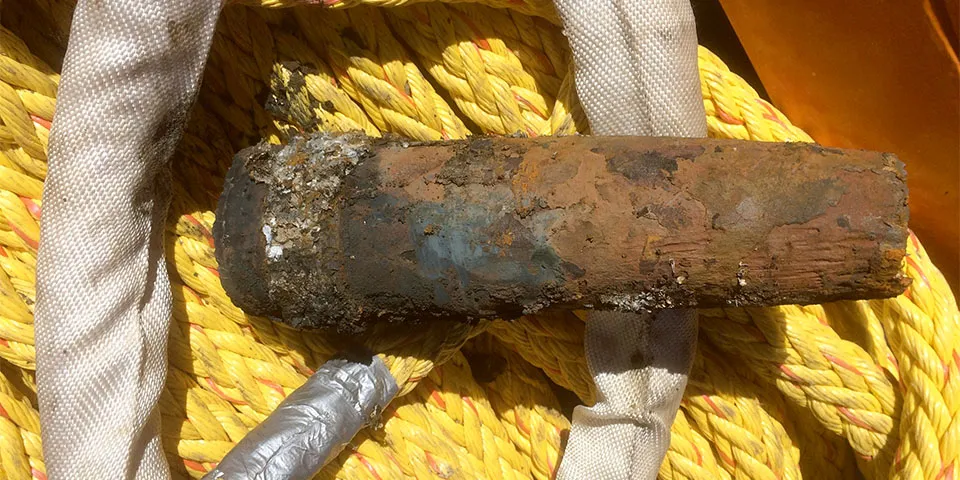
The photo shows a high-explosive shell, one of the finds.
Based on the preliminary investigations, Levvel mapped the quantities and types of ordnance at each location. “The ordnance is mainly German artillery and air-dropped ammunition, as well as British and Dutch artillery ammunition,” says Van Oers. “The Afsluitdijk covers a very large area. For each area, we have an indication of what might be there and where. This is important for us when determining the risk control measures. The British and German forces used different types of fuzes, with different levels of sensitivity. The fuzes may also have become more sensitive over the years. The technology of the time was already very good, though. The ordnance we find may look black and rusty on the outside, but the inner workings often still shine like new.”
Bodac has international experience in detecting conventional explosives, both on land and underwater. “The Afsluitdijk requires a combination of expertise,” says Van Oers. “Unexploded ordnance may be present both on land and on the seabed. We work to Levvel’s schedule and are called in as soon as work is due to take place in a suspected area. At present, this includes, for example, construction of the floodgates at Den Oever and Kornwerderzand. We use the appropriate detection equipment based on the types of ordnance expected. We detect, approach and make unexploded ordnance safe. We then hand it over to the Explosieven Opruimingsdienst Defensie, which destroys it. Because we have our own equipment, diving gear and excavators weighing from 6 to 45 tonnes, with or without long-reach booms, we can respond quickly and adapt to Levvel’s schedule. To reassure people: locations where unexploded ordnance is suspected or found are off limits until work needs to be carried out there. It is all precautionary. The Afsluitdijk itself is safe, and always has been.””
Question about this story? Ask your question
Who worked on Afsluitdijk
- clientRijkswaterstaatMentioned in Greater discharge capacity through specialist, bespoke pump design
- central control
 Croonwolter&drosMentioned in Afsluitdijk system integration: invisible and indispensable
- supplierSaferoadMentioned in “Alternative systems are permitted, provided they comply with the rules”
- underwater construction
 DISA InternationalMentioned in ‘Placing underwater concrete is all about good planning’
- underwater excavation
 BonneveldMentioned in A sheet pile structure with anchoring has been installed at the Lely monument, halfway along the dyke.
- technical integrator
 Batenburg Industrial AutomationMentioned in A complex IT puzzle on the Afsluitdijk
- contractorBoskalisMentioned in ‘You can’t see from the outside how much work is being done on the Afsluitdijk’
- Levvel construction consortiumInvesisMentioned in ‘You can’t see from the outside how much work is being done on the Afsluitdijk’
- contractors' joint ventureIJsselmeerwerken VOFMentioned in ‘You can’t see from the outside how much work is being done on the Afsluitdijk’
- clientProvince of FrieslandMentioned in ‘You can’t see from the outside how much work is being done on the Afsluitdijk’
- fire alarm and evacuation systems
 Unica Fire SafetyMentioned in Optimal fire safety for the Afsluitdijk
- Levvel construction consortiumAberdeenMentioned in Afsluitdijk reinforcement complete: pumping station and new sluices officially opened

Keep following this
Get an email when a new story is published. No account needed.
- ProjectAfsluitdijk
- ThemeFlood protection and climate-resilient water management
- SubjectWater infrastructure
- CompanyVan Oord







