









Afsluitdijk renovation is a showcase for the rest of the world
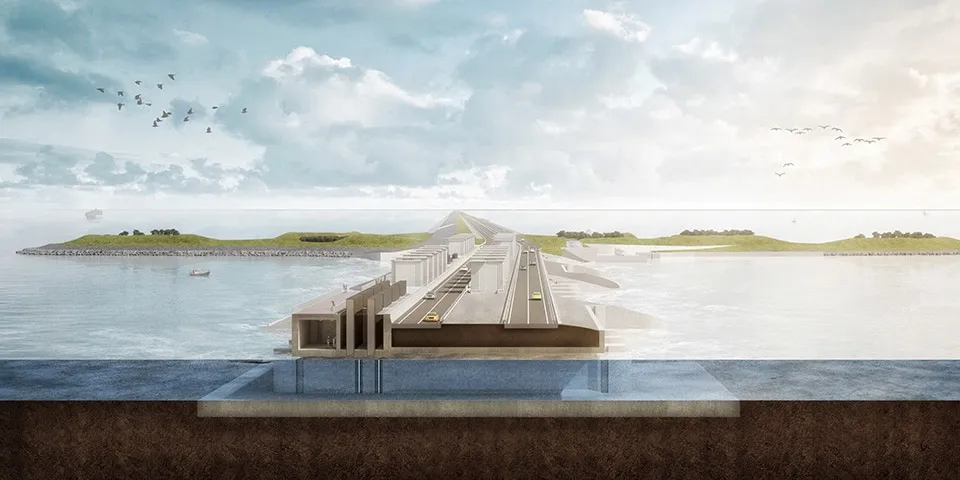
On 28 May 1932, the final gap in the Afsluitdijk was closed. The flood defence between North Holland and Friesland, which separates the IJsselmeer from the Wadden Sea, was built as part of the Zuiderzeewerken to protect the Netherlands from flooding.
The original design for the Afsluitdijk was drawn up by engineer Cornelis Lely, who was a member of the Zuiderzeevereniging at the time. He devised the original plan to close off and reclaim the Zuiderzee as early as 1891. Construction of the Afsluitdijk began in 1927. Now, in 2019, the Afsluitdijk is undergoing a major renovation to ensure that future generations are also protected from flooding, while taking account of changing climate conditions. The work is being carried out by the construction consortium Levvel (BAM, Van Oord and Rebel), meaning “Lely’s Heritage Secured”. We meet Levvel’s Carlo Kuiper, Project Director SPC, and Carlos Mollet, Project Director EPC and MTC, at the company’s offices. The two men are from BAM and Van Oord respectively.
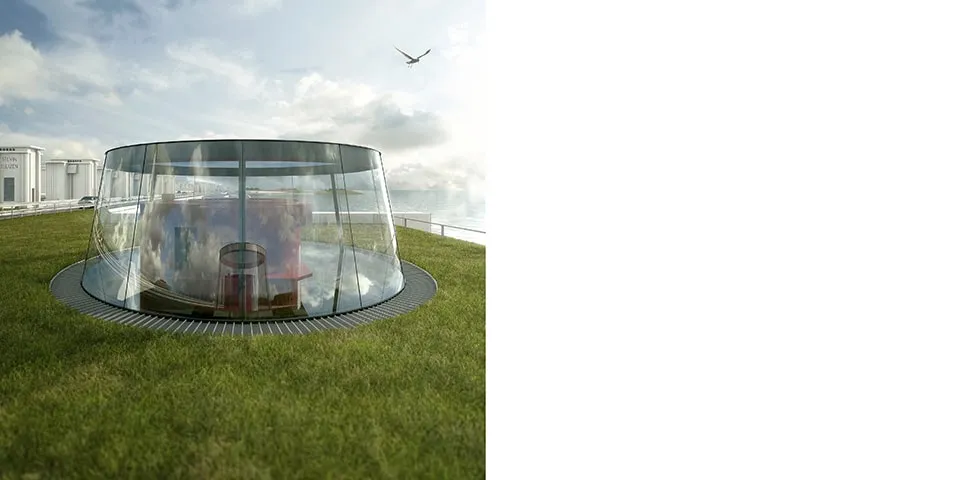
Discharge and pumping complex at Den Oever.
Now is the time
Asked why the Afsluitdijk needs to be renovated, Mollet replies: “The dike has protected the Netherlands from flooding for almost 90 years, but it no longer meets current water safety standards and has been rejected. The planned renovation is intended to provide protection against a storm that occurs once every 10,000 years. More water must also be able to be discharged from the IJsselmeer into the Wadden Sea. Changing climate conditions mean that more water from the rivers flows into the IJsselmeer in peak periods. This water must be discharged into the Wadden Sea through the existing sluices in the Afsluitdijk. Sea levels are rising, which means the window for discharging water is getting shorter. That is why 8 additional discharge culverts and 2 large pumping stations are being built. Each pumping station has 3 pumps with a diameter of 4.65 metres. The pumps can discharge water in all conditions.”
Keeping the shop open
“The work by construction consortium Levvel is being carried out under a DBFM contract for Rijkswaterstaat. This means that we, as construction companies, take care of the upfront financing, and Rijkswaterstaat pays once the infrastructure is available,” says Kuiper. “The Special Purpose Company (SPC) attracts the financing. The SPC’s shareholders are BAM with PGGM, Van Oord with Aberdeen Standard Investments, and Rebel with EPICO. The SPC then contracts the work to an EPC (Engineering, Procurement and Construction). BAM and Van Oord jointly form the EPC and the MTC (Maintenance Term Company), each taking a 50% stake in a fully integrated partnership.”
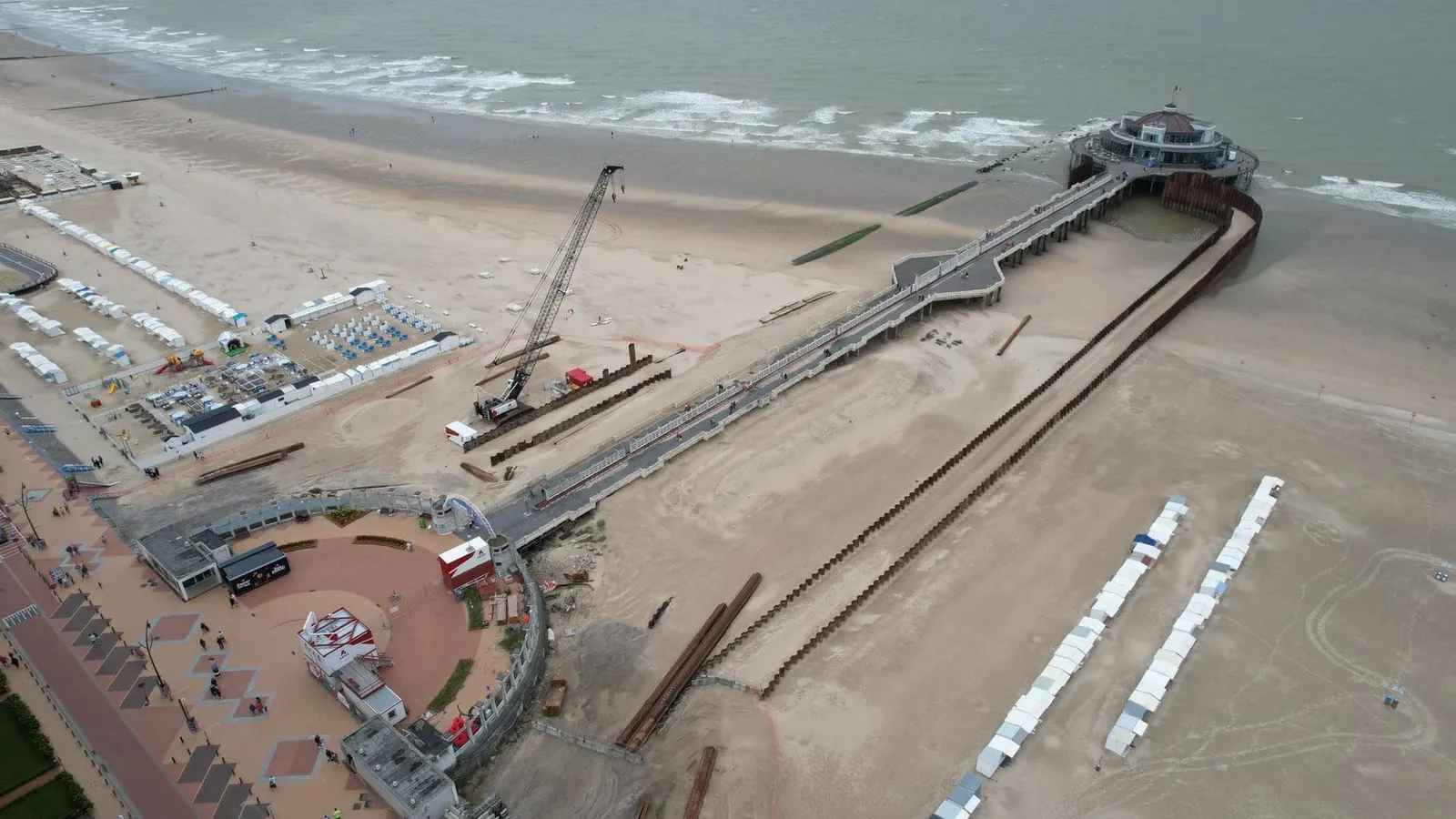
Work at Den Oever, May 2019.
The contract with Rijkswaterstaat was signed on 25 April 2018. “12 October 2018 was the official start date,” explains Kuiper. “That was when we took over the maintenance of the Afsluitdijk.” Mollet adds: “We are keeping the shop open. All the sluices and bridges must continue operating as much as possible, so we have a maintenance organisation that has been maintaining all the assets covered by the contract since 12 October 2018. This is not simply a case of ‘building within the fence’: we are talking about a substantial maintenance organisation. When the construction phase is completed on 31 December 2022, a 25-year maintenance period will follow, running through to 2048.” Older contract models can sometimes create an obstacle course when it comes to innovative solutions. In this case, Mollet is keen to praise Rijkswaterstaat: “The Rijkswaterstaat team really stuck its neck out to draw up a contract with functional specifications rather than just prescriptions. That makes it possible to respond innovatively to the tender. The Afsluitdijk renovation deserves to be seen as a global showcase for hydraulic engineering.”
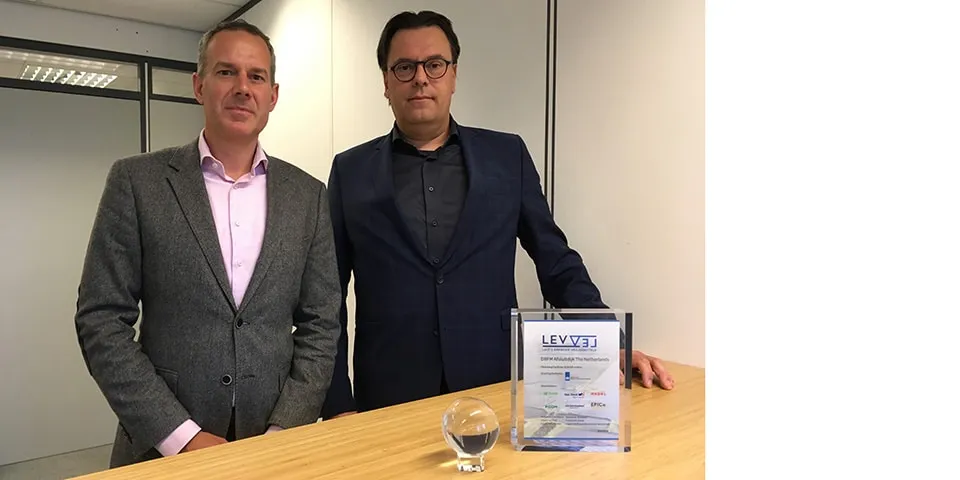
Carlo Kuiper (left), Project Director SPC, and Carlos Mollet, Project Director EPC and MTC.
Afsluitdijk to be energy-neutral
Rijkswaterstaat has set the requirement that the Afsluitdijk must be made energy-neutral.
Mollet: “6 new pumps, each as big as a house, are being installed. The pumps we are using are fish-friendly and energy-efficient. Additional discharge sluices are also being built, allowing more water to be discharged naturally. Each pump can discharge 235 cubic metres per second, but thanks to the additional sluices included in construction consortium Levvel’s plan, only 10% of the energy required by the reference design is needed. So, discharge water when possible and pump it when necessary.”
Proportions of the Levvel-bloc.
A solar park is being built to offset all the energy used. Kuiper: “It will cover around 3 hectares in total, enough to make the Afsluitdijk, including all its assets, energy-neutral. The final location will be Den Oever, where our office currently stands. Once everything is ready, the office will be removed using a plug-and-play approach and replaced with solar panels.” At Breezanddijk, a pilot project involving 1 hectare of floating solar panels is being set up on the IJsselmeer. “These will be monitored for 15 years to assess their ecological impact, including their effects on birds and fish and the impact of, for example, drifting ice,” explains Mollet.
Work at Kornwerderzand, May 2019.
A full 32 kilometres of reinforcement on the Wadden Sea side
To strengthen the dike, new revetment materials are being used, among other measures. Mollet describes the Levvel-bloc, a further development of the Xbloc, also known as Xbloc+. “This wave-breaking block uses 35% to 40% less concrete than traditional concrete blocks. Thanks to their unique shape, the Levvel-blocs are placed in an overlapping pattern using a specially developed gripper attached to a crane. This results in an exceptionally stable position. A new factory in Harlingen will manufacture the Levvel-blocs on a fully automated basis. We are talking about 75,000 Levvel-blocs, each weighing 6.5 tonnes. Each block will be fitted with an RFID chip containing information about its composition and placement. Every block is fully traceable. The blocks will be transported by water from Harlingen to the Afsluitdijk. This is sustainable and avoids disrupting road traffic,” Kuiper concludes.
Have a business enquiry for Van Oord? Get in touch
Who worked on Afsluitdijk
- clientRijkswaterstaatMentioned in Greater discharge capacity through specialist, bespoke pump design
- central control
 Croonwolter&drosMentioned in Afsluitdijk system integration: invisible and indispensable
- supplierSaferoadMentioned in “Alternative systems are permitted, provided they comply with the rules”
- underwater construction
 DISA InternationalMentioned in ‘Placing underwater concrete is all about good planning’
- underwater excavation
 BonneveldMentioned in A sheet pile structure with anchoring has been installed at the Lely monument, halfway along the dyke.
- technical integrator
 Batenburg Industrial AutomationMentioned in A complex IT puzzle on the Afsluitdijk
- contractorBoskalisMentioned in ‘You can’t see from the outside how much work is being done on the Afsluitdijk’
- Levvel construction consortiumInvesisMentioned in ‘You can’t see from the outside how much work is being done on the Afsluitdijk’
- contractors' joint ventureIJsselmeerwerken VOFMentioned in ‘You can’t see from the outside how much work is being done on the Afsluitdijk’
- clientProvince of FrieslandMentioned in ‘You can’t see from the outside how much work is being done on the Afsluitdijk’
- fire alarm and evacuation systems
 Unica Fire SafetyMentioned in Optimal fire safety for the Afsluitdijk
- Levvel construction consortiumAberdeenMentioned in Afsluitdijk reinforcement complete: pumping station and new sluices officially opened


Keep following this
Get an email when a new story is published. No account needed.
- ProjectAfsluitdijk
- ThemeFlood protection and climate-resilient water management
- SubjectWater infrastructure
- CompanyVan Oord
- CompanyEPC Groep







