









A unique approach to consolidating the Markermeerdijken
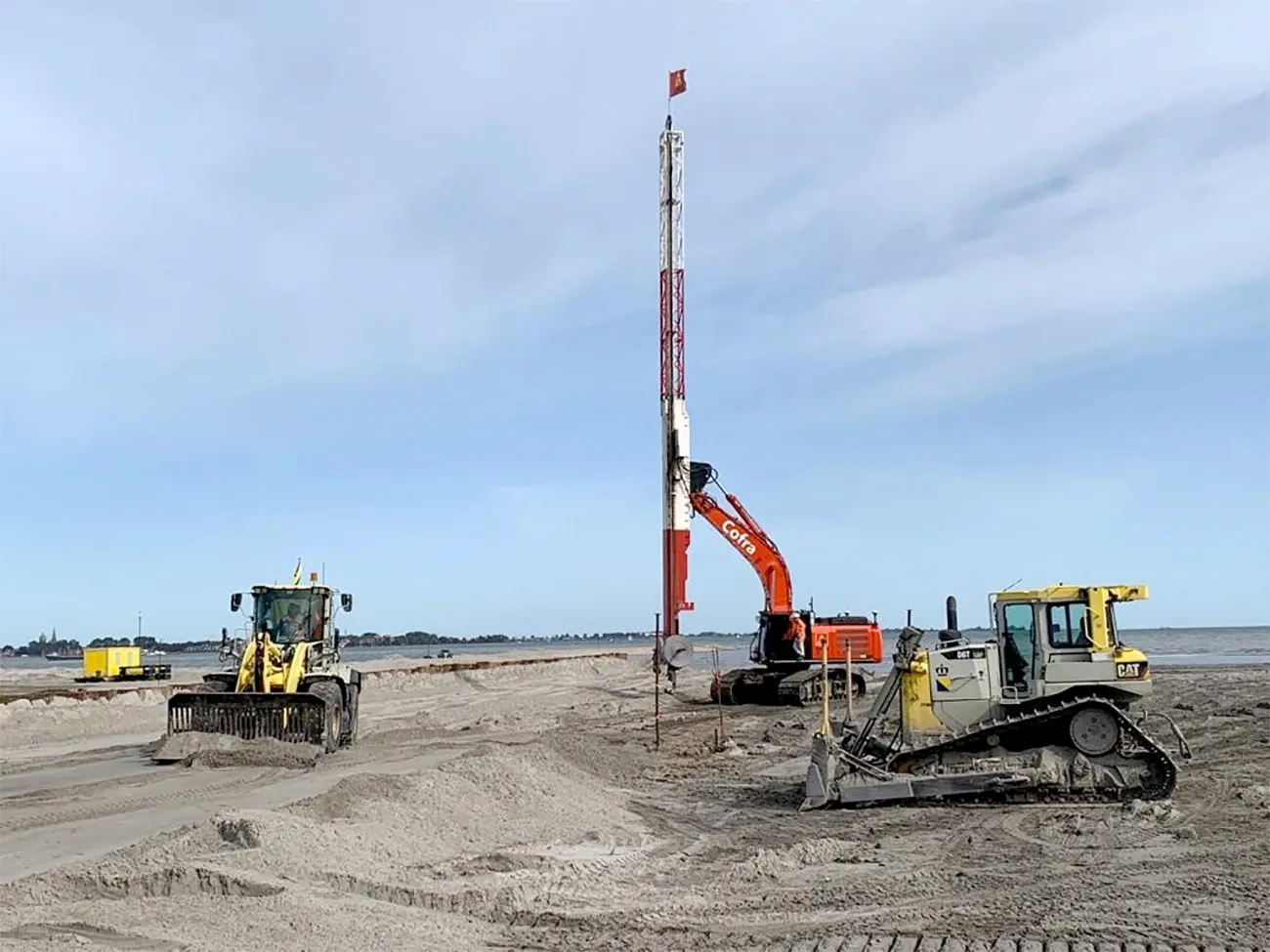
As the Markermeerdijken are strengthened, the Alliantie is making extensive use of Cofra’s expertise. Its (vacuum) consolidation techniques are used to stabilise the settlement-sensitive ground, and to do so more quickly. One section of the dike is even the site of a genuine world first. We spoke to Wiegert Dijkkamp, project manager at Cofra Nederland.
Cofra has a long track record in (vacuum) consolidation. “Our vertical drainage techniques are widely used on a great variety of projects around the world,” Dijkkamp begins. “Because of the soft ground here along the Markermeerdijken, we were brought in at an early stage to advise on accelerating the settlement process. In this case, most of the dikes are being widened rather than raised, with additional weight applied to the poorly draining soft clay and peat layers.”
Innovative solutions
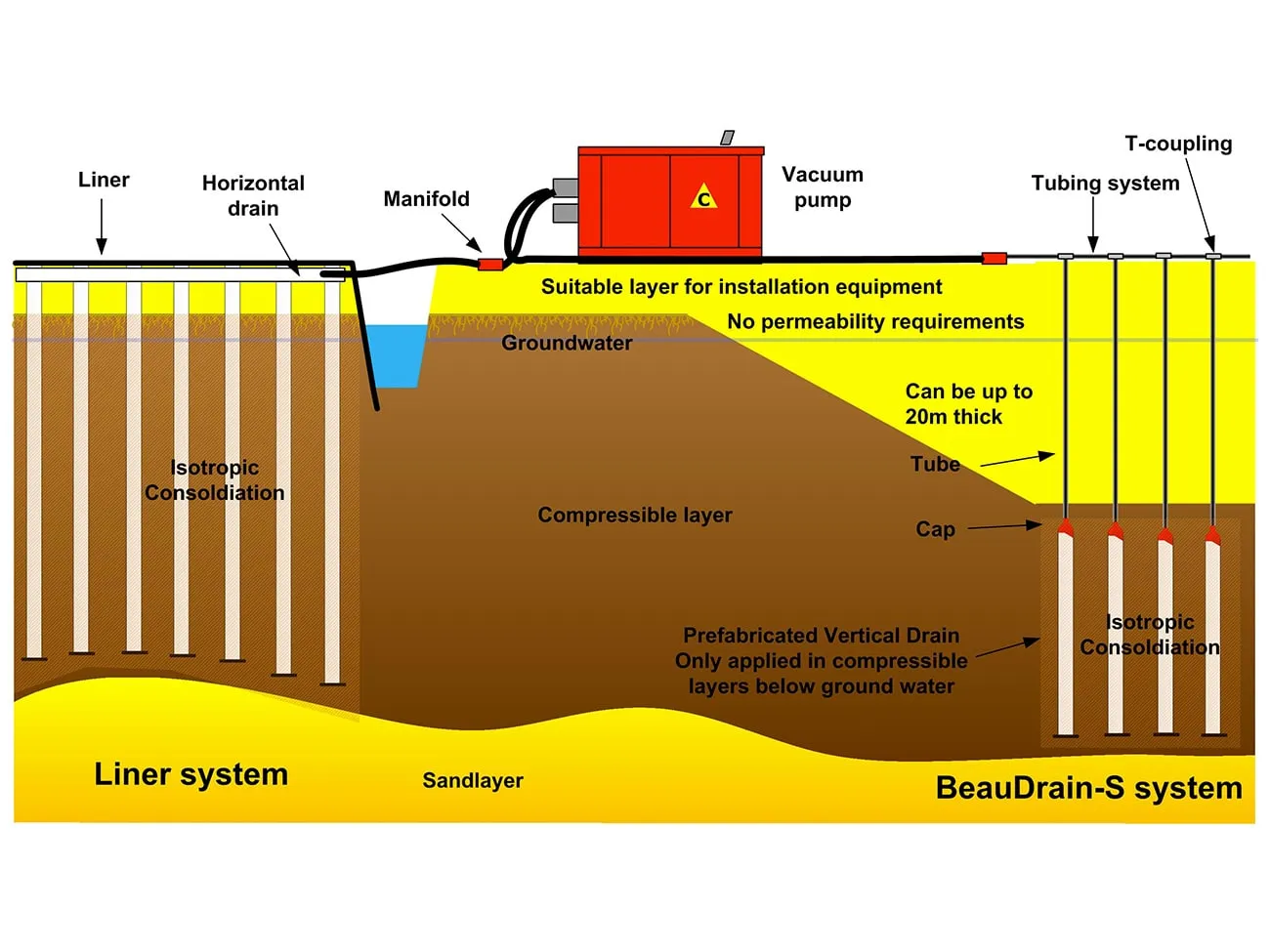
As a 100% subsidiary of Alliantie partner Boskalis, Cofra is known for its innovative solutions. “With almost a hundred years of experience, we can devise tailored solutions for every ground improvement project,” Dijkkamp continues. “The Markermeerdijken are no exception, with many millions of linear metres of vertical drainage installed. During the preparatory phase, we carried out a pilot with the Alliantie at Schardam to see which method would be best suited to this dike strengthening project. The ground here is extremely soft. Think of it as a poorly draining sponge that wants to compress as soon as weight is placed on it. But because it drains so poorly, it cannot do so, resulting in a large excess pore water pressure in the sponge. Our vertical drainage method rapidly removes this ‘overpressurised’ groundwater from the soil, accelerating settlement so that the ground can be raised sooner and the dike completed earlier. The process also increases the strength of the ground and, consequently, the stability of the dike.”
Positive effect on strength development
Cofra has several vacuum consolidation systems. “Alongside ‘standard’ vertical drainage with MebaDrain, without vacuum, we have three methods that accelerate the process by applying negative pressure: BeauDrain, BeauDrain-S and a membrane variant,” Dijkkamp explains. “The difference between the two BeauDrain systems is that the drains are interconnected in the BeauDrain-S system, whereas with standard BeauDrain a long string of drains is installed using a plough.
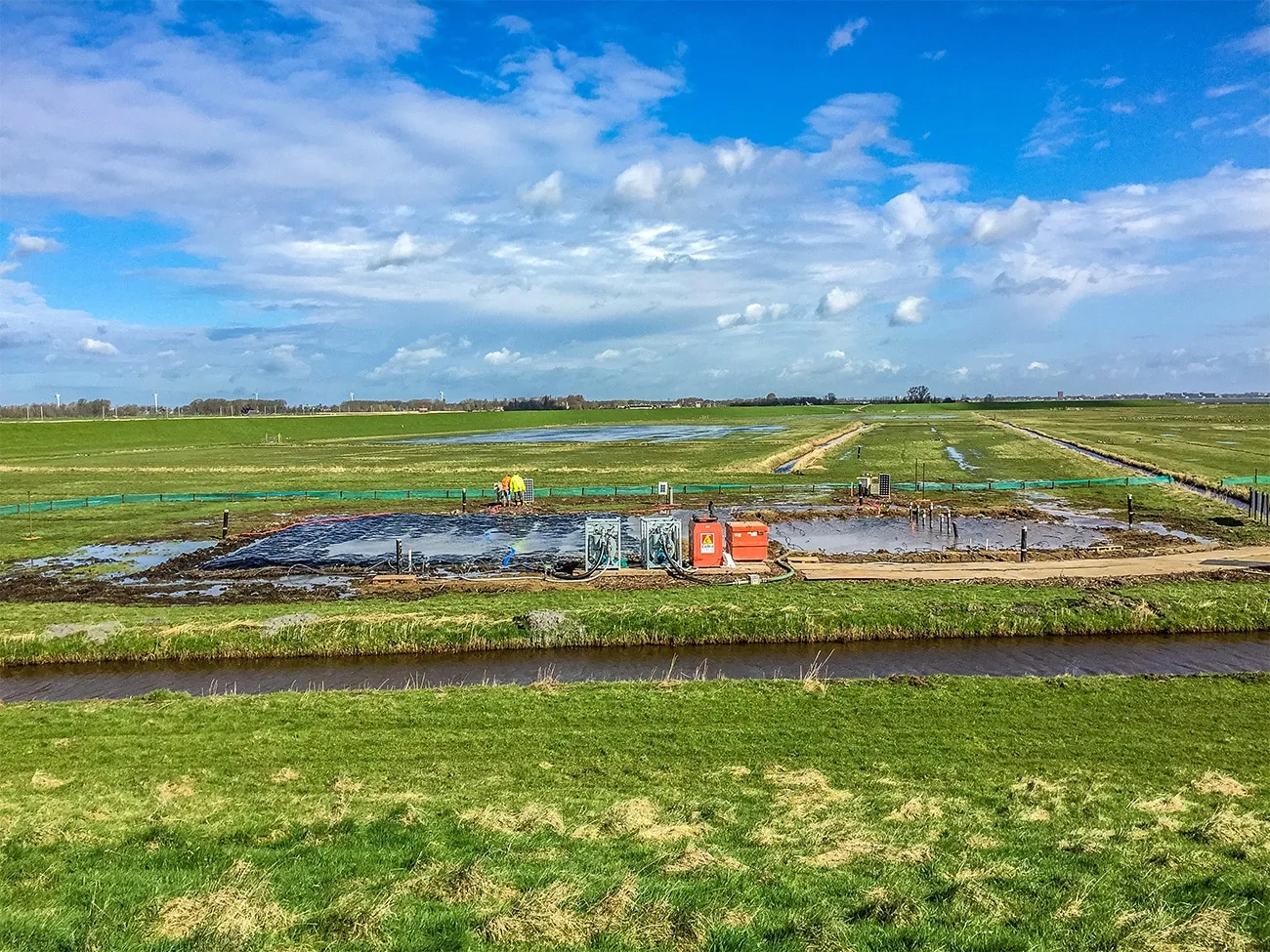
We also make extensive use of the membrane consolidation method. Each system has its own advantages and disadvantages, and its own solution for overcoming vacuum loss in sand layers. The choice therefore depends on the situation. In a few specific dike sections, ‘standard’ vertical drainage was not sufficient because an increase in strength was required. That was why we tested BeauDrain-S and the membrane consolidation method in a test section at Schardam in 2016. Our geotechnical department carried out a large number of measurements there in collaboration with Fugro. The results showed that applying a vacuum does indeed have a positive effect on the development of the ground’s strength, and that BeauDrain-S performed best at these critical locations.”
World first
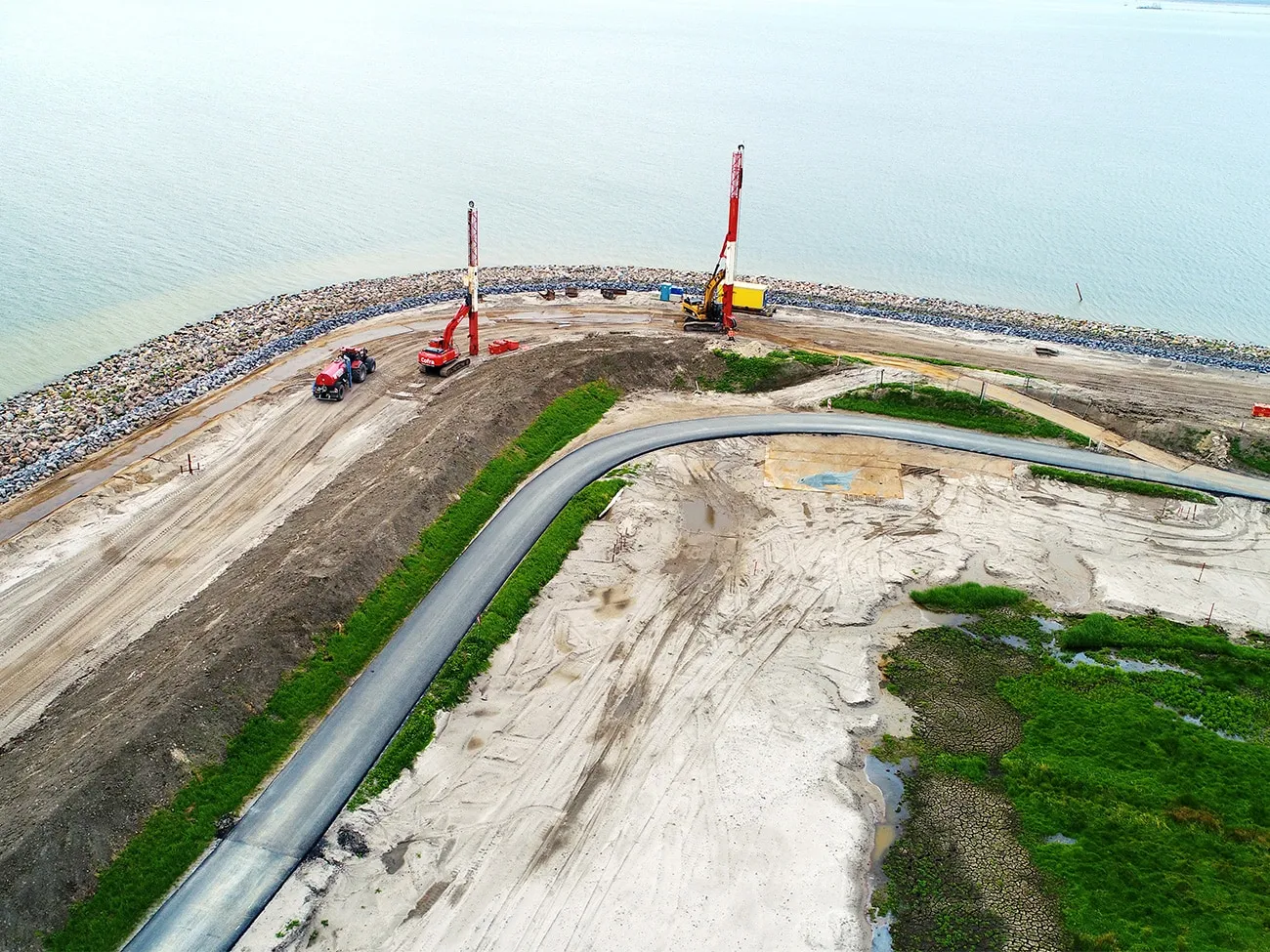
The way BeauDrain-S is being used at these critical locations is unique worldwide. Dijkkamp explains: “The test section enabled us to demonstrate that the ground ‘remembers’ its vacuum and therefore its strength. This technique is normally designed with a settlement criterion as its starting point. In this test section, we looked at the correlation between the reduction in pore water pressure and the increase in ground strength. The results showed that the sponge effectively remains compressed when we release the pressure and switch off the pumps. Within the design, this application offers benefits in terms of the combination of settlement and time, stability, limiting surcharge height and avoiding the need for berms. The latter is particularly important on this project because of the need to integrate the works into the landscape. As far as we know, this approach is unique not only in the Netherlands but internationally.”
Mini cone penetration tests
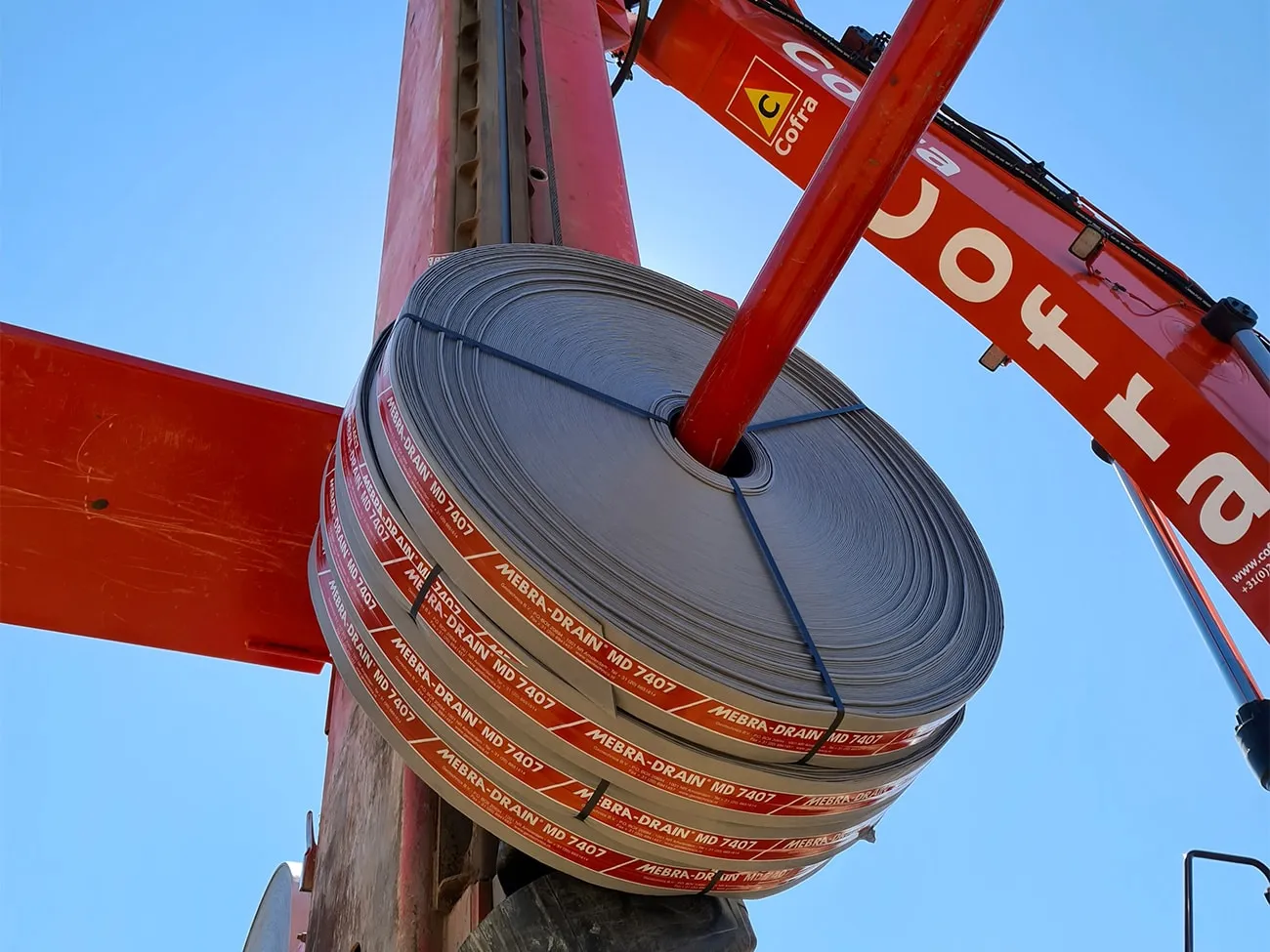
Cofra has now installed many millions of metres of vertical drainage along the Markermeerdijken. “We began ‘pushing in’ drains in the northern sub-area in early 2020, and are now working in the central and southern sub-areas,” says Dijkkamp. “Our fleet of machinery has been developed to the point where we can work fast enough to keep ahead of the sand deliveries. Each rig installs around a thousand drains a day, recording the exact position and insertion force of each one. Every drain therefore effectively provides a mini cone penetration test, giving the Alliantie valuable information. In total, 5 million linear metres of MebraDrain and 90,000 m2 of BeauDrain will be installed across a number of dike sections. These are substantial quantities for us too. However, we have sufficient capacity to manufacture the materials for projects of this scale at our own factory in Amsterdam, then deliver and install them on site. It is not just the quantities that make this work so special for us, but also our involvement from the design phase onwards in 2016. “Our role goes far beyond simply supplying and installing. It has even led to a genuine world first.”
A business enquiry for Cofra B.V.? Get in touch
Who worked on Markermeerdijken
- led consortiumBoskalis NederlandMentioned in Broad foundation expertise for the Markermeerdijken project
- All-round foundation specialistGebr. van ’t HekMentioned in Broad foundation expertise for the Markermeerdijken project
- welding and fabricationLinden StaalbouwMentioned in Broad foundation expertise for the Markermeerdijken project
- engineering consultancyHektecMentioned in Broad foundation expertise for the Markermeerdijken project
- clientHoogheemraadschap Hollands NoorderkwartierMentioned in A complex technical challenge calls for a unique partnership
- Integrated monitoring team (IMT)AMMDMentioned in Managing the risk of damage at the Markermeerdijken
- earthmoving machinery with operatorHuiberts BVMentioned in Cumela contractor at the heart of the dike reinforcement project
- contractorDe Vries & van de WielMentioned in Hopper suction dredger TEXEL unloads more than 3.5 million m3 of sand
- settlement markers and other temporary worksWelding and assembly work (LMW)Mentioned in Special settlement gauges and fencing
- reinforcement supplierSpanberg WapeningMentioned in Integrated design and installation of reinforcing steel
- integrated designStaalis EngineeringMentioned in Integrated design and installation of reinforcing steel
Keep following this
Get an email when a new story is published. No account needed.
- ProjectMarkermeerdijken
- ThemeFlood protection and climate-resilient water management
- SubjectWater infrastructure
- CompanyCofra B.V.
- CompanyFugro







