









Safely raising the Markermeerdijken
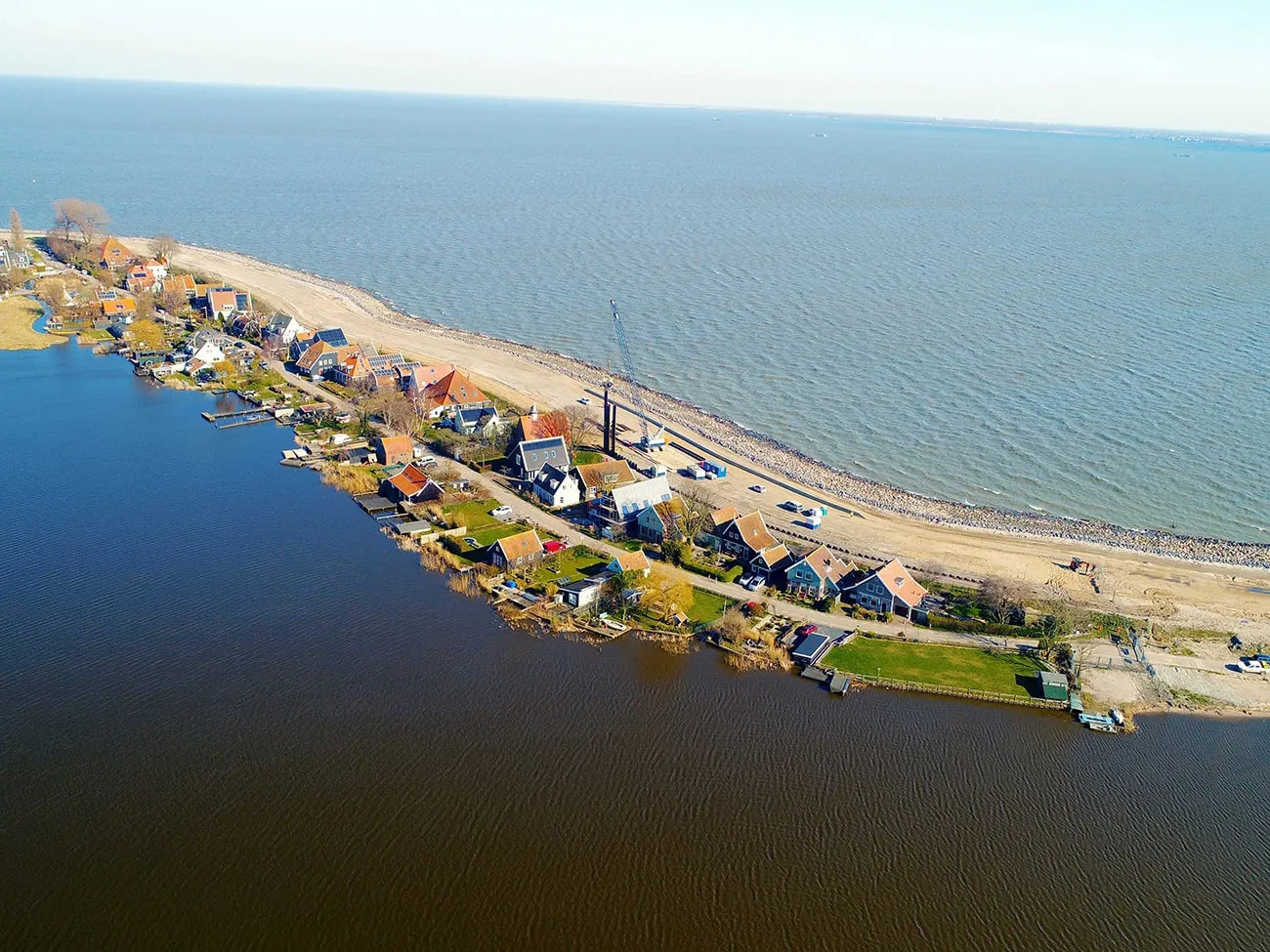
During a routine safety inspection in 2006, the Markermeerdijken between Durgerdam and Hoorn were assessed and found not to meet safety standards along a stretch of about 33 kilometres. Extensive studies were then carried out into the design and approach for the large-scale strengthening operation in an area with very soft, low-bearing-capacity ground. As a result, the dikes are being raised in stages. BT Geoconsult is part of the site engineering team, effectively bridging the gap between design and construction. Using extensive monitoring data, the site engineering team supports the Alliantie Markermeerdijken in safely raising the dikes, while guaranteeing flood safety and limiting risks to the surrounding area.
Site engineering team bridges the gap between design and construction
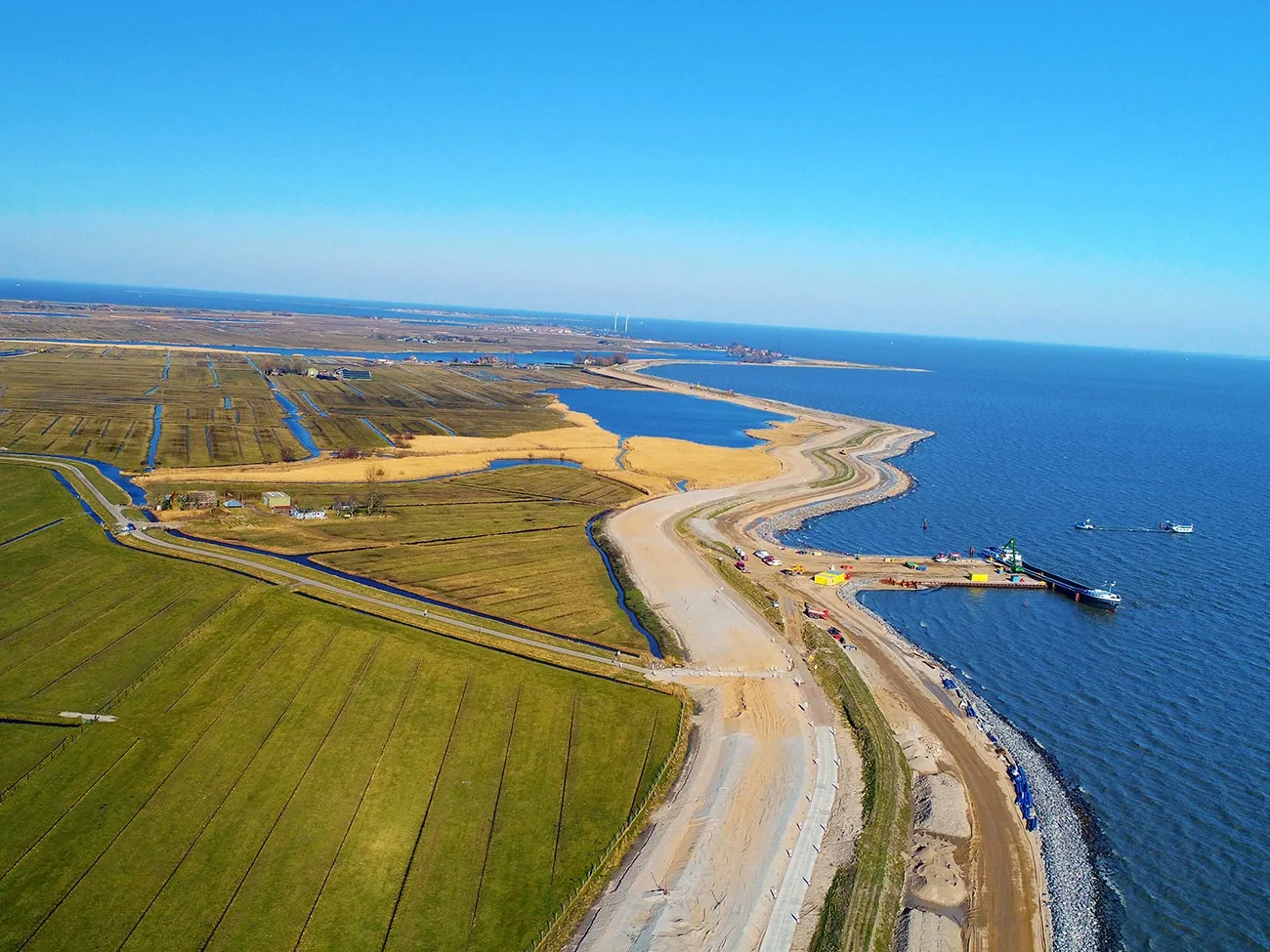
The dike was assessed in 2006 and found not to meet safety standards. “Under the calculation rules in force at the time, the strengthening operation would have had a huge impact on the surrounding area, partly because it would have required the construction of long stability berms,” says Remco Bakker, geotechnical adviser at BT Geoconsult. “It also proved impossible to fit into the available space. A major research programme, Dijken op Veen (DoV), was then launched, leading to the conclusion that the strength of the peat had been underestimated. This ultimately led to the development of the specific Dijken op Veen working method, which uses the undrained shear strength of the subsoil, a property that depends, among other things, on the preconsolidation pressure. The advantage of this method is that temporarily applying a surcharge can increase the preconsolidation pressure, in other words, the strength of the subsoil. This strengthens the ground without having a major impact on the final design geometry. The method forms the basis of the strengthening operation.”
Interpreting monitoring data
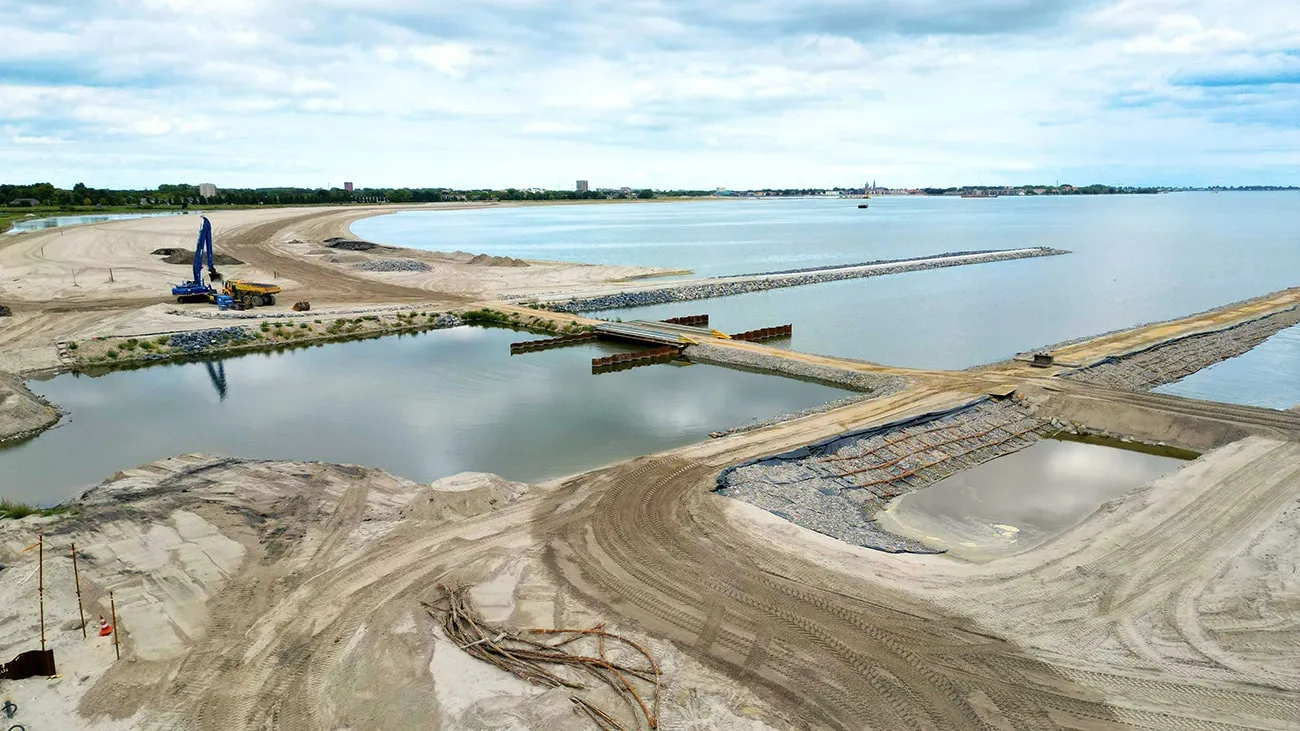
Applying this innovative method, and particularly placing the fill in lifts, involves a number of restrictions and conditions. “Monitoring is crucial,” says Bakker. “A considerable number of instruments have therefore been installed, including more than a thousand settlement plates and hundreds of pore pressure gauges. We interpret the data so that the alliance can safely place the fill. The ground is extremely soft along large sections of the route. Every metre of sand placed settles and causes horizontal deformation. This deformation is also monitored, and, like all the other data, recorded in a GIS environment. We use this information to check whether the ground and surrounding area are behaving as expected. If anything deviates, we assess whether additional measures are needed to limit deformation, or whether the threshold values can be adjusted.”
Significant settlement
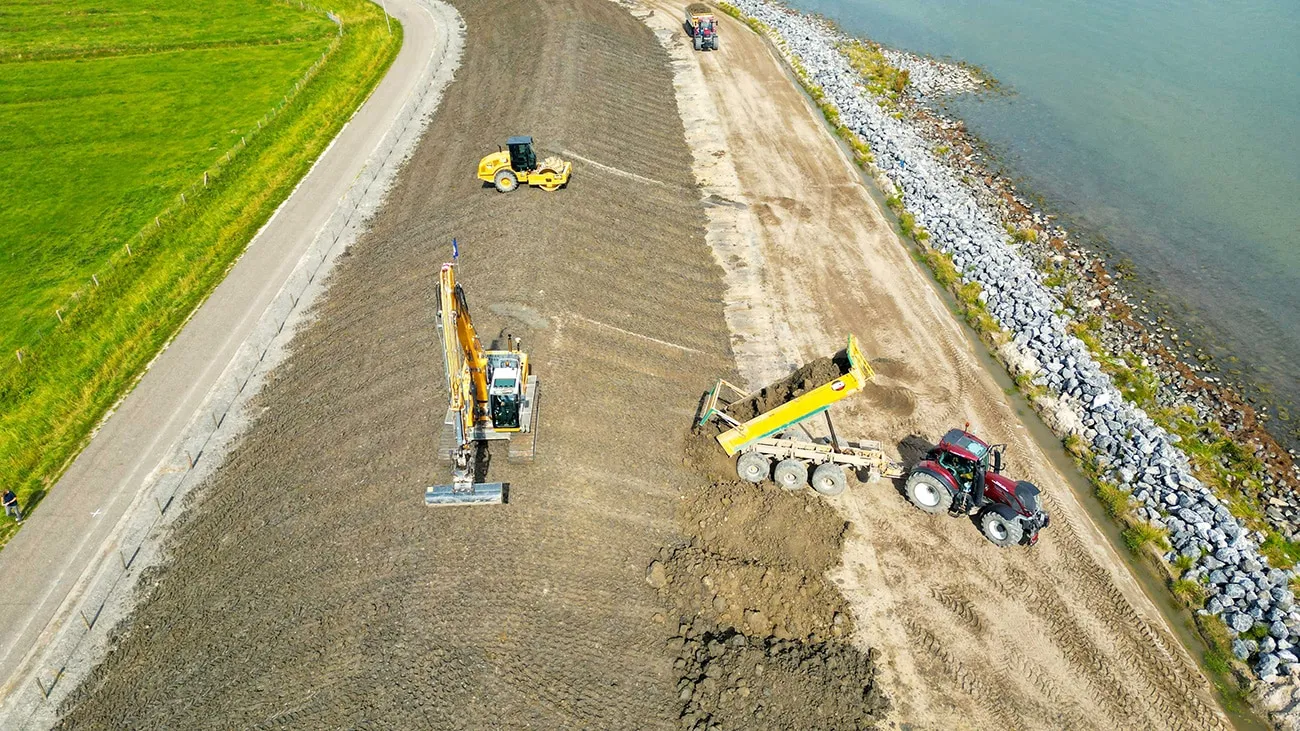
The dike strengthening operation is divided into three sections. BT Geoconsult is involved in two of them, with three site engineers and support from the back office. “The site engineering team includes several geotechnical specialists, but overall we have a relatively large role in site engineering on the project,” says Bakker with justified pride. “At BT Geoconsult, we have extensive experience with infrastructure and dike projects on soft ground. That experience is essential if you want to be well prepared for a project like this, because conditions on site can prove more challenging than expected. That is also true here on the Markermeerdijken. The strengthening is carried out largely through surcharging, applied in several lifts ranging from half a metre to a metre. We approve each lift before the next one is placed. To do so, we interpret all the monitoring data. The process requires such precision that in some cases we raise the dike in lifts of just 25 centimetres. Fortunately, that is unusual, but it shows just how critical the work can be. Settlements are substantial: more than a metre is not unusual, and in some cases they exceed 2 metres!”
Strengthening the Markermeerdijken is, therefore, a complex operation. “Although the site engineering team is a small part of the overall project, it is crucial to keeping the project moving forward.”
Question about this story? Ask your question
Who worked on Markermeerdijken
- led consortiumBoskalis NederlandMentioned in Broad foundation expertise for the Markermeerdijken project
- All-round foundation specialistGebr. van ’t HekMentioned in Broad foundation expertise for the Markermeerdijken project
- welding and fabricationLinden StaalbouwMentioned in Broad foundation expertise for the Markermeerdijken project
- engineering consultancyHektecMentioned in Broad foundation expertise for the Markermeerdijken project
- clientHoogheemraadschap Hollands NoorderkwartierMentioned in A complex technical challenge calls for a unique partnership
- Integrated monitoring team (IMT)AMMDMentioned in Managing the risk of damage at the Markermeerdijken
- earthmoving machinery with operatorHuiberts BVMentioned in Cumela contractor at the heart of the dike reinforcement project
- contractorDe Vries & van de WielMentioned in Hopper suction dredger TEXEL unloads more than 3.5 million m3 of sand
- settlement markers and other temporary worksWelding and assembly work (LMW)Mentioned in Special settlement gauges and fencing
- reinforcement supplierSpanberg WapeningMentioned in Integrated design and installation of reinforcing steel
- integrated designStaalis EngineeringMentioned in Integrated design and installation of reinforcing steel
- Site engineering teamBT GeoconsultIn this story
Keep following this
Get an email when a new story is published. No account needed.
- ProjectMarkermeerdijken
- SubjectRoad construction
- CompanyBT Geoconsult







