









No surprises with new pumping installations thanks to a ‘digital twin’
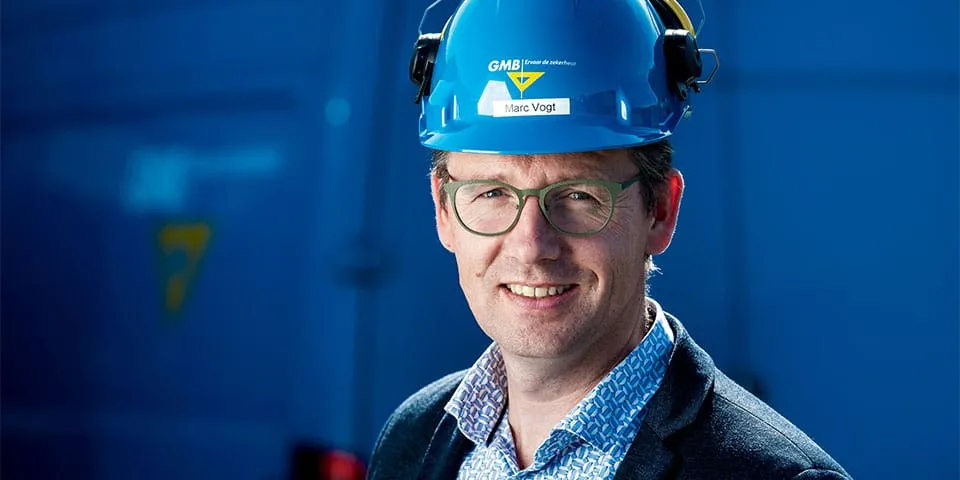
Reducing the cost of failures and preventing damage: isn’t that what every company wants? The pump industry is no exception, especially when you consider the consequences of a pump failing to operate. From its various clusters, GMB designs and builds, and renovates, among other things, dykes, port areas, sewers, pumping stations, water treatment plants and sludge processing plants.
Cluster Waterkwaliteit en Installaties has a state-of-the-art method for reducing the risk of failure in a new pumping installation to an absolute minimum. Together with their partners, they create a ‘digital twin’ before the pump is commissioned, and use it to simulate its operation. Marc Vogt, design manager at GMB, takes us through the process.
Dry testing for maximum risk management
“The best way to explain how the digital twin works is to look at project AWP 2.0 for Waterschap Brabantse Delta, which is currently under way,” Vogt begins. “We are renovating three pumping stations, replacing two old pumps with three new ones at each station. The first pump was recently commissioned, and we knew in advance that it would work without any problems. Beforehand, together with our partners, we created a digital twin of the pumping station. This meant building a virtual model of the pump, pipes and instrumentation so they could operate in a digital simulation. We then used calculation software from our partner RHDHV to feed the simulation with data, including artificially generated rainfall, local measurement data, all kinds of system influences that affect operation, and, importantly, the pump test data from our partner Pentair. Our partner Hoppenbrouwers’ software links everything together. The result is a virtual pump in operation, subject to conditions that are certain to occur in real life. A kind of digital baptism of fire…”
But the simulation does not stop there. Vogt explains: “This dry, virtual test also lets us simulate all kinds of operating conditions. You can’t get more certainty in advance. The great thing is that you can fine-tune and adjust things in the simulation, then transfer them directly to the real installation once they have proved successful. That inspires confidence.”
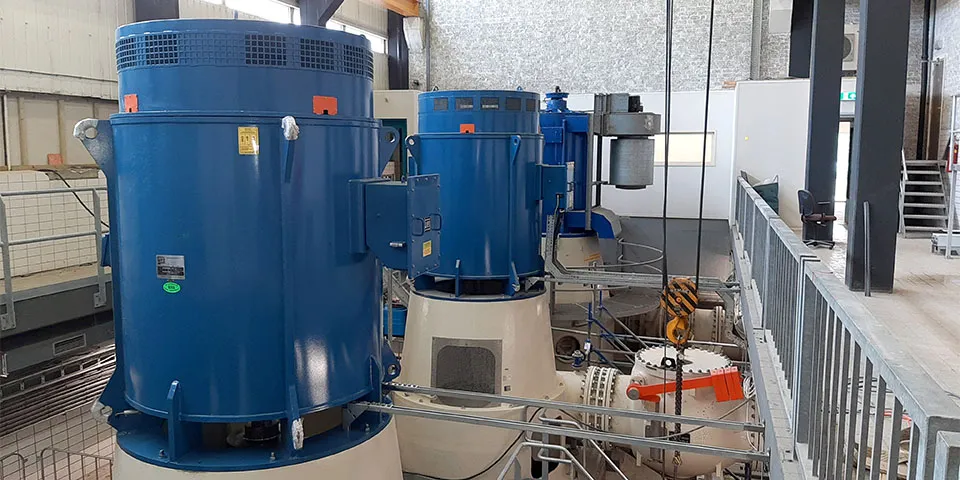
An overview of the three pump lines.
Huge time savings
As well as providing certainty about the technology, the digital twin also saves a great deal of time. “It makes sense, really, because without digital testing we would have to rely on peaks occurring in real life. We would have to wait for severe weather and just hope the installation could withstand it. Apart from the time that takes, there is a real risk of damage. ‘Trial and error’ is not desirable with pumping installations of this scale. Not only because of the cost of potential damage to the installation, but above all because of the impact that failure of a pumping installation like this would have on the surrounding area. It is further proof that we are fortunate to be able to test virtually. Computers are patient. Running a 24-hour virtual test is no problem: we simulate in real time.”
The first time leaves us wanting more
This is the first time GMB has worked this way. “That was possible because this project is particularly well suited to it,” Vogt explains. “These pumps are large and powerful. And the flow must be maintained throughout the project. In the virtual environment, we can push things to their absolute limits… The forces involved are so great that trying this in a real-life situation could cause enormous damage. That would cost time and money and, in effect, destroy capital. Now we can test with the shop open, as the saying goes. The old pumps are still running, the new pump can be brought into service reliably, and it is simply a matter of replacing the old ones without unnecessary downtime.”
Taking a predictive approach
Vogt concludes: “There is more and more we can do with it. The pump that has now been commissioned is also being monitored. We are linking that data to the initial test results, and everything is matching so far. That is a form of validation. By analysing the data, we will soon even be able to work predictively. That is the future, and it will be ideal for optimising systems further, for example.”
Een zakelijke vraag aan Pentair Fairbanks Nijhuis? Get in touch
Who worked on AWP 2.0
- construction of the second pipeline
 GW LeidingtechniekMentioned in Update on the renovation of the Wastewater Rising Main
- process automationCroon Wolter en DrosMentioned in Update on the renovation of the Wastewater Rising Main
- temporary pumping installationsVan der Kamp PompenMentioned in Temporary pumping installations safeguard AWP continuity
Keep following this
Get an email when a new story is published. No account needed.
- ProjectAWP 2.0
- ThemeDigitalisation from design to construction
- SubjectSpecials
- CompanyGMB
- CompanyPentair Fairbanks Nijhuis
- CompanyHoppenbrouwers Techniek







