









‘Infrastructure is a world of challenges and opportunities for innovation’
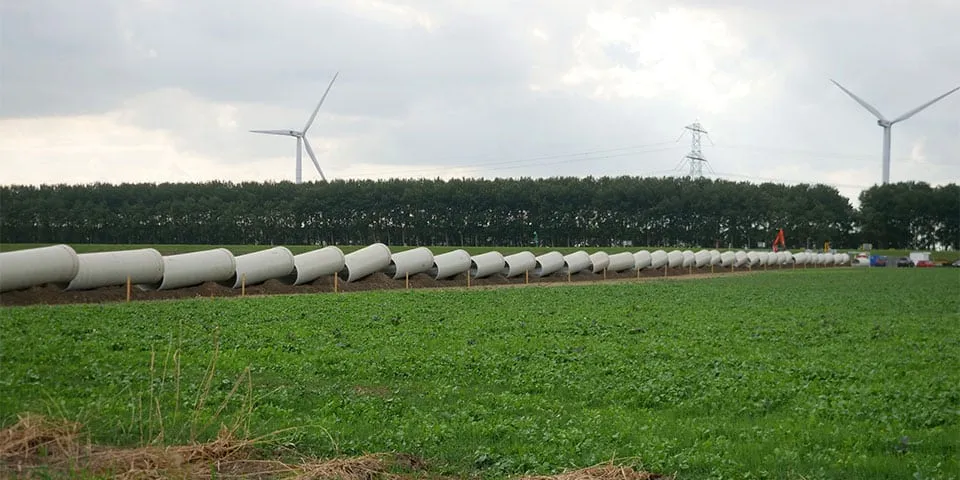
In the Netherlands, utility services are neatly tucked away. This has created an extensive underground network of cables and pipelines for transporting electricity, gas, water and raw materials. Each substance flows through the type of pipeline best suited to it.
GW Leidingtechniek BV, based in Helmond, has been active in underground and above-ground infrastructure for six years, specialising in water transport. It installs pipelines for wastewater, drinking water, cooling water and heating water that meet current requirements. “With around 30 skilled employees, we are strong enough to take on major contracts and flexible enough to handle smaller ones,” says Harm van Ganzenwinkel, director of GW Leidingtechniek.
Underground infrastructure
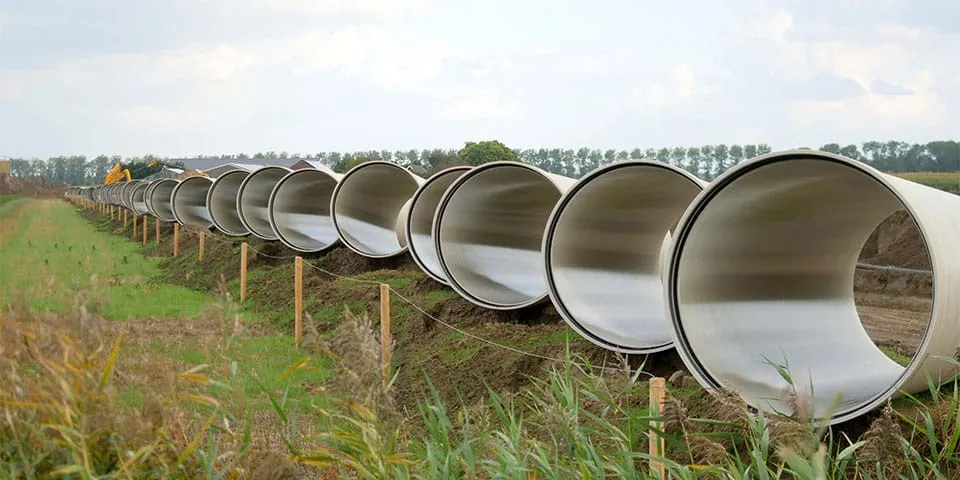
GW Leidingtechniek is currently delivering a striking example of underground infrastructure for Waterschap Brabantse Delta in Rilland, Zeeland. It is renovating and doubling the capacity of the existing wastewater pressure pipeline. “As part of project AWP 2.0, we are installing a Ø 1500 mm pipeline along a 4.5 km route,” says Van Ganzenwinkel. “The project was tendered as a Design & Construct contract. So we are responsible for the entire process, from preliminary and final design through to detailed design and stakeholder management. There is a lot involved. To obtain the permits, we have to talk to municipalities, the province and landowners. And then the actual work still has to begin.”
Gate valves
As part of project AWP 2.0, the butterfly valves are being replaced with gate valves. Waste can become trapped around the central shaft of butterfly valves, eventually preventing them from closing properly. Gate valves slide down from above and do not have this problem. “This involves ten Ø 1500 mm valves and one special: an 1800 mm valve,” says Van Ganzenwinkel, with some pride. “It is the largest in the Netherlands and was developed specifically for this project. The valve has been installed in an existing chamber with limited working space.”
Combined works
In practice, underground and above-ground infrastructure works go hand in hand. Once the pipelines have been installed, the above-ground infrastructure must be reinstated or renewed. This is known as a ‘combined works’ project. “For example, in Maarssen we installed a Ø 500 mm HDPE pipeline for Waternet to transport wastewater. The work covered a 7.5 km route, running right through a residential area and an industrial estate. This involved a great deal of above-ground infrastructure work. We carried out paving, repaired the asphalt, relocated streetlights, replaced pavements and arranged traffic management. The project also required eight HDD crossings, including one 1,100 metres long, passing beneath a railway and waterways managed by Rijkswaterstaat. Stakeholder management plays a major role in projects like this.”
Taking things to the next level
Van Ganzenwinkel is particularly pleased that more and more contracts for complex situations are being awarded through building team contracts. “The client then selects a contractor from those shortlisted for the project. That contractor works with the client and its regular supply-chain partners to find the best and most cost-effective solution for the project.”
Opportunities for employee development
For Van Ganzenwinkel, infrastructure remains a world full of challenges. The search for the most cost-effective solutions encourages resourcefulness. Sometimes it also calls for innovative solutions, which are then developed within GW Leidingtechniek BV. “That creates opportunities for our employees to develop,” says Van Ganzenwinkel, “and we welcome that. Our people are what make us who we are. We want them to be able to put their talents to work. Organisational skills, spatial awareness, numeracy. It all comes into play. We are also keen to support them with training, courses and certification.”
Innovative lining method for pressure pipelines
One innovation to come out of this is a lining method for renovating pressure pipelines. “The existing lining method is designed for gravity pipelines, where a ‘liner’ is installed inside the pipe and the existing pipe continues to provide the strength,” explains Van Ganzenwinkel. “Our innovative blueline method uses the same basic approach, but with this technique the liner, which is cured using steam or water, takes over the structural role of the existing pipe, effectively creating a fully functioning new pipe. The renovated pipeline can withstand pressure and its new inner pipe will serve it well for years to come.”
“The blueline method is suitable for pressure classes up to PN6 and diameters of 100-1100 mm. It is now being used in several pilot projects, and the prospects are excellent. I am proud of our team, who bring such a positive, creative attitude to their work.”
Een zakelijke vraag aan GW Leidingtechniek BV? Get in touch
Who worked on AWP 2.0
- construction of the second pipeline
 GW LeidingtechniekMentioned in Update on the renovation of the Wastewater Rising Main
- process automationCroon Wolter en DrosMentioned in Update on the renovation of the Wastewater Rising Main
- temporary pumping installationsVan der Kamp PompenMentioned in Temporary pumping installations safeguard AWP continuity
Keep following this
Get an email when a new story is published. No account needed.
- ProjectAWP 2.0
- ThemeUnderground construction
- SubjectUnderground infrastructure
- CompanyGW Leidingtechniek BV







