Climate-resilient water management: TBS-SVA Groep on smart solutions for public spaces
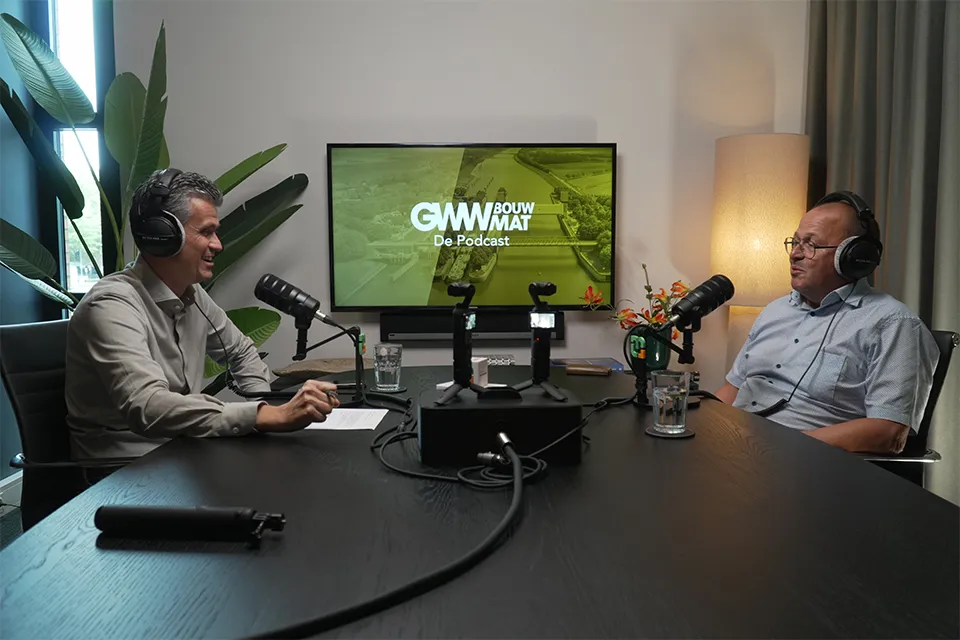
Guests: Willy Bruckers
Host: Roel van Gils
How can public spaces be designed to withstand extreme rainfall, drought and stricter sustainability requirements? Willy Bruckers of TBS-SVA Groep discusses integrated water management, drainage, storage, infiltration, water treatment and the role of smart climate-resilient solutions.
A business enquiry for TBS-SVA GROEP? Get in touch
Full transcript
All chapters (20)
- Climate-resilient solutions for public spaces
- TBS-SVA Groep and its various businesses
- Drainage products and solutions
- Changing client requirements
- Getting involved in projects earlier
- Working with specialist partners
- Six steps in water management
- From draining water quickly to holding it back
- An integrated approach
- Gully Box, Mini Raingarden and Cool City Drain
- Management and maintenance of climate-resilient systems
- How AquaCare came about
- AquaCare as a product range and service
- Sustainability at TBS-SVA Groep
- Modernisation of the production site
- More integrated collaboration in the future
- Alternative raw materials and FILCOTEN
- TBS-SVA as a knowledge specialist
- Monitoring in practice
- End-to-end solutions and closing
Climate-resilient solutions for public spaces
Roel van Gils Welcome to another episode of GWW-BOUWMAT, the podcast. Public spaces are under pressure. We are increasingly dealing with extreme downpours, longer periods of drought, stricter sustainability requirements and a growing need for smart, future-proof solutions. But how do you ensure that all these challenges do not lead to a series of piecemeal solutions, but instead to an integrated design that continues to work for years to come? Today we are discussing this with Willy Bruckers of TBS-SVA Groep, which creates more sustainable solutions. Willy, welcome.
Willy Bruckers Thank you. It’s great to be here.
Roel van Gils Very good. It wasn’t far to come, I don’t think.
Willy Bruckers No, you could call it a home game.
Roel van Gils Absolutely. Could you start by introducing yourself, Willy?
Willy Bruckers Yes, of course. As you said, my name is Willy Bruckers. I’ve been working for TBS-SVA Groep for about 30 years as commercial director, with overall responsibility for everything relating to sales and marketing.
TBS-SVA Groep and its various businesses
Roel van Gils Yes, you mentioned it already: TBS-SVA Groep consists of several entities. Could you tell us a little about them?
Willy Bruckers Yes. The group came about when TBS and SVA merged. They were two separate brands in the market, and two separate companies with two separate production sites. At the time they joined forces, each had a market share of about 40%. After merging into one company, that brought the market share to around 80%. You could certainly call yourself the market leader then. We now have four companies. Two more have joined the group. One is DDC in Heinenoord, which stands for Drain Design Construct. The other is IE Systems, a company specialising entirely in sewer gas control.
Read the full transcriptCollapse transcript18 more chapters
Drainage products and solutions
Roel van Gils Okay, so it’s a substantial range. Many people may know you for one product or one solution. Could you give us an overview of your product range?
Willy Bruckers Certainly. I think most people in the civil engineering sector know us as a supplier of drainage products. They mainly include road gullies, pavement gullies and small drainage channels. But also, for example, the very simple inspection chamber cover, or manhole cover, as it is often called, that you see in the road. But let me put it this way: in recent years, we’ve come up with excellent solutions for those as well.
Changing client requirements
Roel van Gils I see. So, looking at what clients are asking for, what is the question you hear most often?
Willy Bruckers One question we hear time and again is: “We’re working on a new plan, and we’d like to take climate change into account. What can you do to help us?” They want to look beyond just the traditional road gully and manhole cover.
Roel van Gils So you’re not just a product supplier, but also a partner who helps clients develop solutions.
Willy Bruckers Yes, we are of course a manufacturer and supplier of products, but in recent years we have increasingly positioned ourselves as advisers. An account manager, or, well, what used to be called a sales representative, but these days we call them an account manager. We also work with project advisers. They can help a local authority, landscape architect or engineering consultancy think through how to incorporate climate-resilient solutions into a design. That’s how we work.
Getting involved in projects earlier
Roel van Gils So you come into the project much earlier and are involved from the outset, rather than only coming in at the end as a supplier?
Willy Bruckers Yes, that’s right. When it comes to traditional drainage products, most engineering consultancies and local authorities know a fair bit about them. But when you need to take a broader view and connect several systems, you sometimes need to look beyond your own products. You can also advise clients, for example, that they would be best off using a product from company X here, combined with some of our products.
Working with specialist partners
Roel van Gils I see. That brings me to another point: we’re increasingly looking to partnerships. Can you give us an example?
Willy Bruckers As I just mentioned, BVB Landscaping is a company specialising in substrates. We know a great deal about concrete and cast iron, and a little about steel and stainless steel, but we don’t really know much about substrates. They are the absolute specialists in that field. Combining their substrate with, for example, a solution for adding greenery to public spaces, as well as storing and filtering water, means the two can complement and strengthen each other.
Six steps in water management
Roel van Gils Yes, yes. So why are the solutions and products you offer becoming increasingly important?
Willy Bruckers Well, first of all, the public don’t want to deal with flooding. And our clients, often local authorities, don’t want complaints from residents either. That’s how climate adaptation comes into it. We reached a point where we said: “We are the absolute specialist and the market leader in drainage. But there’s a whole series of steps between conventional drainage through a road gully and, so to speak, fully treating the water.” And that’s where we want to go. We call them the six steps in water management. They start with what we’ve always done: carrying water away or collecting it. Collecting it, often quickly. But now the question is also: can you slow the water down? Can you then infiltrate it? Can you clean or filter it? That’s very important too, and one of our particular areas of focus. It was what prompted us to set up AquaCare.
Roel van Gils I see. We’ll come back to that later, we shouldn’t rush ahead. But you can cover all six steps, right through to cleaning the water.
Willy Bruckers Absolutely, yes.
From draining water quickly to holding it back
Roel van Gils So the challenges are different from, say, 10 years ago.
Willy Bruckers Yes. It used to be very simple. The brief was to get the water away as quickly as possible.
Roel van Gils Yes.
Willy Bruckers That approach is now completely outdated. Of course, you need to get water off the road for traffic safety. But then you need to consider what the water is like, where it is going and how much space you have available. That’s very important too. You can want all sorts of things, but you also need space underground and above ground. That’s where one of our project advisers can help with the thinking.
Roel van Gils Yes, yes. So in the past the main concern may have been flooding, but now you also have to take drought into account.
Willy Bruckers Exactly. It’s about preventing flooding, of course, but also keeping groundwater levels as high as possible. That’s very important in the Netherlands, especially in the west of the country, because saline seawater moves further inland when groundwater levels are too low. A lot of groundwater is also used, so water needs to be returned to the ground. And another very important point is that the water you put into the ground must be clean.
An integrated approach
Roel van Gils Yes, yes, yes. Okay. You touched on this briefly already. You often talk about an integrated approach. What exactly does that mean?
Willy Bruckers Well, we think you need to look at the whole process, from A to Z, and also consider the management and maintenance side. You often see local authority management and maintenance departments taking a rather sceptical view of new technologies. So you need to try to get several parties round the table and look at the budget. You can want all sorts of things, of course, but they also have to fit within the budget. When you sit down together, you can come up with a solution that covers everything from A to Z: drainage, traffic safety, water treatment, filtration and storage. The whole range, so to speak.
Roel van Gils Yes, yes, yes. So instead of an individual solution...
Willy Bruckers As you say, it becomes a complete package. You might also consider bringing in a partner. That way, you can provide the local authority, engineering consultancy or landscape architect with a fully integrated approach.
Gully Box, Mini Raingarden and Cool City Drain
Roel van Gils Can you give an example of a project where that integrated approach really comes into its own?
Willy Bruckers Yes. For example, take an urban development where we were also asked to look at ways of tackling heat stress. There was a lot of paving and concrete, and very little room underground because of cables and pipes. The solution was to store and infiltrate the water using the Gully Box. This is a new product of ours. It can be installed just below the paving, so there is no need to go a metre or a metre and a half underground. It stores the water and allows it to infiltrate slowly. The water fed into it comes from gullies fitted with a filter. So the water is effectively treated in two stages: first by settling, then by filtration. That means the water entering the Gully Box is clean. This helps prevent blockages in the longer term, because we were often asked: ‘We have an infiltration facility here, but it’s getting clogged.’ That brings us back to the key point: filter first, then infiltrate. Finally, Mini Raingardens and Cool City Drains were also installed. The Cool City Drain is essentially a small channel planted with greenery. The water is filtered by the plants first, then by the substrate, and then by a filter. It is also connected to the Gully Box. It is filled with the famous BVB substrate, to which Urban Active Coal is added for extra treatment. It also has large plants, so it looks attractive, rather like a luxury planter, as residents might see it. But it drains, stores and filters water. The water can then be channelled to a nearby swale or even a surface-water stream. So it is discharged clean.
Management and maintenance of climate-resilient systems
Roel van Gils You’ve mentioned a lot of products in a nutshell. What does that mean for management and maintenance?
Willy Bruckers That’s what makes it so good. We’ve given it a lot of thought. One of the many questions we’ve had from local authorities is: ‘Isn’t all this too difficult to maintain?’ So what have we done? Let’s start with the Gully Box. It is fed through gullies with filters, so you can feed filtered water into it. It is also designed with several access hatches or large manhole covers at the top, so you can access the system. And because it sits just below the paving, it is easy to reach. Bear in mind that many other systems are often a metre, a metre and a half or even two metres underground. By designing things this way… Take the Mini Raingarden, for example. It is fully accessible from above. You remove the plants and the substrate, replace them with new substrate and, if necessary, new plants. And you’re ready to go again. There’s no need to dig anything up. That makes it all more accessible and easier to maintain.
Roel van Gils Does the local authority do that itself, or can you also help with it, perhaps through partners?
Willy Bruckers You can, of course, work with partners who carry out the maintenance. But we find that, if the system is straightforward enough and you explain it clearly to the local authority, they can maintain it perfectly well themselves. Or they can include it in routine maintenance, such as gully cleaning.
Roel van Gils Oh, you can do that.
Willy Bruckers When gullies are cleaned, you can clean a Gully Box too. Grounds maintenance teams can also look after a Mini Raingarden. So maintenance is actually quite straightforward.
How AquaCare came about
Roel van Gils Great. You mentioned AquaCare earlier. What exactly is it?
Willy Bruckers People know us, of course, for our drainage products. We started developing AquaCare after one particular finding, which I’d like to explain. We carried out research into whether gully sand, the sludge left in gullies, could be used as a secondary raw material in our production. All right, how could we get hold of the sand? Who collects it? And so on. After a great deal of research, we discovered that there are around seven million gullies in the Netherlands that are maintained. On average, each contains eight kilograms of waste… I’ve called it waste all of a sudden.
Roel van Gils Not sand.
Willy Bruckers Not sand, but waste. And why do I call it waste? Research shows that when the sand is cleaned, you are left with six kilograms of cleaned, reusable secondary sand that we can use, and now do use, in our production. Two kilograms of the eight are heavily contaminated with chemicals: PAHs, PCBs, microplastics and heavy metals. You name it, it’s in there. That made us realise that so much water, often without passing through a gully and going straight into underground facilities, carries all this waste from our public infrastructure. In other words, we’re creating contaminated sites for the future. On top of that, local authorities were telling us: ‘The systems are all getting clogged.’
Roel van Gils Yes, that’s the reason.
Willy Bruckers That’s how we started out, first making filter gullies. Eventually, we also started coming up with our own ideas for storing and filtering water. In just two years, we’ve developed a whole range of products, which we now offer under the AquaCare name.
AquaCare as a product range and service
Roel van Gils So it’s essentially a product range, but also more of a service, isn’t it?
Willy Bruckers It is a service too, because we have three project advisers who can advise engineering consultancies, landscape architects and local authorities.
Roel van Gils Yes, yes, yes. Is it just about drainage, or also about infiltration?
Willy Bruckers It covers the whole process. It starts with drainage. You take water away from somewhere to keep the road safe. But what do you do with that water next? We say: treat it, store it, discharge it at a controlled rate, or infiltrate it. Choose whatever suits you best. Ultimately, the aim is to reduce the burden on the sewer system and raise the groundwater level, but using clean water.
Roel van Gils I see. Has AquaCare been going for two years now?
Willy Bruckers Yes, it has been going for two years, and the first full-scale projects are now under way.
Roel van Gils Will you continue to be involved in those projects as they progress?
Willy Bruckers We’ll certainly stay involved with the first projects for a while, because we also want to monitor their performance over the longer term. How do they perform? You can test every new product on paper and in our own water testing rig, but you still need to see how it performs in real-world conditions. We’re convinced that we’ve developed a product range that works and will continue to work over the longer term. The question now is how often it needs maintenance, and so on. That’s something we’ll have to learn from practical experience.
Sustainability at TBS-SVA Groep
Roel van Gils Yes, I understand. You were just talking about reusing gully sand. That brings us to a broader subject. What does sustainability mean for TBS-SVA Groep?
Willy Bruckers I think we’re very progressive in our industry. To start with, we looked at how to make our products using less cement. We’ve managed to reduce cement use by 50% without compromising the strength or quality of the product.
Roel van Gils So, using alternatives to…
Willy Bruckers Well, using different mixes. We also use at least 30% secondary raw materials. That includes RKG sand from sewers, gullies and pumping stations. We also take products back. They are crushed and the concrete is cleaned, then reused in our production. We also reuse all our internal concrete waste streams. And we’re working hard on electrification. We have a fully electric truck that operates full-time. Our raw materials are also delivered electrically. We’re making sure that we only use trucks with Euro 6 engines.
Modernisation of the production site
Roel van Gils Yes, but you also mentioned that your production site is being redesigned and expanded, with the future in mind.
Willy Bruckers Our production site is currently being fitted with a modernised batching plant and a modern storage silo. This will allow us to use a wider range of raw materials than we can today. That was one of our limitations. But that should be resolved after the summer holidays. We’re also paving the site, and we’re doing that with the environment in mind, with water storage and other measures.
Roel van Gils And of course, you’re using your own products here.
Willy Bruckers Of course.
More integrated collaboration in the future
Roel van Gils Looking a little further ahead, what changes do you see over the next five years, Willy?
Willy Bruckers Greater coordination between local authority departments. Local authority departments, the companies they hire, such as engineering consultancies and landscape architects, their own departments, and suppliers should work together more closely. In particular, they should make use of suppliers’ advisers to develop an integrated solution. The expertise is there, of course. They can often suggest solutions that have been used by other local authorities. As I always say, you don’t need to reinvent the wheel three times over. But we’re still missing a little of that integrated coordination. I hope that will improve in the future.
Roel van Gils If we sit down together again in five years’ time, will that have been sorted?
Willy Bruckers That would be my dream scenario.
Alternative raw materials and FILCOTEN
Roel van Gils And in terms of developments, what are you keeping a close eye on?
Willy Bruckers I’d say the use of alternative raw materials, and material savings. To give you a good example, we currently offer a range of channels called FILCOTEN. They are made from high-strength concrete, which means the wall of the drainage channel can be just as strong as that of a polymer concrete channel. But this is ordinary concrete and contains no BTEX substances. Polymer concrete contains BTEX substances, which are harmful to the soil. It shouldn’t really be used any more, but it still is.
Roel van Gils Because there’s no alternative?
Willy Bruckers Because there’s no alternative. We now offer a range of channels that are BTEX-free. They’re made from concrete, but it’s high-strength concrete.
Roel van Gils I assume they have a long service life.
Willy Bruckers The same service life.
TBS-SVA as a knowledge specialist
Roel van Gils Yes, yes, yes. And what role do you see TBS-SVA Groep playing in the coming years?
Willy Bruckers We want to become increasingly recognised as the knowledge specialist in climate-resilient solutions. People know us, and across the Netherlands, particularly among public authorities, we’re known as a quality supplier of drainage products. We want them to see us as a quality supplier and adviser for climate-resilient solutions too.
Monitoring in practice
Roel van Gils Yes, and does monitoring play a part in that too?
Willy Bruckers Yes, definitely. We are running a trial together with Rijkswaterstaat, and we are one of the parties involved. Several parties have a role to play. But it is a close collaboration with the client, Rijkswaterstaat. The site is being monitored, so this will also allow us to see what actually happens in practice over the longer term. This is a location with a lot of traffic, including heavy vehicles, and so on.
Roel van Gils It really does take a lot of punishment.
End-to-end solutions and closing
Roel van Gils Finally, what do you hope listeners will take away from this episode? Potentially clients?
Willy Bruckers That clients should see us not just as a supplier looking to sell a product, but as a source of expertise they can turn to with questions. And one that is prepared to think beyond its own product and offer a complete solution.
Roel van Gils OK, well put, Willy. Thank you.
Willy Bruckers You're welcome.
Roel van Gils And thank you for listening.
Willy Bruckers Goodbye.
Companies in this story
Keep following this
Get an email when a new story is published. No account needed.
- ThemeFlood protection and climate-resilient water management
- SubjectSpecials
- CompanyTBS-SVA GROEP