









An innovative project for water quality and safety
Text Suzanne van GaaleImage Rijkswaterstaat
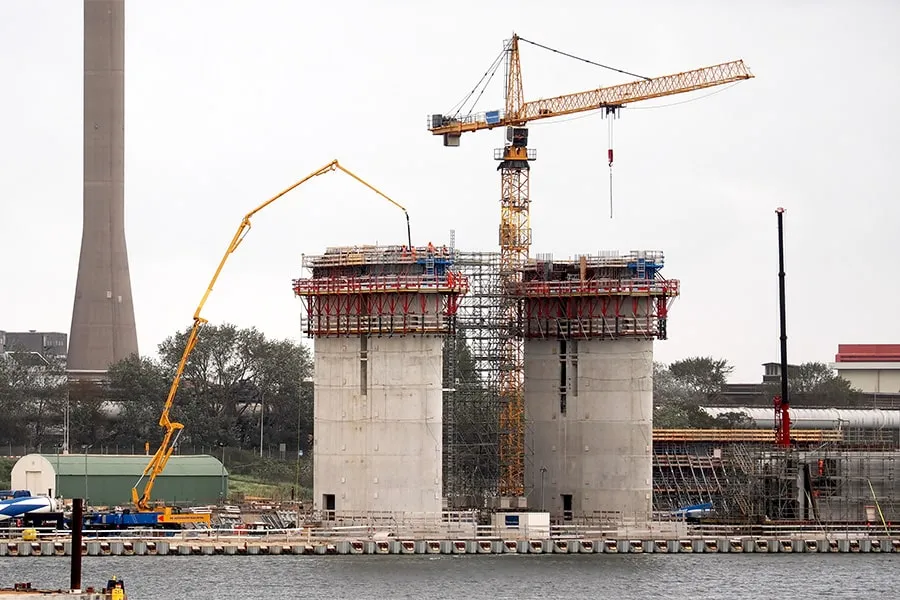
Building a salt barrier at Zeesluis IJmuiden
The construction of the salt barrier at Zeesluis IJmuiden is an impressive feat of Dutch hydraulic engineering. This special project, known as Selective Withdrawal, is being built on behalf of Rijkswaterstaat and carried out by the renowned construction company Van Hattum en Blankevoort. Jan Rienstra, who is responsible for environmental management during the project on behalf of Rijkswaterstaat, explains why the salt barrier is being built and why the project is so important for water quality.
The construction of the salt barrier at Zeesluis IJmuiden is a project that is impressive not only for its technical complexity, but also for its importance to water quality and sustainability. Jan describes it as an innovation in itself and a unique structure. “The construction is certainly no easy task. In fact, the salt barrier is a brilliant concept. It shows how Rijkswaterstaat continues to innovate to safeguard, among other things, good water quality and safety during construction work. Compared with the Noordersluis, the use of Zeesluis IJmuiden allows much more salt water to flow into the North Sea Canal. This is not in itself a problem for the North Sea Canal, but it is for the surrounding area, because of the negative effects on water quality, nature, agriculture and horticulture, and our drinking water. That is why we are building a salt barrier in the Binnenspuikanaal of the IJmuiden lock complex. It is a kind of (saltwater) letterbox, with an opening at the bottom of the barrier at a depth of between 16 and 23 metres. Because salt water is heavier than fresh water, it sinks to the bottom. The salt water flows through an opening at the bottom of the barrier and back out to sea via the Spui- en Gemaalcomplex. The salt barrier holds back the fresh water, which remains in the North Sea Canal.” Until the salt barrier is completed at the end of 2024, lock operations will be managed according to vessel demand to control salinity in the North Sea Canal. This means that, as well as Zeesluis IJmuiden, the Noordersluis will also be used to lock vessels through. Each vessel is assessed to determine whether it will pass through the Noordersluis or Zeesluis IJmuiden.
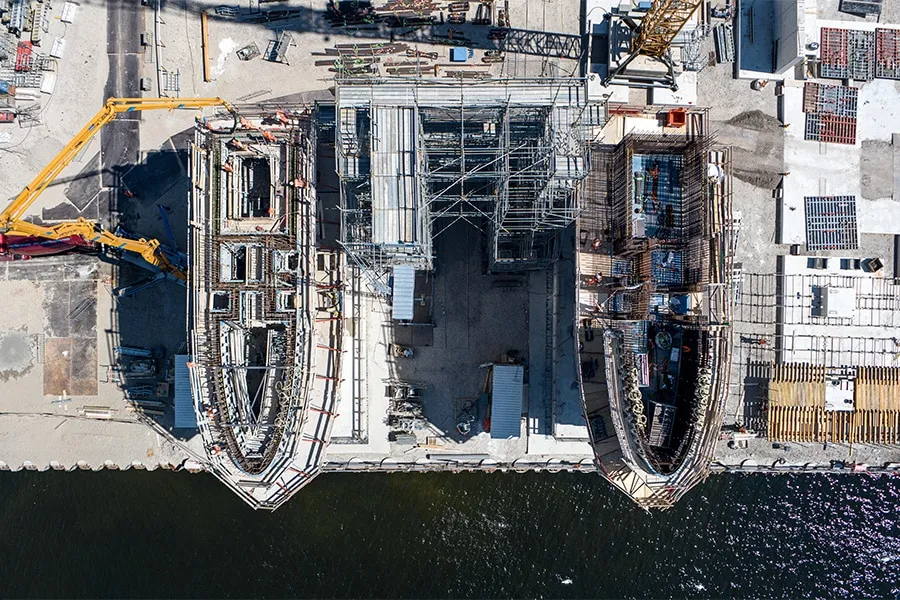
Scale model tests at Deltares
To make sure the salt barrier will function optimally, Rijkswaterstaat has carried out extensive tests on a 1:40 scale model at Deltares, a hydraulic engineering research centre. “These tests have given us valuable insights into how the salt water will behave under different conditions,” Jan explains. “These extensive tests are essential to ensure that the salt barrier achieves the desired effect.”
Underwater drones
One remarkable aspect of the salt barrier’s construction is the use of robotics. Rather than using human divers to inspect the sheet-pile walls, underwater drones make the task safer and more efficient. These robots carry out inspections and collect data without exposing divers to physical risks. This illustrates the project’s commitment to safety and efficiency, making use of new technologies.
Safety above all
Safety always comes first on a complex project of this kind. Building the salt barrier requires not only advanced techniques, but also a carefully considered safety plan. Jan emphasises that Rijkswaterstaat and Van Hattum en Blankevoort apply the highest standards to safeguard the safety of workers and the surrounding area. “Safety is our top priority. We have to ensure that construction proceeds safely, while also minimising noise and traffic disruption for local residents.”
A moment of anticipation: autumn 2024
Construction of the salt barrier is in full swing, and Jan Rienstra is eagerly looking forward to autumn 2024, when the barrier will be brought into operation. “This is an exciting moment for us and everyone involved,” he says. “Personally, I’m looking forward to seeing the statistics for the five-day average salinity. Will it actually fall once the salt barrier is in operation? If everything goes as expected, this will also be the moment to decide whether to bring Zeesluis IJmuiden fully into operation.”
Question about this story? Ask your question
Who worked on Selectieve Onttrekking
- construction companyVan Hattum en BlankevoortIn this story
- main contractorVan Hattum BlankevoortMentioned in Offshore diving experience proves invaluable on Selective Extraction project
- temporary steel structures
 Marsé MontageMentioned in Versatile specialist in steel temporary works presses ahead on the Selective Withdrawal
- lifting cushion and bearing
 TrelleborgMentioned in Trelleborg devises ingenious solution for Selective Extraction IJmuiden Sea Lock walls

Keep following this
Get an email when a new story is published. No account needed.
- ProjectSelectieve Onttrekking
- SubjectWater infrastructure
- CompanyVan Hattum en Blankevoort







