A feat of civil engineering by concrete specialist
Text Suzanne van GaaleImage Van Hattum en Blankevoort / Topview luchtfotografie
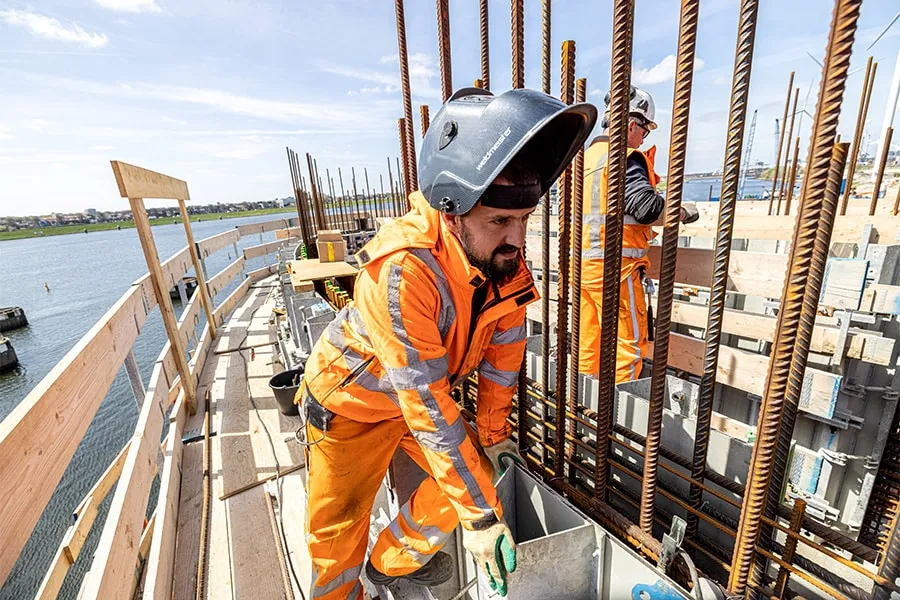
Selective Withdrawal structure calls for a meticulously thought-out plan
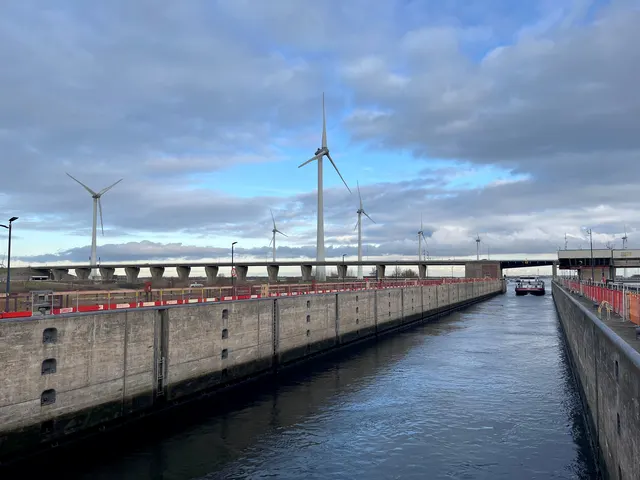
Van Hattum en Blankevoort is building the Selective Withdrawal measure in IJmuiden on behalf of Rijkswaterstaat. In practice, this means constructing a kind of ‘saltwater letterbox’ in the Inner Discharge Canal of the IJmuiden lock complex. The same principle is already used on a much smaller scale at the De Helsdeur pumping station in Den Helder. What makes the structure in IJmuiden unique is its scale. Rob Gordijn, environmental manager at Van Hattum en Blankevoort, offers a glimpse into the preparations made over the past year and looks ahead to how the salt barrier will work in 2024.
“Innovative, large-scale and complex”, is how Rob sums up construction of the salt barrier. “Think 44-metre-long tubular piles, two piers weighing 3,000 tonnes and 26 kilometres of anchors, and you get a sense of the sheer scale of this project. The largest crane vessel that can reach this site will be needed to transport everything. Our strength lies in designing and building striking concrete civil engineering structures of all shapes and sizes, and the salt barrier is certainly one of them. It is a fine example of a specialist concrete structure in a challenging location. There is an enormous amount involved.”
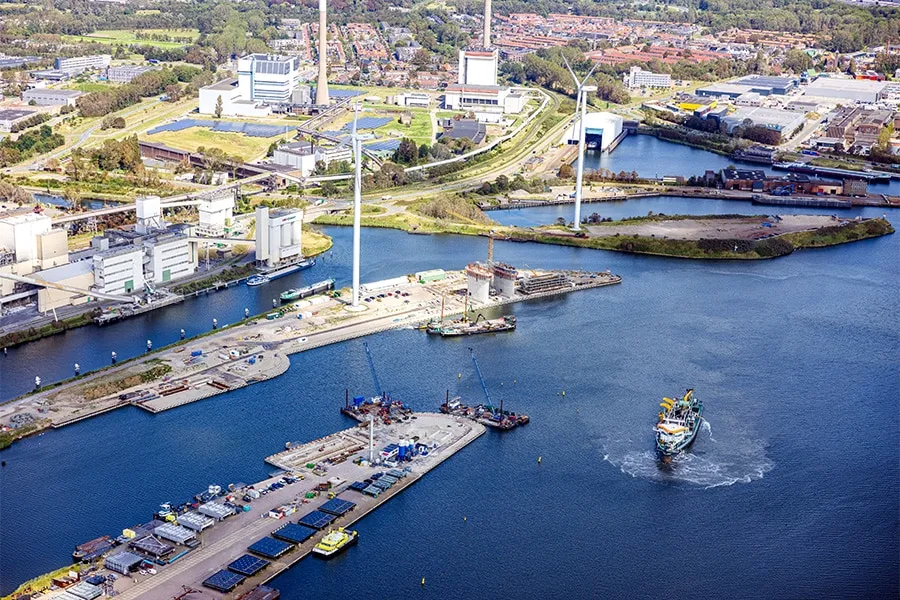
A commission with requirements
Rijkswaterstaat commissioned Van Hattum en Blankevoort to deliver the Selective Withdrawal measure. The hydraulic design, the dimensions of the letterbox and the shape of the piers had already been worked out. Van Hattum en Blankevoort was tasked with devising and developing the most suitable structure, and getting it to the site. A number of essential conditions applied. The Inner Discharge Canal had to remain open throughout the works, and the risk of flow slides, for example as a result of dredging, also had to be taken into account. “Water levels in the western Netherlands depend to a significant extent on the daily discharge through the Inner Discharge Canal,” Rob explains. “That means the canal cannot be closed. So the concrete structure for the piers and walls has to be built another way, on land. We will then put it in place in 2024.”
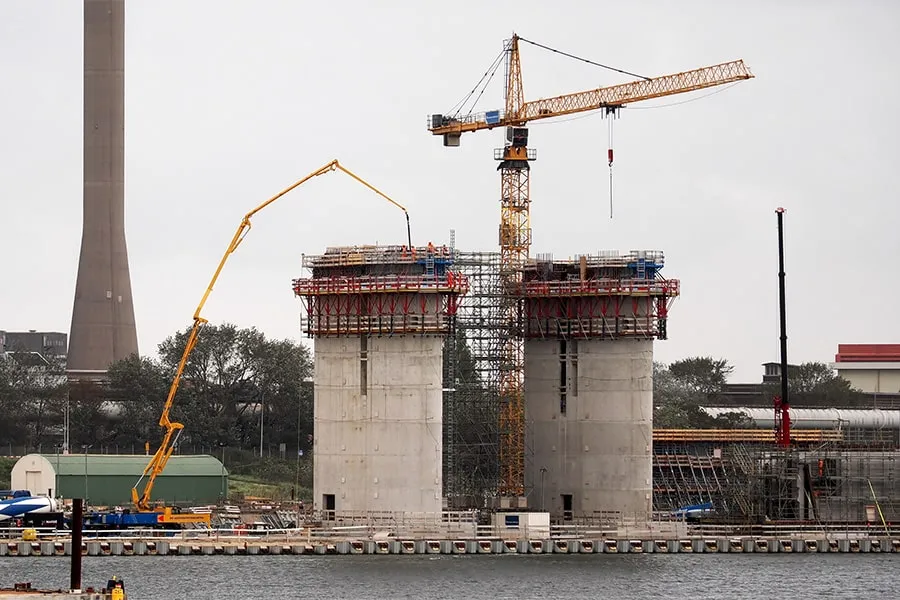
A tightly sequenced construction programme
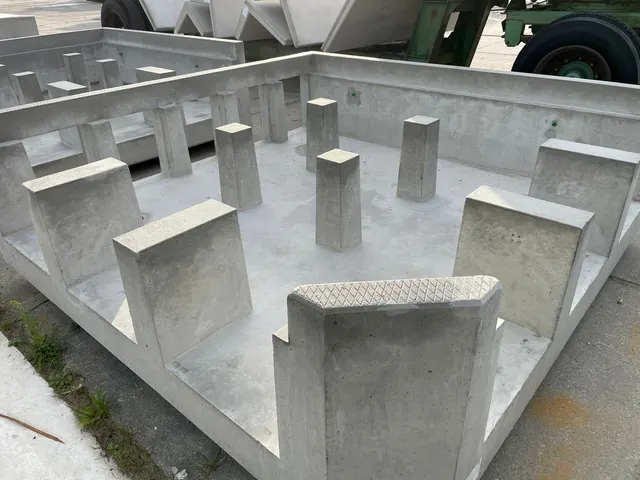
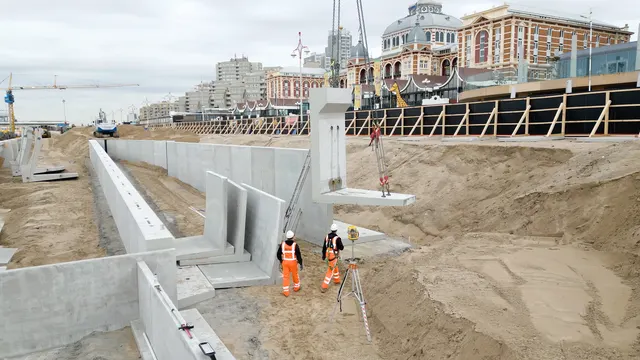
The schedule and sequence of the work require careful coordination. A retaining structure has been built along the canal banks. Tubular piles and sheet piles have been driven into the ground and anchored along almost 800 metres. Nearly 26 kilometres of anchors have been installed to hold the bank structure in place. Van den Herik then began dredging to deepen the canal. “Next, we will work on the site where the salt barrier will stand. That is where we will assemble it, but first we will install the piers in the canal. We will lower walls into place from above between the piers and the bank. These will also be prefabricated on the bank. This will effectively block the canal from above, while installing the walls creates the so-called letterbox opening at the bottom. This means that throughout the construction process we can gradually achieve the intended final situation without closing the canal.”
Nature takes its course
Dredging has been in full swing over the past year, and the retaining structure and combi-walls have been installed. Rob considers these important milestones. “Next year is the year when everything comes together. The project’s strength lies in the fact that the plan and schedule are progressing as intended. Installing the piers and walls will be the most spectacular parts of the project still to come. What is special is that once the structure has been installed and we are completing the work, the salt barrier will start functioning of its own accord. The laws of physics do the work. There is no ribbon-cutting ceremony, no bridge or viaduct opening. So this is anything but standard in our line of work. Combined with the excellent cooperation between all the parties involved, the fact that we are on schedule so far, and the project’s innovative nature, this makes it something truly special.”
Question about this story? Ask your question
Who worked on Selectieve Onttrekking
- construction companyVan Hattum en BlankevoortMentioned in An innovative project for water quality and safety
- dredgingVan den HerikIn this story
- main contractorVan Hattum BlankevoortMentioned in Offshore diving experience proves invaluable on Selective Extraction project
- temporary steel structures
 Marsé MontageMentioned in Versatile specialist in steel temporary works presses ahead on the Selective Withdrawal
- lifting cushion and bearing
 TrelleborgMentioned in Trelleborg devises ingenious solution for Selective Extraction IJmuiden Sea Lock walls


Keep following this
Get an email when a new story is published. No account needed.
- ProjectSelectieve Onttrekking
- ThemeFlood protection and climate-resilient water management
- SubjectConcrete
- CompanyVan den Herik