









Archaeological research reveals Roman infrastructure works
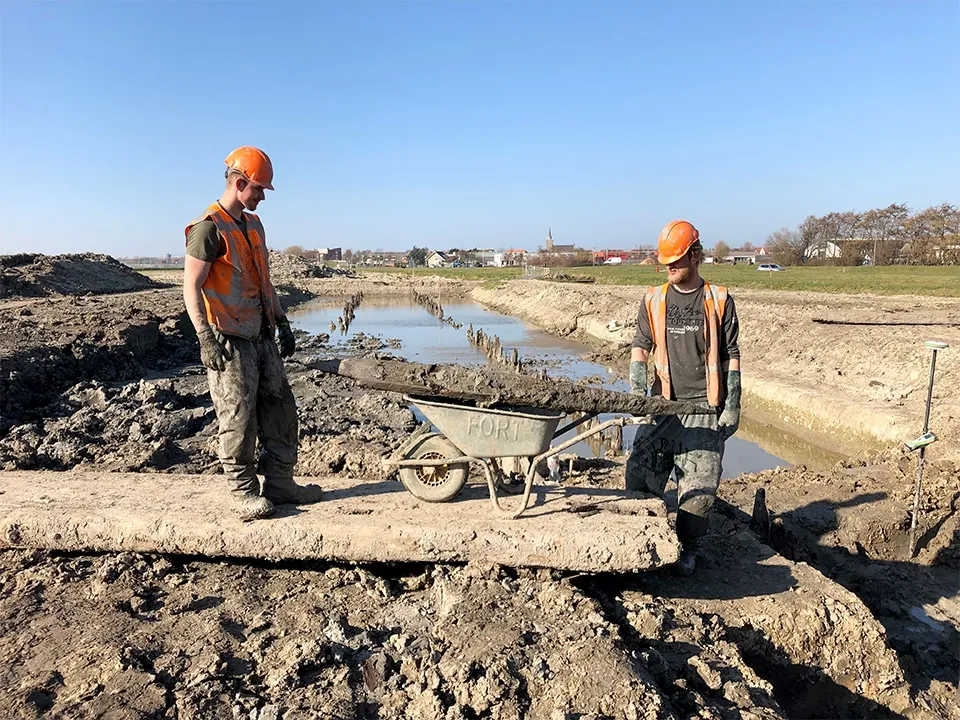
When René Isarin, archaeological adviser to the Province of South Holland, starts talking about the archaeological research along the RijnlandRoute, you listen carefully. It reads like a gripping story... in which Emperor Hadrian ordered (around 120 AD) that the border roads of the expanding Roman Empire be strengthened.
“If you are going to build somewhere, you need to plan the archaeology in good time”
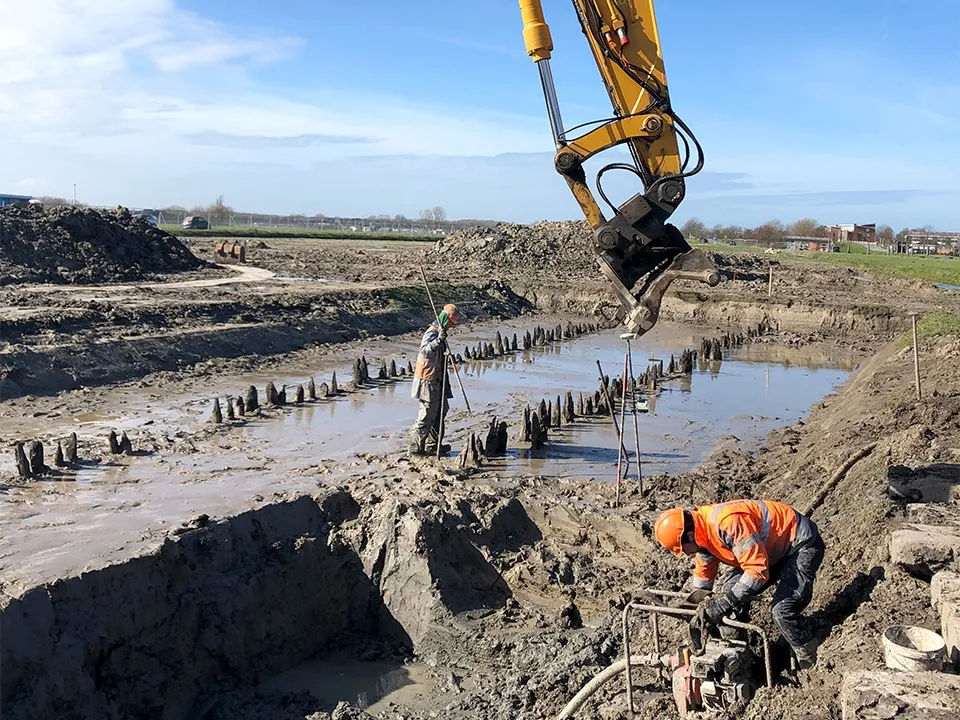
“Archaeological research is a lengthy process, and can be very challenging for the client. It starts with desk-based research, which may be followed by boreholes to investigate the soil profile. The findings may then lead to trial trenching. The final step is excavating a site, if there is no way to preserve it in the ground. Decisions about the process naturally have to be made during the archaeological investigation,” René explains. “I became involved in the RijnlandRoute after the desk-based research and borehole survey had been completed. There were plans of approach ready for me to review and put into effect. That was in 2016.” The investigations indicated a strong likelihood of finding archaeological material.
René continues: “There were three areas earmarked for investigation: the future Knooppunt Ommedijk, the Leiden West connection, where the Tjalmaweg joins it, and the Tjalmaweg itself, where Roman infrastructure had already been found in the 1980s. Lammenschans was later added as a fourth site, with archaeology dating from the Spanish period, the time of the Relief of Leiden. Fieldwork has now been completed, and the finds are being analysed and drawings prepared. The reports for Ommedijk and Leiden West are complete. The finds along the Tjalmaweg and at Lammenschans will be documented in early 2021. I will then give a seminar on behalf of the province, to help people connect with the story.”
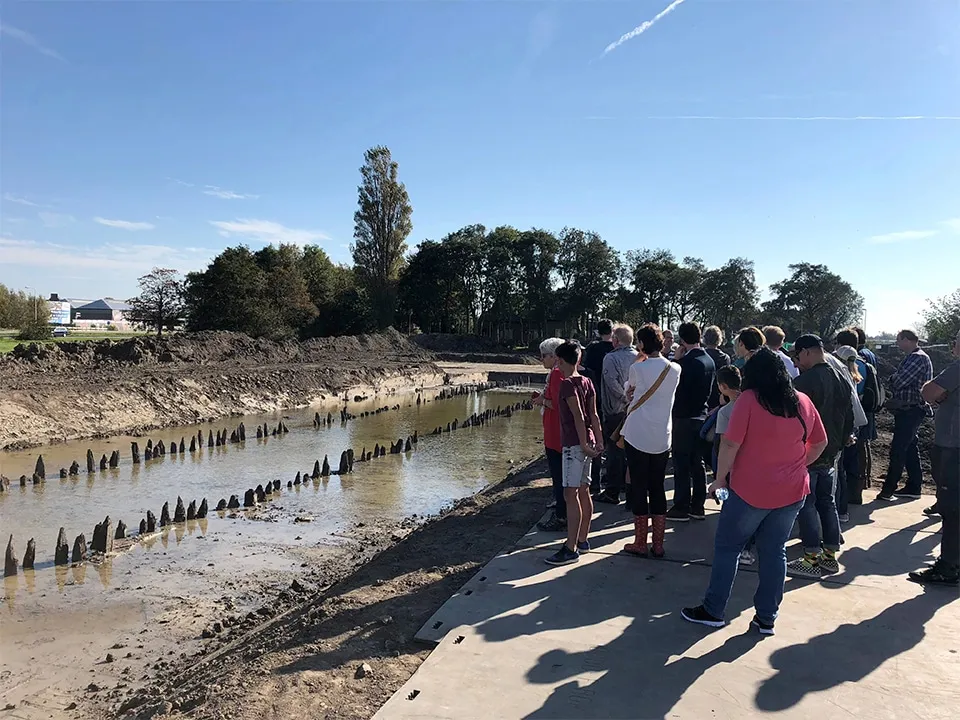
More than 10,000 wooden piles in one kilometre
One of the ancient roads we mentioned at the start lies deep underground within the RijnlandRoute project area. “The Environmental Impact Assessment for the RijnlandRoute was drawn up in 2014, and the first specific investigations were carried out then. We already knew from the 1980s that Roman remains lay along the Tjalmaweg in Valkenburg, so it was expected that finds would also be made along the RijnlandRoute.” René continues his account of Emperor Hadrian, who around 120 AD ordered the Roman Empire’s border roads to be upgraded. “The existing road had to be reinforced. Thousands of oak trees were felled in Germany and made into piles. These were transported here by water. Judging by the growth rings on the piles we found, the trees must have been felled in 123/124 AD. The piles required were delivered in bundles all along the Rhine. The tree trunks were split into six sections, like slices of a pie when viewed from the end. It was practical, because they were easier to drive into the ground.”
The wooden piles were driven into the ground at intervals of 20 to 30 cm. “We even know who did it! Just as contractors today put their logo on equipment, the ‘pile drivers’ carved their initials into the piles,” René says. The reinforced road must have been about 6 metres wide, with piles supporting it on both sides. “Earth was tipped between the piles, and every 2 metres tie piles were installed to strengthen this embankment. The road rose about a metre above the surrounding landscape. It was impressive engineering, too, because this construction method took account of the tidal landscape.” What makes the site remarkable is that, where infrastructure workers are working flat out on the road in 2020, their Roman counterparts were doing the same almost 1,900 years ago. “That has to stir something in you if infrastructure runs through your veins,” René says with a sigh.
500 years of Roman occupation
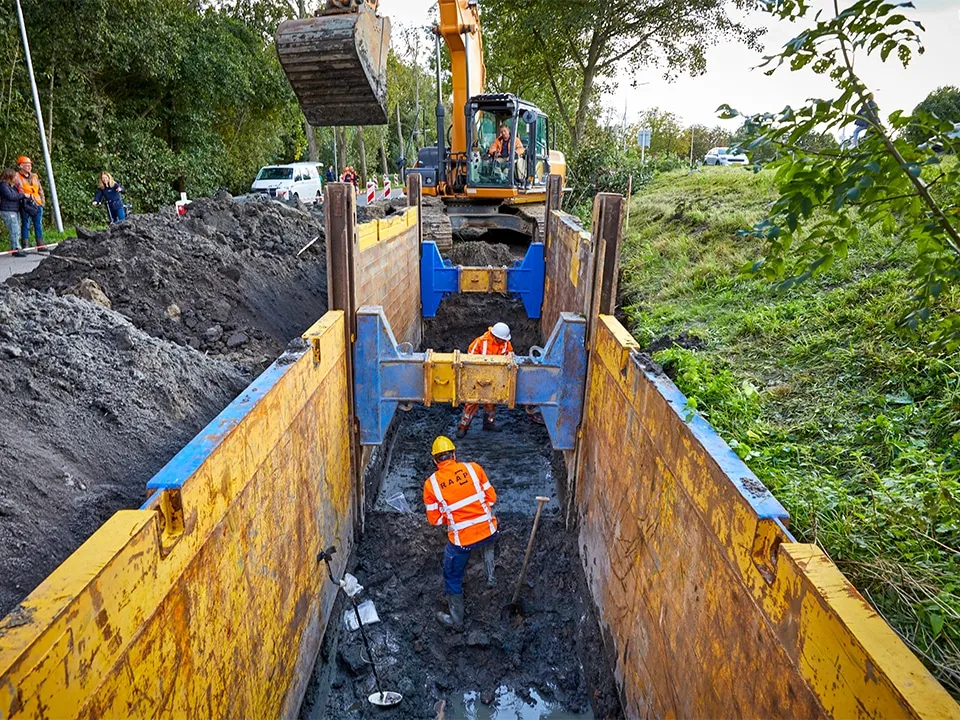
René sees similarities in the way work was done then and now. “Just imagine how impressive it was to be working with such planning and structures as early as 70 BC. The Romans were here for about 500 years. Infrastructure was hugely important to them, just as it is to us. Today, the N206 serves the flower industry. In Roman times, the economy was flourishing and ports were built. Trade took place, for example in grain. Soldiers and civilians interacted, and settlements were established.”
As a tribute to the past, a work of art made from the original Roman timber will be installed where the HOV bus stop is planned. “In this way, we are giving residents and visitors a glimpse of what happened at this historic site almost two millennia ago,” René concludes.
Archaeology and the RijnlandRoute
The Province of South Holland is rich in archaeological heritage. Archaeology tells the story of our history and the many cultures that have shaped the province over the centuries. The province aims to document the archaeological sites in the RijnlandRoute project area and, where necessary, safeguard, conserve and preserve the finds. In this way, the Province of South Holland protects its archaeological heritage, and with it its cultural history, while making it accessible to as wide an audience as possible.
Question about this story? Ask your question
Who worked on RijnlandRoute
- technical modules
 Croonwolter&drosMentioned in RijnlandRoute tunnel technology: a report from the heart of the operation
- anchor plates and plates for shoring supportsDe Boer StaalMentioned in Made-to-measure steel for the RijnlandRoute bored tunnel
- custom-cut steel componentsDe Boer SnijbedrijfMentioned in Made-to-measure steel for the RijnlandRoute bored tunnel
- clientProvince of South HollandMentioned in World first: sunlight in the tunnel delivers major energy savings
- contractors' joint ventureVINCI Construction Grands ProjetsMentioned in Er wordt hard gewerkt aan het “nieuw Leids Ontzet”
- contractors' joint ventureDEME Infra Marine ContractorsMentioned in Er wordt hard gewerkt aan het “nieuw Leids Ontzet”
- compressed air systemBOGE KompressorenMentioned in Energy-efficient compressed air system keeps tunnel bore under pressure
- temporary traffic measuresTraffic & MoreMentioned in Driving the right way is less straightforward than many people think
- traffic engineering expertMAP Traffic ManagementMentioned in Diverging Diamond Interchange: een stukje Amerikaans verkeersinzicht op Nederlandse bodem
- international contractor consortiumDIMCOMentioned in RijnlandRoute: The tunnel on the N434 is named Corbulotunnel
- pile breaker combinations
 van der JagtMentioned in More than 60 years of expertise provide a solid foundation for structures on the RijnlandRoute


Keep following this
Get an email when a new story is published. No account needed.
- ProjectRijnlandRoute
- SubjectUnderground infrastructure







