









Strategic clay extraction speeds up sustainable dike reinforcement
Text Roel van Gils Beeld Aannemingsbedrijf J. den Boer
For large-scale dike reinforcement projects, the distance between the extraction site and the worksite has a major impact on the efficiency and sustainability of the work. Thanks to the strategic location of its clay pit in Winssen, contractor J. den Boer can deliver large quantities of clay quickly and with minimal transport movements. Combined with electric transport on the dike, this makes an important contribution to the sustainable delivery of this major dike reinforcement project.
Cooperation with Dijkalliantie Neder-Betuwe began at an early stage. “We agreed with the alliance on the use of electric equipment during the tendering phase,” says Ton Kuijs, director of contractor J. den Boer. “After the alliance was awarded the contract, an intensive preparation period followed, focusing on logistics, material flows and emissions reduction.”
Just 50 minutes by boat
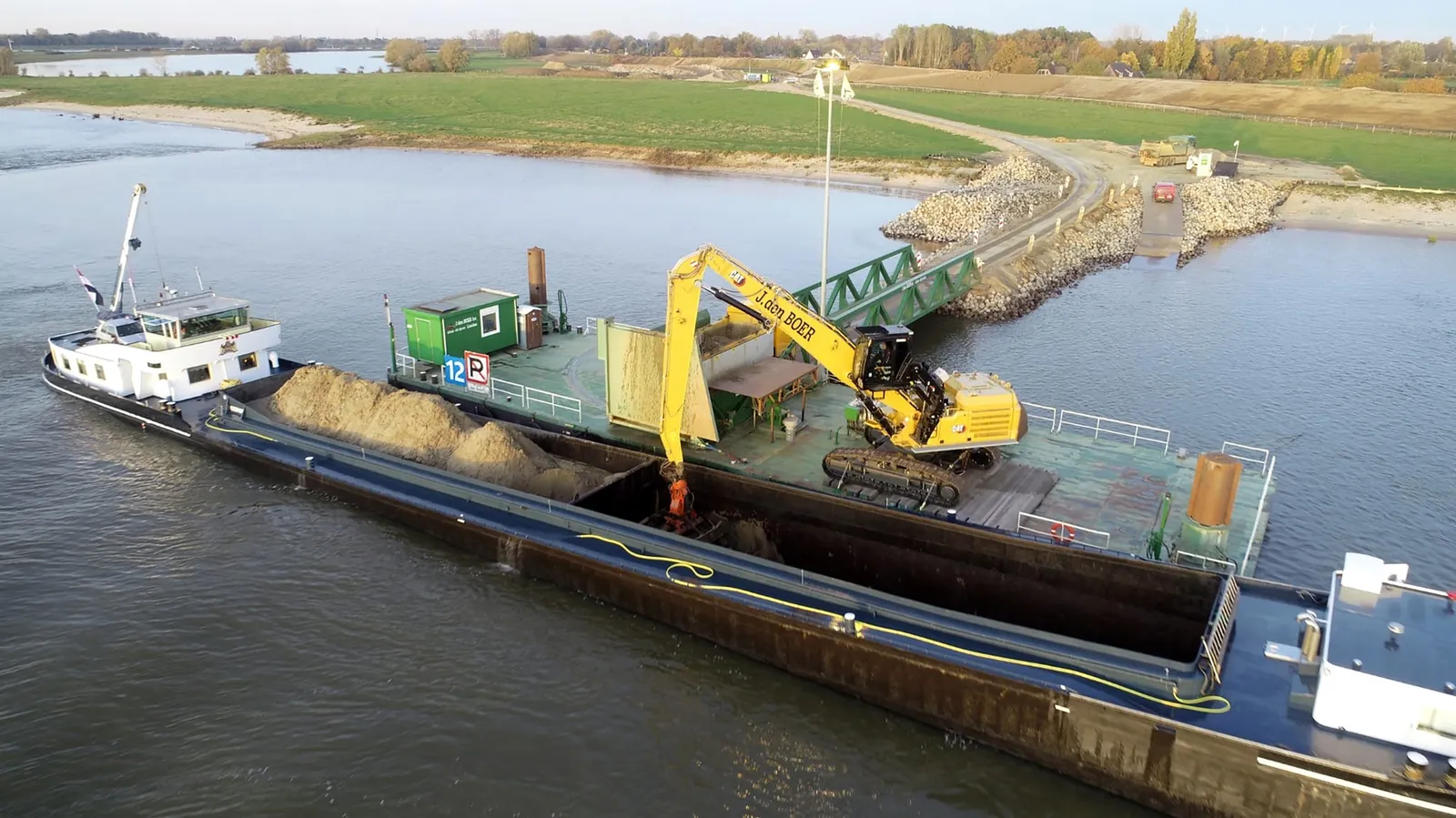
The strategic location of J. den Boer’s clay extraction site in Winssen is an asset to the project. “It is less than an hour’s sailing from the project area,” says Ton. “That means we can deliver large quantities of clay efficiently.” J. den Boer has already extracted 2.3 million m3 of clay from the pit for other dike reinforcement projects, including Tiel-Waardenburg and Gorinchem-Waardenburg. “A lot of clay has also gone to the Afsluitdijk, and we supply the pit’s output to smaller projects and the ceramics industry. Our initial scope for the Dijkversterking Neder-Betuwe project is to supply 250,000 tonnes of erosion class 1 clay, a slightly heavier clay intended for the protective top layer of the dike.”
Electric tipper trucks
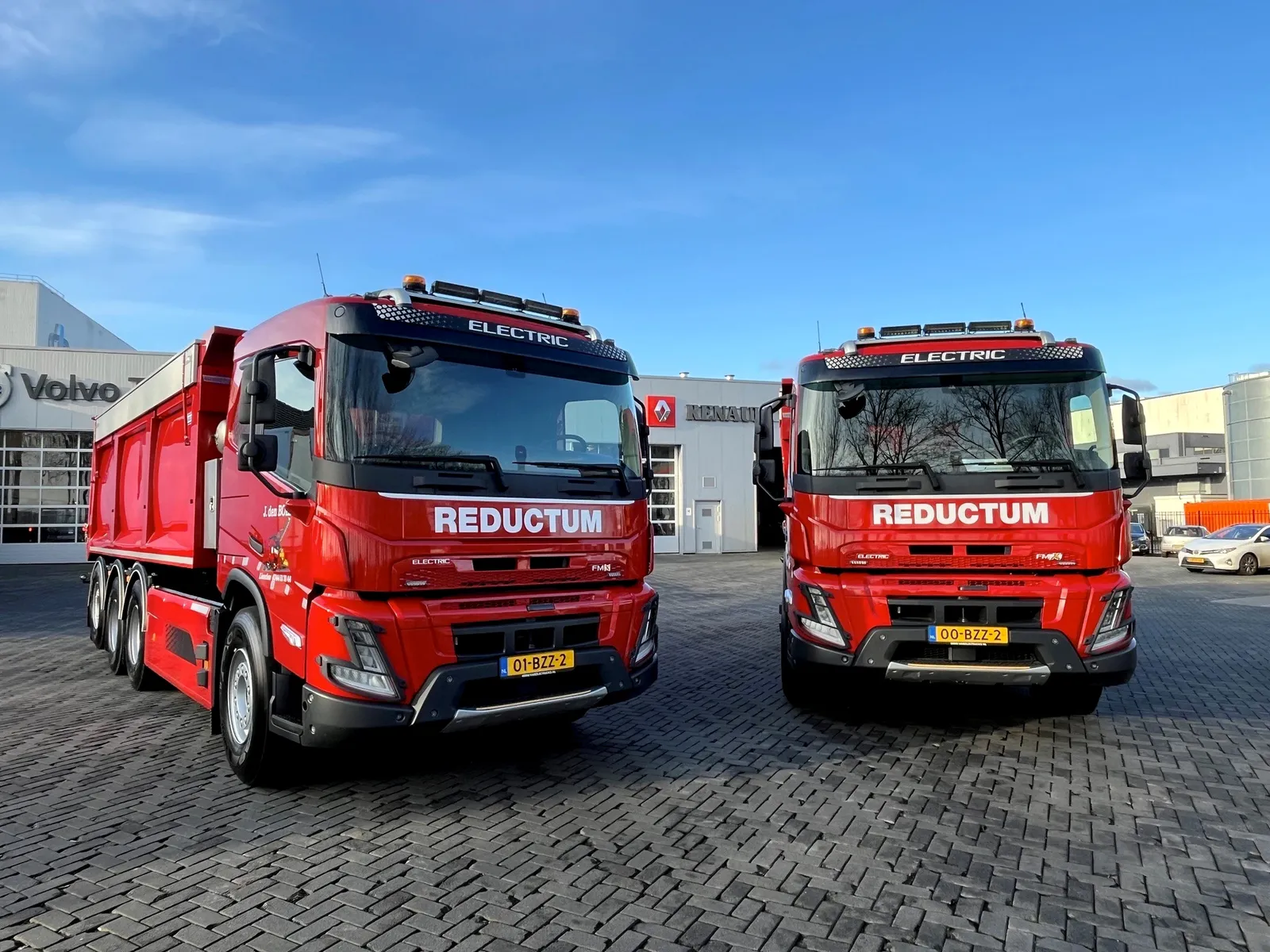
J. den Boer began the first clay deliveries to the project in February 2026. The clay is delivered by ship, unloaded and then transported around the site by electric tipper trucks. The alliance has reserved two electric Volvo 8×4 tipper trucks from J. den Boer specifically for this work. “Every day, they transport the earthworks materials around the site with the other electric lorries and tractors, with no emissions,” says Ton. “The vehicles run continuously between the unloading quay and the work area. By charging them overnight at the newly built charging hub at Lingemeer, the trucks are ready for work again first thing the next morning.”
The project is much larger in scale than the initial package of work. “Ultimately, we will deliver different grades of clay. In addition to erosion class 1 clay, other types are used depending on their function in the dike structure. Erosion class 3, for example, is used for the inner core, while erosion class 2 is generally used for the outer layer, where grass turf grows,” Ton explains. J. den Boer can supply these grades too. “Because our clay comes from a large extraction site, we can guarantee continuity of supply and quality.”
●
Question about this story? Ask your question
Who worked on Dijkversterking Neder-Betuwe
- contractorconstruction company J. den BoerIn this story

Keep following this
Get an email when a new story is published. No account needed.
- ProjectNeder-Betuwe dyke reinforcement
- ThemeFlood protection and climate-resilient water management
- SubjectWater infrastructure
- Companyconstruction company J. den Boer







