A partner in going emission-free, not just a machine supplier
Text and images Armand Landman
One battery swap: a full day’s work
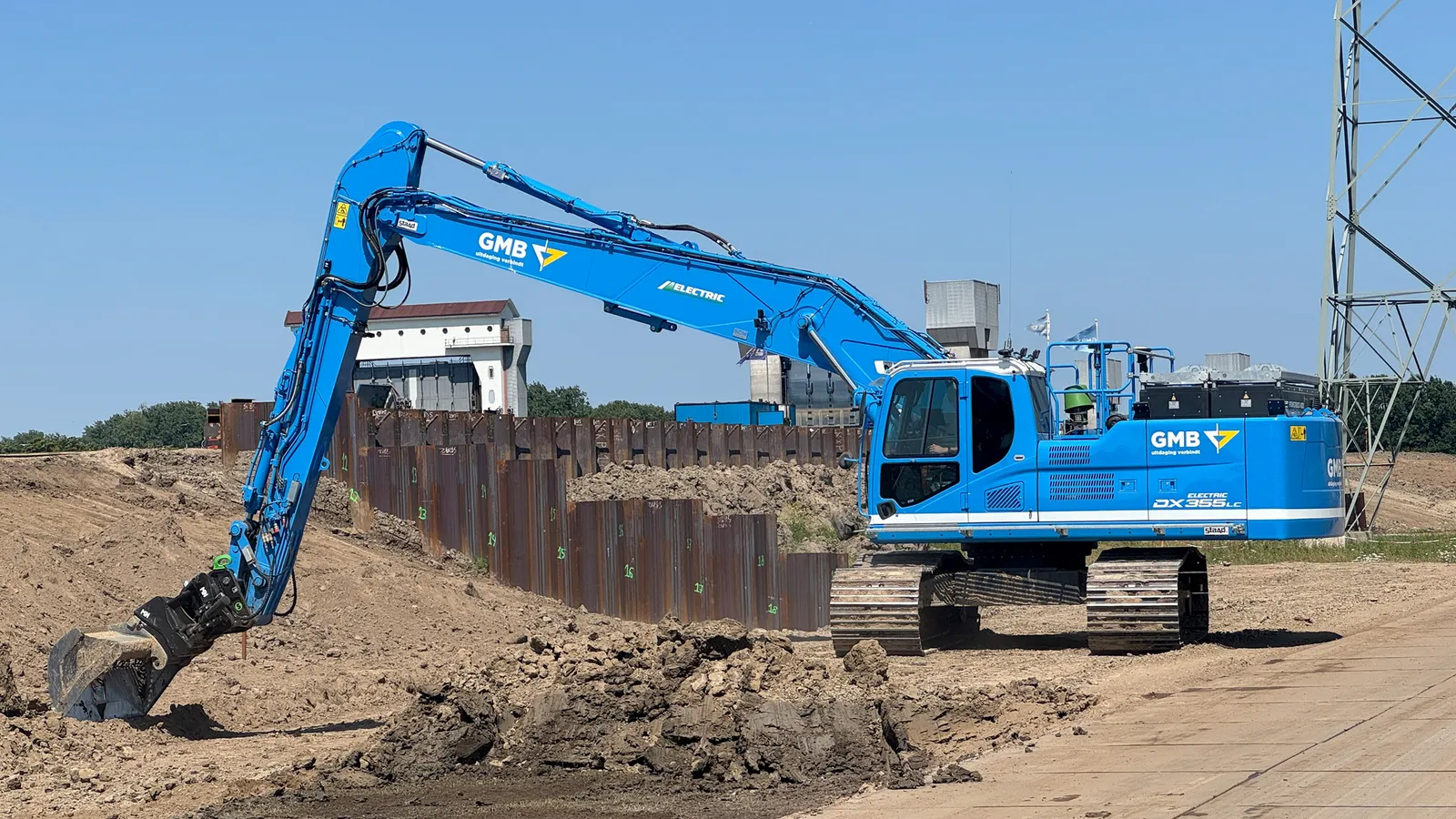
Along the Waal near Ochten, GMB’s new electric crawler excavators are working on the Neder-Betuwe dike reinforcement project. This is no trial set-up or demonstration, but heavy earthmoving from early morning until the end of the working day. Operators Anton Molenaar and Jurgen Kruis notice above all what is absent: engine noise, exhaust fumes and the loss of power from a diesel engine.
If you follow the sound of engines near Ochten, it is easy to walk straight past GMB’s new excavators. On the Waalbandijk, tracks crunch over the sand, a bucket breaks up the rubble road and the hydraulics hiss with every movement. The familiar roar of a diesel engine is missing. Meanwhile, Anton Molenaar carries on working in the cab.
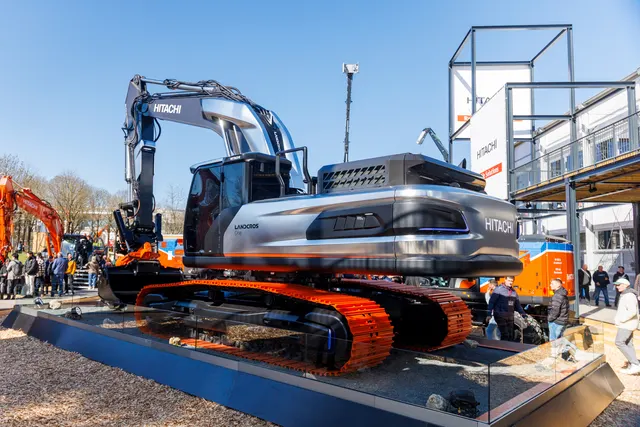
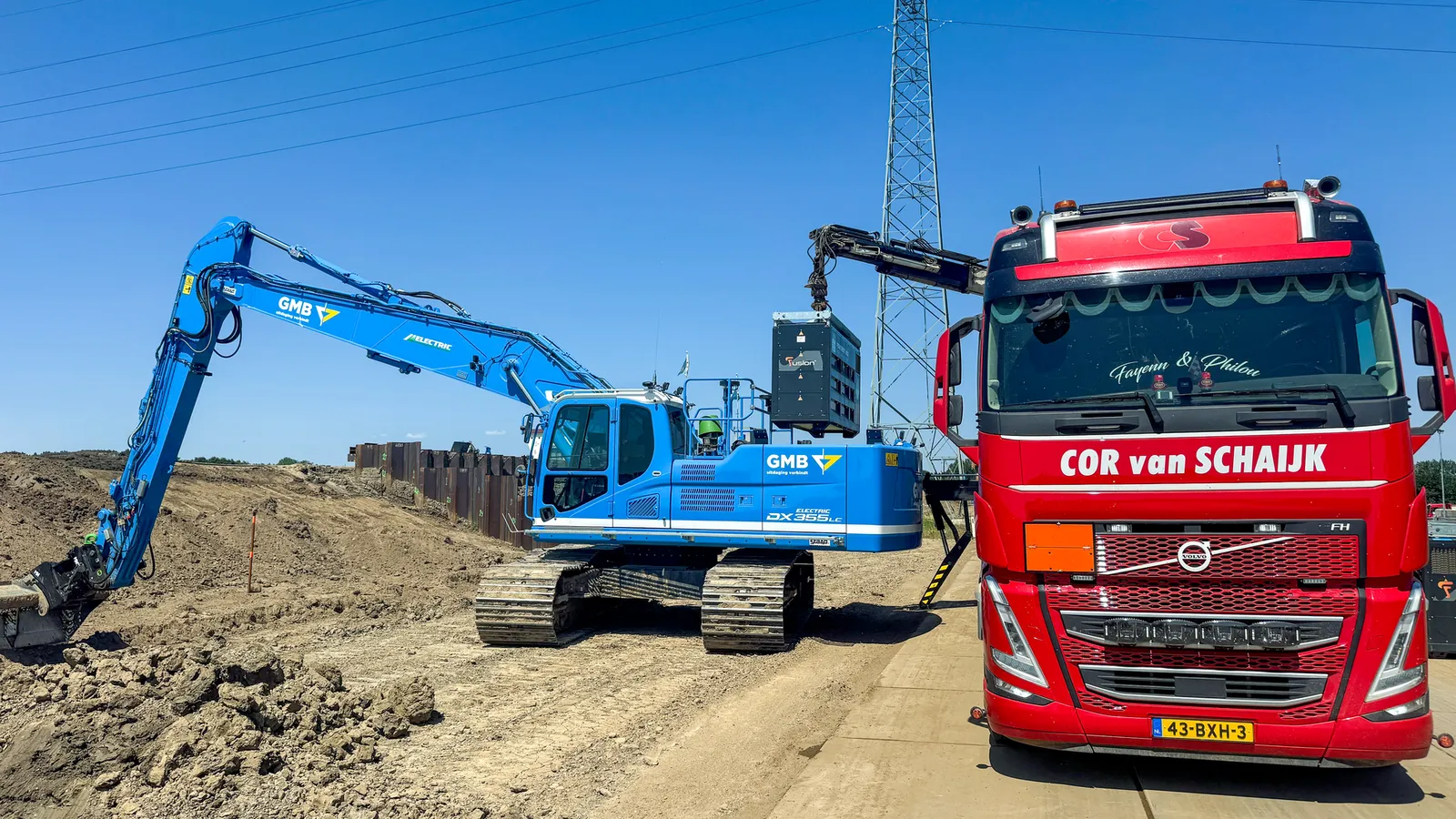
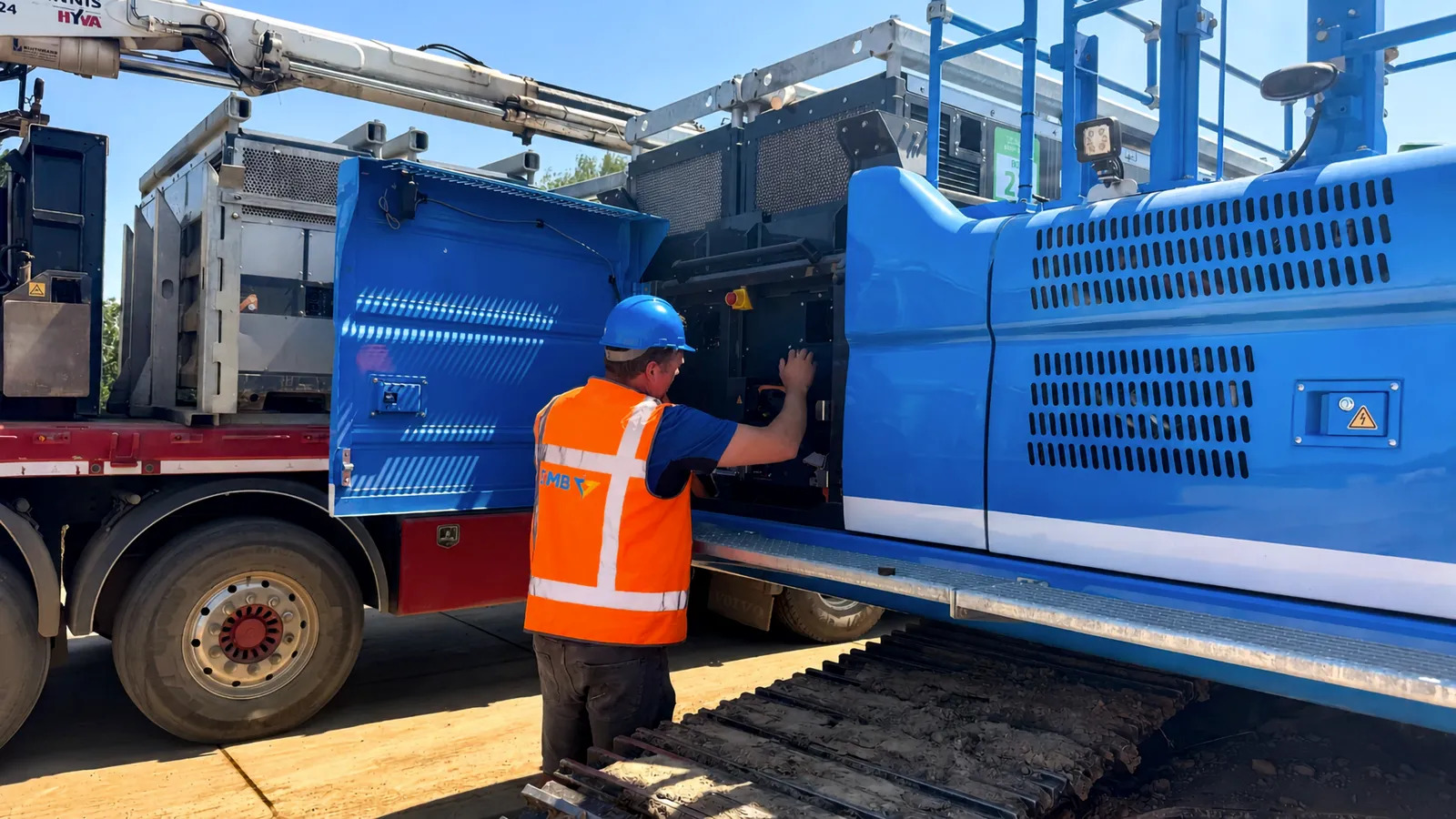
His DX355LC Electric is a 35-tonne electric crawler excavator with a boom extended to 12.3 metres. This is no light work. The machine digs deep and places material high, exactly the kind of work that takes a lot of energy. Yet the two Powerbox 400 battery packs are swapped just once a day. The earthmoving machine gets a full set in the morning, then runs for the entire working day. According to the operators, the swap itself takes no more than four to five minutes. “The electric motor delivers its maximum torque immediately,” explains Staad sales specialist Frank Verbij. “So the revs don’t drop when the machine is under heavy load.”
Power
Anton now has more than two and a half years’ experience with electric equipment. “Ultimately, it’s still a hydraulic excavator. Only the drive is different.” He notices the biggest difference in the way power is delivered. A diesel engine has to keep compensating under load, while the electric motor delivers power evenly. “There’s less of a dip and a continuous flow of oil. The machine just keeps pulling.” He also expects benefits for the hydraulics: fewer fluctuations could mean less wear on the pumps.
Colleague Jurgen Kruis is equally matter-of-fact. “You don’t really notice any difference in the way it operates. It’s mainly the things around it that are different.” The plug must be disconnected and the release operated correctly before a battery swap, and the start-up procedure requires a set sequence. If you rush, you can skip a step. “You need a little time to get used to those things.” The new electric machines help the operator with this, says Frank. “For example, an interlock prevents the battery from being swapped while the charging plug is still connected.”
The crawler excavators are being used on the Neder-Betuwe dike reinforcement project for Waterschap Rivierenland and Dijkalliantie Neder-Betuwe, a partnership between Dura Vermeer, Ploegam and GMB. The entire section along the northern bank of the Waal is 20.2 kilometres long. Work has started on the first nine kilometres between Tiel and Ochten. Strict rules govern how much of the dike can be opened up. The Waal can rise quickly, so only a limited length may be open at any one time for each earthmoving machine, allowing the work to be closed in time in the event of high water.
Selection
For GMB, the purchase is part of a broader plan. The family-owned company aims to work emission-free by 2030 and began phasing out diesel equipment, lorries and company cars years ago. “We didn’t just want to buy an electric machine, we wanted to find a partner we could build on,” says Pascal Ogink, head of operations at GMB. He represents the operators and site managers in the selection and purchase of equipment.
The requirements were clear: interchangeable batteries, enough capacity for a full working day and, preferably, a single supplier for both crawler and wheeled excavators. Fixed, heavy-duty charging facilities are not available everywhere on dikes. Separate battery packs make it possible to bring the energy to the machine.
GMB had machines from several suppliers tested on projects. Operators worked with them for a day and reported on stability, speed, tyres, range and controls. GMB then assessed the candidates on functionality, price and collaboration. Staad and its electric machines came out on top. Frank made a point of staying close to the operators during the tests. “They can tell straight away whether a machine feels right, is not stable enough or has a boom configuration that doesn’t suit the work. With that information, you can give targeted advice.”
Tailored specification
The next step was to work through the details. GMB and Staad drew up a build specification for each machine. It covers not only the boom length and the heavier counterweight, but also the position of screens, joystick functions, lighting, cameras, decals and grease points. “The operator is in there all day, so their workplace needs to be right,” says Pascal. Three of the four DX355LC Electric crawler excavators ordered will have the same long boom; the fourth will have a shorter, more powerful configuration.
The total order comprises four electric DX355LC crawler excavators, two electric DX165W wheeled excavators and four additional Powerbox 400 battery packs. GMB also ordered three conventional Develons for work where electric power is not yet always viable. On the Neder-Betuwe project, the contractors also share a pool of 24 battery packs. Using a single platform makes swapping, charging and sharing equipment considerably easier. “You need to view the machine and its energy supply as a single system,” says Frank. “Even without a fixed connection at every worksite, you can keep working emission-free with a charging hub and swappable batteries.”
For Staad’s sales specialist, the collaboration really begins after delivery. Operators can call him directly, and their experience in the field feeds into future configurations. “We can do something with critical feedback. It makes the machines better,” says Frank.
On the dike, the bucket sinks into the embankment once again. The long boom extends, the upper structure turns, and tens of tonnes of steel and earth move in silence. There is no noisy announcement of electric working here. It simply gets on with the job.
grondverzetdagen
Want to experience an electric crawler excavator for yourself? At Staad’s Grondverzetdagen on Friday 18 and Saturday 19 September in Veghel, you can take a close look at the machines featured in this article and try them out for yourself.
Have a business enquiry for Staad BV? Get in touch
Who worked on Dijkversterking Neder-Betuwe
- contractorconstruction company J. den BoerMentioned in Strategic clay extraction speeds up sustainable dike reinforcement

Keep following this
Get an email when a new story is published. No account needed.
- ProjectNeder-Betuwe dyke reinforcement
- ThemeFlood protection and climate-resilient water management
- SubjectMachines & equipment
- CompanyStaad BV
- CompanyGMB