









Restoration of Hunsingosluis is a true craft
Text Roel van Gils Image Oosterhof Holman
Family business demonstrates its versatility
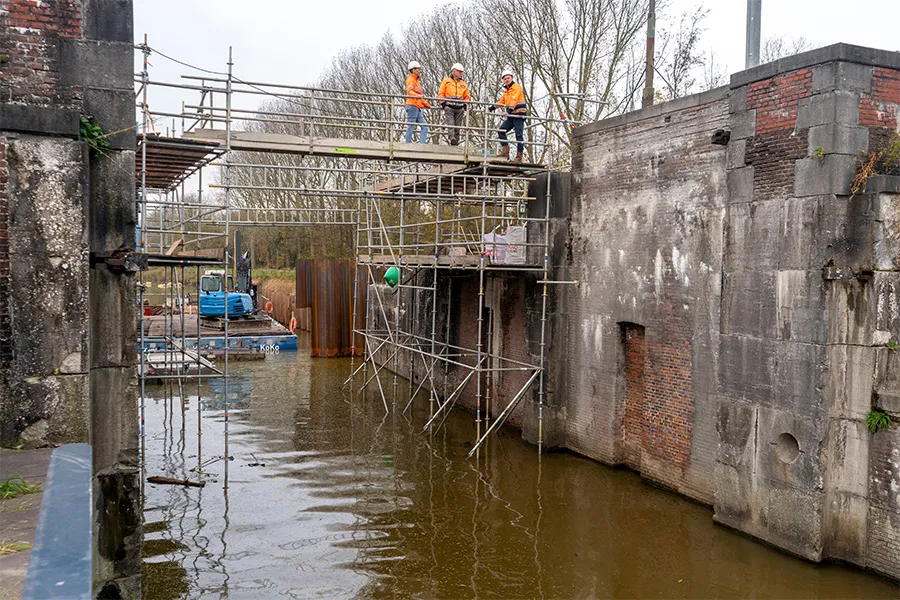
To protect the Groningen village of Zoutkamp from high water at least until 2050, a new pumping station is being built and the historic Hunsingosluis, dating from 1859, is being transformed from a former sea lock into a navigation lock. Koninklijke Oosterhof Holman is undertaking the full restoration of the historic structure, but its remit goes much further. The 112-year-old family business is manufacturing the new wooden lock gates and steel fendering in-house, and has even made the entire construction site more sustainable with sister company Elize Energie.
Oosterhof Holman is working in Zoutkamp on behalf of Strukton. The two companies have a long history together. “We complement each other well,” says Taeke Visser, managing director of Oosterhof Holman Beton- en Waterbouw. “For water authority Noorderzijlvest, we previously completed the ‘17 bridges programme’ successfully, working closely with Strukton as part of a construction team. De Blauwe Loper, Europe’s longest cycle bridge, is another example of a recent successful collaboration. Although on paper we are a subcontractor on Nieuwe Waterwerken Zoutkamp, here too we are working more as partners. Initially, during the tender, we provided capacity and proposed solutions that helped secure the winning bid. This also led to the intention to continue working together during the delivery phase, on the restoration of Hunsingosluis.”
Respect for the historic structure
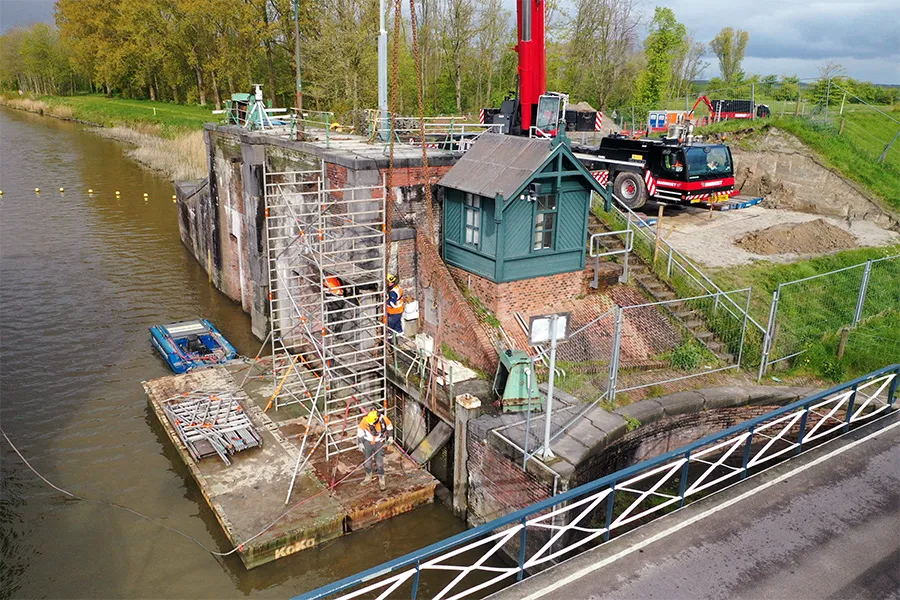
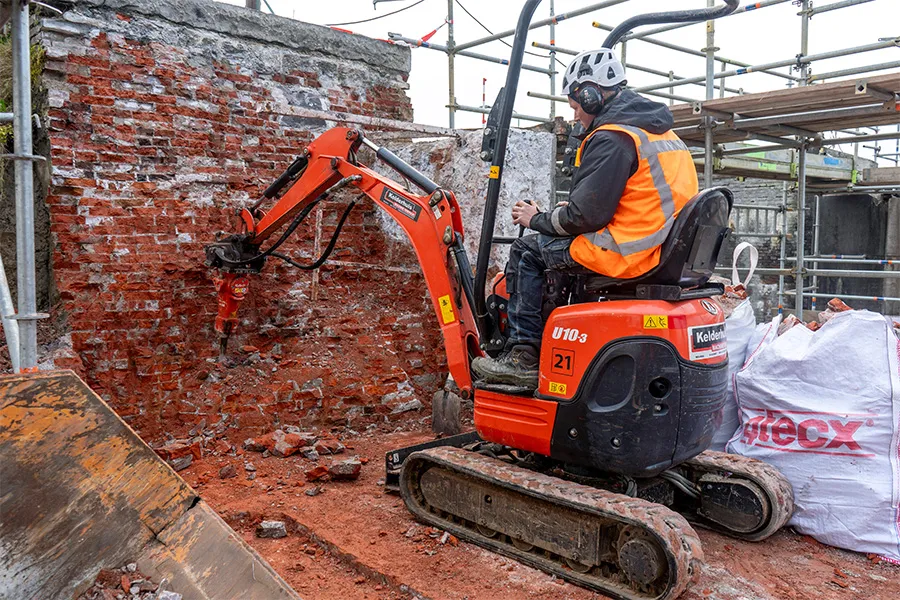
In its new configuration, historic Hunsingosluis will form part of the new navigation lock. “Strukton is responsible for the new construction, while we are restoring the existing lock,” Taeke continues. “That is Oosterhof Holman’s specialism: restoration that respects the historic structure. Even so, there is also a substantial demolition task, because the drive points for the new gates are being integrated into the lock wall.” Jan Sluiter, project manager at Oosterhof Holman Beton- en Waterbouw, agrees and adds: “The lock also has quite a lot of deferred maintenance. Much of the brickwork is in poor condition. It will be our job to determine where to draw the line, of course in consultation with the restoration architect. But we will only know once work starts in February 2025. The condition of the brickwork beneath the natural stone coping slabs is also difficult to assess at this stage.” The coming months will be busy in the lock, Taeke says with a laugh. “Because it all has to be done in a single season.”
Mortars made to an old recipe
For the extensive restoration of Hunsingosluis, Oosterhof Holman is working with a number of regular partners. Jan says: “For the brickwork, we draw on the expertise of Siegersma, while the natural stone restoration is being carried out by Meesters In.
We recently completed a similar project with this team, fully renovating the historic Aduarderzijlen lock complex. Here in Zoutkamp, we will be using mortars made to an old recipe. It is a true craft. The mortar sets slowly, so you cannot work at today’s speeds. You are also dependent on the weather. Too cold or too wet is disastrous. It requires great care. We will not clean the lock by blasting it completely either. The aim of the historic restoration is to make the restored lock look as old as possible, so that the contrast between the existing structure and the new section built by Strukton remains clearly visible.”
New lock gates
Initially, Oosterhof Holman’s experts also looked into whether the old wooden lock gates could be salvaged, but they proved to be in too poor a condition. “The gates were removed and thoroughly inspected at our site in Harlingen. They were then definitively rejected,” says Taeke. “We are currently building a set of three new wooden gates, each 9.60 metres high and 5 metres wide. The old steelwork on the lock gates will, however, be given a second life. For example, the capstans for manual operation are being restored in our steel workshop and will have a ‘ceremonial function’ on the new gates, which will be operated electromechanically. The intention is to retain as many old elements as possible, provided this is technically feasible and does not compromise safety. The fendering is also within our scope, although this is not restoration work. We are preparing it entirely in our workshop and will install it in front of the new lock, against the tubular piles that we are driving using our own vessels.”
Sustainable thinking
The Nieuwe Waterwerken Zoutkamp project showcases Oosterhof Holman’s versatility. “We have a great many disciplines within our company and make good use of one another’s expertise,” says Taeke. You can even leave the task of making a construction site more sustainable to Oosterhof Holman’s experts. Around twelve years ago, the company set up a sister business for this purpose. “We work towards sustainability because we believe in it, but in a realistic and practical way that gives it a chance of succeeding,” says Aletta Zwart, business unit manager at Elize Energie. “We do this for our parent company, but also for third parties. For Nieuwe Waterwerken Zoutkamp, we installed solar panels and provided charging infrastructure on behalf of Strukton.” And speaking of sustainability and circular use of materials, Oosterhof Holman tries to combine work wherever possible. “Opportunities to combine projects are being taken in Zoutkamp, where we have been commissioned to build two wooden jetties. For the foundations, we are using sixty mooring piles recovered from one of our projects in Alkmaar,” Taeke explains. “We guarantee they will have the same service life as new piles.”
Busy times lie ahead for Oosterhof Holman in Zoutkamp. “We start in February next year, and everything must be completed eight months later.” The family business is no stranger to the area. “We have a multi-year maintenance contract with the municipality of Het Hogeland for roads, civil engineering structures and the water system. It is quite a job, as Het Hogeland is the second-largest municipality in the Netherlands by area.”
A business enquiry for Strukton Civiel? Get in touch
Who worked on Waterwerken Zoutkamp
- water boardWaterschap NoorderzijlvestMentioned in Zoutkamp pumping station is also ‘nature-inclusive’
- restoration of the listed sectionKoninklijke Oosterhof HolmanIn this story
- masonrySiegersmaIn this story
- natural stone restorationMeesters InIn this story
- Pumping station pumps
 Stork PompenMentioned in One of the world’s largest fish-friendly submersible pumps

Keep following this
Get an email when a new story is published. No account needed.
- ProjectWaterwerken Zoutkamp
- SubjectWater infrastructure
- CompanyKoninklijke Oosterhof Holman
- CompanySiegersma
- CompanyMeesters In
- CompanyStrukton Civiel







