









Complex ground conditions, innovative solutions
Text Roel van Gils Beeld Strukton en Waterschap Noorderzijlvest
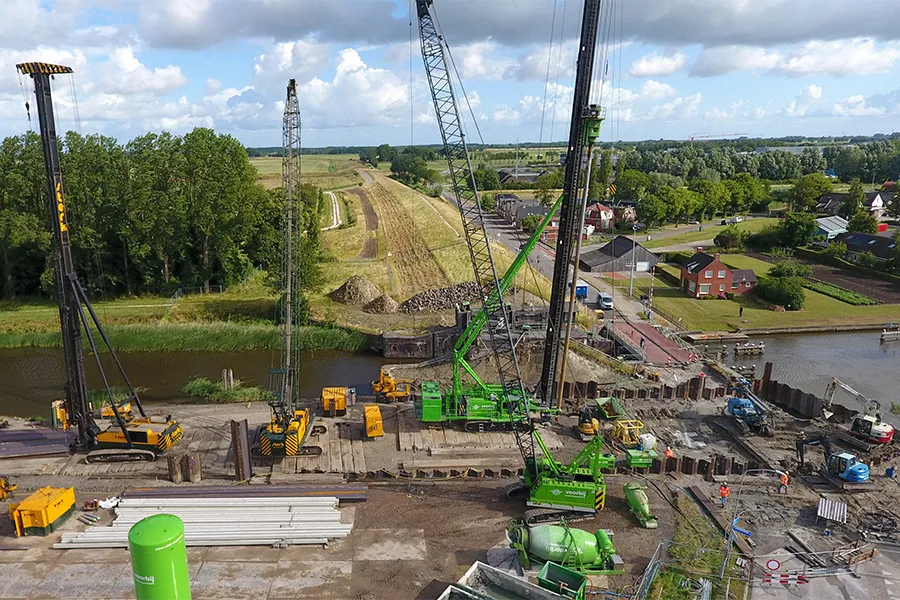
Zoutkamp and its surroundings are characterised by a complex subsurface, with alternating overconsolidated sand layers and pot clay. This poses considerable challenges for the Nieuwe Waterwerken Zoutkamp project, as extensive groundworks are required to build the new pumping station and extend the existing listed Hunsingosluis lock. To ensure everything ran smoothly, CRUX was called in. CRUX is an independent consultancy specialising in geotechnical engineering, geohydrology, soil and environmental impact.
CRUX is familiar to both main contractor Strukton and structural engineer Nepocon. “We have worked with both parties on previous projects and were asked to work with them to develop the geotechnical aspects of the design,” says Alwin Rutgers, senior geotechnical adviser at CRUX. “We provided the excavation support and foundation designs for the new pumping station and the lock extension. We also carried out an integrated deformation analysis in connection with excavation work for the construction pits. This focused on Plaxis 2D analyses of ground deformations at the construction pits, the existing Hunsingosluis, heave caused by the pot clay layer, the bending moment distribution in the existing timber piles of the historic Hunsingosluis, and the new piled foundations for the pumping station and lock extension.”
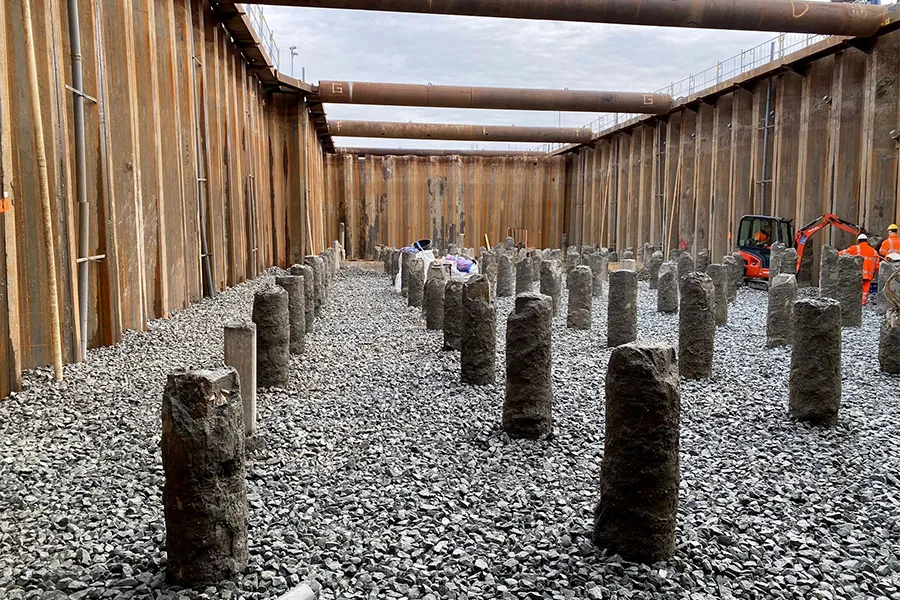
Heave
The complexity of the ground conditions is particularly challenging, Alwin stresses. “In addition to the overconsolidated (prestressed) sand layers, we also have to contend with a very dense clay layer in the subsoil, whose thickness varies from 10 to as much as 20 metres across the full cross-section of the new structure. Excavating the construction pit generally causes cohesive layers, including the pot clay layer, to expand in volume (heave). This heave can impose additional loads on the base slab and piles of the new pumping station and lock extension, which are anchored into the deep sand layers. It can also affect the foundations of the listed Hunsingosluis.”
Working in the hard sand layers can also adversely affect the lock. “That is why we carried out an integrated deformation analysis to assess whether deformations and forces would remain in balance, and whether the forces acting on the foundations of the existing lock would be acceptable. Careful design showed that they would, but we did recommend visual inspections and monitoring as control measures during construction.”
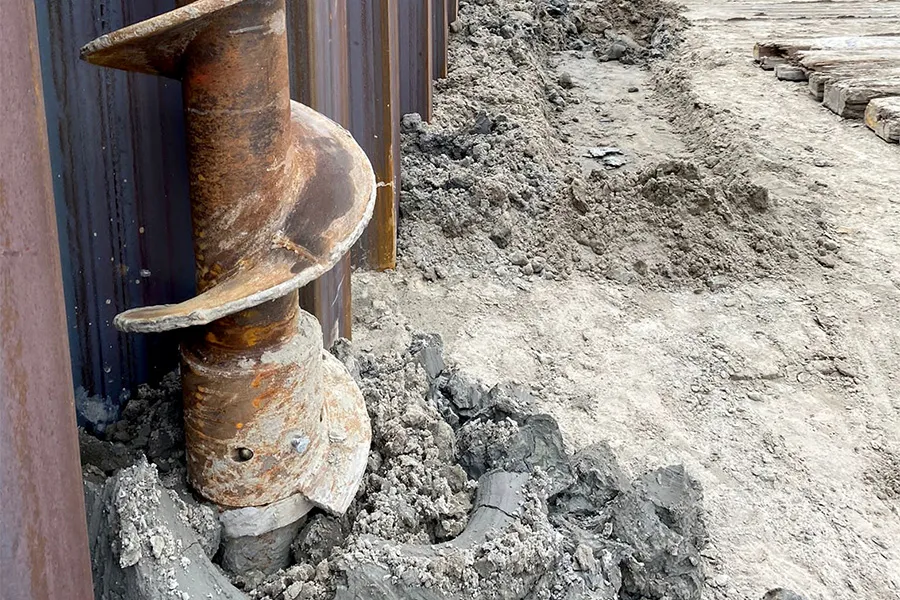
Pre-loosening
CRUX also designed the construction pit and foundation systems for both the pumping station and the Hunsingosluis extension. “For both structures, we recommended excavation under water with a tremie concrete base,” Alwin explains. “Braced sheet-pile walls were also used to withstand the forces. To provide horizontal stability, part of the pumping station construction pit was additionally anchored using grout anchors. We also proposed installing the sheet piles by pressing them in rather than vibrating them, because of the overconsolidated sand layers and the potential impact on the existing lock’s pile foundations. In addition, we recommended pre-loosening the ground at the pumping station to reduce resistance from the hard sand layers when pressing in the sheet piles. This worked well in practice, and the construction pit and foundation systems for the pumping station were installed successfully.”
On standby
The pumping station has cast-in-situ displacement combi piles, while the lock extension uses self-drilling anchor piles. Work on the lock extension is still under way. As the sheet piles there are not driven as deep, pre-loosening is not needed, and the sheet piles can be pressed in without any special measures. CRUX has therefore completed its work, although, as Alwin says, the team remains on standby to provide advice or answer questions during construction. Despite the complex ground conditions, Alwin is already looking back on a smoothly delivered project. “At CRUX, we have a great deal of knowledge and expertise in-house. Once again, that proved invaluable here in Zoutkamp. Geotechnical engineering and environmental impact are our core business. We have done this many times, which is precisely why we are called in for this kind of complex project throughout the Netherlands. I think the ‘crux’ of working with both Strukton and Nepocon was collaborating throughout the design and construction phases, striving for a robust and innovative design that takes account of the surroundings, while also keeping a practical approach. The close communication between the work planner at Strukton and the structural engineer at Nepocon was particularly effective, and we found it very positive.”
Een zakelijke vraag aan Strukton Civiel? Get in touch
Wie aan Waterwerken Zoutkamp werkte
- water boardWaterschap NoorderzijlvestMentioned in Zoutkamp pumping station is also ‘nature-inclusive’
- restauratie van het monumentale deelKoninklijke Oosterhof HolmanMentioned in Restoration of Hunsingosluis is a true craft
- Pumping station pumps
 Stork PompenMentioned in One of the world’s largest fish-friendly submersible pumps
- independent consultancyCRUXIn this story
Keep following this
Get an email when a new story is published. No account needed.
- ProjectWaterwerken Zoutkamp
- ThemeFlood protection and climate-resilient water management
- SubjectWater infrastructure
- CompanyNepocon
- CompanyCRUX
- CompanyStrukton Civiel







