









Uncovering the layers of a centuries-old dam
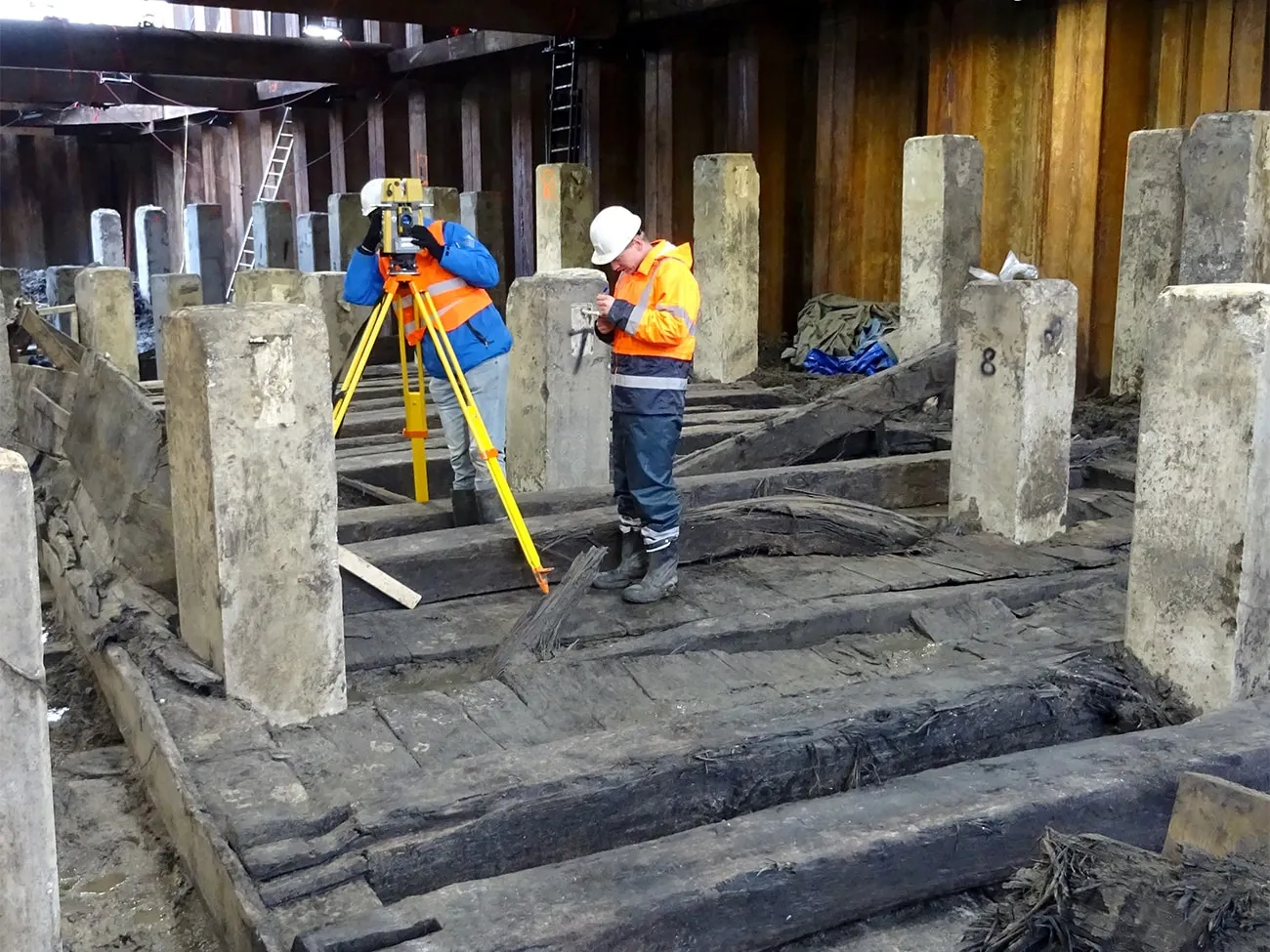
Nieuwendam, where the Monnickendam pumping station is being built, was constructed around 1400. Over the past 600 years, the dam has been reinforced, raised and widened several times. There is no documentation of this, apart from records covering the last 100 years. To gain a better understanding of the dam’s structure, Vestigia Archeologie & Cultuurhistorie, a research firm based in Amersfoort, is investigating the layers within the earthwork as the excavation for the construction pit proceeds. The work recently led to a remarkable archaeological discovery.
The Hoogheemraadschap Hollands Noorderkwartier had no complete picture of how the centuries-old dam was built, explains Jeroen Flamman, senior KNA (Quality Standard for Dutch Archaeology) archaeologist at Vestigia and project leader for the archaeological investigation. “The preliminary investigation mentioned a lock that had supposedly been built in Nieuwendam in the past, based on a brief description, but its exact location was unknown. Historical maps from the 16th century were inconclusive too. They were not drawn to a consistent scale and could not be overlaid on a current map, so it was not possible to determine the location of the historic lock in advance. Initially, then, our work was to focus solely on investigating the dam’s structure. That changed when we got a call from the contractor consortium.”
Oak structural timber
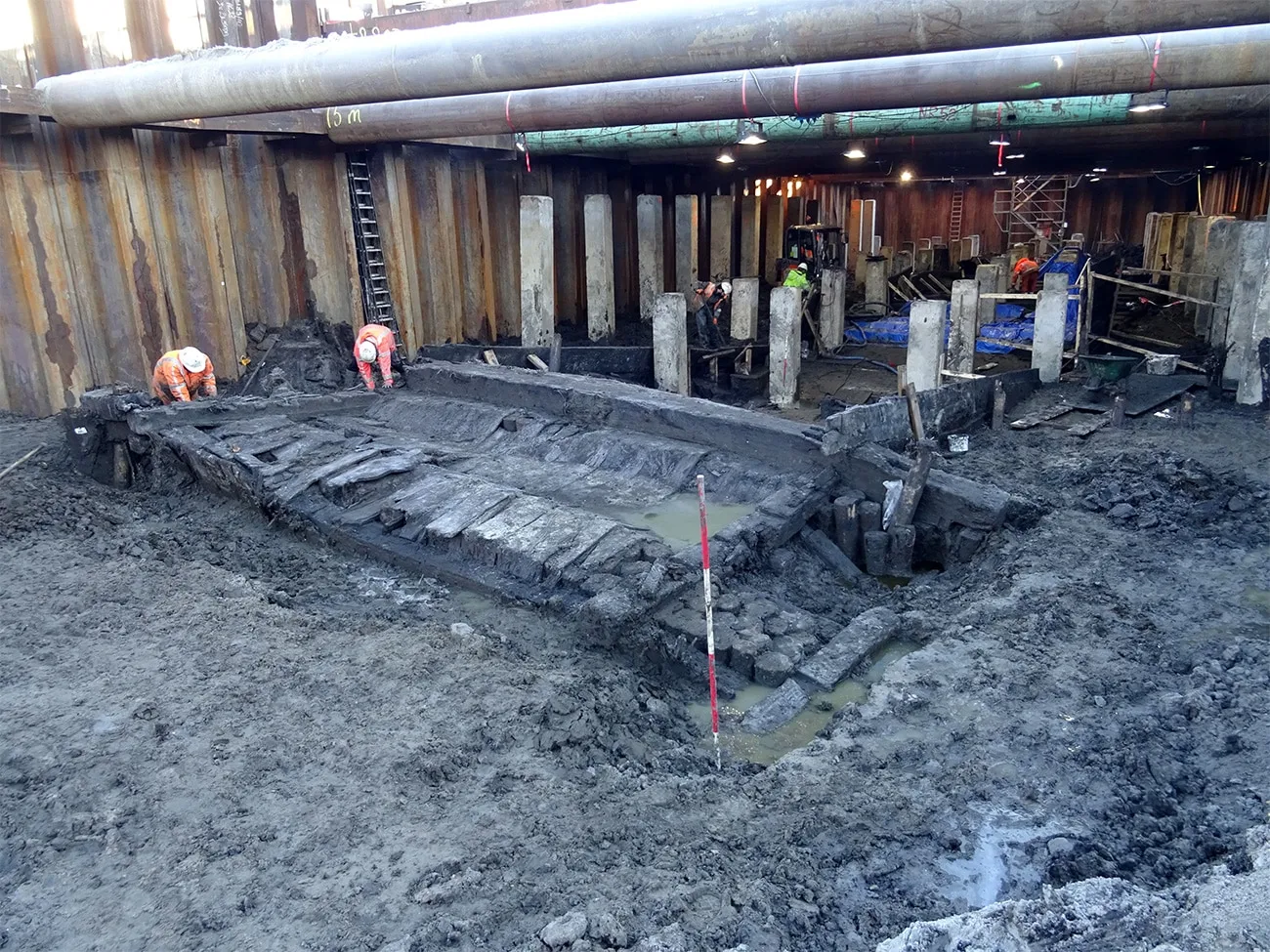
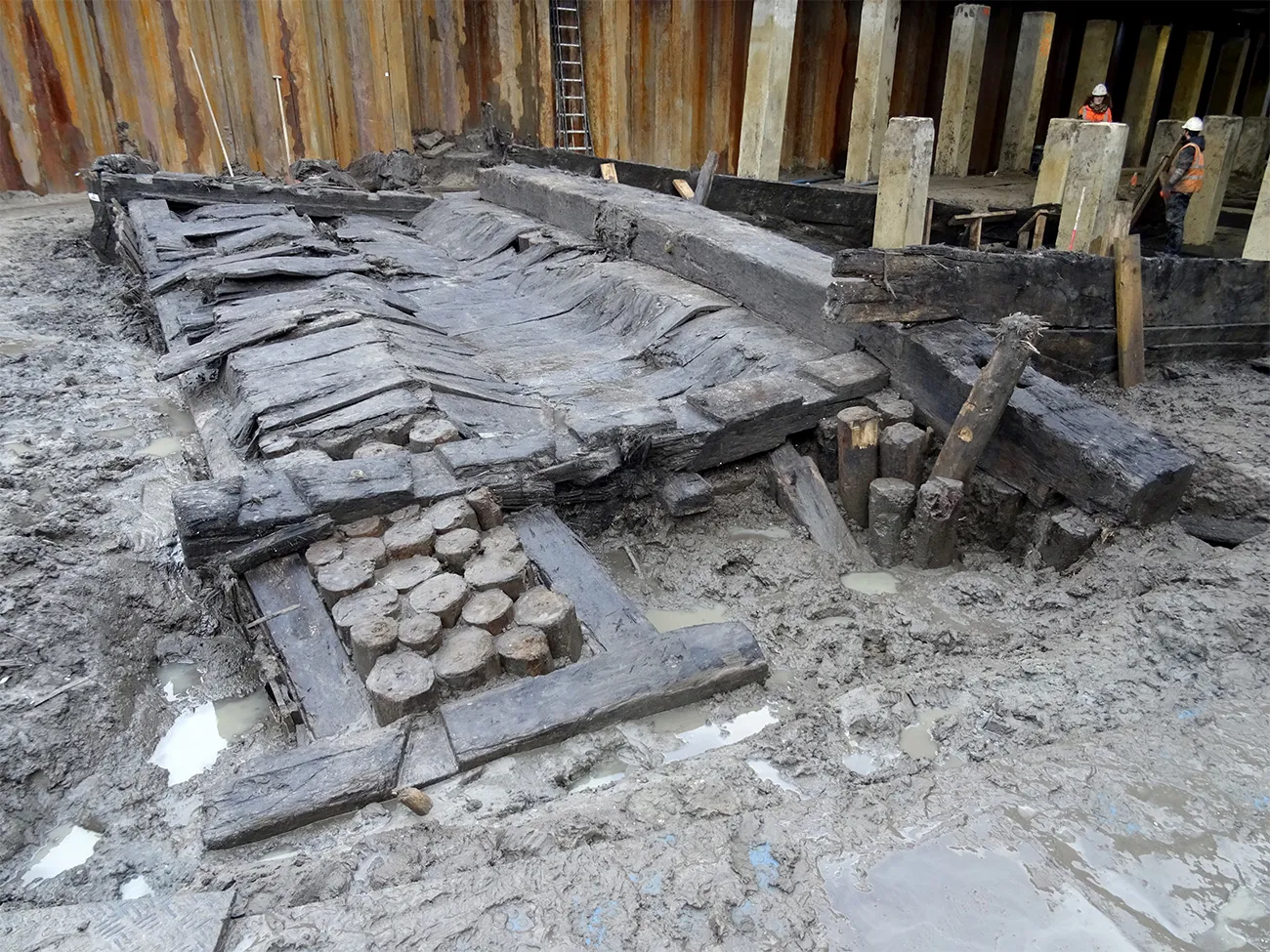
During excavation work in the construction pit, various pieces of timber were uncovered. “At first, we thought they might be remnants of bank protection or earlier reinforcement work,” says Flamman. “Once we arrived on site, it became clear that this was structural timber, oak that had been worked by hand. That set things in motion. Ultimately, it led to the remarkable discovery of a lock more than 400 years old. Or, more precisely, the bottom section of a lock structure, comprising the floor and foundations, measuring 36 m long and 6.5 m wide. After consulting the competent authority, we joined forces with Hoogheemraadschap Hollands Noorderkwartier and contractor consortium CGM to document the centuries-old
structure as carefully as possible. Each of us has our own role in ensuring that construction work can resume as soon as possible.”
Efficient investigation
As the initiator and client, the water board also employs a historian. “He immediately started searching the archives for information. We then mobilised a large team to begin archaeological fieldwork in accordance with the applicable laws and regulations. The contractor consortium, in turn, provided equipment and staff to assist us. Everyone is contributing to the investigation in this way. Within a week and a half, all the tasks and roles had been allocated, and we joined forces to carry out the work efficiently. That is truly commendable for such a large and complex project,” says Flamman.
Modern technologies
The centuries-old lock is being fully exposed and surveyed using the latest technologies. “The structure is even being captured using 3D laser scanning and photogrammetry,” says Flamman. “Samples of the oak and historical descriptions indicate that the lock must have been built around 1560. That raises all kinds of other questions. At the time, little oak was available in the Netherlands, especially not in the sizes used for the lock. The timber must therefore have been brought in from elsewhere, perhaps Germany, Poland or even Scandinavia. We are also keen to learn more about the structure’s design. Few specifications from that period have survived. Often there was only an order list, and structures were not recorded in drawings but built from memory by experienced carpenters, as was also common practice in shipbuilding at the time. There are plenty of reasons, then, to document the structure carefully.”
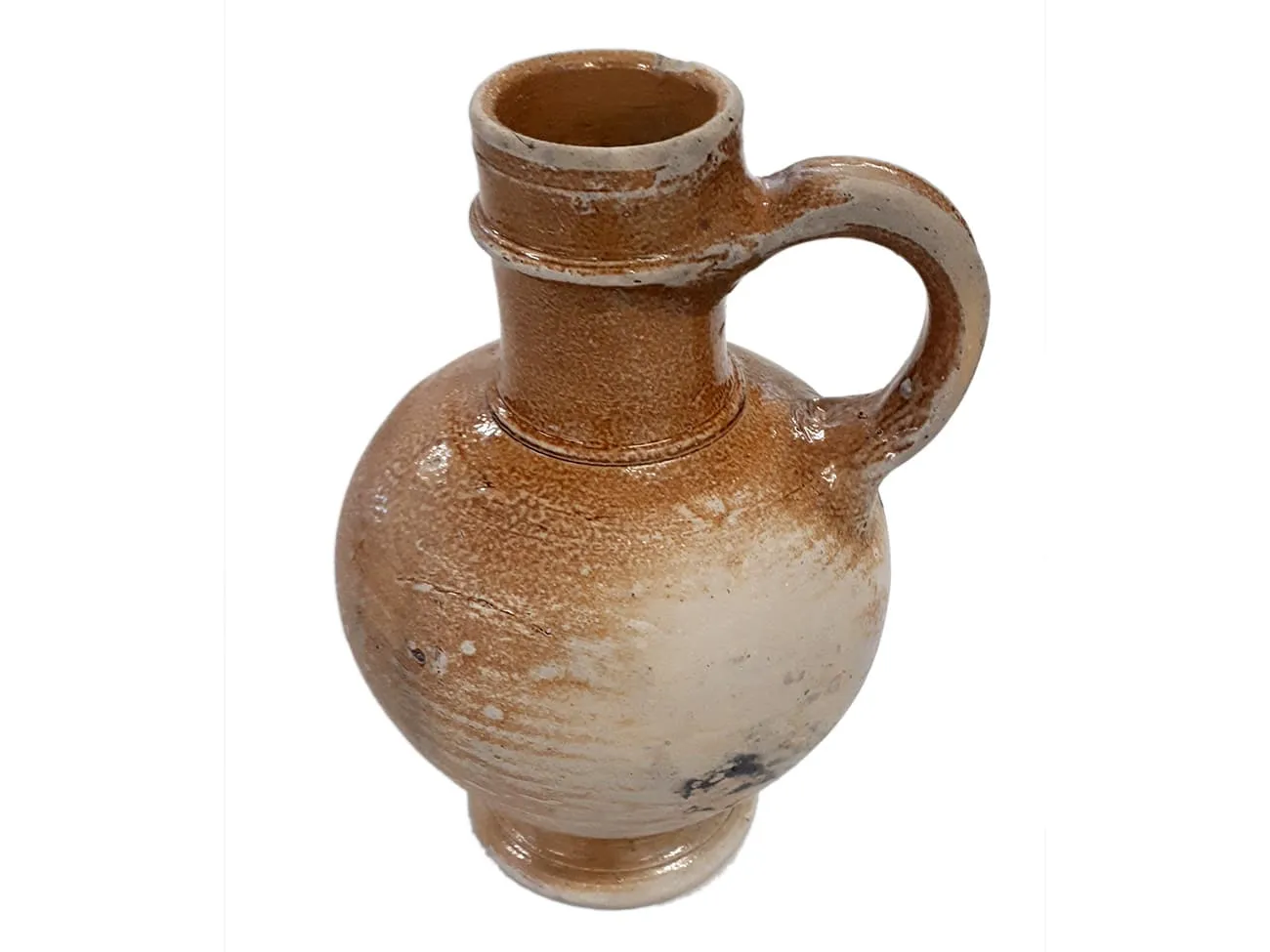
According to Flamman, preserving the lock was not an option. “The lock was found at a level 2.5 metres above the lowest level at which the pumping station is being built. However, some structural elements will be preserved and put on public display at a later date. Once the survey is complete, the contractor consortium can resume work. We will bring together the findings of this investigation and this remarkable discovery, along with the various other objects recovered from the lock floor, and describe them in a substantial book. This project deserves it.”
Question about this story? Ask your question
Who worked on Gemaal Monnickendam
- contractors' joint venture
 Friso CivielMentioned in Monnickendam pumping station: A remarkable feat beneath the surface
- contractors' joint ventureVan Hattum en BlankevoortMentioned in Monnickendam pumping station: A remarkable feat beneath the surface
- clientHoogheemraadschap Hollands NoorderkwartierMentioned in Monnickendam pumping station: A remarkable feat beneath the surface
- NoNOx filtersVolkerWesselsMentioned in Monnickendam pumping station: A remarkable feat beneath the surface
- fish-friendly pumping station pumps
 Pentair Fairbanks NijhuisMentioned in Fish-friendly pumping station pumps
- gate valves and non-return valvesHC Waterbeheersing BVMentioned in Large spindle-operated penstocks and flap valves
- foundation specialistGebr. van ’t HekMentioned in Three ‘foundation projects’ to build a single pumping station
- contractors' joint ventureCGMIn this story
- research agencyVestigia Archeologie & CultuurhistorieIn this story
Keep following this
Get an email when a new story is published. No account needed.
- ProjectMonnickendam pumping station
- SubjectWater infrastructure
- CompanyCGM
- CompanyVestigia Archeologie & Cultuurhistorie







