









Integrated project safeguards Amsterdam’s flood protection
Text Roel van Gils Image BT Engineering
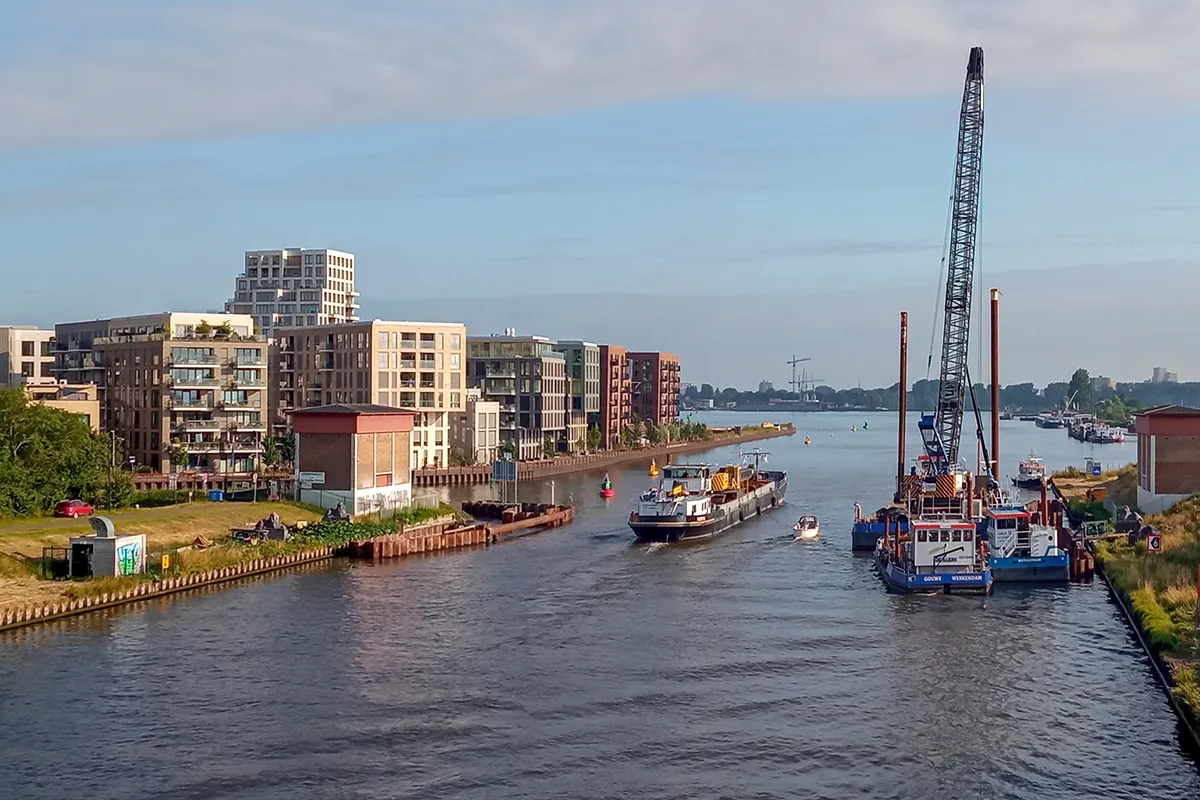
New vessel impact protection for Zeeburg siphons
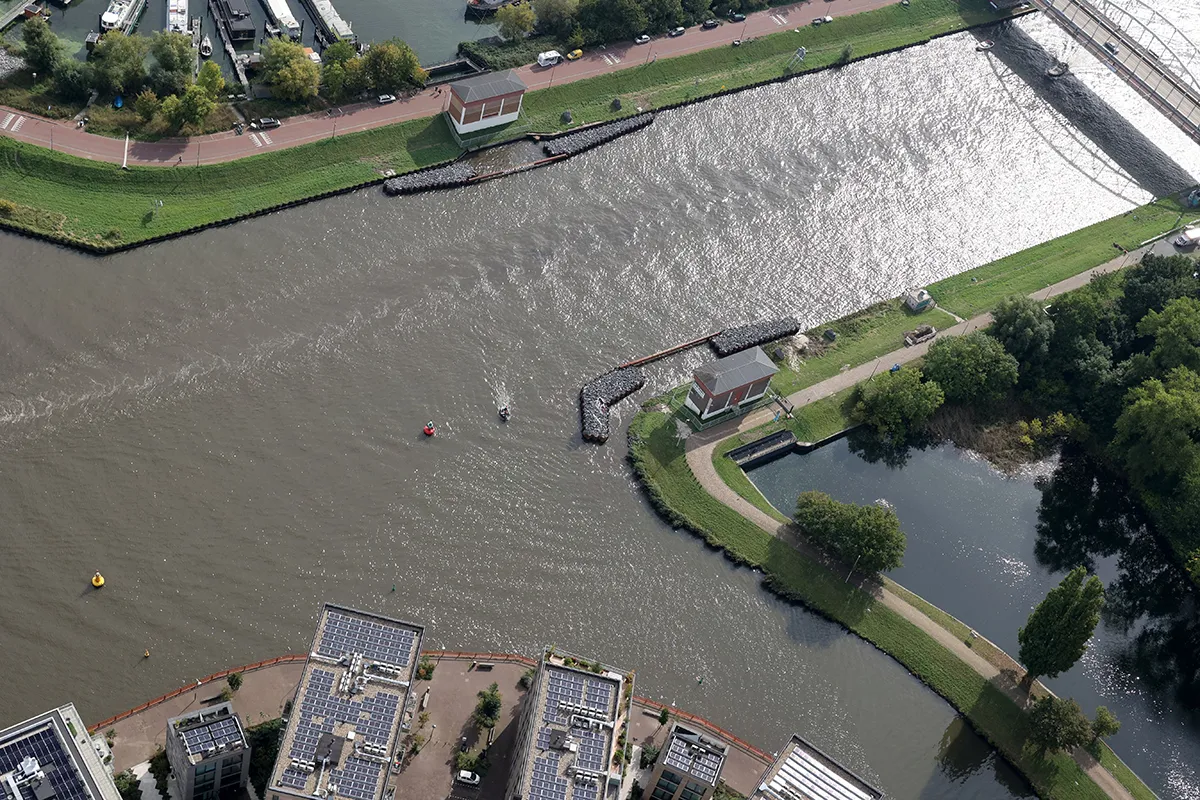
Beneath the Amsterdam-Rhine Canal lie the siphons at Gemaal Zeeburg, which play a crucial role in managing water levels in central Amsterdam. The siphons are relatively shallow and even protrude above the canal bed at the canal’s edge. Protection against vessel impact is therefore essential to safeguard Amsterdam’s flood protection. BT Engineering was commissioned to protect the siphons sustainably and make them resilient for the future.
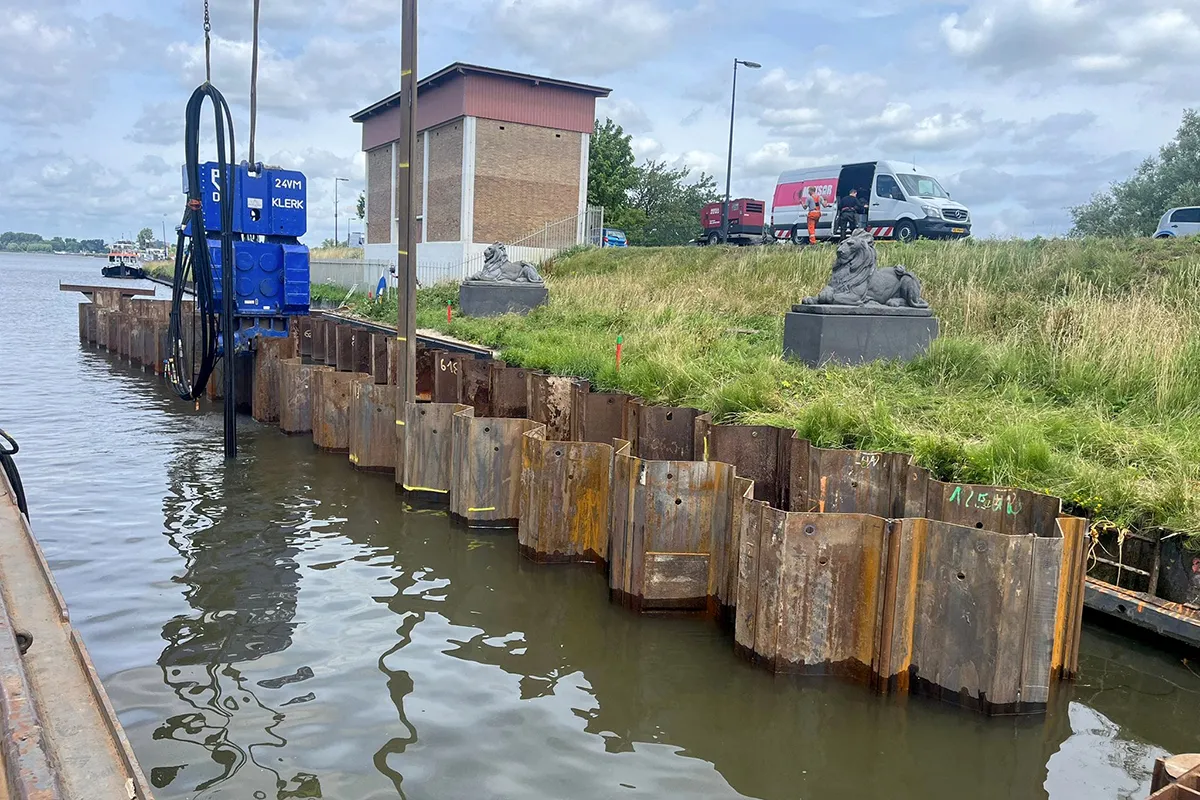
Waterschap Amstel, Gooi en Vecht, the authority responsible for the siphons, wanted a robust solution to protect them against vessel impacts. Previously, the siphons were protected only by a number of marker posts, some of which were no longer in place. “With shipping traffic increasing and vessels getting larger, the question arose as to whether the existing arrangement was still safe,” says Sytse Alkema of BT Engineering. “A collision could have serious consequences for water levels in the city. Commissioned by the water authority, we initially carried out various site investigations and a study of alternative options to identify the most promising solution for protecting the siphons.”
Integrated options study
In this first phase, the site, risks and requirements were surveyed in detail. “We assessed three options: a conventional protective structure made of steel tubes, covering the area with rock armour, and building cofferdams filled with soil,” explains Alkema. “We considered not only technical performance, but also constructability, sustainability and future developments, such as a potential widening of the Amsterdam-Rhine Canal, which would allow the new vessel impact protection to be dismantled and reused.”
Circular cofferdam structure
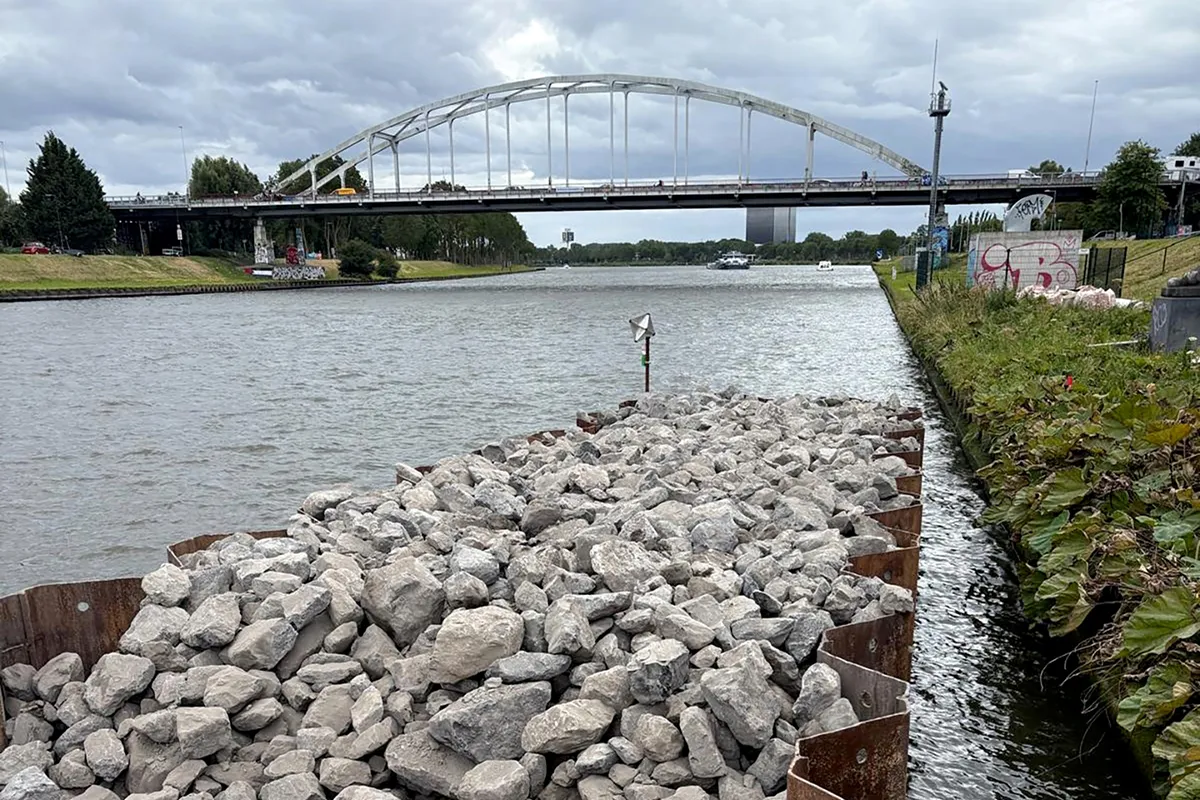
The final choice was a system of four steel cofferdams, says Bart van Langevelde of BT Engineering. “This structure strikes an optimal balance: it is robust enough to absorb impact energy, but not so rigid that vessels would sustain excessive damage in a collision. What’s more, the components can be reused in future if the canal is widened.” Circular construction therefore played a major role: around 95% of the steel can be recovered for reuse later.
3D structural analysis
Alkema says there was a significant element of innovation in the calculation methods. 3D analysis models, deformation analyses and energy calculations made it possible to optimise the design without over-dimensioning it. “For example, we used Plaxis 3D to estimate how the structure would deform under a given impact. This allowed us to calculate the energy absorbed and verify through calculations what the cofferdam structures could withstand. They consist of a steel sheet-pile wall with a waling and anchors behind it, and are filled with sand, with rock armour at the top. Sheet piles cannot be driven where the siphons themselves are located. The cofferdams are connected by a steel tube, which also serves as a guide structure.”
Managing risks and considering the surroundings
According to Van Langevelde, BT Engineering considered the constructability of the design at an early stage. “As soon as the contractor came on board, we discussed it in detail and coordinated our approach.” Alkema adds: “That’s where we make a difference: by considering constructability throughout the process. This is particularly important for projects like these, where the design can quickly become highly technical.” During preparation, an old pile foundation buried in the ground was unexpectedly discovered. “We were able to respond quickly in this case too. Working as a project team with Waterschap Amstel, Gooi en Vecht and the contractor, De Klerk Werkendam, we agreed solutions quickly and efficiently.”
According to Van Langevelde, the project reflects the development of BT Engineering, which recently adopted its new name. “We have a geotechnical background, but in recent years we have broadened our expertise to include structural engineers, modellers, pipeline engineers and hydrologists. This broader expertise now enables us to deliver projects like these on an integrated, end-to-end basis, from options study through to construction and handover. We are involved at every stage.”
A business enquiry for BT Engineering? Get in touch
Who worked on Zeeburgerbruggen
- construction companyBAM Infra NederlandMentioned in Rijkswaterstaat and BAM join forces for sustainable A10 road surfacing
- sweepers and road surface cleaners
 Wolfswinkel ReinigingMentioned in Wolfswinkel Reiniging gets the A10 ready for new sustainable asphalt
- asphalt reinforcement
 S&P Reinforcement BeneluxMentioned in Longer-lasting asphalt thanks to glass fibre reinforcement
- administratorWaterschap Amstel, Gooi en VechtIn this story
Keep following this
Get an email when a new story is published. No account needed.
- ProjectZeeburgerbruggen
- ThemeFlood protection and climate-resilient water management
- SubjectWater infrastructure
- CompanyDe Klerk Werkendam
- CompanyWaterschap Amstel, Gooi en Vecht
- CompanyBT Engineering







