









From port to homes: the dock becoming a new urban district
Text Piet Andries Image Gemeente Rotterdam
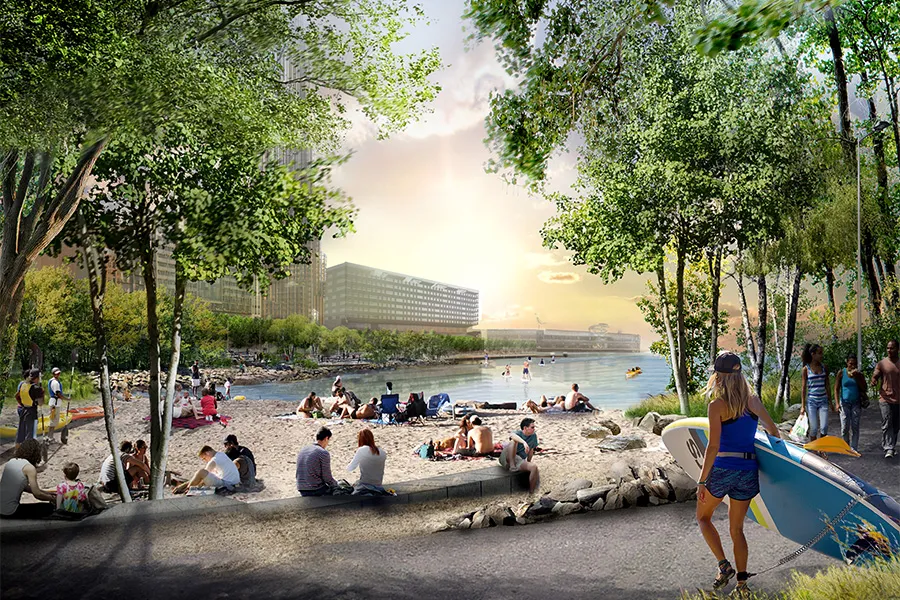
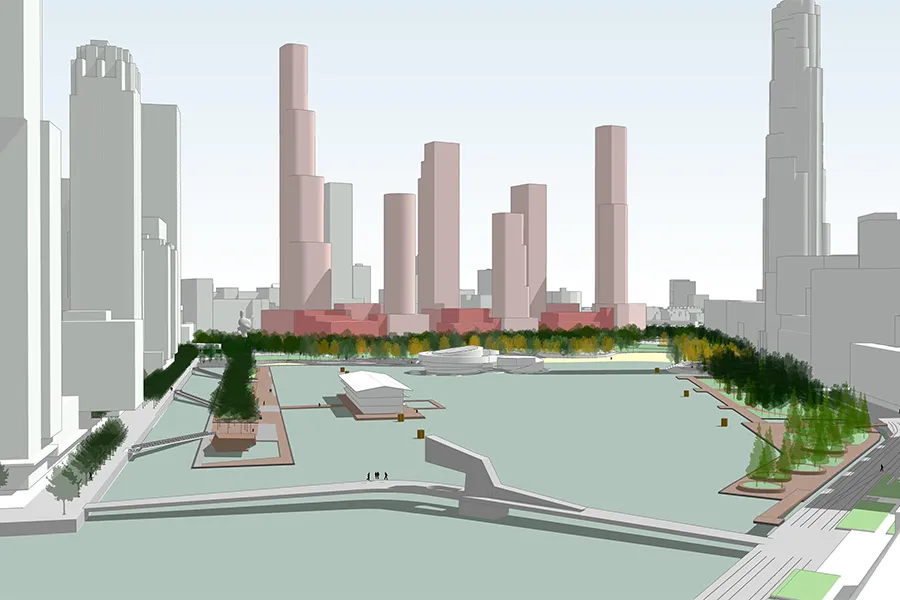
Initially, Rotterdam considered creating extra parking for residents of the residential towers in Kop van Zuid. But in 2017, a more ambitious project took shape to repurpose the Rijnhaven. The dock basin was to be transformed into a modern place to live and spend time. This metamorphosis, featuring swimming facilities, an office with a restaurant on the water, floating urban parks and mixed-use blocks with 3,000 homes, offices, business facilities and shops, was set out in a masterplan that involved extensive infilling of the dock. As the engineer responsible, René Groeneveld is overseeing the preparatory work for the city.
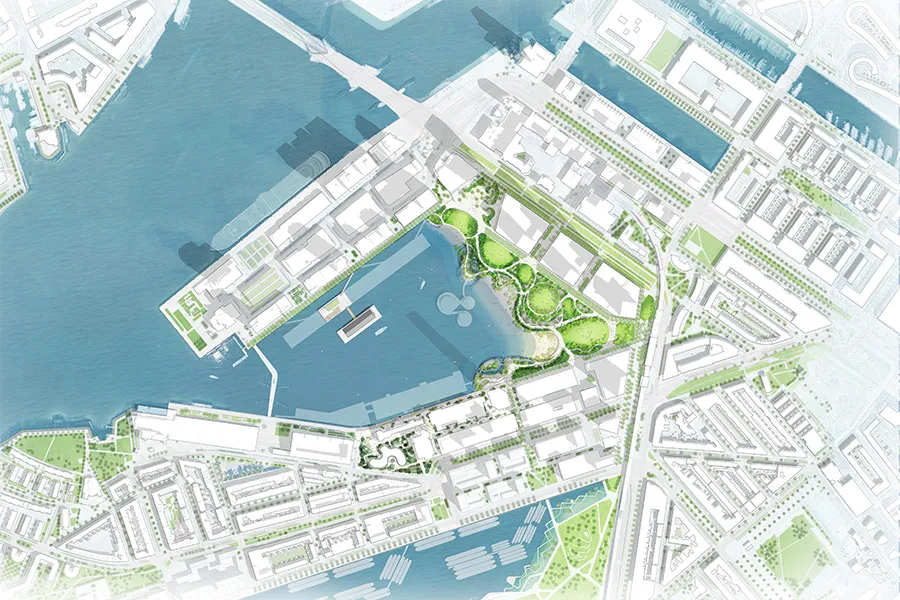
“The Rijnhaven dates from 1890 and received barely any maintenance during that time. But because the harbour entrance is favourably positioned in relation to the river currents, siltation was limited to around 2.5 metres. The sediment essentially skirts past it,” says René, describing the dredging work that marked the start of the infrastructure works in 2021. Initially, main contractor Boskalis transported 142,000 cubic metres of silt to the Slufter, a quantity later increased to 160,000 cubic metres following a change to the plans. “The original masterplan from 2017 involved infilling in a straight line. But three years later, New York-based architectural firm Van Valkenburgh Associates redesigned it as a more gently sloping park with more dynamic forms, and the dredging work had to be adapted accordingly.”
The masterplan also meant that a new zoning plan was needed. The infilling work is being carried out in two phases. “We are currently filling in two-thirds of the total area, with an extra surcharge to allow it to consolidate. We will use the remaining surcharge for the infilling in the second phase,” says René. “But below the waterline, the infilling is already fully complete in accordance with the latest plan. We are now placing around 1.2 million cubic metres of sand, followed by a further 200,000 cubic metres. That will involve around 10 metres below water and 5 metres above it.”
Mitigating stability risks
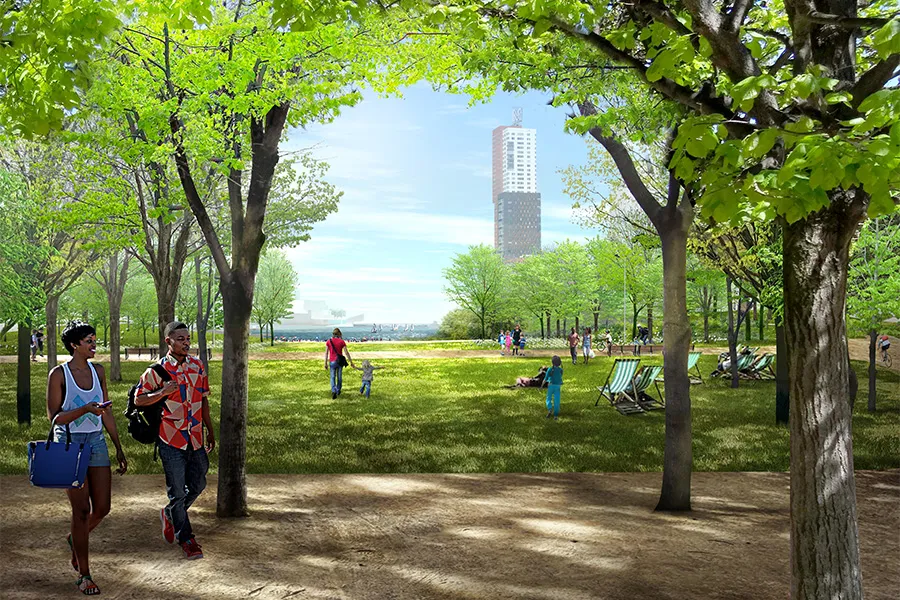
The sand placed by hydraulic fill is intended not only for an urban beach, but also for the construction of three blocks, each with 1,000 homes, and the 42,000 m2 land park. The total infilled area covers 65,000 m2. “Both the homes and the park will be built on the newly reclaimed land, where we are placing 16 metres of sand,” René explains. “We dredged an area in the harbour to a greater depth and built a dam to minimise the effects on edge stability. We are also monitoring the works continuously using two ‘total stations’ so that we can identify any problems in good time. We raised the Luxor Theater, and placed Argex, to avoid potential stability issues and loads caused by settlement of the infill.”
City or port?
International research shows that half of infrastructure projects run significantly over budget. How is public money being spent on the Rijnhaven project? “So far, so good,” says René. “We are constantly managing the budget, adjusting it to reflect rising material costs, indexation, the impact of the war in Ukraine and so on. A lot has happened in the seven years between the plan and the start of construction. Depending on how settlement progresses during consolidation, additional sand may be needed. We have included a contingency in the project budget to cover this potential setback. The area to be covered is enormous.”
Another issue during the construction phase has been the successive changes to legislation on nitrogen emissions. “When the dredging work began in 2021, we included a strict NOx limit in the tender, in accordance with the law. But a construction exemption was introduced later, covering infrastructure works too, so the infilling contract did not need to include an NOx limit. Following an objection, the exemption was withdrawn again in 2022, forcing us to upgrade the machinery at short notice. Today, we have to meet an annual nitrogen emissions limit. We are managing this very closely, because even in the harbour we are close to strictly regulated Natura 2000 areas such as Hoek van Holland and the Biesbosch.”
Finally, is the Rijnhaven now simply a repurposed part of the port, or is it a fully fledged urban district? “Both,” says René with a laugh. “The basin covers around 210,000 m2, so two-thirds of the area will remain a port, with all that entails, but it is also an extension of the city.” The park and beach will be completed first, from 2028, with the homes due for completion around 2031.
Have a business enquiry for Boskalis Nederland? Get in touch
Who worked on Rijnhaven
- architectural practiceVan Valkenburgh AssociatesIn this story
Keep following this
Get an email when a new story is published. No account needed.
- ProjectRijnhaven
- SubjectWater infrastructure
- CompanyBoskalis Nederland
- CompanyVan Valkenburgh Associates







