









Fascine mattresses: the foundation of a strong dyke
Text Roel van Gils Image Van Aalsburg
Traditional structures for sustainable flood protection
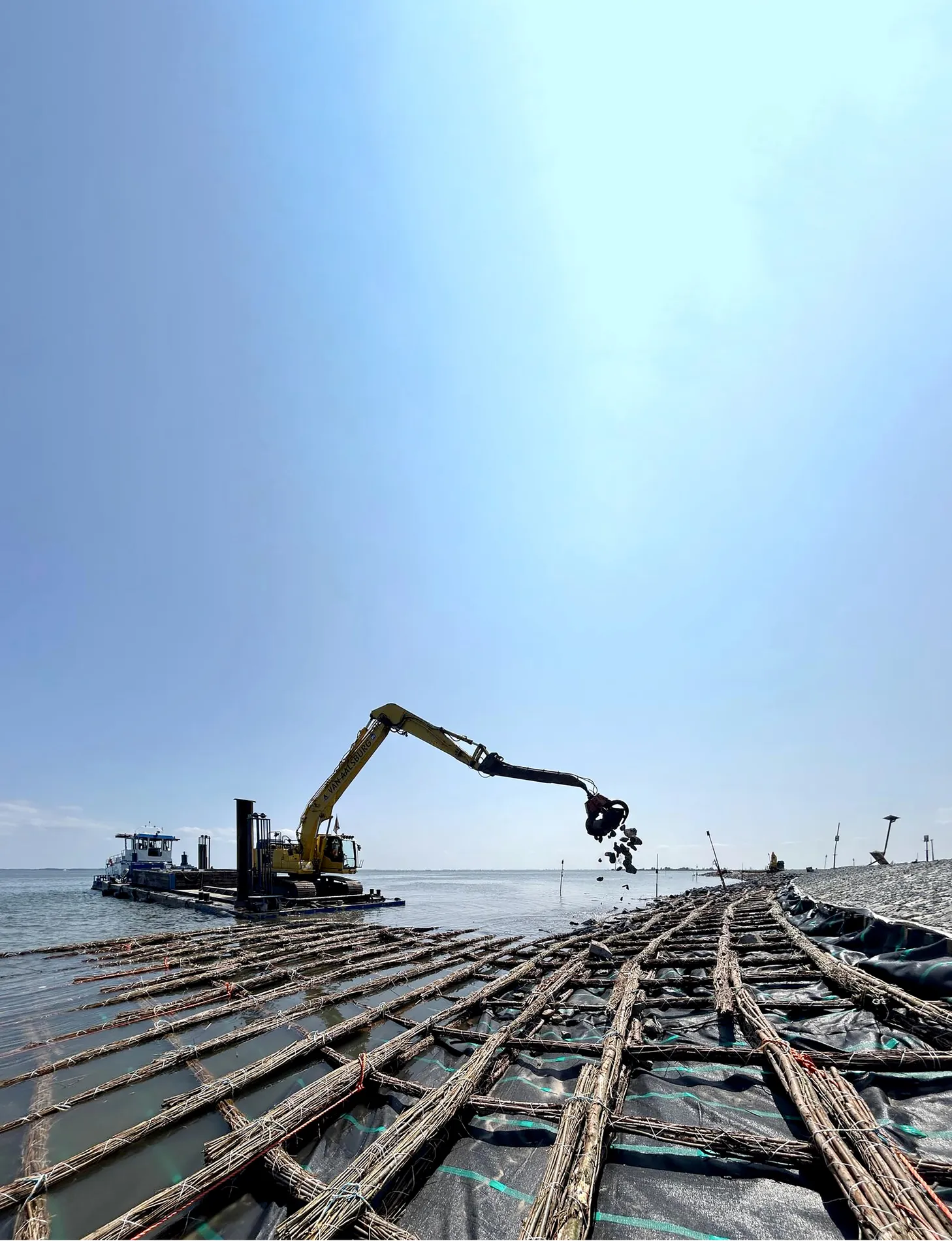
Fascine mattresses have been an essential part of protecting Dutch dykes for centuries. They keep the sand in place, protect the slope from erosion and literally lay the foundation for a safe flood defence. For family business Van Aalsburg, these traditional but highly effective structures have been at the heart of its work for generations. They also play an important role in the dyke reinforcement on Marken, where these robust mats of willow branches and geotextile are used. But the work extends beyond the water’s edge.
Our history with fascine mattresses goes back a long way, begins Jennis van Aalsburg. “My grandfather started out growing willow branches, and several generations now work together in the family business. We have been producing fascine mattresses for projects by DEME, one of the partners in Hof op Marken, for more than 30 years. It is a long-standing partnership built on craftsmanship and reliability. They build up the dyke by pumping in sand, and we finish it.”
From ecobarrier to temporary solution
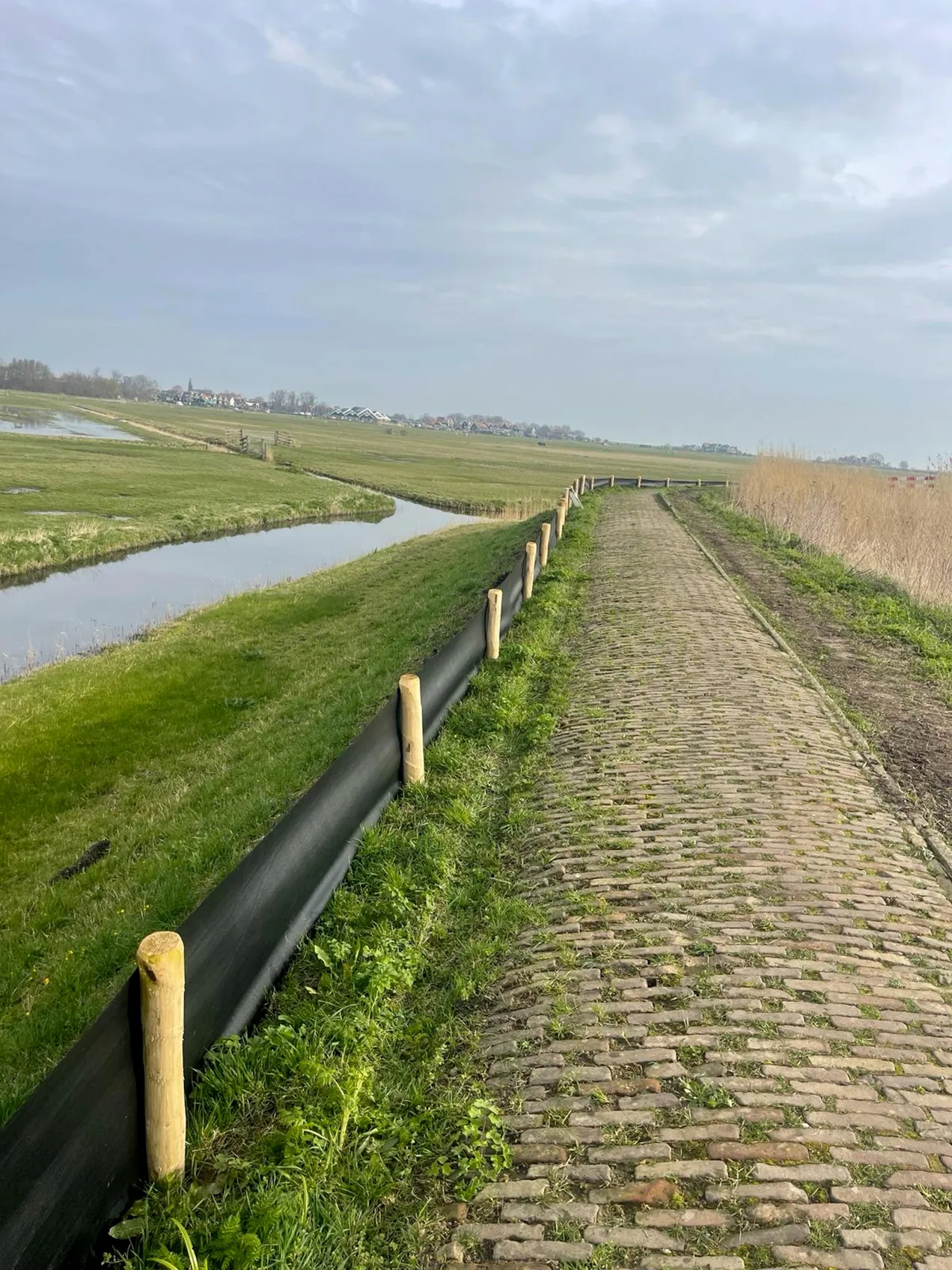
On Marken, Van Aalsburg’s contribution goes a step further. “We put smart measures in place for nature even before the first fascine mattresses were laid,” says Van Aalsburg. “For example, we installed a geotextile ecobarrier on the dyke to keep vulnerable species, such as grass snakes, safely out of the work zone. During the preparatory phase, we also built two trial sections using the final revetment, giving the client and local residents an idea of the finished result.” A feature of the dyke reinforcement on Marken is that the dyke is raised in stages by pumping in sand. “That is why, during the preparatory phase, we installed temporary fascine mattresses in front of the coastline, over a length of around 5 kilometres and a width of 10 metres, to protect the pumped sand during preloading.”
Permanent structure
The newly built-up dyke has now stopped settling. “After the summer holidays, we will start work on the permanent structure,” explains Van Aalsburg. “Each day, around 40 metres of temporary fascine mattresses are removed, the slope is reprofiled, and a new fascine mattress is installed and finished with rock armour. We carry out all this work ourselves. For this job, we are entirely dependent on the weather. Wind can lift the large mats like kites, while waves make it harder to profile the slope. In favourable conditions, we can significantly increase the pace. We recently laid no less than 5,000 m2 in a single day, although that is an exception.” Van Aalsburg expects the work on Marken to take around a year. “If necessary and the weather is on our side, we are flexible enough to scale up.”
A business enquiry for Van Aalsburg BV? Get in touch
Companies in this story

Keep following this
Get an email when a new story is published. No account needed.
- ThemeFlood protection and climate-resilient water management
- SubjectWater infrastructure
- CompanyVan Aalsburg BV







