Fugro expertise helps put dikes on a firm footing
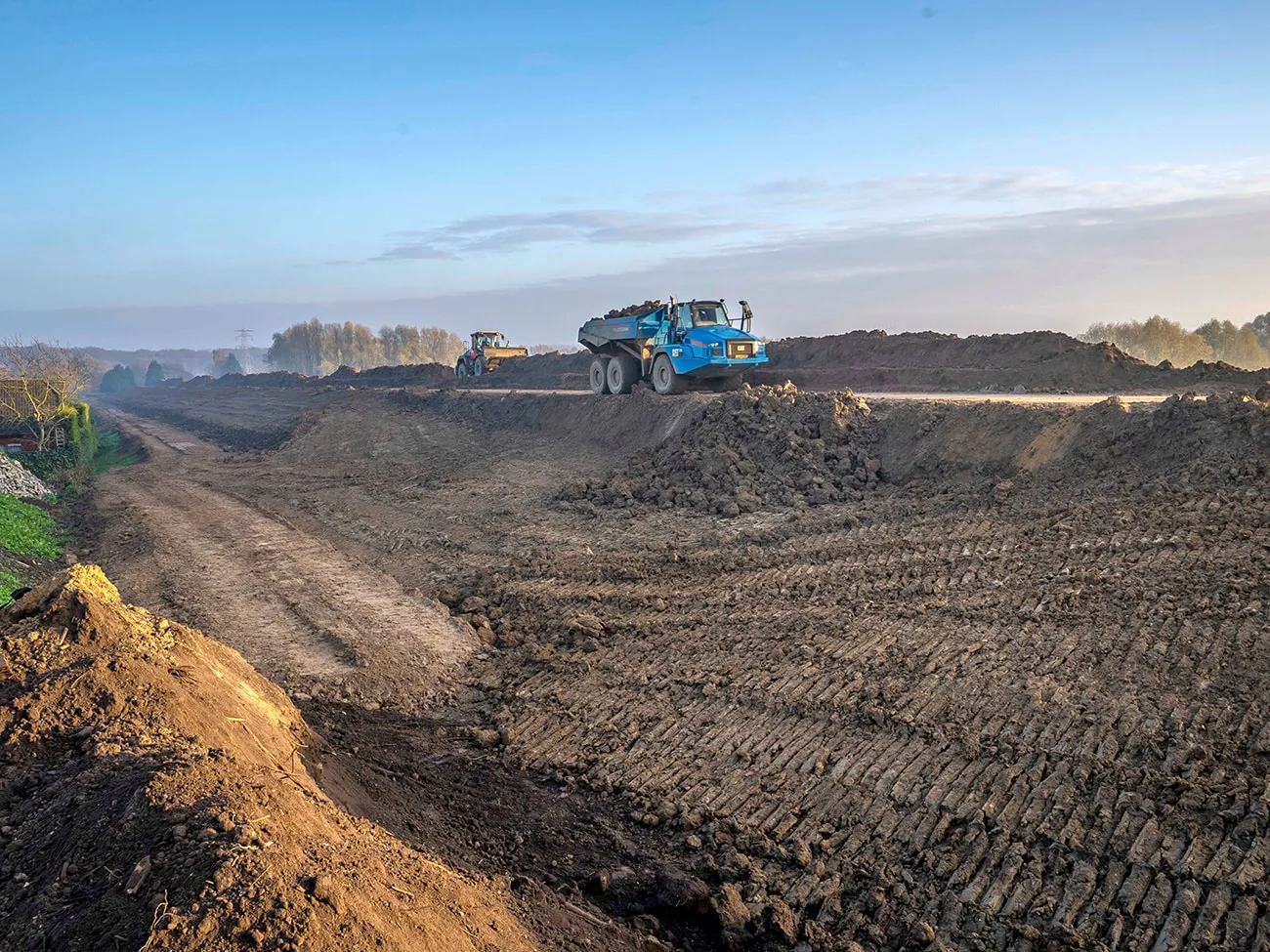
Work began midway through last year to reinforce the northern Waaldijk between Wolferen (Overbetuwe) and Sprok (Nijmegen). Commissioned by Waterschap Rivierenland, the De Betuwse Waard construction consortium, comprising Ploegam, GMB and Dura Vermeer, will reinforce the 15-kilometre stretch over the coming years.
Smart solutions to the challenges of the Wolferen-Sprok dike reinforcement

The project covers safety, sustainability, area development and climate adaptation. Fugro was brought in to tackle the key technical challenges. We spoke to Werner Halter, principal consultant at geo-data specialist Fugro, and Marijn Hop, water engineering adviser at Fugro, about the investigations and solutions the company has delivered for the project.
Piping is a problem along almost the entire route
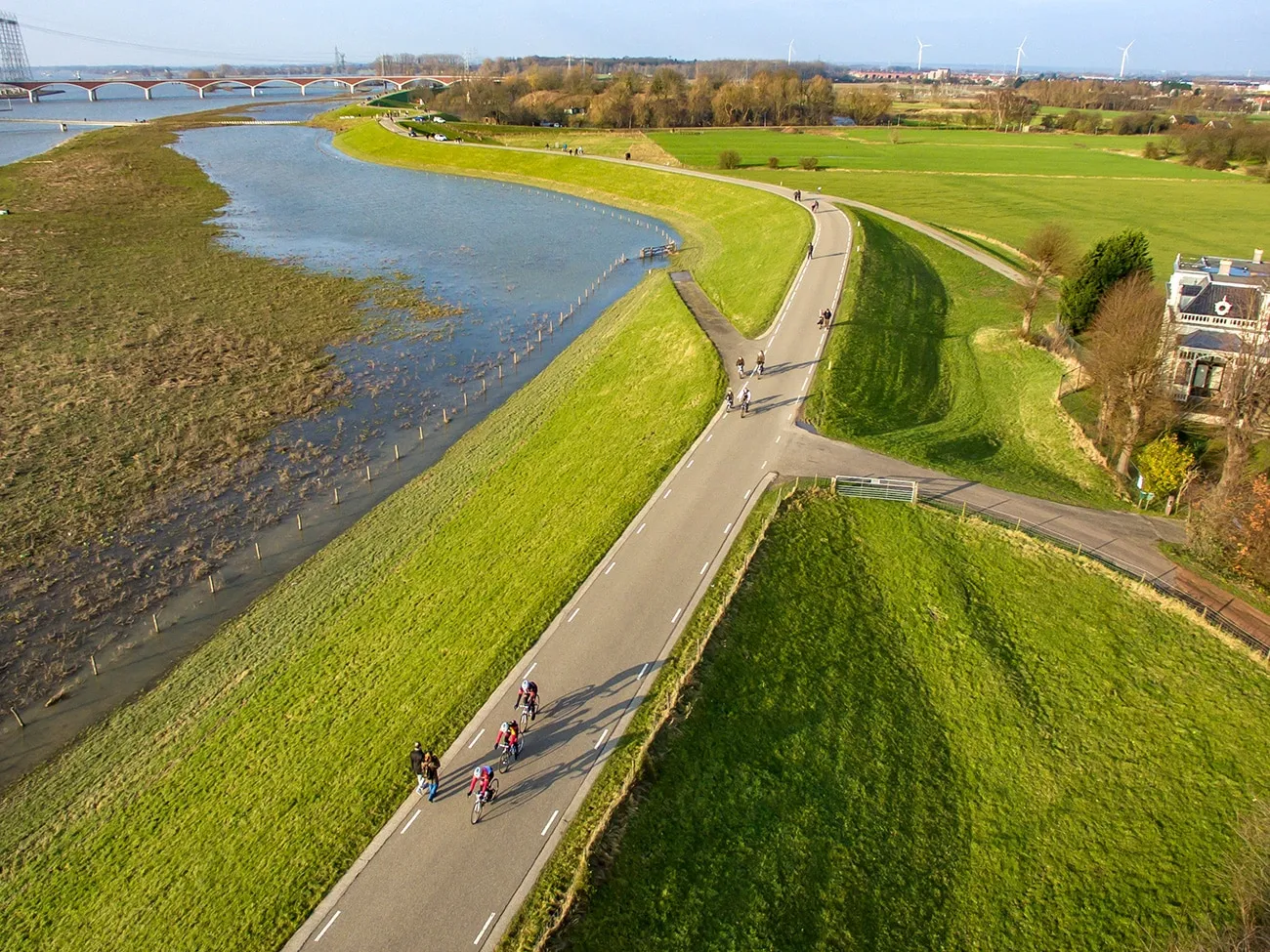
Marijn begins: “The main technical challenges on this project are effectively addressing the piping problem, working within the limited space available for reinforcement measures, making the dike resistant to overtopping, and complying with the strict Natura 2000 requirements.” What exactly is meant by ‘piping’? Werner explains: “Piping can occur during high-water events. A large difference in water levels on either side of the dike can create substantial pressure differences. As a result, water can flow beneath the dike and then emerge on the landward side. This creates a ‘sand boil’, where seepage water rises to the surface. If high water and the difference in water pressure persist, water can continue to flow through the sand layer beneath the dike. If it carries sand particles with it, a channel, or ‘pipe’, can form beneath the dike. If this continues for a long time, erosion can eventually cause the dike to collapse.”
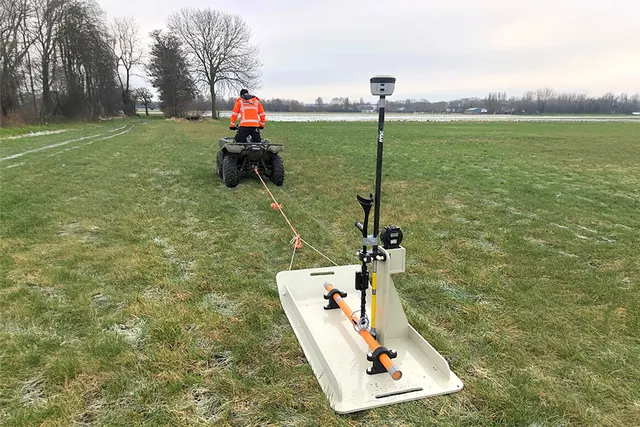
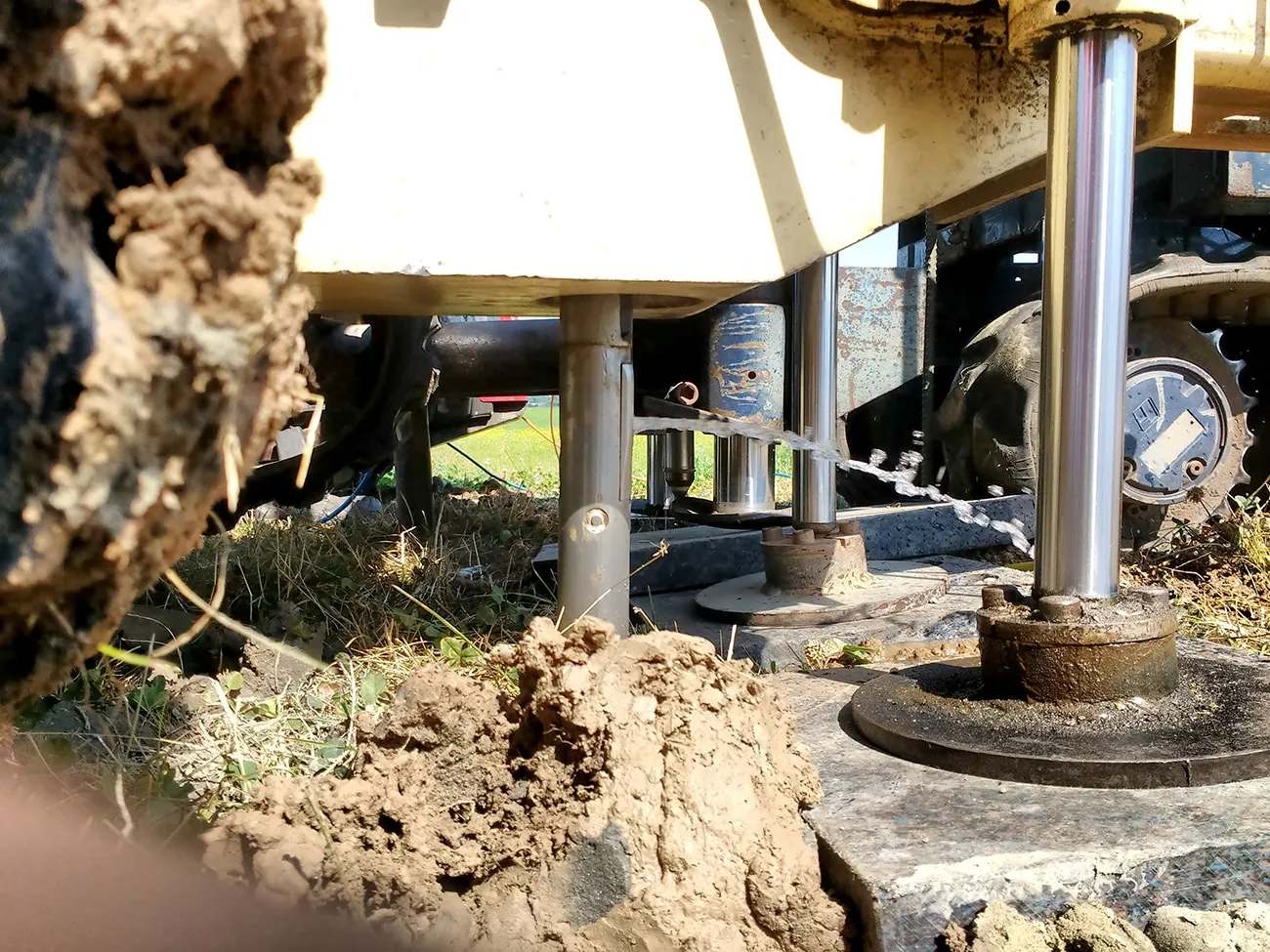
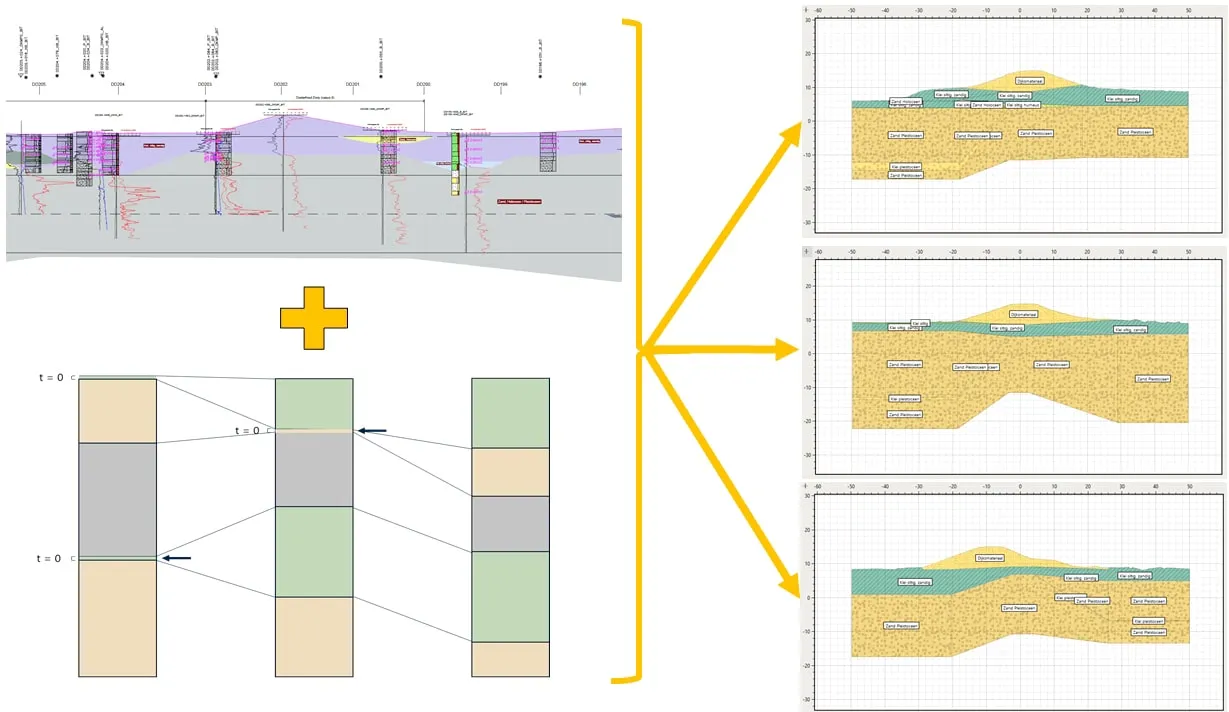
Marijn: “At Wolferen-Sprok, piping is a problem along around 90% of the dike route. Using HPT-AMPT®(Aquisense™) soundings, deployed on a large scale, Fugro mapped variations in horizontal and vertical permeability. We also mapped the clay cover layer, enabling us to account for the resistance provided by the foreland. This gave us answers to the question of where the ‘pipe’ grows. Normally, only a limited length of the foreland is taken into account. However, together with Deltares, we looked at how to refine this. The result was an approach that benefits the dike sector.” Thanks to the additional investigation, no piping solution was needed for part of the project. For the locations where one was still needed, Fugro proposed a solution using seepage screens and optimised the design. “Some of these screens, or sheet-pile walls, will be made of plastic and others of steel, depending on the stability requirements and the in-situ ground conditions,” says Marijn.
Werner adds: “It is becoming increasingly common to use HPT-AMPT technology to measure subsurface permeability and determine the piping challenge more accurately.”
Working in a confined space
The homes, natural environment and other interests along the dike left very little room to work. It was therefore important to keep the reinforcement measures as compact as possible and minimise their impact on the surrounding area. “Making the dikes much wider was not an option, so we had to work within the tight space available. That is why seepage screens are such an ideal solution,” Werner explains. “It was also important to protect the Natura 2000 area. No construction is allowed in the Natura 2000 floodplains, too many trees must not be felled, and construction has to be phased to minimise disruption to nature.”
Marijn: “Safety was the top priority in the design. We then considered how the design fitted within all the rules and guidelines, and adjusted it accordingly.” Groundwater levels were also taken into account. Werner: “The sheet-pile walls must not affect groundwater levels. Nature must not be disrupted, and foundations must not be damaged. Fugro therefore carried out extensive analyses of the effects of the proposed measures. Deltares was involved during the feasibility phase; later, we worked with Deltares to protect gas and water pipelines crossing the route.”
MAKING THE DIKE RESISTANT TO OVERTOPPING
“Overtopping is an issue for all dikes,” says Marijn. “Since 2017, dike design has aimed to allow high overtopping rates in order to limit crest height. This has presented challenges over the past two years that needed to be addressed. Wolferen-Sprok is a typical clay dike, designed to allow 10 litres of water per second per metre of dike to overtop it.” Werner adds: “The dike only needed to be raised a little. The chosen option was a lower, narrower dike, which is better for the landscape. But overtopping must not erode the landward slope. At Wolferen-Sprok, there are trees, houses and driveways right behind the dike, so we had to examine the effects of the changes in detail. The existing sand wedge could be washed away by overtopping. Fugro’s solution was to install erosion-resistant clay. By carefully assessing the required clay properties, we were able to reuse local clay. We looked in detail at what was needed for each section of the dike.”
Typical Fugro
Fugro is known for its innovative techniques and solutions. “We simply leave nothing to chance,” says Marijn. “We were already part of the construction team during the design development phase, after the water authority had approved the preferred design. This was a ground-based design, with structural elements in some places. From there, we developed a detailed design with extensive detailing. Fugro is always looking for ways to optimise: taking a more nuanced approach to the rules and carrying out more investigations. We want to use the ground as efficiently as possible, which means working as precisely as possible in the design. We use new software and calculation methods to do this. For example, we carried out probabilistic analyses to show that costly reinforcement could be avoided, reinforcement that would normally be installed as a precaution to prevent the dike from sliding during a storm. So we calculate not only what we need, but also what we do not need. Digitalisation is essential to working sustainably and resiliently.”
All the specialist disciplines Fugro has in-house have been involved: ground investigation, geophysics, geomonitoring, geodesy, laboratory services and consultancy. Marijn continues: “As we speak, our laboratory technicians are still out in the field carrying out ground investigations, installing piezometers and monitoring. It is an ongoing process.” Werner concludes: “A colleague recently gave an internal talk at Fugro about this project. Around 250 people at Fugro have contributed. The client sees 10 of them out on site; the rest work behind the scenes. So more than half of Fugro Netherlands’ staff are involved in Wolferen-Sprok. That gives you an idea of the enthusiasm this excellent project has generated among our colleagues!”
A business enquiry for Fugro? Get in touch
Who worked on Dijkversterking Wolferen Sprok
- adviserDeltaresIn this story
- construction consortiumDe Betuwse Waard construction consortiumMentioned in A modern take on a proven concept
- anchoring of the steel sheet pile wallDe Vries TitanMentioned in Expertise required to install grout injection anchors
Keep following this
Get an email when a new story is published. No account needed.
- ProjectDijkversterking Wolferen Sprok
- SubjectSurveying & geo-ICT
- CompanyFugro
- CompanyGMB
- CompanyDeltares