Understanding the composition of the subsurface
Text Roel van Gils Beeld Geologische Dienst Nederland
‘From zero downwards’
Whether it is the construction of a motorway, the reinforcement of a dike or the building of a bridge, reliable data on the ground help determine the success and safety of such projects. For more than a century, the Geological Survey of the Netherlands (GDN) has ensured that this knowledge is available.
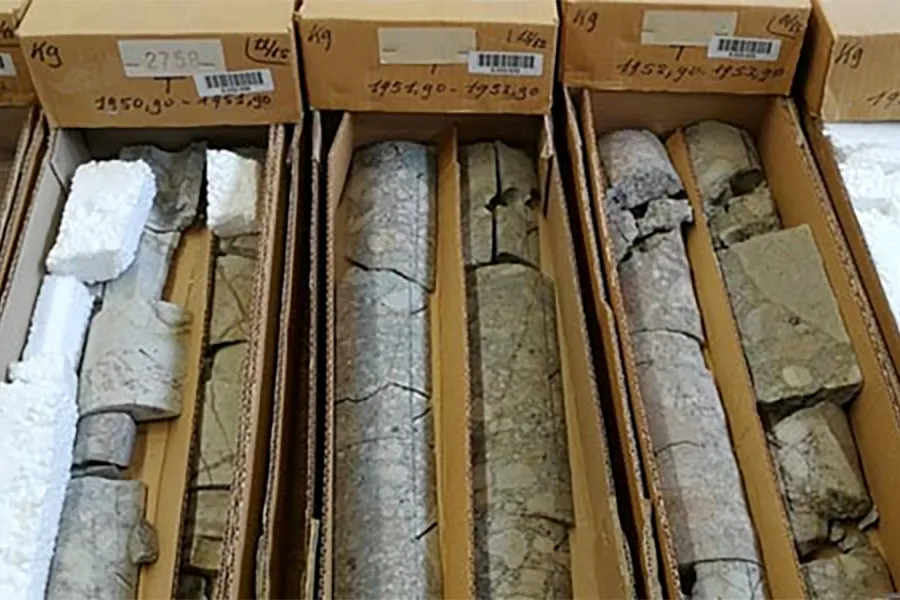
Since its establishment in 1903, originally to support coal mining in the southern Netherlands, the GDN has collected and managed data on the composition of the Dutch subsurface. The organisation, part of TNO since 1997, supports government bodies, engineering consultancies and businesses with crucial information about the subsurface, from the upper tens of metres, which are essential to the civil engineering sector, down to deeper layers.
Crucial information
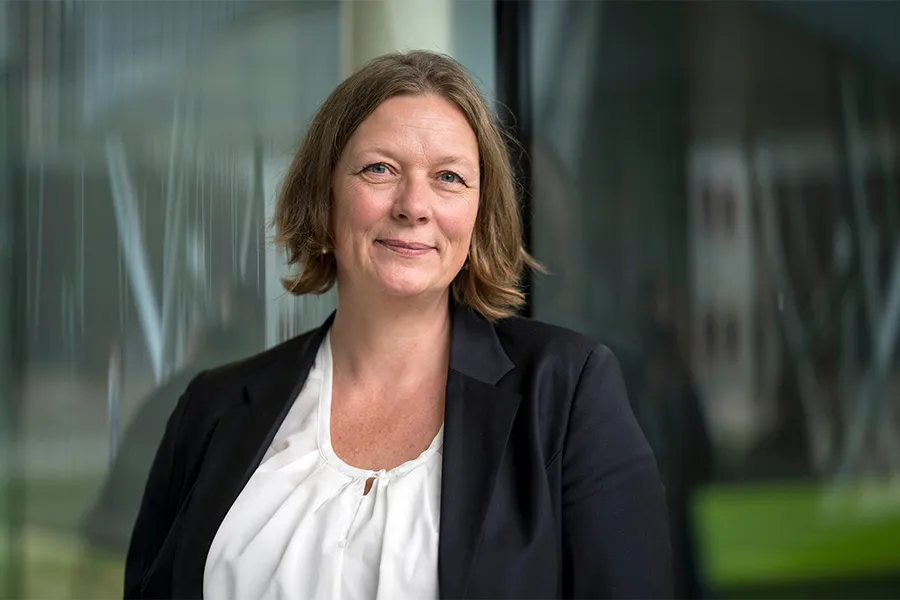
The GDN works literally from zero downwards, says Tirza van Daalen, director of the Geological Survey of the Netherlands. “Knowledge of the upper tens of metres is indispensable for organisations such as Rijkswaterstaat, provinces, municipalities and engineering consultancies that need to know where it is safe to build and what types of soil are present. We also map the location of groundwater and identify which layers are suitable for extraction and which need to be protected. Deeper underground lies the world of geo-energy: geothermal energy, CO2 storage, and heat and hydrogen storage. The extraction of raw materials such as sand, gravel and clay also falls within our ‘remit’. In this way, we provide crucial information for the Netherlands’ energy and raw materials supply and support government and industry in making major strategic decisions.”
Statutory duties
Two statutory duties form the backbone of the GDN: the Key Register of the Subsurface Act (BRO) and the Mining Act. “These systems give government bodies, engineering consultancies and businesses access to the same reliable data. They provide data and then use the same information for policy, design and delivery,” explains Van Daalen. “Since the BRO was introduced, the use of subsurface information has grown exponentially: businesses can carry out preliminary studies more quickly and make better-informed decisions on complex projects. Businesses and government bodies are also increasingly turning to us with specific questions or for project preparation. Whereas national maps used to be the starting point, specific 3D models are now being developed for local applications. This makes geological information more accessible, up to date and immediately usable for design and delivery.”
The Dutch subsurface is crowded, but it is also a very important factor in the future of Dutch society. “Through our knowledge and meticulous approach, the GDN makes an important contribution to the major spatial and energy challenges of the future,” concludes Van Daalen. “Spatial planning of the subsurface is an issue in our country. What can go on top of what, what fits alongside what, and what can you build on: a layer of sand, clay or peat? Understanding the subsurface is essential. That is the GDN’s business model. We sometimes joke that ‘in the upper 100 metres we prevent costs, while in the deep subsurface we make money’.”
Question about this story? Ask your question
Keep following this
Get an email when a new story is published. No account needed.
- ThemeUnderground construction
- SubjectSurveying & geo-ICT