









Sustainable steel sheet piles made from scrap
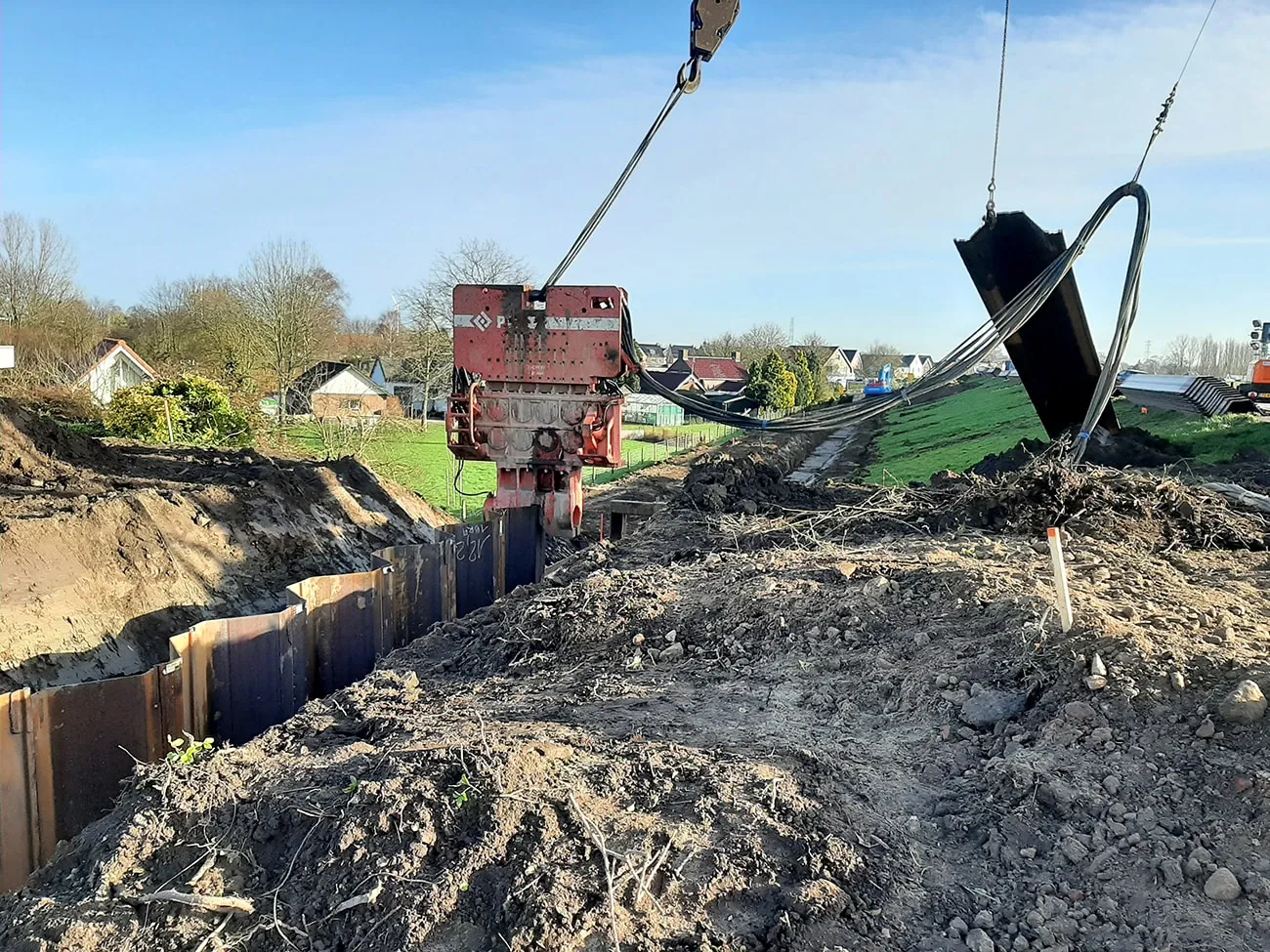
Traditional steel sheet piles often have a poor environmental reputation because the steel is produced from ore in blast furnaces. This is not the most environmentally friendly production method. ArcelorMittal takes a different approach. At its plant in Luxembourg, sheet piles are made from scrap in an electric arc furnace. This results in an environmental impact that is 4 to 5 times lower. This is also one of the reasons why these sheet piles are being used on a large scale for the Wolferen-Sprok dike reinforcement project. ArcelorMittal steel sheet piles are unrivalled in addressing the failure mechanism of macro-instability.
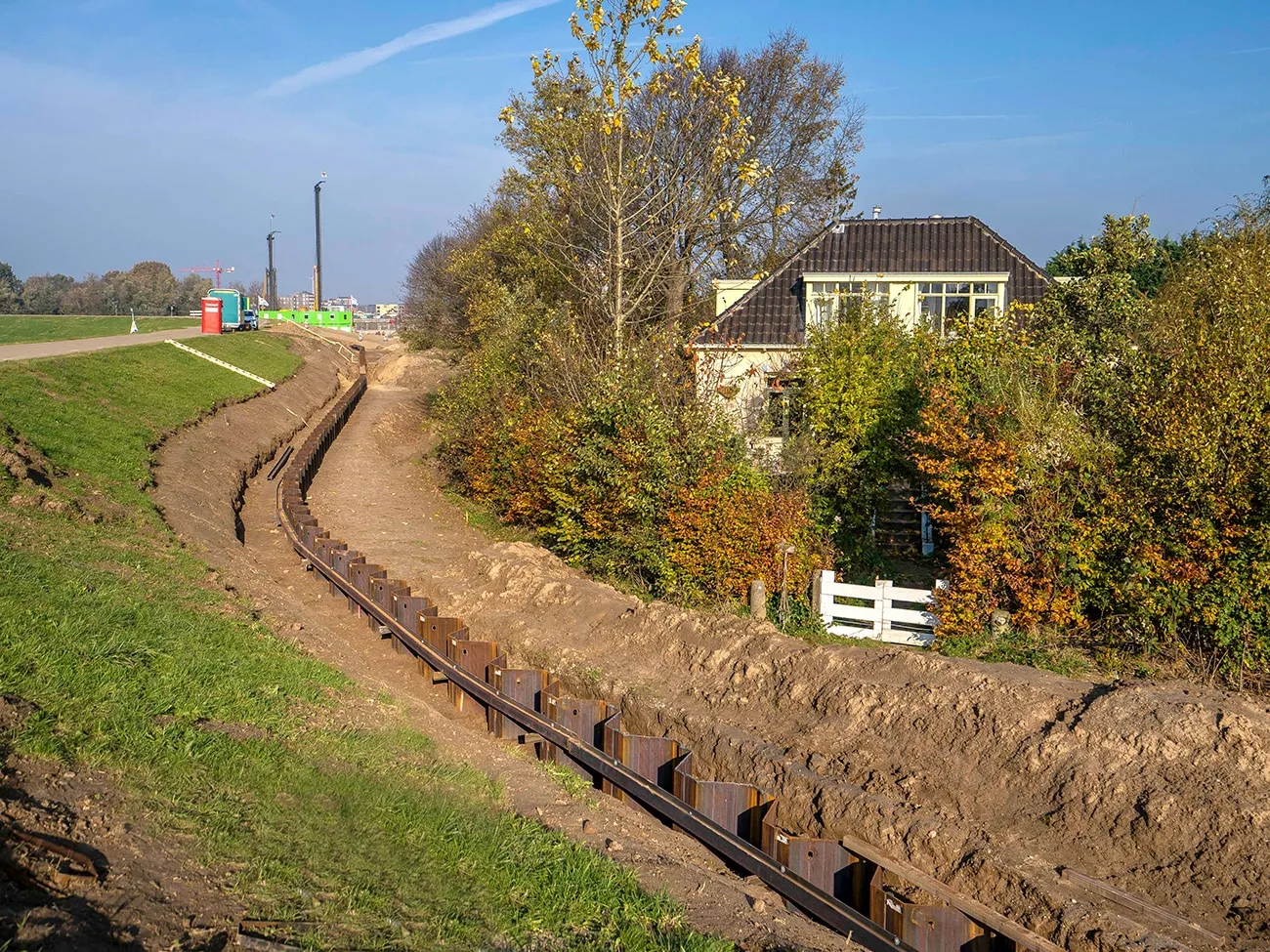
“Given the considerable volume of steel sheet piles, we agreed the framework with the De Betuwse Waard consortium right at the start of the project,” says Roel Bijlard, Technical Sales Engineer at ArcelorMittal Projects. “A total of 11,500 tonnes of steel sheet piles will be installed over a three-year period. Some 4,500 tonnes were delivered last year, while the remaining 7,000 tonnes are being stored at a temporary storage site close to the project and will be delivered as required.”
Low environmental impact thanks to electric arc furnace production
The project uses mainly ArcelorMittal sheet piles from the AZ18-700 series, with a smaller share from the AZ24-700 and AZ28-700 ranges. “All these sheet piles are 1,400 mm wide, and most are between 9 and 16 metres long,” says Bijlard. “Because we use 100 per cent scrap as feedstock instead of ore, making use of secondary material, the environmental impact is many times lower. The CO2 footprint of our sheet piles is approximately 47 kg/m2, a fraction of that of steel produced using the blast furnace process. In addition, our plant is located in Luxembourg, keeping transport distances extremely short. The sheet piles for Wolferen-Sprok were transported by inland vessels to the temporary storage site. They are then delivered by road in phases to the consortium as required.”
Reduce, reuse, recycle
Bijlard is well aware that environmental impact is an increasingly important issue on projects. “In recent years, both our company and the sector have made major efforts to reduce environmental impact, guided by the principles of reduce, reuse and recycle. The greatest environmental gains have come from reducing the number of kilos of steel driven into the ground, through innovations in the sheet piles themselves and in steel quality. By way of comparison, a sheet pile was on average 30 per cent heavier 30 years ago. ArcelorMittal is the only sheet-pile supplier with an 800 mm-wide Z-section range, enabling a unique weight-to-strength ratio. We were also closely involved in the sheet-pile trial in Eemdijk, a dike reinforcement study into macro-stability. The trial showed that the calculation rules for steel sheet piles were too conservative, and that they could be made up to 30 per cent lighter. The calculation rules were revised accordingly, and Wolferen-Sprok is also benefiting from this through the use of lighter sheet piles than under the previous rules.”
For the Wolferen-Sprok dike reinforcement project, Waterschap Rivierenland worked closely with the construction consortium to decide that half of the 13 kilometres of new sheet piling would be made from plastic, to further develop that innovation. Bijlard understands the decision and says: “For the application on this project, where it is used solely as a piping barrier, it is a possible alternative. Where both piping and macro-instability are failure mechanisms, steel sheet piles remain the only right solution for eliminating both with a single product. In this application, steel sheet piles are a reliable, proven technology and can be removed from the ground at the end of their service life and used as scrap for a new sheet-pile product. That completes the circle.”
Een zakelijke vraag aan ArcelorMittal Projects Europe B.V.? Get in touch
Who worked on Dijkversterking Wolferen Sprok
- construction consortiumDe Betuwse Waard construction consortiumMentioned in A modern take on a proven concept
- anchoring of the steel sheet pile wallDe Vries TitanMentioned in Expertise required to install grout injection anchors
Keep following this
Get an email when a new story is published. No account needed.
- ProjectDijkversterking Wolferen Sprok
- ThemeUnderground construction
- SubjectNews
- CompanyArcelorMittal Projects Europe B.V.
- CompanyCombinatie De Betuwse Waard







