









Working together for a thriving water engineering sector
Text Roel van Gils Images De Vries & van de Wiel
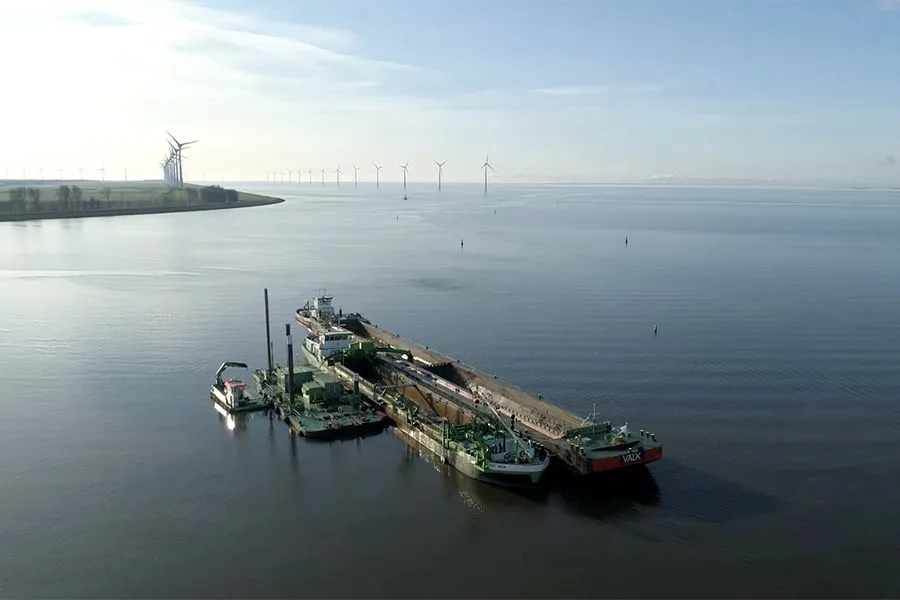
Sustainability, innovation and circularity are key issues in water engineering. Because of what it sees as ‘excessive’ regulation, the sector is now in a worse position on circularity than it was five years ago. At the same time, we are expected to make substantial investments in cutting emissions and greening the water engineering fleet. That is the view of Yves Marsé, adviser to the Vereniging van Waterbouwers. He calls for the government to take a stronger lead, addressing sustainability and circularity as an integrated whole.
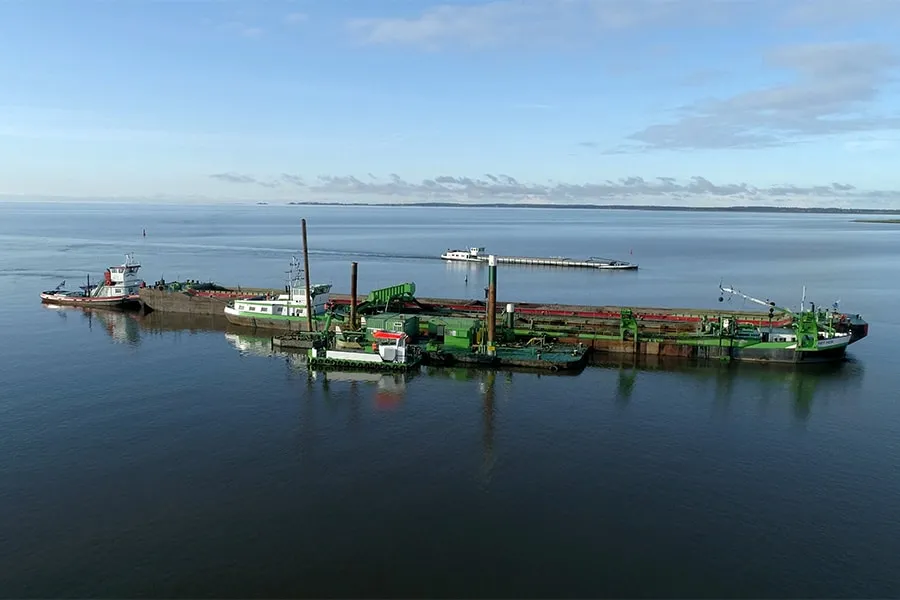
The Vereniging van Waterbouwers is the employers’ and business organisation for contractors and service providers in water engineering. “We represent the interests of our 91 members and work together continuously towards a thriving water engineering sector, in both fresh and salt water,” says Yves. “We focus exclusively on companies operating in the Netherlands. They range from large dredging contractors to small businesses, for example those involved in dredging ditches, and everything in between.”
Long-term vision
As part of the Clean and Emission-free Construction programme, the Vereniging van Waterbouwers worked with Rijkswaterstaat, various water authorities and Havenbedrijf Rotterdam, among others, on a transition pathway for water engineering. “The government’s current sustainability policy is rather incoherent,” says Yves. “There is a need for clarity, and above all for a consistent long-term vision to achieve the targets of a 55% reduction in CO2 and a 60% reduction in nitrogen emissions by 2030. As a sector, we are keen to align with this, provided a number of conditions are met. We have therefore done the necessary groundwork together and developed a transition pathway, which has now been submitted to the cabinet. Hopefully it will be approved in the autumn, giving the market a clear investment outlook and enabling it to become more sustainable. At present, there is a great deal of uncertainty, making it difficult to justify investments.”
Step by step towards the target level of ambition
The transition pathway was drawn up in accordance with the Clean and Emission-free Construction (SEB) system and consists of two parts. “The first covers measures to meet the minimum requirements, while the second sets a higher level of ambition, the upper limit,” says Yves. “Both parts are divided into four periods, each lasting a few years, to achieve the reduction targets and ambitions for 2030 step by step. For each period, the minimum requirements for engines and energy carriers are specified. For 2028, CCR2 has been set as the minimum requirement. It is important to note that this applies to the weighted average of all engines on board. For the second part of the transition pathway, the availability of funding is a serious obstacle. It remains to be seen how far the cabinet is willing to go to make these ambitions a reality. We commissioned TNO to research options for making the freshwater fleet more sustainable. Zero-emission equipment cannot be used everywhere, and where it can be, it requires an investment 5 to 10 times higher, amounting to around 300 to 400 million in additional costs by 2030. The question we all need to ask, and which is now before the cabinet, is: are we prepared to pay that?”
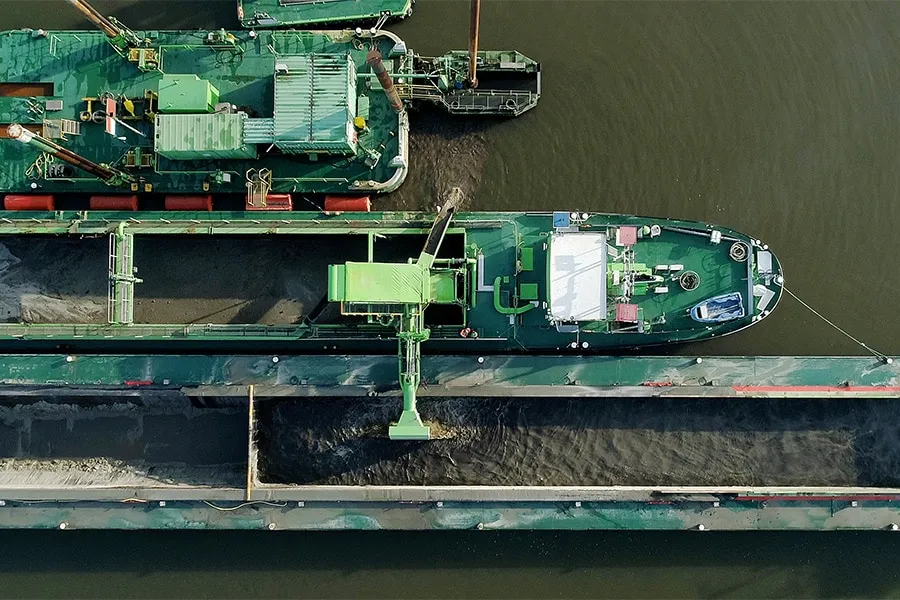
According to the principles of circularity, soil or dredged material excavated during a project should preferably be reused locally, Yves rightly points out. “That was what happened until a few years ago. Unfortunately, regulations are creating more and more obstacles, with PFAS the most pressing example. On the one hand, industry is allowed to release kilograms of substances into our environment through the air and water. Naturally, we encounter them when dredging. In itself, that is not a problem, except that the limits imposed on us are set in tenths of a microgram. That is a billion times smaller (!) and completely disproportionate. The rules are also much stricter than those applied to other substances. As a result, contractors have to transport soil and dredged material over ever greater distances to one of the three disposal sites in the Netherlands, even though the material is often usable. This is anything but circular and runs counter to the government’s policy of encouraging reuse. Besides being bad for the climate because of the extra emissions from transport, it also costs much more, money that could be put to far better use in making the sector more sustainable.”
As a trade association, we would like to see circularity and sustainability addressed as an integrated whole, so that decisions can be made on a consistent basis, Yves concludes. “The current policy of continually tightening standards at the back end is not sustainable in the longer term. It needs to be viewed in proportion. This is a difficult political debate, and we will continue to draw attention to it in The Hague to encourage a more realistic perspective. We were more circular five years ago than we are now. Unfortunately, that is not widely recognised, but it is a consequence of current policy.”
Question about this story? Ask your question
Keep following this
Get an email when a new story is published. No account needed.
- ThemeLower emissions and more reuse
- SubjectWater infrastructure







