









Wellpoint dewatering, water management and pump hire: John van Tongeren on used pumps and international trade

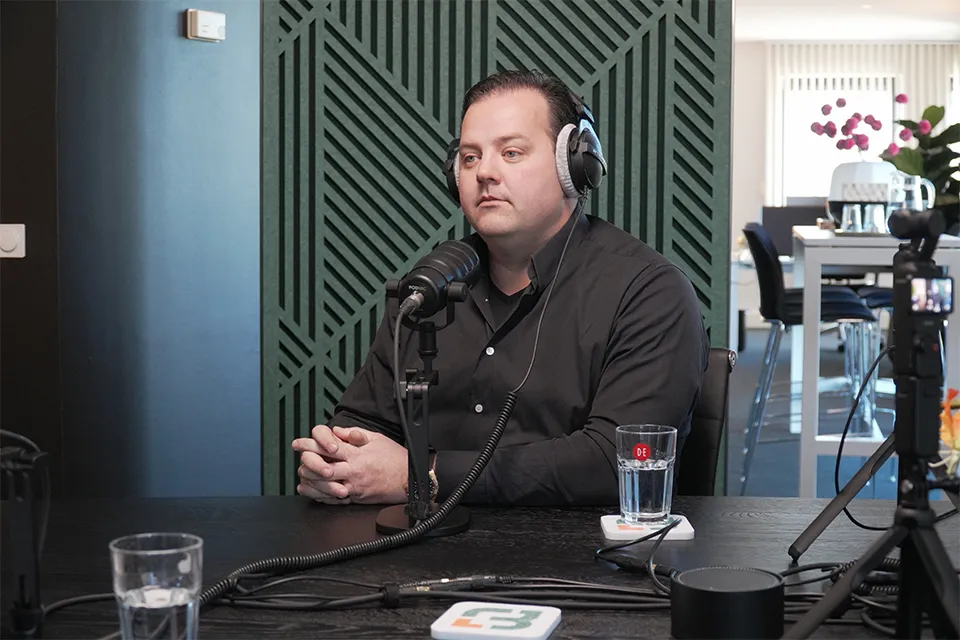
In this episode of the GWW Bouwmat podcast, Roel van Gils talks to John van Tongeren about wellpoint dewatering, water management and pump hire in the civil engineering sector. They discuss the growing importance of used pumps, circular working, fast delivery and international trade. How do you choose the right pump for your project, and what role do monitoring and maintenance play in practice?
Interview with John van Tongeren (Van Tongeren Trading)
Host: Roel van Gils
Een zakelijke vraag aan Van Tongeren Trading B.V.? Get in touch
Full transcript
All chapters (33)
- Introduction to the episode
- Introducing the guest
- The company and its activities
- Background and interest in pumps
- A gap in the market and giving pumps a second life
- How they differ from general machinery traders
- Sales versus hire
- Brand independence
- Comparison with the automotive industry
- Quality control and testing
- Choosing the right pump
- Customer types and specialisation
- Stock and preparation
- Volumes and team
- International use and examples
- Strength in international trade
- Work patterns and customer behaviour
- Market trends
- Electrification and innovation
- Sustainability and reuse
- Smart systems and monitoring
- Demand for used pumps
- Faults and operation
- Warranty and responsibility
- The importance of speed
- Anecdote and transport
- Buying pumps
- Maintenance and service
- Maintenance and expertise
- Media and applications
- Working together and the market
- Advice for listeners
- Complete solutions and closing remarks
Introduction to the episode
Roel van Gils Welcome to another episode of GWW Bouwmat, the podcast. Today we’re taking a closer look at a world you might not think about every day, but one that quite literally keeps everything running. Yes, without pumps there would be no construction sites, no agriculture, no industry and apparently not even any theme parks. Anyway, we have someone here who knows all about it. John, welcome.
John van Tongeren Thank you.
Introducing the guest
Roel van Gils Tell us a little about yourself.
John van Tongeren I’m John van Tongeren, 42 years young, married with two children, and I live in beautiful Fase.
The company and its activities
Roel van Gils Right, we’re all curious, of course. What do you do?
John van Tongeren I own Van Tongeren Trading. We trade in water pumps, in the broadest sense of the word, as well as related products, pipes and hoses, for front or rear. We source them worldwide, usually second-hand. We bring them back to Apeldoorn and then recondition or overhaul them, depending on what’s possible and needed.
Roel van Gils And then we find them a new home somewhere in the world. Right. And you’ve been doing that since 2009, as I understand it? Yes. What prompted you to start your business?
John van Tongeren Well, at the time I was working in the automotive industry. Things weren’t going very well in the automotive sector in those years, and I was basically politely asked to look around for something else, if you like. That’s how bad things were in the automotive industry. I took advantage of a scheme that allowed me to leave, and then I started working for myself. At first, I still relied on the network I had in the automotive industry. So, about 80-90% commercial vehicle sales and 10% pumps and related products. Over the next 2-3 years, I gradually changed that to 99% pumps and related products.
Read the full transcriptCollapse transcript30 more chapters
Background and interest in pumps
Roel van Gils So you had an interest in the pump market?
John van Tongeren Yes, absolutely. I was born and raised in a family of wellpoint dewatering contractors and ground drillers. So, from a young age, I was crawling around among the pumps, pipes and hoses. Yes. My grandfather started the business more than 75 years ago now. My father and his cousins took it over, and eventually my brother took over, but I was involved in it too. I grew up with the whole concept of pumps and everything that goes with them.
A gap in the market and giving pumps a second life
Roel van Gils So what did you see in the market that made you think, there’s a gap here, this is where I’ll get involved?
John van Tongeren You often see people overestimating what these machines cost.
Roel van Gils Go on.
John van Tongeren Overestimating, or perhaps underestimating. I think a pump has a very long service life, so there’s definitely scope to give a machine a second life. But that wasn’t really happening. Manufacturers tended to treat used equipment as an add-on. They weren’t exactly enthusiastic about selling it alongside new equipment, which I can understand. But there was no one doing it? No, not really.
How they differ from general machinery traders
John van Tongeren There were a few general plant and machinery dealers who sometimes sold a pump or two. But they did it purely as part of a sale, without knowing what they had or what they were selling, let alone what
Roel van Gils it was worth. And they knew even less about its reliability, so to speak.
John van Tongeren That’s what people generally do when I go to look at a pump. I don’t want to speak badly of anyone, but the average plant and machinery dealer says, ‘It works’, because the engine runs. But that tells you nothing about how the pump performs. And I don’t mean to criticise those people, they probably mean well. But to an outsider, a pump is a pump. And that’s not quite true. There are so many different applications, each requiring and suiting specific types of pump, that it’s not just about selling. It’s also about giving advice and talking to the potential customer to find out what their actual problem is.
Sales versus hire
Roel van Gils You mentioned sales. Do you only sell, or do you also hire out pumps?
John van Tongeren No, we only sell. That’s because many of our customers are hire companies. To put it bluntly, I don’t want to undermine my own business. They’re good at hire, and we’re good at selling to them.
Brand independence
Roel van Gils Right, okay. So what do you do differently from other companies?
John van Tongeren Well, it depends a little on which companies you’re comparing us with. But I like to say that we’re Switzerland in this market, because we’re completely brand-neutral. We’re not a dealer for any brand, and we have absolutely no ambition to become one. In fact, you could say that we work with all the leading pump brands in the world. That means we don’t try to sell a customer a specific product or brand. We try to find the best solution for their problem.
Comparison with the automotive industry
John van Tongeren I also like to draw a comparison with the automotive industry. You can go to a Volkswagen dealer for a used car. They’ll always do their best for you within the Volkswagen range. But an Audi might be a much better solution to your transport needs. That’s why there’s always a place in the automotive industry for independent garages as well. They’ll always do their best to find you a
Roel van Gils A suitable solution.
John van Tongeren The best possible transport solution, rather than one tied to a particular brand.
Quality control and testing
Roel van Gils You mentioned Switzerland, which means brand independence, but Switzerland also stands for
John van Tongeren precision and quality. That’s why I use the comparison. Every machine that comes in, whether it’s a week old or 20 years old, goes into our workshop. We inspect it, including its appearance, and we have our own testing facilities. We test it as thoroughly as we can to see what the pump can actually do in operation. We document the results and then check them against the manufacturer’s specifications for what it should be capable of.
Roel van Gils When it was new?
John van Tongeren When it was new. There’s always some degradation, of course. Let me use the automotive analogy again. When you probably bought your car, the salesperson said it did 1 litre per 22 kilometres. It probably would, too, if you took the mirrors off, put bicycle tyres on it and ran it in a wind tunnel with a little tailwind
Roel van Gils Yes, in ideal conditions. Pumps are no different.
John van Tongeren There’s always a little something extra to take into account. What can you expect from a used machine? It’s no longer new, but we have to make sure that a properly working machine leaves our premises. In our case, it doesn’t matter whether it’s going to Poland, Peru, America or Portugal. The internet has made the world both much bigger and much smaller. The idea that once a machine crosses the border, we’ll never hear from or see the customer again is well and truly a thing of the past. And those customers are all willing to spend money, but they also expect to get quality in return.
Choosing the right pump
Roel van Gils So how do you choose the right pump? You’ve already said there are so many types of pump for so many different applications. How do you select one?
John van Tongeren Well, we actually start by doing the opposite. The most important thing for us is this: we get several emails and enquiries every day asking how much a particular machine costs, for example. But we approach it the other way round. We always try to call the person who sent the enquiry straight away. First, tell us what your problem is. You need a completely different solution if you want to lower the groundwater level using wellpoint dewatering equipment, empty a sewer system or irrigate farmland. Those all require different technology. So we first need to understand the problem.
Customer types and specialisation
Roel van Gils But that’s a broad field for a hire company.
John van Tongeren Yes, but pump hire companies are generally specialised too. There are general plant hire companies that have a few pumps as well. But as soon as things get a bit complicated, the companies involved are often specialist pump hire firms. They have such a wide range of machines that they can usually help with any requirement. They come to us too, and often know more than we do. I’m not ashamed to admit that. They’ll ask whether we have a particular model or type in stock.
Roel van Gils Right, and then what?
John van Tongeren If the deal goes ahead, it’s all ready to go at our premises.
Stock and preparation
Roel van Gils Oh, it’s ready to go too? Before it goes online?
John van Tongeren Or before it’s available. Depending on how it’s handled, by the time it’s listed online it will have been through the workshop, been prepared cosmetically and mechanically. To be honest, that doesn’t always happen quite like that. Sometimes we’re waiting a bit longer for a small part, for example, and if a valve cap hasn’t arrived yet, I don’t mind. We’ll still put the machine online.
Roel van Gils Yes, I understand.
John van Tongeren But generally, if it’s listed online, you can assume it’s ready to go: call, confirm, pay and collect.
Volumes and team
Roel van Gils I understand you sell around 500 to 700 pumps a year.
John van Tongeren Yes, we get through that many. They’re not always individual units. We also handle larger quantities, sets or packages that go in one go. We buy them in, then either sell them individually or sometimes as a set. So yes, we reach those numbers.
Roel van Gils Do you keep a large stock, then?
John van Tongeren We don’t always have that many in stock. We generally have around 100 to 150.
Roel van Gils And you do all that with a fairly small team, don’t you?
John van Tongeren Yes, there are six of us.
Roel van Gils That’s efficient.
John van Tongeren Yes, and I’d like to keep it that way. We have a very good team, which makes all the difference.
International use and examples
Roel van Gils Okay, great. You mentioned that the pumps end up all over the place, from banana plantations in Suriname to mines in Africa, and even Euro Disney, as I understand it. How does that happen?
John van Tongeren Well, Euro Disney is a great story. At the time, they were cleaning, not really remediating, a large lake where I think the Mississippi boat goes around. We had one in stock, and it was an urgent problem. So we got a call saying, “We’re looking for such-and-such a machine. Do you have one? You do? Can it get to Paris tonight?” Yes, it can get to Paris tonight.
Roel van Gils Seriously? What was the problem?
John van Tongeren Well, with a current machine, the work could only be done in the evening because during the day there were tourists, visitors to the park. So it could only be done at night. They had a tight schedule and simply couldn’t wait for other machines.
Roel van Gils Right, right. And there was one in the Netherlands.
John van Tongeren There was one in the Netherlands. I don’t know exactly, but about six or seven hours later, it was there, right on time.
Strength in international trade
Roel van Gils So what makes you so well suited to international trade? What gives you that edge?
John van Tongeren A, because we have a lot of stock. B, because we have the expertise in-house. So we can often work closely with the customer to identify exactly what their problem is. We have the stock, and we’re strong on logistics. We can, in principle, handle transport ourselves. Otherwise, we have good contacts in the transport industry. We’ve done it all before. So whether a machine has to go by plane, ship or train, that’s nothing new to us. We work with reliable partners, which means we can act quickly and get things organised fast. Fortunately, there are six of us, and all six of us have the same attitude: if it needs doing, it needs doing, so we’ll do it.
Roel van Gils So you get on with it. Right. But you don’t forget to close the door behind you.
John van Tongeren No. That wouldn’t really suit our customers, you know.
Work patterns and customer behaviour
Roel van Gils It gets busy here from four in the afternoon.
John van Tongeren Seriously? Yes. Many of our customers are smaller SMEs. They’ve been working all day, run into a problem, and at four o’clock they’re in the car on their way home thinking, “Maybe I need a pump.” So they call, and they’re welcome to keep calling. This isn’t a complaint, by the way. Then the calls and emails start coming in. It’s the same at half past eight. I’m usually at the office by half past six, and then the calls and emails start. The guys are on their way to a job or to their business, and things come to mind. They call, and things can move very quickly. That’s something we can do too.
Roel van Gils Well, great.
Market trends
Roel van Gils Taking a step back and looking at the bigger picture, what are the main trends you’re seeing in the pump sector?
John van Tongeren What we’re seeing is that, with so much infrastructure-related work, people in the Netherlands are more inclined to buy a machine themselves rather than hire one. This is particularly true in the 4-inch or 6-inch segment. They want to own the machine. We’re seeing that happen.
Roel van Gils And perhaps it spends more time standing idle.
John van Tongeren Yes, but at the moment, it’s hard to predict how things will pan out. If you work in infrastructure, in pipes, cables and utilities...
Roel van Gils There’s still plenty of work to come, of course.
John van Tongeren Exactly. So I wouldn’t let fear rule you too much. I’d assume it’ll be out working more than it’ll be standing idle.
Roel van Gils Yes, I see what you mean.
Electrification and innovation
John van Tongeren And, of course, we get a lot of questions about electrification, whether to use battery packs, whether to use hydrogen. Yes, we get a lot of questions about that.
Roel van Gils Questions, or are people taking action too?
John van Tongeren No, electric power isn’t new to us. We’ve had electric pumps since the 1950s, alongside the traditional combustion engines. So electric is nothing new. No, battery packs and hydrogen are relatively new, of course, and people have a lot of questions about them. Manufacturers of new equipment will no doubt sell them too.
Roel van Gils Yes, but do you have any on your site?
John van Tongeren No, they’re still asking such high prices that I quickly say, “Just go for a conventional electric pump.” The end client will have to make sure there’s a power supply, or there’ll be a generator further down the line. They’ll have to work out how to manage it.
Sustainability and reuse
Roel van Gils Yes, but when you talk about sustainability, reuse is obviously...
John van Tongeren Yes, buying a used machine is a great example of circularity. And we can do that. If required, we can also make improvements, because these machines often have more traditional engines. We can add monitoring or telemetry to make further improvements and help them run more efficiently.
Smart systems and monitoring
John van Tongeren A very simple example is a timer switch, so the pump doesn’t run 24 hours a day, but switches on at 5 in the morning because we start work at 7. That saves two hours of running time. Then there are systems that let you switch it on and off from your iPhone, for example. That’s possible too.
Roel van Gils Yes, yes, yes.
John van Tongeren So yes, you’ve made the link to smart systems and monitoring. We’re already seeing a lot of demand for that. It depends a bit on the customer and the type of customer, and how interested they are in their fleet or business. For some, it’s definitely a priority, while others aren’t interested in it at all.
Roel van Gils Yes, and that demand depends on the application.
Demand for used pumps
Roel van Gils Are you also seeing demand for used pumps increase? You only deal in used pumps, of course.
John van Tongeren Yes, demand is increasing. We do sell new pumps too, but most are used, and demand is only growing. I think that’s partly because of the high investment cost of some machines, so buying used can make financial sense. And secondly, speed. Manufacturers often have fairly long lead times, which not everyone would consider long, but you can easily wait several weeks for a new machine, if not months. And in the wonderful world of water, the problem was often there yesterday and they want a solution today.
Faults and operation
Roel van Gils Do people often call when there’s a fault, or when a pump has broken down?
John van Tongeren Of course they call. I always say I’d rather you call me angry than stay away in anger, because then I can do something about it. What we do see is that 9 out of 10 faults are caused by human error, not the machine. But I think that’s inherent in the way we all are these days. Often, all we get is a call saying, “It doesn’t work.” Then you ask a few more questions and say, “Well, it does help if you put diesel in it.”
Roel van Gils Or plug it in, yes. Unbelievable.
Warranty and responsibility
Roel van Gils What’s the expected service life of these pumps? Do you offer a warranty?
John van Tongeren Basically, we don’t offer a warranty. That sounds very strange, and it’s not the best news to hear, but that’s because we simply aren’t responsible for what the customer does with the machine. A lot of faults are caused by operator error. If you buy a machine from me for, say, €15,000 and it breaks down the next day, with the bearings flying out, then we certainly have a conversation to have. I completely understand that, and we wouldn’t avoid that conversation. But the only way I can describe it is that the starting point is: you buy what you see, and you need to have confidence that it’ll work out. And it will, it really will. That’s how it is. I’d rather you call me angry than just stay away.
The importance of speed
Roel van Gils And how important is speed?
John van Tongeren Extremely important. Our customers had a problem yesterday and want a solution today, so they want fast delivery too. Especially when it comes to groundwater. It often comes completely unexpectedly, or everything has been fine for weeks. It’s lovely weather as we record this podcast, so I can imagine you start work now thinking there’s nothing to worry about. Then it rains for two days and you need wellington boots and a pump. That’s why we’re here now, of course. Otherwise, I wouldn’t be able to sit here. And if it gets very dry, we need pumps again, to pump water the other way. So this changeable weather isn’t much use to us.
Anecdote and transport
John van Tongeren We once supplied pumps to a gold mining company in an African country. A man called and turned up without an appointment, and it turned into a fantastic order: three excellent machines. We were delighted, and the financial side was sorted out within a few days. Everything was fantastic. Then he called and said, “The boat will take too long. Can you deliver them to Liège? There’s a cargo airport there. Can they go by plane?” Of course we can arrange that for you, no problem. We sorted out all the paperwork, cleaned the machines properly and did everything. Then the man called again and said, “I have one more question. Can you go via Maastricht?” I said, “If we’re going to Liège, we’ll go via Maastricht. That’s no problem.” “Great,” he said, “because I bought my Ferrari there, and I’d like that to go on the plane too.” There was just enough room. I said, “You’ll have to call someone else about that. Loading it onto our low loader as well would be a bit much.”
Roel van Gils Yes, but those sorts of things happen.
Buying pumps
Roel van Gils Hey, but you buy pumps too, don’t you? Yes. Can people get in touch?
John van Tongeren Yes, yes, yes, yes, yes.
Roel van Gils Is that important too?
John van Tongeren You can register a pump for sale on our website. You can upload some photos and provide a description. We’ll usually get in touch straight away and tell you whether we’re interested or not. There’s also a step-by-step guide explaining how it works. If you’re a new customer, I like to meet in person. We don’t screen people, but I do like some personal contact. So I’ll often get in the car or on a plane. We’ll have a look at what it is and who we’re dealing with, then we’ll sort everything out properly. Payment is made in advance when we sell, so we also pay upfront when buying. We’ll also arrange transport. The pump will be brought to the Netherlands in good order. Because why...
Roel van Gils So that’s an important part of your business too, buying pumps. I mean, if you don’t buy them, you can’t sell them either. That’s right. But there are also a lot of machines sitting unused.
John van Tongeren Yes, we take machines from ex-traders because that’s where the relationship is. There’s no right or wrong when it comes to a manufacturer or anything like that. That’s simply where our relationship lies. And the same applies here: we like to keep stock. Manufacturers sometimes call us and say, ‘We’ve had a cancellation.’ Or, and you don’t see this as often, ‘We have some excess capacity.’ That’s good for us.
Maintenance and service
John van Tongeren In principle, any customer who has bought a machine from us can have us carry out the maintenance or repairs. The question is usually whether we can do that on site. Yes, we can, though I’m a little cautious about it because there’s often only so much we can do on site. You can have the biggest service van in the world, but you’ll always have the wrong parts with you. Pumps are often large and heavy, so you also have to consider transport, of course.
Roel van Gils Transport.
John van Tongeren Transport. So ideally, we have the machine brought to us. We can test it straight away too, including a capacity and power test, as it should be done. We prefer to have it here, then repair it. We also provide what we call third-party servicing, and that’s no problem at all. We can work on all makes too.
Roel van Gils So you’re make-independent too. And do you keep the parts you need in stock, or do you...
John van Tongeren ...have them in stock? We keep all the fast-moving parts in stock, and we make sure the rest is brought in.
Maintenance and expertise
Roel van Gils So the buyer is looked after in that way too.
John van Tongeren Yes, exactly. We can take care of everything for our customers.
Roel van Gils That’s good.
John van Tongeren And I’ve noticed that customers have been happy to leave it to us in recent years too.
Roel van Gils In this area, or more generally?
John van Tongeren In this area. We’re getting more and more maintenance and repair work. That’s partly because we must be doing something right. And often, in the civil engineering and water sector, someone will say, ‘We can do the maintenance ourselves.’ And that’s absolutely fine. They’ll come in and say, ‘The engine is running perfectly, the oil change and fuel filter are all sorted.’ Then it comes to the pump-specific expertise, and that’s where they reach their limit. So we also do a lot of maintenance and repairs in consultation with the customer. A workshop mechanic or service engineer might ask us what needs doing to the pump. We can provide the right documentation and give them tips and advice. We can tell them what to look out for when they have that machine, based on our experience: after so many hours, this will need attention, or given the work you’re doing with it. After all, not everyone pumps water.
Media and applications
Roel van Gils Right, that’s a good point too. We know what medium you’re pumping, so we know what maintenance or wear to expect. Can you give a few examples other than water?
John van Tongeren Bentonite is very relevant at the moment in the infrastructure sector, for directional drilling. It’s a very difficult substance to pump, although some pumps handle it brilliantly. But it’s really important to clean the pump thoroughly when you’ve finished.
Roel van Gils So you need to flush the pump, basically. Does that not happen much, because people are in a hurry or forget?
John van Tongeren It’s always easier to point out someone else’s mistakes. 9 times out of 10, it’ll be done properly. But that 1 time it isn’t, a pump can go wrong straight away. Then they call us, and that’s fine, they should keep doing that.
Working together and the market
Roel van Gils But then you have to go to the site, of course. I’m just wondering...
John van Tongeren No, usually you bring it in, because we can do so much more, and so much faster, in the workshop than we can on site. The advantage and disadvantage of being a small team is that, especially on a directional drilling job where there’s quite a lot of time pressure, we’ll literally drop everything and make sure the machine is back up and running.
Roel van Gils Yes, you can do that.
John van Tongeren And what other media are there? Of course, there’s brackish water, salt water, fresh water and sewage. We don’t do much in the industrial sector ourselves, but there are all sorts of other liquids, with different pH values, that can affect a pump over time. And of course, that also depends a bit on how you look after it.
Roel van Gils When it comes to maintenance, do you also liaise with the pump manufacturers?
John van Tongeren Yes, and we generally have a very good relationship with all of them, so we can go to them with our questions. We don’t know everything. We know a lot, but not everything. We’ve always had a good working relationship with them.
Roel van Gils Yes, I can see that. It’s a nice market to work in.
John van Tongeren Well, yes. We don’t have a problem with it being a macho market or with any kind of jealousy between companies. It’s all pretty relaxed, really.
Advice for listeners
Roel van Gils That’s good. And if you could give listeners one tip or one piece of advice, what would it be?
John van Tongeren Always buy from us. No, in all honesty...
Roel van Gils Yes, that’s honest.
John van Tongeren If I can give you one tip, talk to us about your problem when it comes to pumps. Don’t just buy something because you’ve got an idea in your head and think, ‘I need something tonight.’ You often buy a pump and think, ‘The neighbour has one of those too.’ Well, I’ve got news for you: it might have the same casing, but there could be 30 different types of pump inside that casing. So explain your problem first. If we can’t help, we’ll tell you that too. That’s one downside of buying used: we don’t always have everything in stock.
Roel van Gils Right, I understand. But you can offer an alternative, or suggest something else?
John van Tongeren Yes, but then you’re selling something too. No, I’m selling... Yes, that happens too. There’s not much I can do about that.
Roel van Gils Right, I understand. And you can’t just wait, because it would take too long to find exactly the right one, of course.
John van Tongeren We can, but usually we try to work something out with the customer. Say you’re looking for pump X and you say, ‘I need that specific machine for this one project, but I can’t hire one anywhere.’ We have a big database of people who own that kind of machine, so I’ll make a few calls. Often, I’ll find a customer who bought one in the past and say, ‘It’s been sitting idle for a year.’ I don’t want it back, of course. Well, it does need to come back eventually. So we try to find a way to bridge the gap. Or someone says, ‘It’s not being used, but I don’t want to sell it yet. Would you like to hire it out to Pietje or Karel for 6 months?’ Great. Then we put those people in touch. We’re happy to help, and we try to help everyone.
Complete solutions and closing remarks
Roel van Gils We need to know about it, then. Right, I understand. So call us, get in touch.
John van Tongeren Yes, just give us a call. I still see people getting carried away and buying something on the market, then calling us to say, ‘The thing doesn’t work.’ It does work. It’s just not suitable for that problem or application.
Roel van Gils So they’ve bought something else and put it to work on another project where it’s not really suitable. Right, that’s quite something. And finally, what sets you apart?
John van Tongeren Well, we don’t just supply pumps, but everything connected to the pump or needed after it. You pump the medium out of somewhere, and we supply the right suction hoses. We can provide them in all sizes and types, with any couplings the customer needs and that we think are right. We can also handle moving and discharging the medium. That can be done with hoses or pipes. In some cases, it needs to go through a water meter, which can be digital or analogue, and may or may not need remote monitoring. It might need to pass through a venting tank or a sand trap. There are all sorts of things that may be needed, and we can supply all those items. You have all of those too?
Roel van Gils So all the related equipment too. Pipes as well? Pipes too, right. And you have another line of business with...
John van Tongeren It’s a company in the same field, in a way: drilling rigs for water wells or geothermal drilling. We buy and sell those too. We get them ready, prepare them for work and make sure they’re ready to go on their next job.
Roel van Gils So it’s a lot more than just pumps. That’s great. Okay, thanks very much, John, for a great conversation, and thanks to everyone listening.
John van Tongeren Thank you, and I hope I’ve made things clear.
Companies in this story
Keep following this
Get an email when a new story is published. No account needed.
- ThemeFlood protection and climate-resilient water management
- SubjectWater infrastructure
- CompanyVan Tongeren Trading B.V.







