









‘We changed the map of the Netherlands’
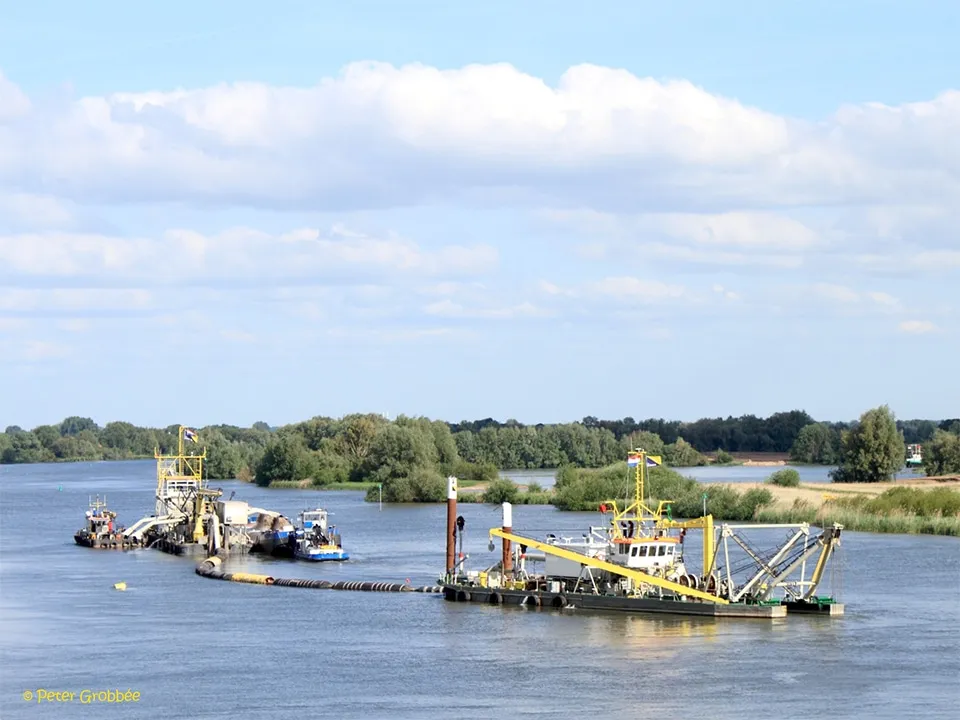
Boskalis delivered the largest contribution to dredging and earthworks in the comprehensive redevelopment of the IJsseldelta. Around two million cubic metres of sand were dredged and then used to build the dykes and shape the landscape.
First, the summer bed of the Lower IJssel was lowered. The river was deepened over a stretch of seven kilometres between Molenbrug and Eilandbrug. The new IJssel bypass was then constructed south of Kampen, together with more than three hundred hectares of nature reserve and attractive walking and cycling paths. Finally, the new navigation channel (Reevediep) for recreational craft was built in the bypass between the IJssel and Drontermeer.
Boskalis was active in the IJsseldelta for more than four years in total, with dredging and major earthworks as its main activities. Cutter suction dredger De Seine spent a year in the IJssel, deepening it by around two metres. Given the enormous scale of the work, even individual tasks sometimes took months. “For example, it took a year to set up our work site and deepen the IJssel,” says Bert van Bavel, project manager at Boskalis. “The peat soil and the ecology in the area presented us with many additional challenges.”
Transporting dredged material from the IJssel to the Reevediep
The IJssel was deepened according to a carefully devised plan. ‘De Seine’ led the way. “It is a smaller cutter suction dredger with a skilled crew,” says Van Bavel. “Cutters, also known as cutter suction dredgers, can cut through extremely hard ground with great force while dredging, to depths of 35 metres.” The sand dredged by De Seine was pumped through a large hose to hopper barge De Olst, where it was loaded into split-hopper barges. These then sailed to an old sand extraction pit in the Onderdijkse Waard and discharged the sand there. A second dredger, ‘Ceres’, pumped the sand on to the Reevediep, where it was used in the dykes.
Warning of hazardous situations
The combination of a cutter suction dredger, discharge pipeline and hopper barge, right in the middle of the IJssel, was a sizeable operation and also posed a risk to navigation. A vessel traffic service was therefore put in place. Both commercial and recreational vessels were warned. Van Bavel says: “We could easily inform commercial vessels over the VHF radio. We warned recreational boaters with leaflets and signs. They often wanted to know more about our work, too. That almost always led to some enjoyable conversations.”
Dykes with a sand core
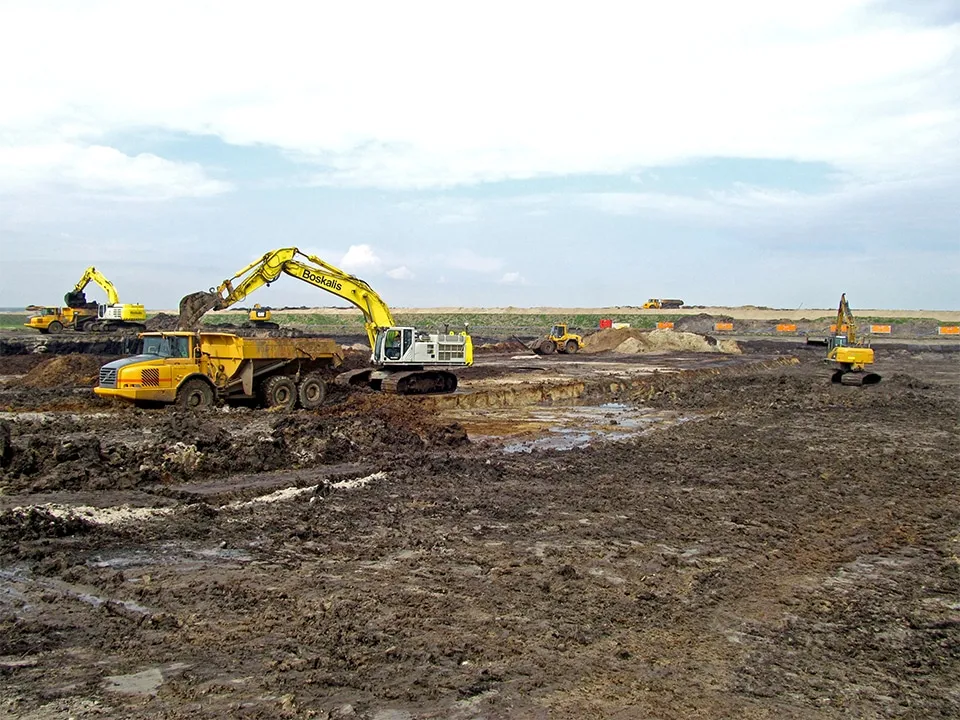
The second major challenge, excavating the Reevediep, first required changes to the water management system in the area. This was carried out with ecological supervision. “For example, a new habitat was created for the water shrew before we were allowed to use part of its former habitat for access roads,” says Van Bavel. The water systems of the five polders in the project area were then disconnected from one another. “To do this, we first joined the polders together into one continuous area. The site was then ready for the excavation of the Reevediep and for the creation of floodplains and protective dykes on both sides. The sand and clay excavated from the Reevediep were used in the dykes. The peat was sold as potting soil. This created a ‘closed soil balance’: all excavated materials were reused sustainably, nearby and to a high standard. This gave the dykes a strong sand core. Their outer faces were built with clay.”
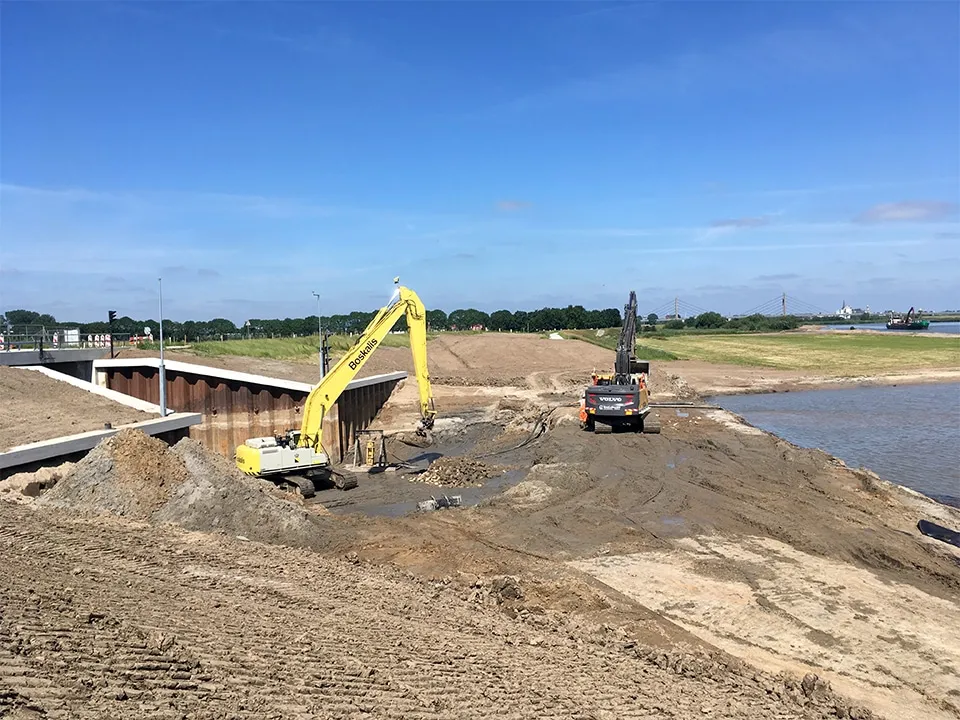
A surcharge profile
To ensure that the dykes met the residual settlement requirements, Boskalis initially built them to a surcharge profile. “For twelve months, we loaded the dykes heavily, adding extra height with clay or sand. During that period, we monitored ground settlement using settlement markers. Only once measurements showed that the ground had stopped settling did we finish the dykes with clay.” After building the dykes, Boskalis carried out preparatory work for the cycle paths and grass-concrete paths along and on top of them.
Enormous quantities
“Day in, day out, and even year in, year out, we moved millions of cubic metres of material,” says Van Bavel. “We dredged 1.8 million cubic metres from the IJssel, and excavated a further 2.5 million cubic metres of sand, peat and clay from the Reevediep. To meet our commitments, we worked at a pretty fast pace. With our dry earthmoving fleet, we regularly achieved output of 50,000 cubic metres a week. That is one reason why we had to change tack quickly when we were told that an archaeological site had been found in the Reevediep.”
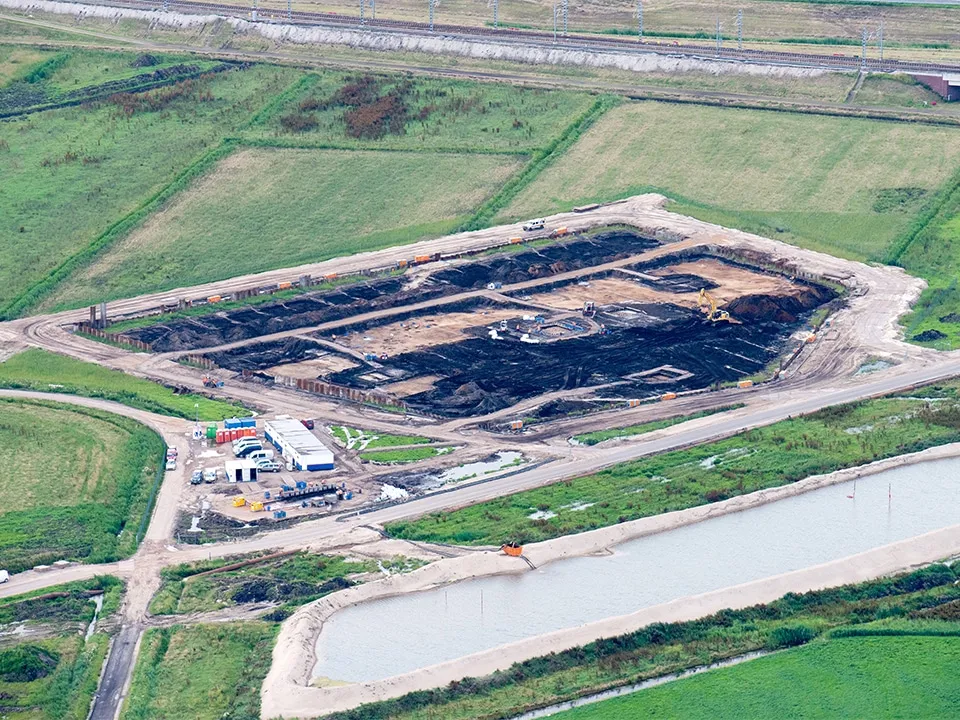
Archaeological finds
The site covered about one hectare and could not be excavated using Boskalis’s enormous buckets. Instead, the work had to be done by hand, centimetre by centimetre. It was an opportunity for Boskalis to offer its services in a different way. “To enable excavation in dry ground, we built a cofferdam using sheet piles for the archaeological team,” says Van Bavel. “This created a relatively dry work area where the archaeologists could carry out their work undisturbed. It yielded some fine finds, including hearth pits and flint tools from the Middle Stone Age, dating from 7000 to 5000 BC.”
Positive reactions
The final part of the project was the Reevesluis complex. Here, Boskalis and Van Hattum en Blankevoort built a navigation lock instead of a flood barrier. “At first, local people were critical of the mega-project cutting right across the polder. But our site manager and community liaison manager kept in touch with them throughout the project, and the criticism turned into positive feedback. Visitors saw a beautiful nature reserve taking shape, with unique opportunities for recreation. And thanks to the closed soil balance and smart logistics plan, they experienced very little disruption from our work.”
“It has been a fantastic few years,” says Van Bavel, looking back. “We did everything: wet and dry earthworks, civil engineering and road construction, and the construction of two complete locks. And best of all, we changed the map of the Netherlands. Zoom in on Google Earth now and you can see that hundreds of hectares have been redeveloped.”
Have a business enquiry for Boskalis Nederland? Get in touch
Companies in this story
Keep following this
Get an email when a new story is published. No account needed.
- ThemeFlood protection and climate-resilient water management
- SubjectWater infrastructure
- CompanyBoskalis Nederland







